LEFFEST – Lisboa & Sintra Film Festival 2019


leffest.jpg

We at Camera Coverage have been attending to the 2019 edition of the biggest film festival in Portugal and thought of speaking a little bit about the films we have been able to see. We got our heads around the whole section of the films in competition to the festival’s awards, and some of the new releases on other sections of the festival. Between all of these we thought of making our brief selection of films that are for us the highlights of the festival. Also, from Wednesday forth we are thinking of making more focused texts on what we think is our favourite of the festival, and the films that were awarded by the selected jury of the festival – that are to be announced in the 24th of November.

For our list we have picked three highlights from the festival selection in the competition.


Atlantis, by Valentyn Vasyanovych


atlantis 3.jpg

This year’s competition was packed with two films from the old Eastern Block that find themselves in somewhat the same category. These are The Criminal Man, by Dmitry Mamuliya and the afforementioned Atlantis, by Valentyn Vasyanovych. Both of these films are paced with care and drag the viewer into a very slow pacing, being easy to put them in what some call the “slow-cinema” category. However, while Atlantis presents consisted cathartic and poetic imagery, The Criminal Man seems to be a film in which there is a great central scene – arguably greater than any scene in Atlantis – and feeling a bit empty in comparison. Atlantis is a film that has its setting in a dystopic post-war Ukraine, following a main character suffering from PTSD. There are many scenes of despair, many moments where we may be led to think that Vasyanovych really has no hope for his country and his people after the consequences of the war. By the end though, we are faced with this flash of light, as poetically depicted as any of the shades of grey previously presented in the film, that remind us that the power of love and humanity  is strong enough, not only to be reborn from the remnants of such war, but I would even say taht there is here a suggestion that this light may even prevent us from falling into this dark utopia if we keep it close to us.


Beanpole [Dylda], by Kantemir Balagov

kinopoisk.ru


Arguably one of the most talked about films in the festival scene, Kantemir Balagov’s Beanpole deserves every bit of the attention it has received. The film deals with a plethora of complex themes, and presents them with, however extreme, 100% believable situations. The fluid sense we have – much of it provided by a sober set and art design – between all of these is impressive. From war trauma, to poverty, to complex romantic and motherhood dynamics, Beanpole seems to gather all of this seamlessly. It is a beautifully shot film, with a strong sense of colour and aesthetics, including a dynamic camera that switches from being handheld and really shaky to fluidity and steadiness at a pace that is hard to notice as we are mesmerized with everything that is being portrayed. The sense of pathos in Beanpole is the probably one of the strongest from the festival, and the performances are certainly the most convincing. A cinematic treat for the eyes, and an always important reminder of what extremes can the human soul deal with.


Fire Will Come [O Que Arde], by Oliver Laxe

fire will come

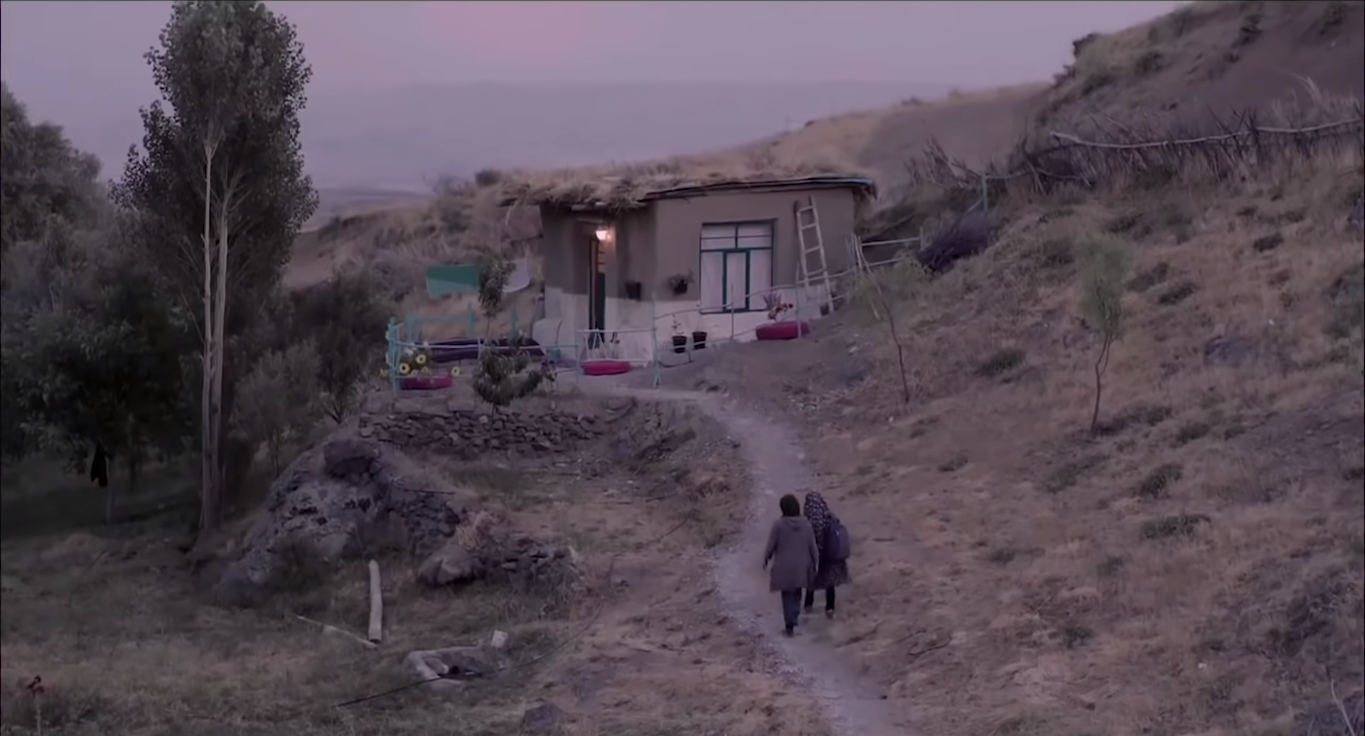
A personal favourite of ours, O Que Arde by Oliver Laxe is one of the most subtle and gentle depictions of the complex nature of human beings. Between the beautiful landscapes of Galicia and their absolute destruction there are humans and their complex, but nonetheless consequential, relationships. We follow Amador through his journey back home from being imprisoned for causing a massive forest fire in his region. He deals with his everyday chores in the countryside, next to his mother Benedita – a charming powerhouse of a 80 year old woman. There is a sense of silence and of the ephemeral throughout the whole of the film, despite the absolute chaos that is the nature of human existence. Even when filming the forest fire scenes there is a sense of calm, a sense of beauty and a sense of sobriety that gives opportunity to the viewer to mingle on the many subjects the film can extract from our lives. Family, ecology, social life, the rural world, decadence, destruction and limits. All of these and none of them at the same time. O Que Arde is without a doubt one of our 2019 favourites.


Other honourable mentions:

Tommaso, by Abel Ferrara
Balloon [Qi Qiu], by Pema Tseden
Atlantics [Atlantique] (out of competition), by Mati Diop


Vitalina Varela (2019)

Directed by Pedro Costa

vitalina

It’s poison!”

[“É veneno!“]

Pedro Costa is in 2019 already a well-established auteur. His work since Casa de Lava (1994) has been consistent theme-wise, and at the same time its progress is clear throughout. With Vitalina Varela the director still manages to stay true to the work he has been developing since Ossos (1997), on elevating the everyday lives of impoverished and endangered people into the realm of cinema. At the same time, there is a sense of evolution, and character development in a way, in this new feature. It is a film about Vitalina Varela, the main actress of the film, and her mostly true story of coming to meet her husband in Portugal after a 40 year waiting call for a ticket, arriving too late, as his funeral had taken place three days before her arrival.

vitalina 3.pngA film well worth noticing for its dark environments, captured as pristine as possible by Costa and his usual collaborator Leonardo Simões

As a standalone feature it is a great new way to introduce a new viewer to the director’s other films. In a way it’s one of the most linear narrative structures of the director, especially if we consider his last film Horse Money (2014) as comparison. In another hand, it is easily the most slow-paced of all of his films, making it the biggest chore to the casual moviegoer that wants to get in touch with his whole filmography. Nonetheless, Vitalina Varela has what is the most positive look towards the future of those depicted Cape Verdeans. It is at the same time, with the help of heavy stylization and immense technical care, a film that is as elevated and astray from reality as it is grounded, by its individual elements (real setting, non-actors, real stories, etc), on the truth surrounding these people’s social and economic lives.

vitalina 1.pngVentura

If we try and manage to contextualize Vitalina Varela in Costa’s full body of work, we can easily state as a fact that this is, as per usual when there is a new film by the director, the zenith of his career. If we consider the balance stated in the last paragraph, it is nothing new to the director’s other films. What is impressive is the development of the actor Ventura, the main character of his two last films Colossal Youth (2006) and Horse Money. It is the first time Ventura is not playing as himself, this is, as the character of Ventura. He plays a priest. This is the absolute next step on what we can consider as the big politics of Costa’s films. Ventura has now reached a new height, as a normal person being an actor playing himself, and now as a normal person being an actor playing a third-party character. The idea of cinema as proof of human potential in art, and of human potential in something that is transcendental, even transcendental of what may appear only as ethical, economical or political statements. This something is what makes these people worth much more than what the world gives to them, as every single person that suffers from similar conditions. This final goal is beautifully achieved in Vitalina Varela, and it presents us the in-depth story of a character that appeared briefly in Horse Money, a story that is tragic, but essentially true. The real truth, though, is not in these stories, it is not in these real people. The truth is their ability to make something great, a film, to be stars, even though that they were born in the dark side of Jesus’ face.

10 out of 10

The Dead Don’t Die (2019)

Directed by Jim Jarmusch

the dead dont die cover

This is definitely going to end badly.

Probably the hardest film of 2019 to discuss so far, The Dead Don’t Die is the new film by the American director Jim Jarmusch. It was the film to open the 2019 Cannes Film Festival and is releasing worldwide since. We at Camera Coverage had the opportunity to watch the first showing of the film in Portugal and having passed two full days since watching it, we feel even more confused about it than what we did when getting out of the theater.

Adam Driver and Bill Murray play Ronnie Peterson and Cliff Robertson, two policemen that will lead us through the whole of the story. Out of nowhere it seems that in the small town of Centerville the days are now unusually longer. Quickly we aknowledge that the cause of this is that the axis of the Earth was messed up by some experimentation with polar fracking. Eventually this situation goes out of proportion, leading to weird behaviour on animal life and eventually, spoiler alert, leading to the rising of the undead.

the dead dont die cover 2.pngNot the dynamic duo that a zombie apocalypse world needs, but the one it deserves.

This is a weird one. Jim Jarmusch is known for his idiosyncrasies when it comes to plot development and genre play, but he goes full-on with his new film. Despite being rather slow, The Dead Don’t Die does not restrain itself to being a mere zombie film. It is not a mere parody or satire either, and despite the hyper-refentiality of the film it is hard to call it an exercise of pastiche. If for nothing else, the film should be taken into consideration for the odd balance it makes with all these known paradigms. By doing so, it gives the film an absurd edge that makes it so unnexpected that by the third act of the film one can only imagine that Samuel Beckett came back from the dead to rewrite the whole thing.

This is one of the best compliments that can be made towards Jarmusch’s new film. Despite the many issues with it, the writing is one of its key successes. All of the parts were clearly written for the actors that played them. The dynamic between these actors and the writing is unbelievable. It enhances what I suppose that was the main focus of the film, that is, the nonsensical aspect of the modern world. Despite it being clearly conscious of its overexplanations and lack of subtilty, as it all contributes to the enhancement of the film’s main idea, it retracts from what could honestly be a much more polished and complex film. That said, there are some nuances in the film that are really interesting. Some images regarding certain characters, especially the characters played by Selena Gomez and Tilda Swinton, really stay with you and are oddly poetic and subtle inside such a consciously obvious film.

dead dont die 1.pngWhat else could Tilda Swinton play in a Jim Jamursch directed zombie film than a Scottish (???) samurai mortician.

It is technically predictable but delightful, as many of the director’s other features. The soundtrack is really impressive and fit for the meta aspect of the whole film, playing with genres, clichés and expectations. The main problem with The Dead Don’t Die is its lack of catharsis. By creating an 100% self conscious film, and I mean 100%, and considering the gigantinc amount of references it has (and not restricted to references of zombie films either), it feels cold and hollow. Even if that was Jarmusch’s main focus, more than feeling cold and redundant, the film feels disapointing. It takes the more than dry idea of George A. Romero’s Dawn of the Dead (1978) and tries to elevate it, but it does not even elevate it that much for it to be original in the slightest. All in all, Jarmusch made a film that I truly believe that needs a rewatch to really get a grip of. Despite not being as likeable as one could hope, it is clear that there is something more to it. Or maybe not and we are just disapointed admirers of the director’s previous work.

6 out of 10

Raise The Red Lantern (1991)

(original title: Da hong deng long gao gao gua)

Directed by Zhang Yimou

raise the red lantern

“Isn’t that the fate of a woman?”

This week on Camera Coverage we turn back to Asia, more specifically, to China. Zhang Yimou is one of the most prolific Chinese directors of the last twenty years. Before estabilishing himself as one of the masters of the modern wuxia film with works like Hero (2002) or Curse of the Golden Flower (2006) he made a bunch of diferent films related to either Chinese history or your regular to-go drama picture. That said, his first three feature films, consisting of an unconnected trilogy, are to this day some of his best, especially the one we selected to elaborate upon. Raise the Red Lantern is a period film based on a novel by Su Tong, Wives and Concubines, that managed to do the impossible task of balancing pure cinema aesthetics and important statements on many political, social and cultural problems that are relevant to this very day.

The film follows Songlian (Li Gong), a young woman in 1920’s China. She appears to have been an university student that had some sort of conflict with her family. In a revenge act towards her family she decides to marry an old, powerful rich man in northern China. All of it happens really quickly, and Yimou puts the viewer straight into the complicated relationships between all of the four wives inside the mansion. Each of them have their own house/room that will be lit up with red lanterns if the master of the house (his name is never mentioned in the film) chooses to stay with that wife for the night or not.

raise the red lantern 1Saifei Ha as Meishan, the second wife, an opera singer.

Right off the bat we are faced with the aesthetic beauty of the film. Yes, the visuals are incredibly, but even the soundtrack works briliantly well with the images. There is a real sense of composition and structure in the film that contrasts well with its cathartic and dynamic ideas. More than just pure aesthetics the film manages to utilize many ingredients from the very beginning that make even the casual viewer to question some of the meanings and possible themes that the film will develop. Not only is the use of colour obviously important – hence the title of the film – but framing is key in the film, as is the decision of what to show and what not to show.

Raise the Red Lantern is not a sympathetic film when it comes to its protagonist, nor it is sympathetic to its viewer. The film has a claustrophobic feeling to it. There are rooms inside houses inside a village, and the four depicted woman are most of the time depicted inside these rooms like prisoners. The cold hand of the director when it comes to the depiction of these problems is felt in aspects like these, even if when picturing the master of the house there is never a shot of his face or, like we mentioned before, the mentioning of his very name. This decision would supposedly work in a way that would make us connect with the women inside, but quickly we realize that, yes, the man is a villain, but there is a bigger problem inside this world that dictates all these feelings of oppression. We must think that from the very beginning we are shown that Songlian’s decision was her own, and if she is a prisoner it is because of her doings. Despite the focus on the relationship between the women regarding their marriage, the film’s decision to avoid direct picturing of the husband puts us far away from any of his personal responsability we could have thought of.

raise the red lantern 2The quest for power of these wome led to lies such as fake illness, and even fake pregnancy.
All of this combined with the cruelty and evil depicted in these four women (being it at the same time a characteristic of each of them and a consequence of their situation), Raise the Red Lantern quickly goes from what could be a go-to bland feminist statement to a complex proposition of an overarching structure that is responsible for such issues. It is a controversial reading of the film, yes, but the catharsis we take from such a film is relevant enough to question these problems further and create a reaction in the viewer that, while mesmerized by the beauty of it, it is shocked by how contrasting it is with its ideas. Zhang Yimou made a beautiful film that manages to embellish and strengthen these women’s cages with the purpose of breaking their own metal bars.

3 Faces (2019)

(original title: Se rokh)

Directed by Jafar Panahi

3 faces

“So you came for her and not for us.”

Jafar Panahi is a Iranian director famous for his continuous quarrel with censorship and his consequent imprisonment in 2010. His 2015 masterpiece Taxi gave him worldwide recognition, but he was already one of the highest praised Asian directors from the last twenty years by film critics and a staple of the big film festivals. His work follows the lead of his master Abbas Kiarostami, especially after being imprisoned, where he approached a fluid style between documentary and fiction to develop his already highly realist filmography. 3 Faces is a film that won the award for Best Screenplay at the Cannes Film Festival, and is since being released all over the globe.

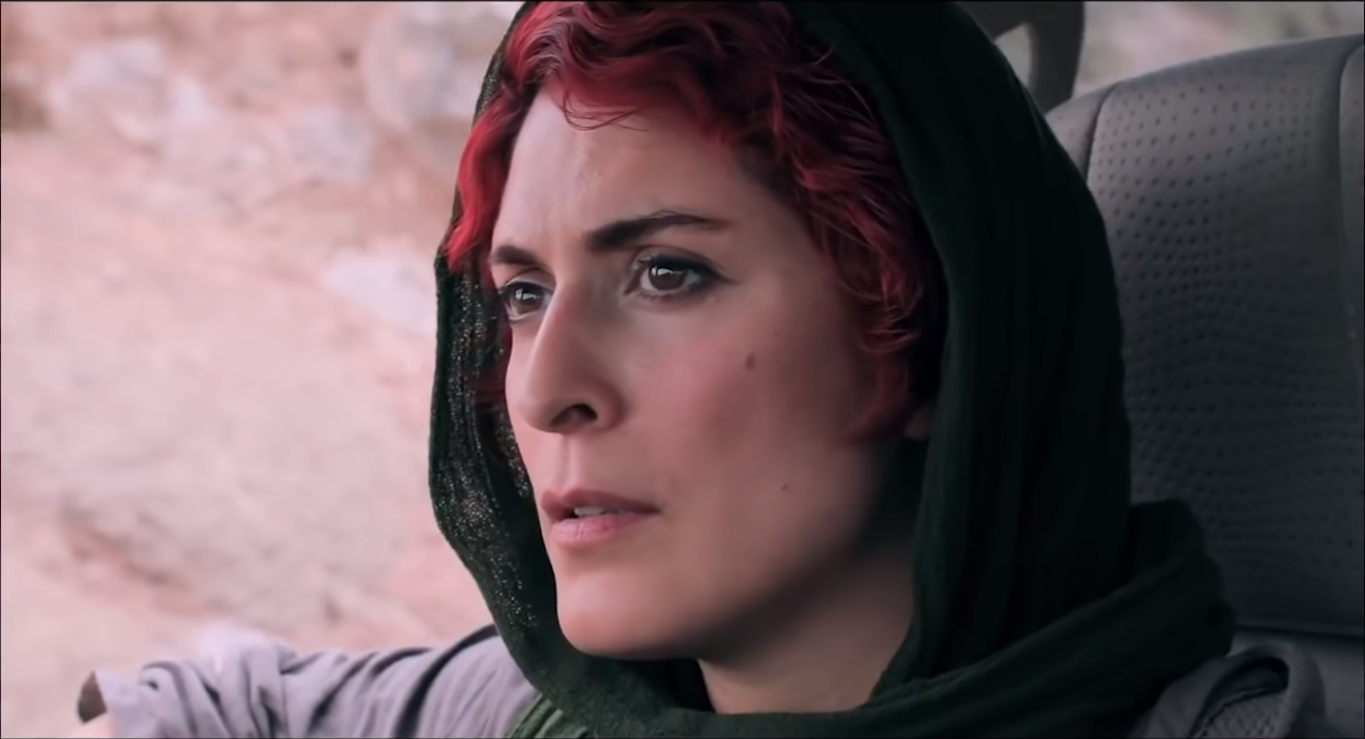
The film follows the director himself and the actress Behnaz Jafari. They received a video message of a young girl commiting suicide in an attempt to get the actress’ attention and help with the consequences of her somewhat progressive lifestyle (she studies in college and is an actress) in her traditionalist village. The three faces that gave the film its title are meant to be the faces of the three actresses in the film. The young girl that sent the message, the middle aged Behnaz Jafari and an old lady that they meet somewhere in the middle of their journey into the village. It is shot at the same location that many of Kiarostami’s films were shot, and has a lot of direct references to some of his most famous work, including the devastating ending of Taste of Cherry (1997) mirrored in the somewhat crazy old actress’ actions.

3 faces 1.pngBehnaz Jafari

As are the other films of the director since 2010, 3 Faces is a politically charged work. Panahi seems to extend his views on femininity, generational issues and religious catharsis from his other films. In this aspect, Panahi’s work seems to resemble another Iranian director that seems to be forgotten when talking about Panahi, that is Mohsen Makhmalbaf. In some of his films, of course considering Kiarostami’s influence on them as well, Makhmalbaf utilized too the fluidity between documentary paradigms and preconceived narratives to approach certain political issues – see for instance Kandahar (2001) and how it deals with the uprising war, or A Moment of Innocence (1996) and how it works with morality issues inside small communities. In the same way Taxi or This is Not a Film (2011) worked, this new film utilizes its meta elements to the fullest in order to reach the level of realism it does. It does not even shy away from going further into many other debates, much like Kiarostami’s Close-Up (1990) when it comes to the debate about the power of film and the influence of art in an oppressed society.

Despite not being as original as a film like Taxi was, Panahi seems to make a proper tribute to his masters. The debate topics of Makhmalbaf in 2001 or Kiarostami in 1990 are not the same the ones being discussed in Panahi’s contemporary cinema. Even if going as far as utilizing diegetic elements of the voyage or other direct elements of these other director, the final product is still original and relevant. There is a blend of a seemingly ascetic scenario with traditional but poetic use of framing and editing, and with a real sense of pathos that transcends the otherworldly level of cinema into real life (with a knowledge of technology and modernity that remembered us of other directors that utilized modern elements to their most real, like Michael Haneke in Happy End (2017) ). This mixture of techniques combined with the poignancy of Panahi’s assertions is hard to criticise and all of it definitely works.

3 faces 3.png

One of the most important things to take from a fictional film like 3 Faces is its sense of realism. Despite working will milions of elements and influences that are somewhat hard to keep track of, the film puts them together in a way that every frame drools a sense of what’s reality like in Iran, but even goes further in globalizing Iran’s problems. How do we deal with our professional lives, how do we deal with deceit, how do we deal with time and how do we deal with rules. What is the role of God, and does godliness ends when humanity starts to fade. These are some of the things that are hard not to think of when we see a film like Panahi’s. Much like the main idea from his 2011 film we are once faced with the fact that a film is a representation of life. Not only that, but the final product of this representation is alarming, not only because of what’s happening in some Middle Eastern countries, but because of the true universality of these problems.

7 out of 10

Cat People (1942)

Directed by Jacques Tourneur

cat-people

“Let no one say, and say it to your shame / That all was beauty here, until you came.”

This week on Camera Coverage, after an unfortunate but necessary hiatus, we take a chance at yet another Horror Classic. This time we discuss one of RKO’s ultimate, but sadly forgotten classics, Jacques Tourneur’s Cat People. We often associate suspense films of this era with Alfred Hitchcock, and rightly so, but Tourneur is a French director that utilized the techniques of the afforementioned director to a new height in his Hollywood career. Despite being associated with B-movie fair, Cat People presents classic horror cinema at its best. There is a creature, there is melodrama, there is symbolism and there is masterful use of archaic techniques in order to portray (or not) all these cathartic elements.

The film plays with the character of Irena Dubrovna (Simone Simon), a Serbian fashion designer working in New York. Right from the beginning of the film we are introduced to her future husband Oliver Reed (Kent Smith), who’s relationship with will be the main focus of the whole film. Irena has a unsettling past and is afraid that some legends from her village in Serbia are true and inside her. Stories of witches, kings, witchhunters and, of course, cat people, live within her as she expresses her anxieties of the possibility of all of it being true. This will lead to a troubled marriage, in which physical contact is inexistant, and the insistence of another woman inside the relationship dynamic will be the key factor for Irena to release the panther within her.

the other woman cat people.pngAlice as, in a genre bending role, The Other Woman, a New Yorker intruding a troubled marriage between a Serbian (Irena) and an American (Oliver).

All of this is quite literal. Irena seems to really release, or rather transform into, a panther by the third act of the film. So what makes the film so fascinating despite its somewhat cheesy premise? Well, what could have turned into a really awkward puppet and silicone fest is dealt with incredible subtilty. Tourneur’s cinema uses shadows as one of its foundational elements. This is essential to a film working with metamorphosis as is Cat People. The idea of transformation is never portrayed directly onto the screen, but suggested. I believe, as many others do, that Tourneur utilized heavy indexicality mainly because of the somewhat low budget of the film. That said, when working with abductive imagery he manages to elevate the film not only in terms of ambiguity, but also in relation to films that utilize top-notch special effects but sadly do not hold so well nowadays. It must be noted and observed that this technique is not reduced to editing and cutting the scene when transformations are due, but there is a work of suggestive imagery throughout the whole of the film. From images of Irena with paintings of menacing cats in the background, to juxstaposition of her body and a reproduction of a statue of Anubis, to the crossing of Irena’s figure and the shadow of an armchair giving her some sort of cat ears. One of the key scenes works with Irena’s footsteps quickly silencing as she is chasing Alice (Jane Randolph), as we must only assume that her feet transmorphed into the silent, deadly paws of a black panther. This film represents the use of cinema’s rhethorical means at its best, using not only the resource of image and visual representation, but going as far as utilizing sound to its most effective.

game of shadows cat people.pngAnother example of suggestion – in this case premonition – of a scene through shadows and objects. If you look closely you can observe the shadow of the bird and its cage projected onto the black panther image, predicting what would later happen in that scene regarding the bird’s death.
One can love a film by its technical prowess, but what does it all really mean? Well, Cat People does not shy away from ambiguity. This is not only due to the decisions behind the technical aspects of the film, but also due to the broad themes that the film is dealing with. Probably the most clear readings of the film lay on the problem of sexuality, femininity and relationships as a whole. There is a clear suggestion throughout the whole film of Irena’s fear of touch, even though she is already married and social or even religious judgements are not an issue. This woman is dynamic in the film, as she can transform into a menacing beast that is awaken by the overextension of male activity in the world that is her own – this is, sexual intercourse regarding her own body. But what about her Serbian identity? The reading of the film as a cultural collision is another interesting perspective by which we can approach Cat People.

Despite all these possible perspectives on the film, its ambiguity and blank spaces should be respected and perceived as such. This is a film that is simultaneously meant to be enjoyed and discussed, but never reduced to x or y perspective. By trying to limit the film’s readings (there is an immense focus by critics in accessing the film with the perspective on sexual anxieties), we tend to leave its essential element of identity that it is dealing with. More than a woman or a Serbian, Irene is an individual trying to defend her individuality when in necessity of interacting with other individuals. Whether Irene is a cat person or not we will never get to really see, but what we get to see is that Irene is as human as she can as she tries to survive in our inherently intrusive world.

Lords of Chaos (2019)

Directed by Jonas Åkerlund

poster1

“I thought you were true Norwegian black metal.”

Jonas Åkerlund is a film director first known for being the original drummer of the Extreme Metal band Bathory and then breaking out of the band to pursue his career on the direction of music videos, beginning with Heavy Metal bands like Candlemass and later with more famous artists like Moby, Robbie Williams, and even Beyoncé. Despite his videography being arguably the most significant part of his work, before (and after) Lords of Chaos Åkerlund made several films like Spun (2002), Small Apartments (2012) and most recently Polar (2019). Being a fan of underground music and even Black Metal music, the sole apparition of a film like Lords of Chaos greatly spited my interest, and being the responsible guy behind the project a legend like Jonas Åkerlund (and despite knowing his work on music videos, at the time of the announcement of the film I had no idea of his other cinema work) I was more than excited to see the film. This was before I started seeing images and clips from the film’s release at the 2018 Sundance Film Festival, and watching the most recent of his films Polar (2019). After seeing this I was worried, and reasonably so.

2.png

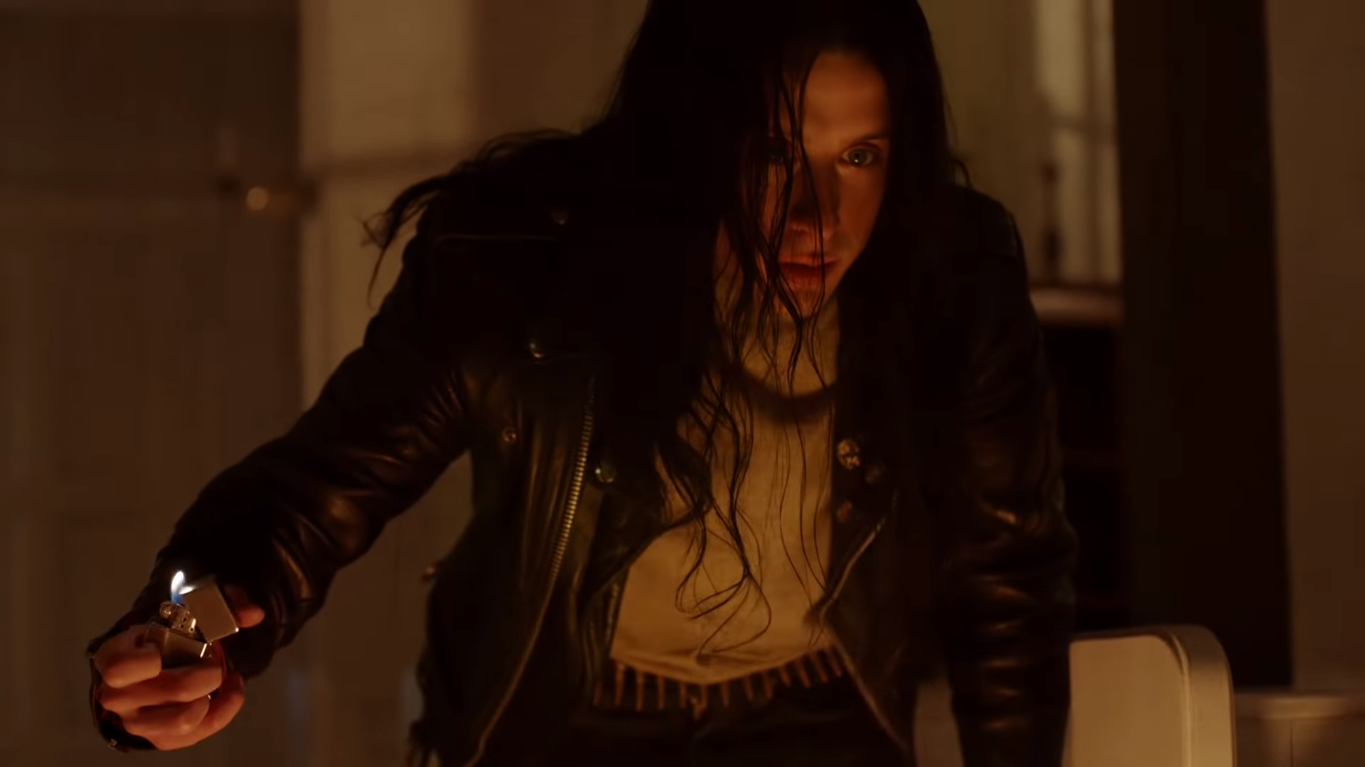
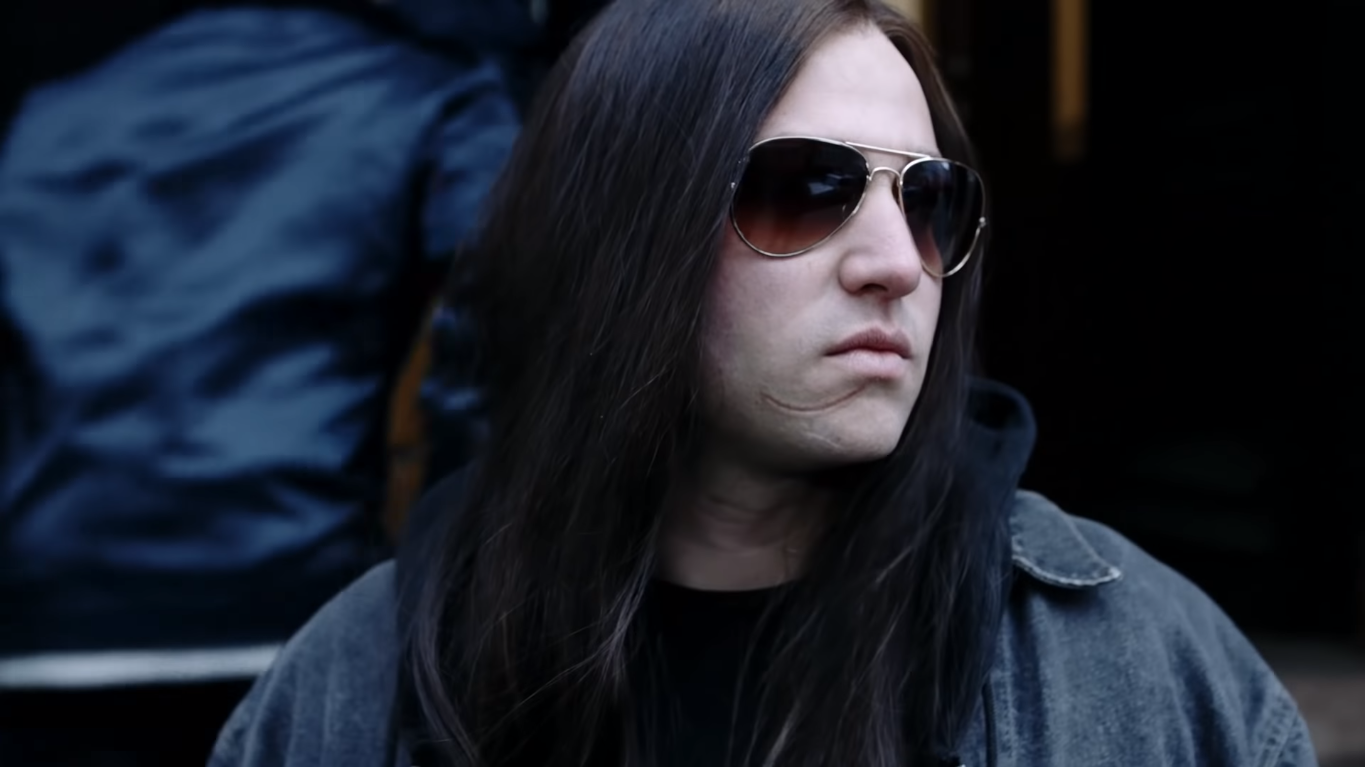
Lords of Chaos is based on the book by the same name, a work that is incredibly controversial on its own for problems regarding truth, romantization of facts and political stances it depicts. The book is based on the infamous stories of the Norwegian Black Metal scene in the late 1980s and early 1990s, and particularly the stories of Euronymous, Varg Vikernes and the so called Black Circle. The film follows the most controversial of these events: the murders, the suicides, the church burnings. It creates a lot of weird scenes that are just there for the sake of it as well. Things like a romantic subplot, sex-related gags and some of the cringe-worthy exaggerated conversations I’ve seen in any representation of an Extreme Metal or Punk scene. As you may well know Euronymous was murdered by Varg Vikernes, and this being the main event of the Black Metal scene in Norway together with the terrorist attacks on churches it created so much controversy that made this extreme genre of music tainted until this very day, being the perfect story to sell at the box-office apparently.

If we step aside from the personal bias with this genre of music and these stories, it does not help the film at all. The final product of Jonas Åkerlund’s work is fundamentally flawed like many of other films that try to depict an event of recent history. There is an obscene sense of disrespect for the dead in the film, more noticeable than the mere disrespect for the story and Black Metal in general. Euronymous is here depicted as a stupid teenager wimp that thinks he is “trve” but is actually a “poser” and Varg is depicted a “poser” that is actually “trve”. In subverting these “scene concepts”, Åkerlund manages to show on which side of the story he is and his criticism in a way that is theoretically interesting. The problem is that he lacks sensitivity with the characters, being way too predictable, and reducing the characters to a Hollywoodesque level of plastic that feels atrocious and offensive even to the ones that are not knowledgeable with the real facts depicted in the film. In the beginning of the film the director puts out a sentence on the screen saying something like “Based on Truth, Lies and What Actually Happened“. He almost used this to an interesting extent when mixing up all the myths in the dream sequences of Euronymous, but he fails, because in actuality what the spectator feels he means with this is that he does not care a single bit about the real story and the Black Metal myths and just wants to poop out a discardable bag of chips.

1.png

Technically it is awful as well. Despite not relying on a predictable shot/reverse-shot structure, the music video style he uses instead does not bring anything to the table that feels in any way authentic or aesthetically pleasing. He also goes for this snappy style of directors like Adam McKay, that combined with the fake, “edgelord” kind of stylization only makes the film stink even worse. Maybe I am privileged in the selection I make to the films I watch, but Lords of Chaos is probably the worst film I have watched in months, even worse than the insidious mess that was (his John Wick remake) Polar (2019). Not even the casting looks legitimate and for the most part the actors do not do a good job. Something as simple as the special effects and the depicted violence feels too exaggerated and silly as well, and I will not even comment on what they did with the soundtrack and especially the Mayhem songs. There are no redeeming qualities to Lords of Chaos whatsoever, and being someone with the background of Jonas Åkerlund the man behind this project, it only makes us feel even closer to the post-capitalist cinematic apocalypse.


1.5 out of 10

Knife+Heart (2019)

(original title: Un couteau dans le cœur)

Directed by Yann Gonzalez

knife+heart poster

“She saw so many gay flicks, she thought she was a fag.”

Yann Gonzalez is a French director known for his feature film You And The Night (2013) but mostly because of his many other short films. He is especially well regarded in the LGBTQ+ community for his preference on themes regarding sexuality and gender politics. Having won many prizes and nominations in important festivals like Cannes Film Festival, he is one of those directors to be watching out for if you are interested in art-house films of the new era. However, we feel on Camera Coverage that this new feature from Gonzalez is pretty much a mess, it is not without some singular scenes that are incredible, but it is indeed a bit of a mess.

The film follows Anne (Vanessa Paradis), a gay pornography film director, in her quest of filming her new feature that seems to be more bold and adventurous than her previous. This brings us close to the character and her relationship dynamics with her film editor Löis (Kate Moran) and her dealing with alcohol addiction. From the start we know that the film has as a main plot a giallo-esque story, with a serial killer that seems to be targeting the actors from Anne’s films. The connecion between the killer and the actors is left uknown until the end of the film, where we are bombarded with a traditional plot-twist from the great classics of the genre.

print heart+knife 1Vanessa Paradis as Anne

The film plays along the lines of what we may consider the supernatural giallo, especially in its first two acts. The relationship between Anne’s vision of her new picture and the killings is meant to be perceived, but sadly, with its ending, we are left hanging in the understanding of this relationship. Throughout her journey we are faced with many surrealist images that are traditional in these giallo films and Italian horror films of the 1960s and 1970s, but they seem to add little to the unravel of our characters quest. It is clear that there are many diagetic layers on Knife+Heart, but after seeing it and thought of it for a week I still feel that they are not only disconnected, but they are sadly disconnected, as most of them are individually incredible and contain a lot of contrasting and formally complex ideas working on a deep semiotic level. The insistence on creating a traditional giallo in structure does not work in the film as much as it does visually, and it lefts the viewer confused, frustrated and cheated.

Vanessa Paradis is one of the actors in later years that we feel, as lovers of photography in general, that has one of the most unique faces. The characterization of every character in the film, especially her’s, is incredibly stylized and works well comparing to the other aspects of the film. The whole visual aspect of the film is undeniably great. It works as a cool throwback to the films of the genre, but it works as a singular piece as well, despite its insistence on weird black and white thermal images when depicting dream sequences. However, even at the technical level (image and sound) Knife+Heart is not the best throwback to the giallo, particularly if we consider the incredible films that made reference to the genre we have seen in the last few years (like Berberian Sound Studio (2012) and Amer (2009) ).

black and white dreams equencesOne of the dream sequences

Falling short on others to describe the film, it feels disapointing. The director has achieved greatness with some of his short films (notably Les îles (2017) ), but this time he completely misses the target. Despite arguably being one of the films that are a throwback to the afforementioned genres that more truly incorporates not only the visual aesthetics but the structure of the giallo, it fails on creating a compelling experience by being too overwhelming and obtuse with its symbols and parallels. I feel that some of this may be due to how random some of the events in the film are, and the discrepancy of vibes in it. The play of the director regarding the meta aspect of the film (the films inside the film; the dreams inside the film; the dreams that are the film; the relationship between director and editor, etc) is interesting, as are the mirror images it tries to make with its individual scenes. Sadly it does not keep up with its promises (especially its depiction of the theme of obsessive and corrosive love) and mostly is an insatisfying experience, that while being really extreme and poignant in the depiction of a community and a genre of filmmaking that is really underapreciated and not valued as it should, it leaves the spectator feeling that it is a mere exercise in shock value and pretentiousness.


3.5 out of 10

The Ballad of Narayama (1983)

Directed by Shôei Imamura

narayama 1

“Our ancestors have gone to the summit for hundreds of years as we do now. 25 years from now I will go there too.”

Created by arguably one of Cannes Film Festival favorite directors Shôhei Imamura (with 5 times Palme D’Or nominations and 3 wins, including on this particular film) this work of his moves the viewer with its whimsical characters that can quickly twist the mood of the film from a light family comedy to a shocking, grotesque depiction of the life in a 19th century Japanese village. The socially poignant Japanese director does not miss his selected target with The Ballad of Narayama, but even surpasses his signature social cinema and elevates the story to a state of fable that despite not being as stylized as the 1958 version of the film, is way more cinematic and even accessible to the Western audience.

Imamura created complex dynamics introducing the viewer to really well-developed characters in a warm family environment and juxtapose this familiar warmth with the rough systems and values that guide village life. The film follows the life of a family in which every member has some unsolved problem. The main plot point of the film is that the old matriarch of the family Orin (played delightfully by Sumiko Sakamoto) is getting old, and there is a tradition in the village of ubasute. Being her the main stabilizer of the family, the film follows her solving her family’s problems while preparing, without the family’s approval, her departure to the mountain.

narayama 4.jpgSumiko Sakamoto

When asked about the story Imamura joked he initially thought about starting the film with a family taking their old grandma to a nursing home up a hill in modern Japan and then showing up the title screen saying The Ballad of Narayama. This says a lot about the intentions of the director when creating the film and presenting yet again this particular story. This work goes a step further than other films that go for this type of commentary. It ends up being way more shocking in, for example, a scene on justice against a family that stole from another family’s house, than in the film’s inevitable ending. It goes beyond its original source material (being it the 1958 film or the novella) and does it in a well accomplished manner, in which apparently scenic shots of animals (rats eating snakes and snakes eating rats, for example) and the environments say a lot more about the plot itself than its charming characters may initially transmit. Having this said, pretty much everything, from the music to the framing, works diagetically in Imamura’s film. And more than that, everything stands individually as a great element to the film. As any of his films, The Ballad of Narayama is visually striking, even more so than something like Vengeance is Mine (1979). It has a visual finesse of some of his most iconic later work like The Eel (1997), another one of our favourites from Imamura that could have easily made the list.

narayama 3.jpg

Despite being better known for his 1960s films, Imamura is a director that we will probably have to revisit another time on Camera Coverage, as for his later work goes above and beyond, in our humble opinions, than what he had previously worked on. In a world where directors like Ken Russell work political cinema and are tremendously poignant in the cinematic conversion of their ideas, we have Shôhei Imamura that is way less known in the West but goes above and beyond any of his political statements and manages to touch much more fundamental problems of the human existence. Even if he was adapting a novella or even adapting the 1958 version of the film, he managed to put as much of his signature social grit and social realism as poetic and lyrical value, all rounded up with an extent use of cinema’s potential. This is how you do an adaptation of a book. This is how you do a remake.

Bibi Andersson || Persona (1966)

[Directed by Ingmar Bergman]

1.jpg

Earlier this week we have been braced with the devastating news of the death of the legendary actress Bibi Andersson. She is best known for her long collaboration with director Ingmar Bergman with whom she had made approximately twelve films. Andersson is responsible to the introduction of Liv Ullmann to Bergman, and therefore responsible for what is one of the most legendary collaborations in the history of cinema. Even though the spotlight is often on Ullmann, Bibi Andersson is the original muse of the director, and works as a strong homogenous figure in Bergman’s early work, only later her figure being noticeable as a “lighthearted” contrast to what was the “severity” of Liv Ullmann, especially on the masterpiece that is Persona.

Every film lover knows Persona. But it is also true that no one can truly deconstruct and interpret the film in what may be considered a “right way”. This is a film that is meant to work on a level that differs from our usual cinematic experiences. Most of this is due to the way both characters interact and the work of metamorphosis between the two. While, as mentioned before, Liv Ullmann plays the patient, an actress that is both austere and troubled, Bibi Andersson plays a deeply humane but also troubled nurse. While both performances are incredibly layered and dynamic, we are mostly guided by the eyes of nurse Alma in her quest to heal Elizabeth Vogler, that quickly turns into a therapy for her own troubles. The humanity and sincerity of Andersson’s performance brings to the film something for the viewer to relate to, something that is essential for Bergman’s work to function correctly in order to not transform into something completely obtuse and abstract. She is the perfect counterpart that bridges the complex states of mind and the complex artistic pretensions of the film into our everyday lives, creating in the end one of the most unheimlich experiences one can have with a film.

Bibi Andersson is the light of our everyday lives fading in the world of Bergman’s cinema. She brought reality and sensibility to films that would feel too cold and distant to be as relevant as they are today. This week we lost one of the big faces of Swedish cinema, and she will surely be remembered as one of the absolute icons of the history of film. We leave a list below of our favourite films she made part of. Bibi Andersson will not be forgotten.

The List:

Sommarnattens leende [Smiles of a Summer Night] (1955)
Det sjunde inseglet [The Seventh Seal] (1957)
Smultronstället [Wild Strawberries] (1957)
Djävulens öga [The Devil's Eye] (1960)
Syskonbädd 1782 [My Sister, My Love] (1966)
Persona (1966)
Flickorna [The Girls] (1968)
En passion [A Passion] (1969)
Scener ur ett äktenskap [Scenes from a Marriage] (1974)
An Enemy of the People (1978)
Quintet (1979)