The Wild Pear Tree (2019)

(original title: Ahlat Agaci)

Directed by Nuri Bilge Ceylan

wild pear tree 1.jpg

“Everyone has their own temperament. The thing is being able to accept and like it.”

The “new” (premiered in 2018’s Cannes Film Festival) film by the critically acclaimed Turkish director Nuri Bilge Ceylan is again a huge work in size. And again, Ceylan presents us a massive picture that feels even more entrancing than his previous film Winter Sleep (2014). The similarities between both films are obvious, as they both tell stories of writers. However, The Wild Pear Tree is way more accessible than Winter Sleep (2014) and more irreverent at the same time. Sadly, it does not quite hold up against the director’s best (most notably Once Upon A Time In Anatolia (2008) and Distant (2002) ), following some of the same small issues present in the 2014 film. This is, however, not a reason to dismiss the film, because even a lesser Nuri Bilge Ceylan film is still a way more interesting experience than most.

wild pear tree 3.png

The filmography of the director is notorious for having two specific characteristics: he is one of the big names associated with the so called “Slow Cinema”, and his films are incredibly wordy and verborraic at the same time. In The Wild Pear Tree this last characteristic is even more noticeable, with the “slow” and transcendental aspect feeling that it was put to side, and, when exercised, feeling a bit forced and out of tone. The film follows Sinan (Dogu Demirkol), a young writer that has finished his education to be a primary school teacher like his father. He is also working on publishing a book he wrote, and most of the first part of the film follows his struggle in finding money to be able to do it. This is the main situation we are presented with the main character, but the film, since the beginning, has an intense focus on the relationship between Sinan and his father Idris (Murat Cemcir), who is a man caught in a downward spiral of gambling and unmesurable debt.

Despite the film mainly following Sinan and his interactions with many of the townsfolk, and even a famous writer, it is on the father-son dynamic presented that the film truly shines. The character development of Sinan, while honest and relatable, is never biased in trying to depict him as a truly well-meant individual at all. His father is depicted with some really harsh situations as well. However, their personalities are completely different. The evolution of the story is one that is settled on the idea that both these characters are antagonistic, and ends with the most incredible note of transcendental family bonding energy that completely disrupts all the insistence on creating such opposite characters.

wild pear tree 4.pngIdris, a truly incredible performance by Murat Cemcir

The problem with The Wild Pear Tree when comparing it with other Ceylan films is that this time Ceylan feels that is touching on much more coloquial and generic themes, and unsuccesfully trying to elevate them all at the same time. It is a weirdly paced film, with scenes that range from the themes of death and religion to relationships and love, sometimes presenting them with no apparent connection to each other. Sadly, it also doesn’t always succeed on being truly poignant in the portrayal of a lot of these themes, with the noticeable exception being the depicted problems regarding family dynamics. The film being dialogue driven does not help it in achieving the poetic intensity of his previous films as well, despite turning the film into a more enjoyable and quickly relatable experience to the viewer. It makes some of its scenes feel like they are too predictable, and some of the “funny moments” in the film feel odd in the overall picture. The idea of quickly cutting scenes that are supposedly happening in the characters minds or in dreams do not always work as well, and do not go well at all with the also stylistic and expected “slow” style of the director.

wild pear tree 2.png“Someone once called time a silent saw. You never know what it’ll do to us.”

That said, the conclusion of the film will leave you with unforgiving anxiety. Ceylan shows us with scenes like these why he is one of the most lyrical filmmakers out there, despite sadly going off the rails in The Wild Pear Tree. The odd pacing of the film is distracting and almost unforgivable to a director that already made so many great things. The visual aspect of the film is top notch, especially the scenes in winter time, but even regarding this, sometimes the digital camera seems to not be able to capture as well some of the scenes as it should. The soundtrack is unnexpectedly great and one of the best yet in his filmography. However, while not being as problematic in some of the aforementioned aspects as Winter Sleep (2014) was, The Wild Pear Tree is still not the hyper comeback we were expecting, despite having one of the most cathartic closures in any of Ceylan’s films. It is a frustatingly imperfect film with a lot of incredible singular scenes. But for some of those scenes alone and the incredible depiction of the relationship between Sinan and Idris, The Wild Pear Tree is still a film to look out for.


7 out of 10

Antonio das Mortes (1969)

(original title: O Dragão da Maldade contra o Santo Guerreiro)

Directed by Glauber Rocha

antonio das mortes 1

“Fight with the strength of your ideas. They are more worthy than me.”

Glauber Rocha was the leading figure of Brazil’s Cinema Novo (New Cinema) movement. This period of Brazilian cinema is characterized by it being deeply influenced by the subversive nature of the Nouvelle Vague and the social consciousness of Italian neorrealism. Considering the importance of this movement, and the importance of Glauber Rocha especially, to the cinema that followed it, I decided to pick what is probably one of the most iconic and highly acclaimed films from this period, Antonio das Mortes. This western-ish film is a prime example of all the characteristics of the movement. It displays the deep passion for the art form and a clear and unashamed political statement that, despite being more relevant considering the socio-political situation of Brazil at the time, pushes its universal themes higher. Also, if we consider the current political scenery in the country, we can quickly find some of the more universal statements of the film surprisingly poignant to a public inside and outside of the contemporary realities of Brazil.

The situation presented in the film is the hiring of Antonio das Mortes (Mauricio do Valle) to help some businessman to get rid of the cangaceiro bandits. As a mercenary, and together with his association with the villainized land owners, his quest for cleaning these lands leads him to a revelation of who is in need of real help. The main idea in the film surrounds this realization of Antonio das Mortes’ identity. This translates into a realization of his national identity and his spiritual identity. Glauber’s film is filled to the brim with cultural (especially religious) imagery that is notoriously Brazilian. The path he walks fights the evil tendencies of capitalism in the country and the protectionism that was due to the military dictatorship that was in rule during the film’s release.

2

The political inclinations of Glauber’s work are easily observed, and Antonio das Mortes is no different than Land in Anguish (1967) for instance. Marxist belief is crystal clear in the film’s presentation. However, having that said, the fundamental questions proposed in Antonio das Mortes show that there was a resistance to the opressive government of the time. One could say that Glauber’s ideology is näive, but the intensity of his imagery regarding cultural identity give the film a surrealist and almost transcendental feeling that go beyond the political statement it was presenting in 1969. Juxstaposing it with an interpretation of the traditional Western film tropes (one could say that the cangaceiros in Brazil are almost like the cowboy mercenaries in the US), the director is creating an incredibly cathartic experience that has a lot more to say regarding the true singularity of Brazil’s cultural life than just overlapping the film’s plot with politics.

The essencial marxist dilemma of this particular film is that there are those who own and those who do not own. Facing this situation, Antonio has to make his decision on who to help, as he does in the film’s remarkably poetic ending. This decision has a lot more implications that it may seem at first, though. By helping the ones in need, Antonio as a mercenary is liberating and delivering to these supposedly “digressive” people what was taken from them, in an almost Robin Hood-esque fashion. By doing so he regards the beautiful exotic distinctiveness and individuality of the ‘real’ Brazil over the bourgeois corruption of the masses represented in the film as the businessmen.

The film’s plastic aspect contributes greatly to its themes. The soundtrack in the film is mainly illustrative, adding an almost Greek chorus-like element to the whole piece. Visually it may be regarded as exotic, hyperbolic and exaggerated. However, the insistence on the Western tropes together with their metamorphosis with Brazilian imagery show how Glauber’s care for the representation of this foundational and almost spiritual Brazil transcends the film’s plot.

3

If you are into foreign films that feel truly foreign, that feel truly exotic and culturally different, then Antonio das Mortes is a must watch. I tried to make justice to the film, and tried to avoid the possibly distasteful analysis of the film’s politics, but this is a work to be experienced. It is as real and poetic as you can get from a country that is in a dire need for some sort of rehabilitation of tradition and identity in the best possible way, as much as it is in need of a recovery of some of the values that Antonio finds throughout his journey.

[ I am sorry for the bad quality of the still pictures, but I was unable to find a better print of the film. ]

Agnès Varda || Les plages d’Agnès (2008)

[Directed by Agnès Varda]

2

The past 29th of March braced us with the sour news of Agnès Varda passing away. A woman that changed the world of cinema so much should not go away dismissed by Camera Coverage. With that in mind I decided to write a small text on how much she meant to us cinema lovers and art lovers based on her autobiographical film The Beaches of Agnès.

In this documentary we see exposed the soul and will behind an incredible individual in the world of the French New Wave, something which we hope to find a lot more in her upcoming picture Varda par Agnès. By going through some of her past films and experiences in the world of art, we are able to go a step deeper in understanding the artist behind them, and never forget that the power moving those pictures was coming from a deep love for the emotions of art. Despite it being an autobiographical film, it is surely full with nods at experimentation. Any fan identifies the personal touches of the director and her whimsical idiosyncrasies. Varda is as expressionistic as ever, with her infamous atittude of being intoxicated with the mere act of living, with poetry and with the romantism in everyday life is as strong as in any of her later films. It is not necessarly the best film to start if you are not familiar with the director and the French New Wave movement, but it is tear inducing if you are an experienced viewer and lover of the excentricities of the its directors.

Varda is the joy of French cinema impersonated. Her last films had the incredible quality of the first, leaving the viewer enchanted by a woman full of life and full of will to live. A truly inspiring artist. In a world where the severity of Goddard and the ‘filmism’ of Truffaut are (wrongly) on top, she finds a perfect spot in the heart and soul of men. Innovative, magical and artsy in the best way possible, all of us want to be a little bit like Agnès, and are grateful to be blessed with so much work from her. The cinema and photography of her work shine bright enough in our world for her to never really fade away. We leave a list below of Camera Coverage’s favourite’s from this great director. May she rest her joyous soul.

The List:

Cléo de cinq à sept [Cléo from 5 to 7] (1962)
Le Bonheur (1965)
Oncle Yanco [Uncle Yanco] (1967)
Documenteur (1981)
Sans toit ni loi [Vagabond] (1985)
Les cent et une nuits de Simon Cinéma [One Hundred and One Nights] (1995)
Les Glaneurs et la Glaneuse [The Gleaners & I] (2000)
Les plages d'Agnès [The Beaches of Agnès] (2008)
Visages, villages [Faces Places] (2017)

Us (2019)

Directed by Jordan Peele

1

“We’re Americans.”

After the massive hit that was Get Out (2017), Jordan Peele kept showing his love for horror and a will to keep on writing new material in the genre. The subtexts and politics of Get Out (2017) were clear and well transformed into a more or less consistent concept. The value of the film was deposited in the dynamic of this transaction of racial politics into the horror film discourse, and by provoking the viewer with suggestive and anarchic ideas (similar to the one’s by Spike Lee). It was a film that worked as a genre piece but utilized its strengths to reach the public and confront them with realities that while terrifying are enlightening. Daniel Kaluuya presented us one great performance, backed by an incredible supporting cast. That is the main thing that mirrors and is enhanced in Us. The performances are well-above average and the film owes its cast a lot for its dynamic between horror and comedy (presented even more extremely than in Peele’s previous).

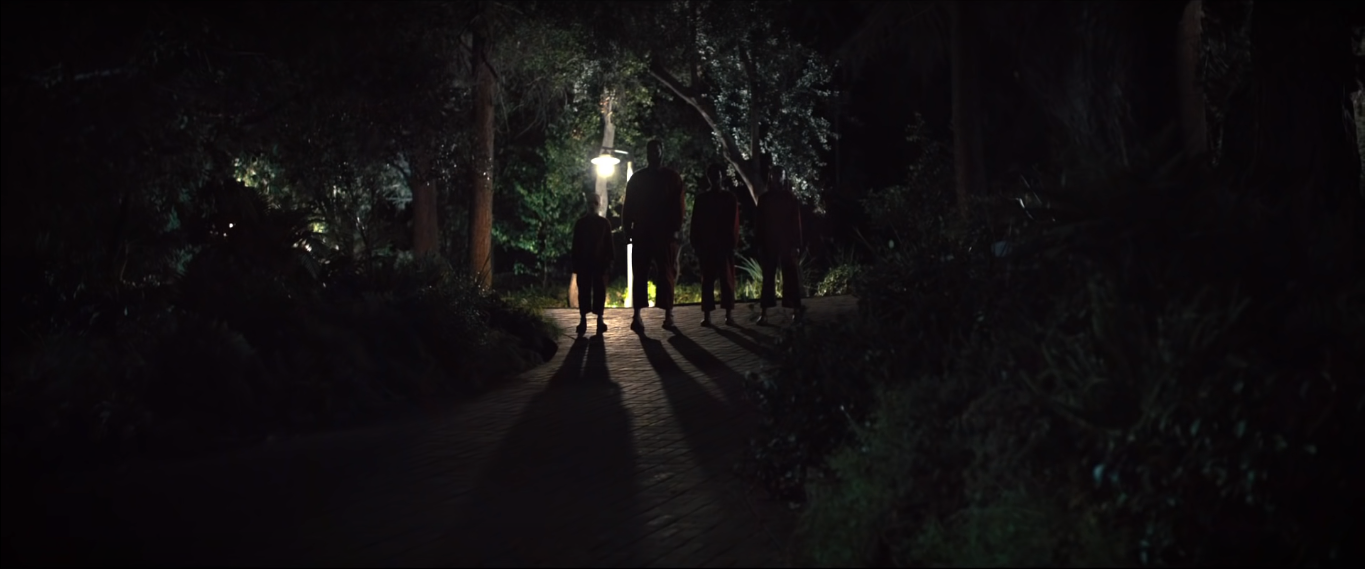
us 1.pngShadows and reflections are essential elements of the film
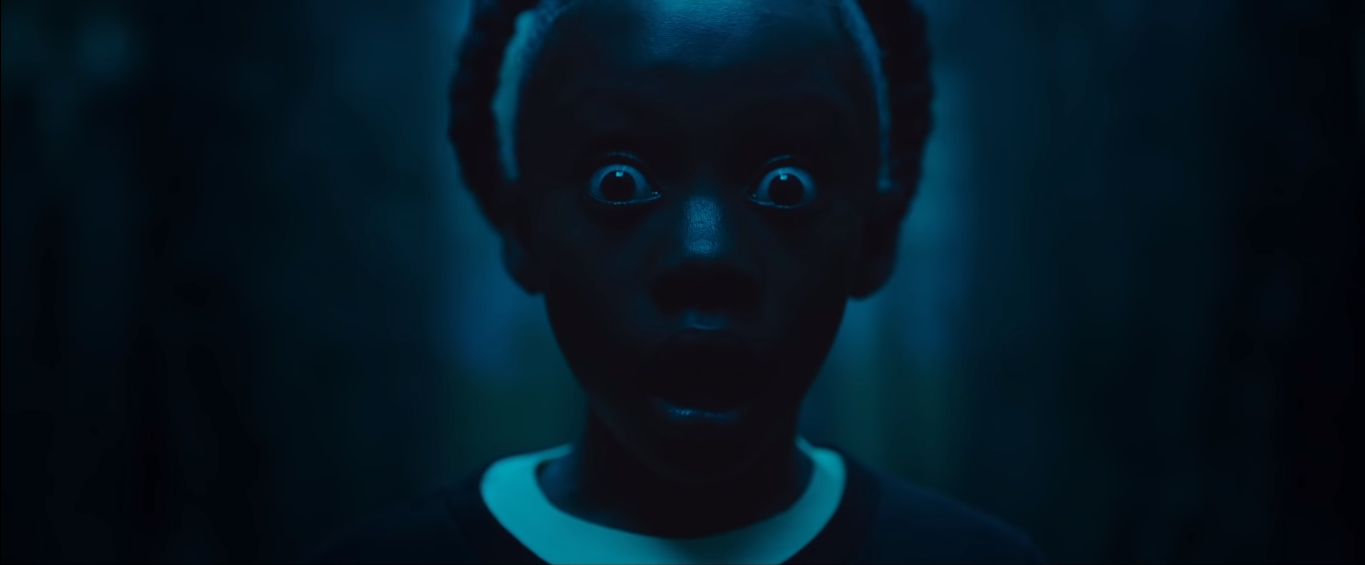
The game of mirrors presented in Us starts right of the bat with the name of the film. There is ‘Us’ and ‘US’, and with that information in mind we can expect the film to present certain political ideas. The problem with it is that most of the times the small scenes are full of certain meanings that contrast with the main concept of the film, creating a lot of room for interpretation, especially considering the film as an exercise in ideology. The best thing about the film (after Lupita Nyong’o’s mesmerizing performance) is arguably how vague its political readings can be. We are teased with the idea of it being a political film with the title alone, and yet the film challenges us to dig deeper to find any consistent concepts regarding its ideas. Despite touching on the subject of racism, Peele’s vision is now aiming at broader issues with Us.

Being a comercial film, it comes with its problems. Some of the scenes in the film are too predictable in its stereotypes. What helps the film to get over these scenes is its usage in an almost metalinguistic cinematic way. Peele knows his horror clichés and uses them in an ironic way briliantly, playing with our expectations and creating genuinely funny moments. As an European citizen it is hard to understand the realities of racism in America (mostly due to our racial prejudices being of a different nature and having a different expression), so probably these complaints at the end of the day are just conditioned by my personal life experience. Having this in mind, Us regards the subject of racism in a lighter way than what was expected, especially considering its main theme. This is not a negative criticism at all, because as I mentioned before, the vagueness of Us adds a lot to any reading of the film, including a reading inclined to the ideas of racism.”

Visually it is more interesting than Get Out (2017), despite being a completely different film. It is creative and intelligent in its visual style, enough to be noticeable when comparing it to other big horror blockbusters. However, it still ends up feeling a little bit flat, just like Peele’s previous did. The use of music is brilliantly funny, and the original soundtrack is really great as well, especially the anthemic track (that reminds me almost of The Omen‘s (1976) soundtrack). Technically it is satisfying enough, never being truly flabbergasting.

us 2.pngThe already iconic shot from Us

By what I’ve said so far one would assume that Us is a brilliant film. But it is not. It is too vague and too self-conscious to be just a commercial film to watch at the mall, and too predictable in its techniques and paralells to be a really serious and innovative picture. One of the things that troubles me the most is that its vagueness translates a lot into meaninglessness, even though it is clear that there was a care in creating a well-rounded plot (in a Hitchockian way) and complete concept. The second thing that annoys me is the necessity to overexplain everything in the end. The “plot-twist” was rather predictable and despite the film having a lot of interesting buried plot points, it leaves a more experienced viewer feeling that the film is being condescending.

This text took into consideration spoilers and I decided to not discuss any of the plot, as it is very fun to watch without knowing what it is about. Gather some friends and go watch it. Probably every person will come out of the theater with a different reading of the film (I read somewhere that a guy thinks that the film is somehow anti-socialist. I highly doubt that though) and it is an enjoyable time in the cinema. Don’t expect too much out of it, but face it with enough seriousness to consider it, as it is clear that a lot of work and dedication went into it. Jordan Peele seems like he will be the new horror genre director to look out for, though.


6 out of 10

Alice (1988)

(original title: Něco z Alenky)

Directed by Jan Švankmajer

40000-alice-0-230-0-345-crop

“Alice thought to herself: ‘Now you will see a film made for children… perhaps. But, I nearly forgot, you must close your eyes, otherwise you won’t see anything.’ “

Jan Švankmajer is one of those directors that is a legend to the lovers of animated films and sadly underappreciated by the general public. In a way it is a disappointing fact, but at the end of the day, stop-motion animation is still a very particular style, and when combined with surrealism and experimental imagery, there is not much left for the casual viewer to incline in its direction. Nevertheless, Švankmajer’s work is an influence to some of the most successful directors in Hollywood, such as Tim Burton for instance. Being a fan of puppeteering and stop-motion, it is hard not to include one of his films in our Classics category, as not only is he a master of the art of puppets and traditional surrealism, but also a great filmmaker that channels his very unique vision with full use of the medium.

If it wasn’t obvious enough, Alice is a film adaptation of Alice’s Adventures in Wonderland, the famous novel written by Lewis Carroll. Despite being very faithful to its original material (even comparing it to some other adaptations, that tend to mix up the novel with its sequel Through the Looking-Glass and What Alice Found There), it does not depict all of the episodes in the book. However, every line in the film (not including the quote we selected above, that is at the very beginning of Alice) is taken directly from the novel. That said, it completely re-reads the novel, illustrating it in a creative and new way. Its style must have been described as truly unheimlich if Sigmund Freud had the chance to watch it. This is mostly because of Švankmajer’s obsession with everyday objects and things that are well-known to us, giving them a life that should not be. Dodgson’s novel is the perfect object to be narrated by Švankmajer, as it is an inheritly playful, ambiguous, psychadelic and metamorphic story. Other surrealists have taken a chance at this novel, but only the odd combination of interests in Švankmajer could result in such an interesting piece.

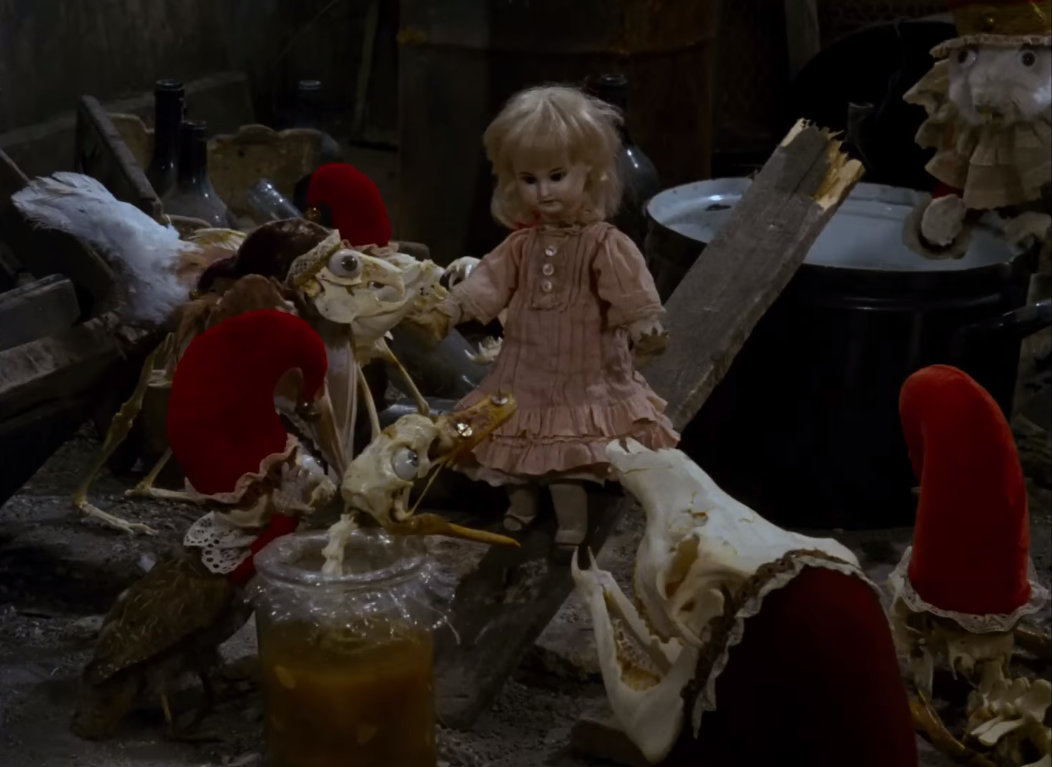
alice 2Alice shrinks into a doll.

By the end of the novel Alice wakes up in her sister’s lap, as she shouts (after growing spontaneously) that all those soldiers were just a “pack of cards”. And in fact we suppose by her sister’s description afterwards that all of her adventures in Wonderland were her background setting fantasized. Švankmajer takes these ideas to an absolute extreme, utilizing animation in everyday objects and artifacts instead of focusing on creating polished fantastical creatures. This creates an incredible textural feeling in the film, something that is common in his body of work. It seems that he knows of the many different readings of the story as well, as his semiotic game (combined with smart editing, framing and cinematic techniques that are not strictly related to the effect of the animation) shows knowledge about the different subtexts of Alice in Wonderland, with a special insistence on its sexual and psychoanalytical readings.

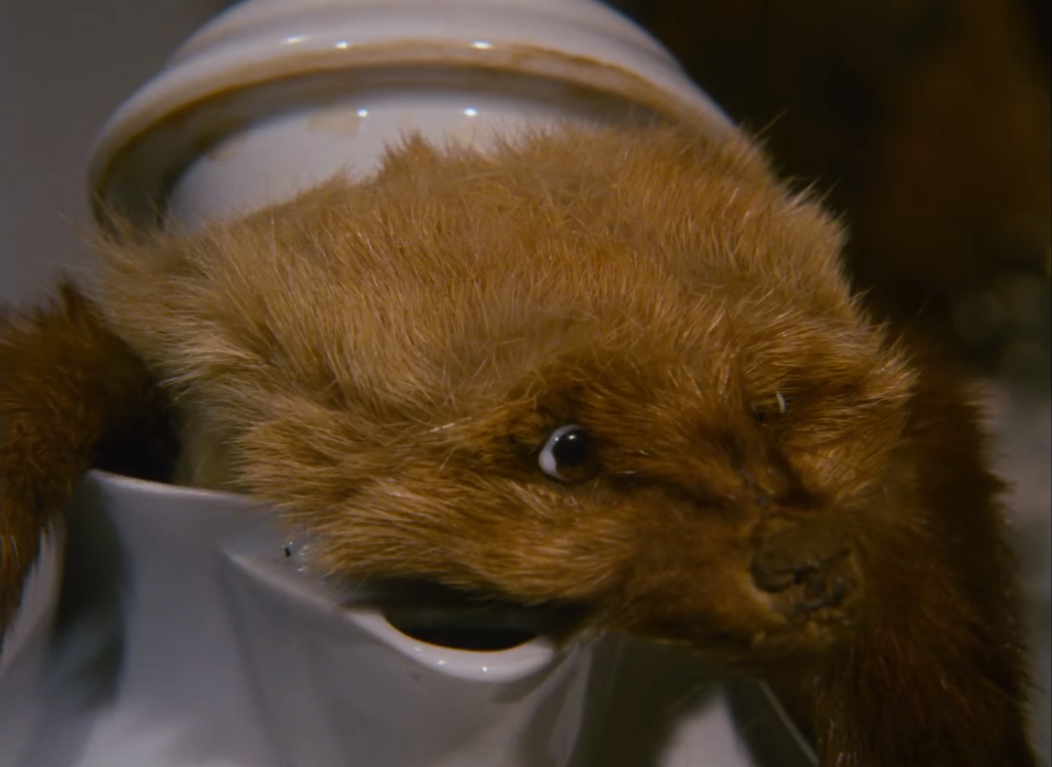
alice 1.pngProbably the most unsettling scene in the film, the infamous tea party.

As in some of his other works (such as Conspirators of Pleasure (1996) and Little Otik (2000) ) we can observe in this work a presence of sexuality in childhood. It is a very subtle and delicate subject, but the honesty and tactility of the director allows these themes to flow in a poignant yet brutal way. The process of coming of age, clear in Dodgson’s original, is a prominent theme in the film overall. The brutal violence of growing in Švankmajer’s version is less evident than in the book, but it burns at a much more deeper level. This is mostly due to the use of the medium of cinema (images and time) combined with the animation and metamorphosis of inanimate objects (especially regarding things like meat and bones, that are a staple of Švankmajer’s, that when back to life create this uncanny feeling of seeing a sort of in-between of life and death).

alice 3.png“Off with their heads!”

Alice is a film to feel and not just watch. As the main character said, it is a children’s film, with the exception that it isn’t. It is, though, an incredible revisiting of a timeless classic. Focusing on the coming of age aspect of Alice, the cyclic nature of the story, the transformations and the perception of the real in human imagination, the film is definitely not for everyone. It is highly stylized, sometimes cryptic and ambiguous and it does not follow an easy narrative for the ones that are unfamiliar with the story. One can’t deny all these obstacles to the big audiences, but it is making it injustice when saying it is not a unique experience that will probably change the way you look at film as an art form and reconsider an old but dynamic and always fresh animation technique.

Gräns (2019)

(eng: Border)

Directed by Ali Abbasi

grans 1

“I don’t see the point of evil.”

Inspired on a novel by John Ajvide Lindqvist (better known for Let The Right One In), Border is one of the films to have a lot of controversy and high regard last year. To it was awarded the Un Certain Regard award at Cannes, and it even managed to swiftly get a nomination to the Oscar for Best Achievement in Makeup and Hairstyling. The controversy is mainly due to the sexual nature of its themes. It is an undeniably shocking film. The usage its shock value is, however, very pertinent. As Let The Right One In (2008), the transformation of Lindqvist’s story into film works brilliantly, combining the already poignant themes present in the words and visually expanding them, something that is even more noticeable in Border, mainly due to the irreverence and shamelessness of the film’s imagery.

The film follows Tina (Eva Melander), a security officer working on border control, and he daily routine. She is not blessed by standards of Western beauty and has a menacing look that works well with her magical power of being able to smell people’s feelings. She lives an unhappy marriage and has no friends other than her mentally-ill father. There are two big changes in her life when she smells a memory card on a passenger’s phone that is full of snuff films and child pornography and on another scene sees a guy that is oddly similar to her and confuses her special sensibilities. These changes lead to two inner plots in the film that consist on one side a detective thriller-like film and on the other a romantic story that leads to Tina’s discovery of her true identity.

border 2.png

Border is a story of fluid bodies and souls trapped in an ordered world. Tina and Vore (Eero Milonoff) are figurations of chaos inside an organized Western society. However, if we consider the sexual nature of the film we quickly understand that there is a political edge to this chaos. Combined with the ideas of social isolation, foreignness and family issues we understand that the new dynamic presented by these two special characters is an amalgamation of every otherness that exists in our contemporary world. So far so great. The problem with the film is that while presenting brilliant ideas, it overly complicates them and by the end it leaves an undesirable odd feeling to the viewer. Of course this ending can be read as an anarchic solution to the aforementioned themes, or even as a following to the mythology presented half-way into the story, but never does it feel as smooth as expected. Comparing it to something like the ending of Do The Right Thing (1989), for instance, it feels really off considering the way the plot devices work beforehand.

Technically it is a decent film. It never does something that is not expected from an ultra-realist style film. Sometimes the camera seems to be too shaky, and even nauseating at times. In other scenes, the fast movements of the camera and all the shakiness contribute greatly to the inner beauty of the film. The original soundtrack is very enchanting and is really on the same page with the tone of the film. The make-up effects are pristine, as is Melander’s performance. I would say Eero Milonoff’s performance is never up to par with Melander’s, and sometimes is not even really good at all. But then again, that is never a big problem (even if combined with the shaky camera aspect of the film) if we face it with the originality and boldness of all the other decisions surrounding it.

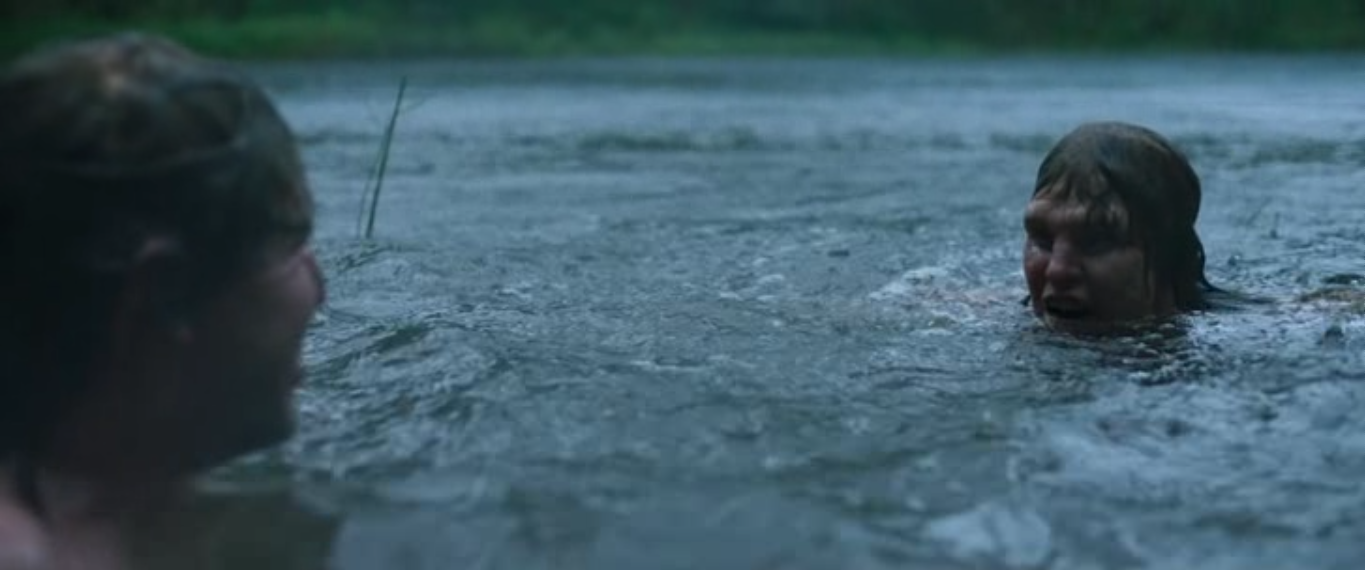
border 4.pngOne of the great visual moments in Gräns
The reason I was not a big fan of Let The Right One In (2008) is probably the reason I am actually a big fan of Border. It is a consciously awkward film, one that is aiming specifically at shocking the viewer in order to get its ideas out there. Most of the times this technique does not work, but with Border it does, as it is probably the perfect figurative film of the many lost souls in our monotonous society. Even though it is not perfect, particularly the thrilleresque subplot, Border works a lot better than expected. This review tried to say as little as possible about the singular elements of the film because in order for it to work it is mandatory to watch it with little knowledge about what is so special about it. It released in Portugal last week despite having been distributed in the rest of the world earlier this year. Still, try and watch it on stream or DVD, because if you don’t, you will be missing what is probably the most excruciatingly, cringeworthy and at the same time beautiful sex scene of the last few years (and for that alone it deserves ½ a point).

6.5 out of 10

Le Havre (2011)

Directed by Aki Karusmäki

le havre 1

“I am ruthless against criminals but I don’t like to see the innocent suffer.”

This week on Camera Coverage we are talking yet again about French Cinema, but this time we are moving fourth in time and talking about Le Havre by the Finnish filmmaker Aki Kaurismäki. This is arguably the director’s most accessible film, considering he is known for his absurdist and irreverent style. But nonetheless, I personally select Le Havre as his definite film and as a classic definitely not because of it being accessible, but because of it being an epitome of viewer manipulation, political cinema and Kaurismäki’s technical mastery. When we regard Le Havre as being less absurd and surreal than, for instance, La Vie de Bohème (1992) or The Man Without a Past (2002), we are talking about the narrative interruptions and singular hallucinatory moments in these films. However, Le Havre contains an absurdity that is conceptual to the idyllic grand narrative of its main plot. What is most impressive about this particularity in the film, however, is that when you see what it is really doing, you can never smile the same way at the colourful characters in Normandy as you did before.

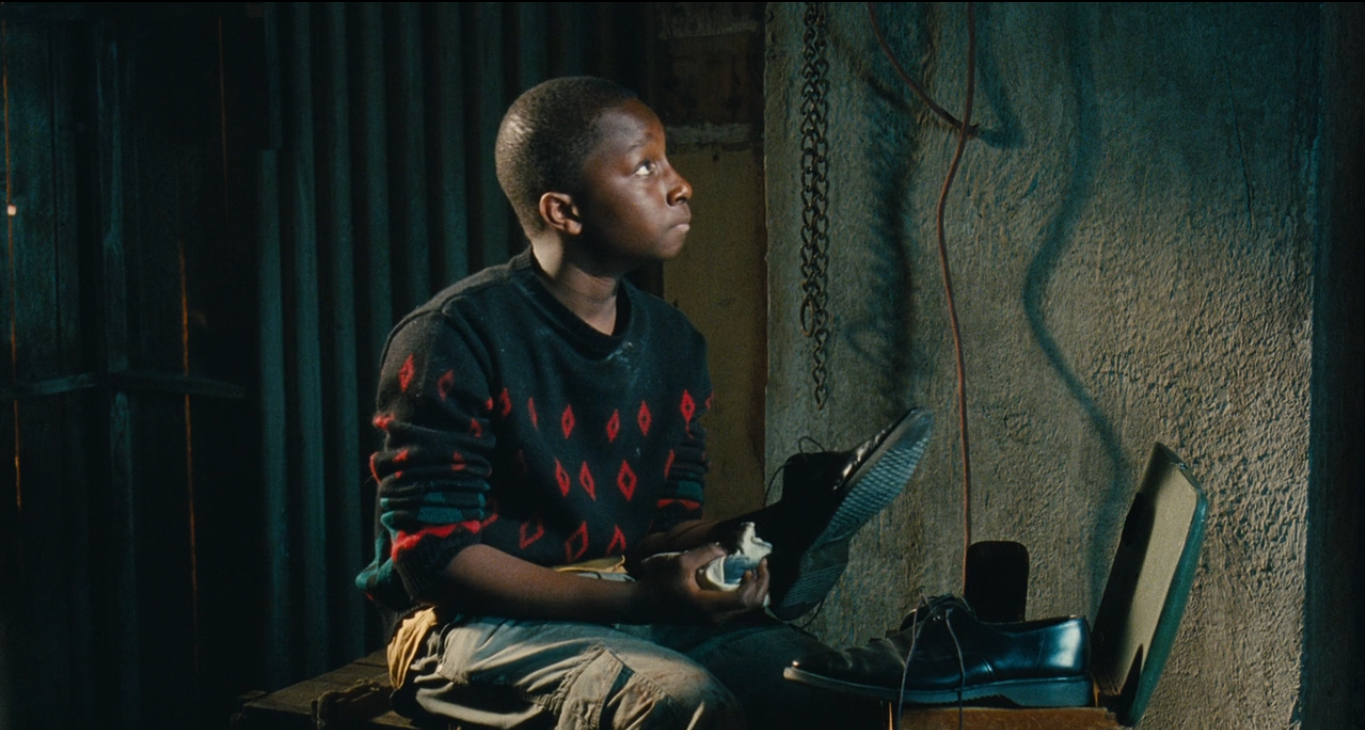
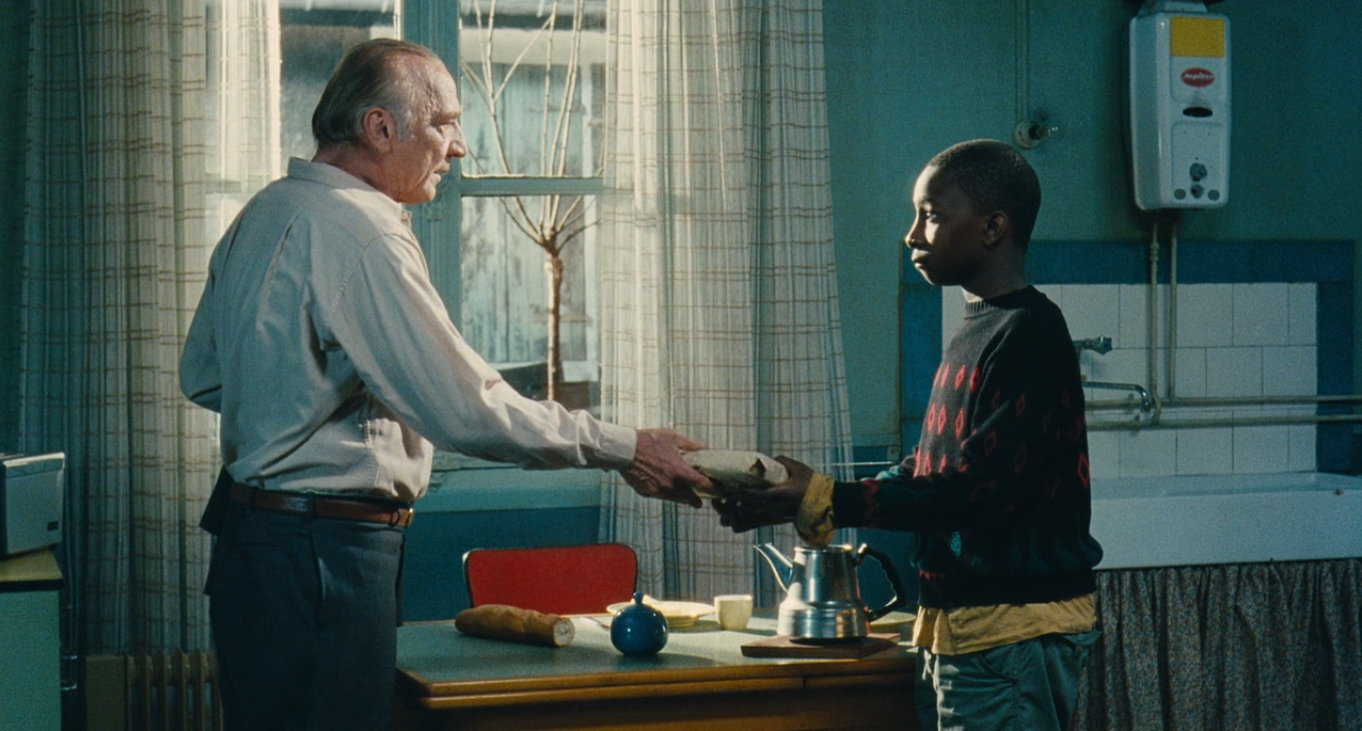
The film follows the daily life of Marcel Marx (André Wilms) and his colourful but monotonous routines. He is an old man, a shoe shiner, that while leading a poor life with his wife Arletty (beautifully played by Kati Outinen) we know he had many life experiences that got him the stability he has in this life of his (we assume this mainly due to his relationship with the other characters in town). All of the sudden, the order of Marcel’s usual tasks and routine is all shaken up as he finds a lost black boy that has tried to enter France illegally.

le havre 2.png“- Where are you going? – London.”

Kaurismäki unusual style is still present, especially considering the film’s framing and the characterization of its characters. The increased colour saturation and strategic placing of certain objects, combined with a complete vintage look regarding the clothes, hairstyles and makeup of its characters give Le Havre a vibe that is reminiscent of something from a Jacques Tati film. Having this said, the dialogues are much more idiosyncratic, following Kaurismäki usual style (despite, as mentioned before, being toned down in this particular film), that for the ones that are not acquainted with his past work, is something that reminds us of Jim Jarmusch for instance, especially regarding its sometimes obscure humour. This combination of vintage style and contemporary themes gives an edge to the idea of it being very self-conscious about its medium, something that in my opinion, despite not being something new, it is used to an uttermost mastery, elevating every single idea present in the film, even if you do not fully agree with its politics.

le havre 1The ultimate cinematic miracle

Despite being clear and conscious of its political inclinations, Le Havre goes a step further in its self-awareness, as the film seems to recognize that after all, this is all just a film. What could be seen like a mere whimsical, typically French and caricatured story quickly turns into an attempt to picture the hyperreality of the politics it is defending, and devastatingly twists the language of film into itself, resulting in the film being a product of pure manipulation but unmistakable honesty, even that it is being arguably pessimistic about the reality it is presenting. By the end of Le Havre and after flirting with the idea of clichés, we witness a miracle, a coincidence that is way too improbable to be taken lightly, even in this light-hearted modern fairy-tale. When we experience this beautiful cinematic and purely fantastical scene we should feel happy for our characters. But we can’t. Because the implication of this beautiful coincidence is that the world Le Havre is presenting is not our real world, and all the other picturesque and lovely situations are mere fabrications of cinema.

le havre fb e igIdrissa

Manipulation in films such as Forrest Gump (1994) or Schindler’s List (1993) are never welcome and often taint what is most of Hollywood cinema today, especially when it is clearly presenting political themes. But when we experience the technique utilized at its maximum potential in films like this, we seem to see unexpected potentials in the usage of this tool in our self-discovery. Kaurismäki seems to have hit the spot with this film, at least for me. In a French idyllic and polychromatic world he managed to make the black boy really seem like a part of the rainbow. Maybe one day in our real world we will manage to include all the current shunned colours in our own rainbows.

A Portuguesa (2019)

a portuguesa

Sempre a guerra. Agora já leva crianças pobres com ele. Para morrerem.

[It’s always the war. Now he takes the children of the poor with him. To their deaths.]

The new Rita Azevedo Gomes film may seem meaningless to people outside Portugal, but as a Portuguese Cinema fan it is exciting to know that a director with such a small but critically acclaimed filmography just released new work. As a director, she has claimed her main influences, and this time she did not even needed to talk about them, as they are clear to anyone that goes through the film. She is working with an old-school film festival favourite actress, Ingrid Caven, and her performance is probably the highlight of the picture. Despite being an interesting homage to many visionary directors and containing great shot compositions (with the help of what is arguably the greatest Portuguese cinematographer, Acácio de Almeida) and a hypnotic soundtrack by José Mário Branco, The Portuguese Woman falls short in its delivery.

The film adapts a story from the 1924 novella by Robert Musil with the same name, with dialogues adapted by Agustina Bessa-Luís, a favourite of Manoel de Oliveira. It follows the story of a Portuguese woman (weird hun?) when she marries a German lord and lives in a castle in Germany while his husband is busy leading a war. It trails their romantic lives while he is in war, and what changes in their relationship when he comes back from it.

a portuguesa 1.pngThe ever beautiful Ingrid Caven in the beginning of the film.

Before I present the reasons I think why this film does not fall into the category of being great at all, let me first point out what holds the film up. There is a clear sense of cinematic conceptualization. A balance between the images and the sound and the music that is absolutely mesmerizing and engaging enough to create hope in the viewer for something great. The incredible care with framing reminds me of, of course, Oliveira’s work (as the director herself has mentioned the film as being a follow up tribute to Oliveira’s body of work), but mainly reminds me of Dreyer and, oddly enough, Peter Greenaway. There is an insistence in The Portuguese Woman of transforming beautiful roccoco painting archetypes into film, working almost like tableaux vivants. Rita works with the tools of camera movement and actor movement to lead us through these living paintings in a way that is diegetic enough to counterpart the hardship you will have in deconstructing the dialogues themselves (especially if you are a casual Portuguese citizen watching the film without subtitles). The soundtrack complements beautifully the rhythm of the scenes, even though that sometimes you feel the sound design of the film (especially regarding dialogue) to sound a little strange in the overall composition of the scenes (at least odd enough for me to notice).

The main problem with the film, and comparing it with some of Oliveira’s films for instance (and I know comparing is not the right way to analyse a new film), is that despite having some brilliant scenes, as a whole, it leaves the viewer feeling like the film is an exercise in futility. There are singular moments that are brilliant, and most of them are visual moments. I have no disdain for Agustina Bessa-Luís’ work (especially considering her words in Vale Abraão (1993) and her novels), but I truly feel that her script combined with the less-amazing and unoriginal scenes create a feeling of decadence that hasn’t the right to be in a tribute film. It is frustrating to deconstruct a film that is as beautiful and competent as this to only find banal and tired ideas that were already messed with a million times, and no overarching concept to hold its existence. And this is where the comparison with Peter Greenaway disappears, because there is no breaking of the narrative conventions in The Portuguese Woman that compensate for the extensive use of the aforementioned indulgent filmmaking decisions. I know that the screenplay is supposed to sound theatrical and poetic (just as it was in, again, Vale Abraão or Francisca (1981) ), but there is something in this particular picture that is profoundly distasteful and tiring.

a portuguesa 2.pngAn example of the mentioned idea of tableaux vivants.

It is a frustrating film for the potential it had to be great. The faces, the costumes, the voices, the colours, all of the small elements are meticulously chosen to compose every scene. The presence of Ingrid Caven brings a mesmerizing element of a Greek Chorus-like nature to the film, another ingredient added to what could have been a great cinematic work. The themes of womanhood, lethargy and class-relations are there though, even if disappointing in their scope. The lighting is great and magnetic. The music – enchanting. Even Bessa-Luís’ words are beautiful, but feel misplaced, and even misspoken at times. The film itself… it really has nothing new to say, and while it is presenting nothing new, and in spite of its cinematic beauty and being a noticeable tribute, it is remarkably unsatisfying and inconsequential.

5 out of 10

Rosencrantz & Guildenstern Are Dead (1990)

Directed by Tom Stoppard

rosencrantz 4

“What are they like? Indifferent.”

On this week’s Classics section of our website we move away from the Golden Age of Cinema to the 1990’s with the adaptation of one of the most successful plays of the 20th century, Rosencrantz & Guildenstern Are Dead. Often compared with other plays like En attendant Godot (1952) regarding its themes – philosophical and hermeneutical – and absurdist style, Tom Stoppard’s work differs in its dealing with metadrama and metanarratives in general, something to keep in mind when watching the film version, even if it was also directed by Stoppard himself.

The main narrative surrounds, as the title suggests, the action of arguably the two of Hamlet’s lesser characters. The story follows them inside the world of Hamlet and participating, when due, with the other characters in Shakespeare’s play. When Rosencrantz and Guildenstern are not caught in Shakespeare’s words, they seem to be alienated from the situation they find themselves in. It is then where Stoppard’s promising ideas really come to life.

rosencrantz and guildenstern are dead 1.png“You see, it is the kind you do believe in, it’s what is expected. Deaths for all ages and occasions! Deaths of king and princes, and nobodies…”

The story treats the existence of characters in a play, the existence of characters inside a story. We are presented with both characters having different world views, even if the world surrounding them often confuse their names (as they are inconsequential and underdeveloped characters in the original Hamlet). Guildenstern (played by Tim Roth… I think) seems to question his surroundings, the absurdities both characters encounter since the beginning of the story, while Rosencrantz (played by Gary Oldman… or is it Tim Roth?) seems to passively accept the reality of these same situations. We are faced with this question between Free-Will versus Determinism that will develop throughout the story as Stoppard takes his side of the fight, when the story will clearly defend and deal with the idea of predetermined human action.

This is but the surface of what is a complicated but uncontested allegory constructed by Stoppard. Complicated questions are like bricks in this wonderfully intellectual wall. However, even if these themes are presented in a slick and rhythmic fashion, all of it can be overwhelming at times. Betwixt the main deconstruction of Determinism we are faced with themes like the questioning of God’s existence, the questioning of our place inside a community that observes us, the themes of private and public life, questions about complex hermeneutic and theoretical constructions, and the delightfully unanswerable question of does Art imitates Life or Life imitates Art; Rosencrantz & Guildenstern are Dead is, at times, even more daunting than what this very sentenced tried to describe. Despite this criticism, the dialogue never leads the viewer (or spectator, for that matter) to perceive Stoppard’s piece as pretentious. This is mainly because of the honesty and transparency of the aforementioned questions. I personally even defend that watching the film version will actually help to decontstruct and interpret a story that can be entangled in the depth of the metanarrative and metadrama in its theater version. Nevertheless, it is really fun, rythmic and enticing, while never being too obtuse or being pointless to the casual viewer.

rosencrantz and guildenstern are dead 2Scene referencing Sir Isaac Newton’s apple.
The film is often regarded as not being cinematic in the presentation of the original story. I would not completely disagree, as it is a film focused on dialogue, but it is not doing justice to Stoppard’s film adaptation when we say that it is completely devoid of cinematic originality. There is a gag added to the film regarding the encounter of Rosencrantz with famous scientific discoveries. Tweaks such as these combined with beautiful organic framing and cinematography, a clear sense of style and production design and great performances from all of the ensemble cast overthrow the arguable lack of originality regarding editing, for instance.

Despite not being as praised as our two previous picks for our Classics section, Rosencrantz & Guildenstern Are Dead is my personal pick as our first modern (or should I say post-modern?) “classic” film. Even though it is probably ideal to see it played in a stage, when you have no other option, seeing it on the screen will not leave you with a distaste for this adaptation of the classic absurdist play. And yes, it is cinematic enough to be considered as a great classic of cinema as well.

The Favourite (2019)

Directed by Yorgos Lanthimos

the favourite 1

“I must take control of my circumstance. I’m on my side, always. As it turns out I’m capable of much unpleasantness.”

Yorgos Lanthimos is a Greek director that has first gathered international attention in the big film festivals with Dogtooth (2009) and has since then gradually gained public attention. Despite the many quirks and particularities of his previous projects, one of the big changes going into The Favourite is that it is the first film in which he worked not having written the screenplay with his associate Efthymis Filippou. This will be a big shift of style and pace from the unusually paced dialogues characteristic of his previous films. Despite this significant transformation in the dialogue, visually Lanthimos is working with some of the most unusual camera placing and most dynamic camera movement in all of his filmography, this being even more noticeable if we consider that The Favourite is at its heart a British costume drama.

This film revolves around the somewhat unknown historical figure of Queen Anne, and plays with the relationships between her majesty, her main advisor Lady Sarah Churchill and the newcomer servant Abigail. The whole piece revolves around the power struggle between these three characters in a way that has been compared to All About Eve (1950), being that it mainly focuses on the scuffle between Lady Sarah and Abigail for the Queen’s attention, love and their privileged position in royal affairs. If we try to deconstruct the film we will quickly realize that beneath all of the witty, sharp and corrosive dialogue there are layers upon layers of different motivations that lead our characters through this love triangle.

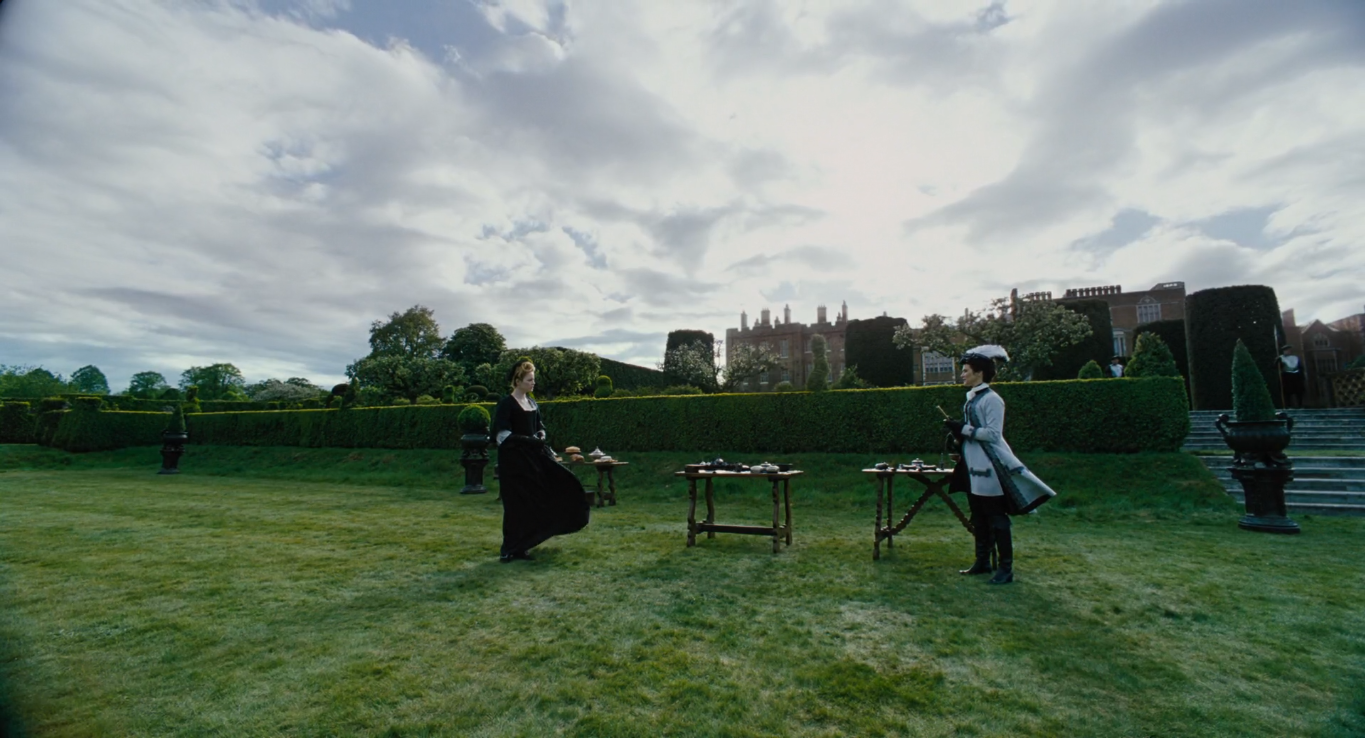
favourite 3 “Sometimes it’s hard to remember whether you’ve loaded a pellet or not.”
What we gather from The Favourite is actually a really kaleidoscopic combination of themes in a story that could be dismissed as mostly politics. In the background we have the grand scale of the war with the French and in the forefront we have all the personal intrigue surrounding our three main characters. The dynamics between these two levels of politics are presented in a much more interesting and creative way than what is expected considering the film’s plot. But again, while this may seem like the core to the film (and is the core to many other films), The Favourite goes beyond and above, constructing all this political talk in a much more important and universal foundation that combines the matter of relationships with the matter of personal emancipation, all bound together by a sense of real tragedy and pathos revolving the central character of Queen Anne. This allows the viewer to be challenged and agitated, but especially helps in engaging the viewer, by never creating distance between both the film’s main ideas and its undertones, avoiding what could be either a wearisome and bland political allegory or an incomprehensible pretentious mess.

The dialogues and acting are witty and poignant and they never reduce the film into a predictable period drama. This is not necessarily due to the fact that they deal with unashamed and violent sexual language and cathartic situations, but instead in it allowing the viewer to engage with its complicated web of themes, something that in previous Lanthimos films was made really differently if not even in a slightly faultier way. The presence of the absurd, particularly the visual absurd, is still a big part of The Favourite, even if it takes a smaller and different role than in films like The Lobster (2015). As mentioned before, the camera is frenetic in The Favourite.

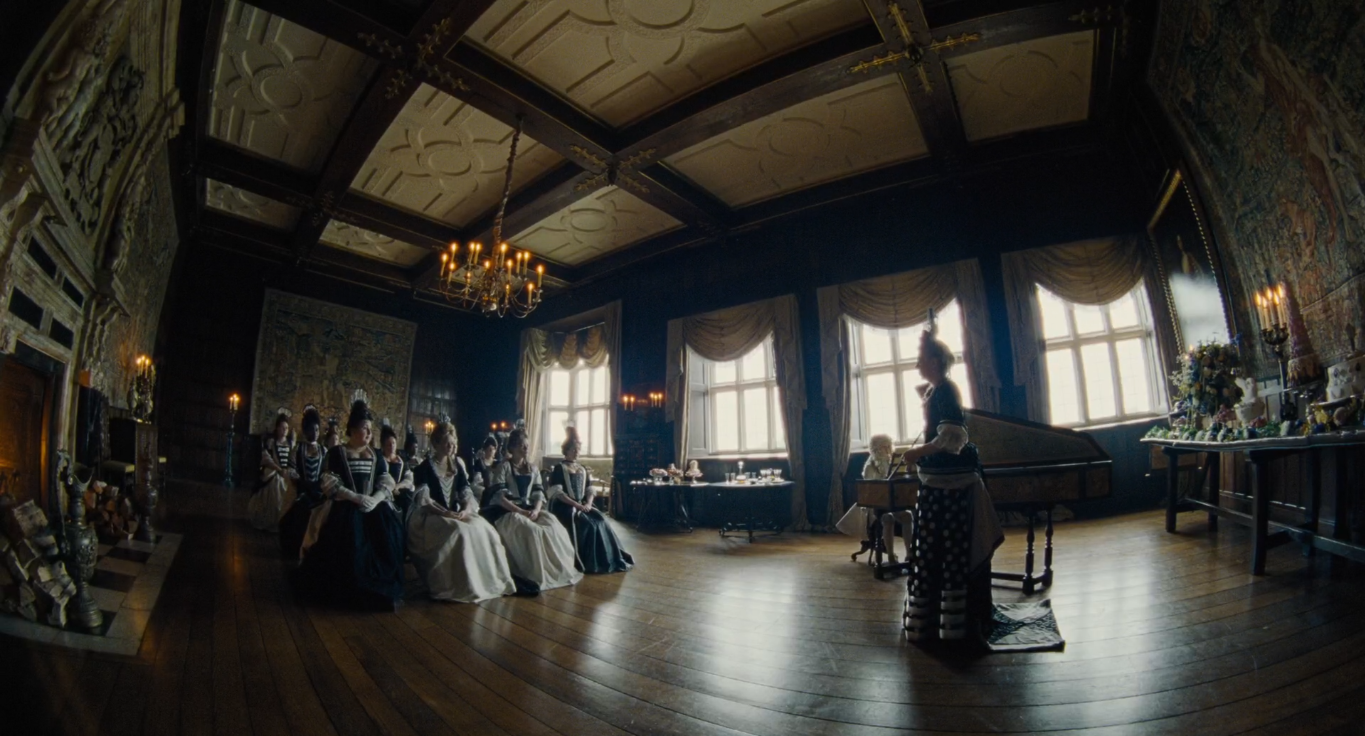
Despite some critics making visual comparisons with films like Barry Lyndon (1975) or The Draughtsman’s Contract (1982) (and rightly so to some extent), Lanthimos’ take on the period drama ditches the expected formality of the genre. The camera is on the ground, on the corner of the room, by the window, it follows the corridors at the oddest angles. This combined with the heavy use of the fisheye lens give the film an edge that elevates the already combination of the oblique motley of themes in the picture, giving it a sense of a nightmare, a weird historical hallucination that seems to play on your subconscious. All of this put together with a truly eclectic soundtrack that goes from the expected baroque music of the time, to deeply sentimental slower paced string tunes, descending gradually into being experimental and dissonant, creates a dynamic that accompanies the visual queues of the film in a no-less than brilliant way.

favourite 2An example of the use of fisheye lens and the odd camera placement in what could otherwise been a regular scene in court.

Complete with what is probably Olivia Colman’s best performance, together with the work of an incredible supporting cast, The Favourite is the most well-rounded of Lanthimos’ film. This sense of completion and unity does not mean that it is a linear and simple film, and not being a straightforward film does not mean that it is not accessible to pretty much anyone. The themes and subjects I mentioned are just a personal selection, but things like the exploration of the gender roles, that the film could be a possible exercise of pastiche and parody, or the viable but more complex psychoanalytical readings of The Favourite are all ideas that are easily interrogated by anyone that watches it. It is one of my favourite films of 2018 and I would say it is up there with The Killing of a Sacred Deer (2017) for Yorgos Lanthimos’ best.

8 out of 10