Raise The Red Lantern (1991)

(original title: Da hong deng long gao gao gua)

Directed by Zhang Yimou

raise the red lantern

“Isn’t that the fate of a woman?”

This week on Camera Coverage we turn back to Asia, more specifically, to China. Zhang Yimou is one of the most prolific Chinese directors of the last twenty years. Before estabilishing himself as one of the masters of the modern wuxia film with works like Hero (2002) or Curse of the Golden Flower (2006) he made a bunch of diferent films related to either Chinese history or your regular to-go drama picture. That said, his first three feature films, consisting of an unconnected trilogy, are to this day some of his best, especially the one we selected to elaborate upon. Raise the Red Lantern is a period film based on a novel by Su Tong, Wives and Concubines, that managed to do the impossible task of balancing pure cinema aesthetics and important statements on many political, social and cultural problems that are relevant to this very day.

The film follows Songlian (Li Gong), a young woman in 1920’s China. She appears to have been an university student that had some sort of conflict with her family. In a revenge act towards her family she decides to marry an old, powerful rich man in northern China. All of it happens really quickly, and Yimou puts the viewer straight into the complicated relationships between all of the four wives inside the mansion. Each of them have their own house/room that will be lit up with red lanterns if the master of the house (his name is never mentioned in the film) chooses to stay with that wife for the night or not.

raise the red lantern 1Saifei Ha as Meishan, the second wife, an opera singer.

Right off the bat we are faced with the aesthetic beauty of the film. Yes, the visuals are incredibly, but even the soundtrack works briliantly well with the images. There is a real sense of composition and structure in the film that contrasts well with its cathartic and dynamic ideas. More than just pure aesthetics the film manages to utilize many ingredients from the very beginning that make even the casual viewer to question some of the meanings and possible themes that the film will develop. Not only is the use of colour obviously important – hence the title of the film – but framing is key in the film, as is the decision of what to show and what not to show.

Raise the Red Lantern is not a sympathetic film when it comes to its protagonist, nor it is sympathetic to its viewer. The film has a claustrophobic feeling to it. There are rooms inside houses inside a village, and the four depicted woman are most of the time depicted inside these rooms like prisoners. The cold hand of the director when it comes to the depiction of these problems is felt in aspects like these, even if when picturing the master of the house there is never a shot of his face or, like we mentioned before, the mentioning of his very name. This decision would supposedly work in a way that would make us connect with the women inside, but quickly we realize that, yes, the man is a villain, but there is a bigger problem inside this world that dictates all these feelings of oppression. We must think that from the very beginning we are shown that Songlian’s decision was her own, and if she is a prisoner it is because of her doings. Despite the focus on the relationship between the women regarding their marriage, the film’s decision to avoid direct picturing of the husband puts us far away from any of his personal responsability we could have thought of.

raise the red lantern 2The quest for power of these wome led to lies such as fake illness, and even fake pregnancy.

All of this combined with the cruelty and evil depicted in these four women (being it at the same time a characteristic of each of them and a consequence of their situation), Raise the Red Lantern quickly goes from what could be a go-to bland feminist statement to a complex proposition of an overarching structure that is responsible for such issues. It is a controversial reading of the film, yes, but the catharsis we take from such a film is relevant enough to question these problems further and create a reaction in the viewer that, while mesmerized by the beauty of it, it is shocked by how contrasting it is with its ideas. Zhang Yimou made a beautiful film that manages to embellish and strengthen these women’s cages with the purpose of breaking their own metal bars.

3 Faces (2019)

(original title: Se rokh)

Directed by Jafar Panahi

3 faces

“So you came for her and not for us.”

Jafar Panahi is a Iranian director famous for his continuous quarrel with censorship and his consequent imprisonment in 2010. His 2015 masterpiece Taxi gave him worldwide recognition, but he was already one of the highest praised Asian directors from the last twenty years by film critics and a staple of the big film festivals. His work follows the lead of his master Abbas Kiarostami, especially after being imprisoned, where he approached a fluid style between documentary and fiction to develop his already highly realist filmography. 3 Faces is a film that won the award for Best Screenplay at the Cannes Film Festival, and is since being released all over the globe.

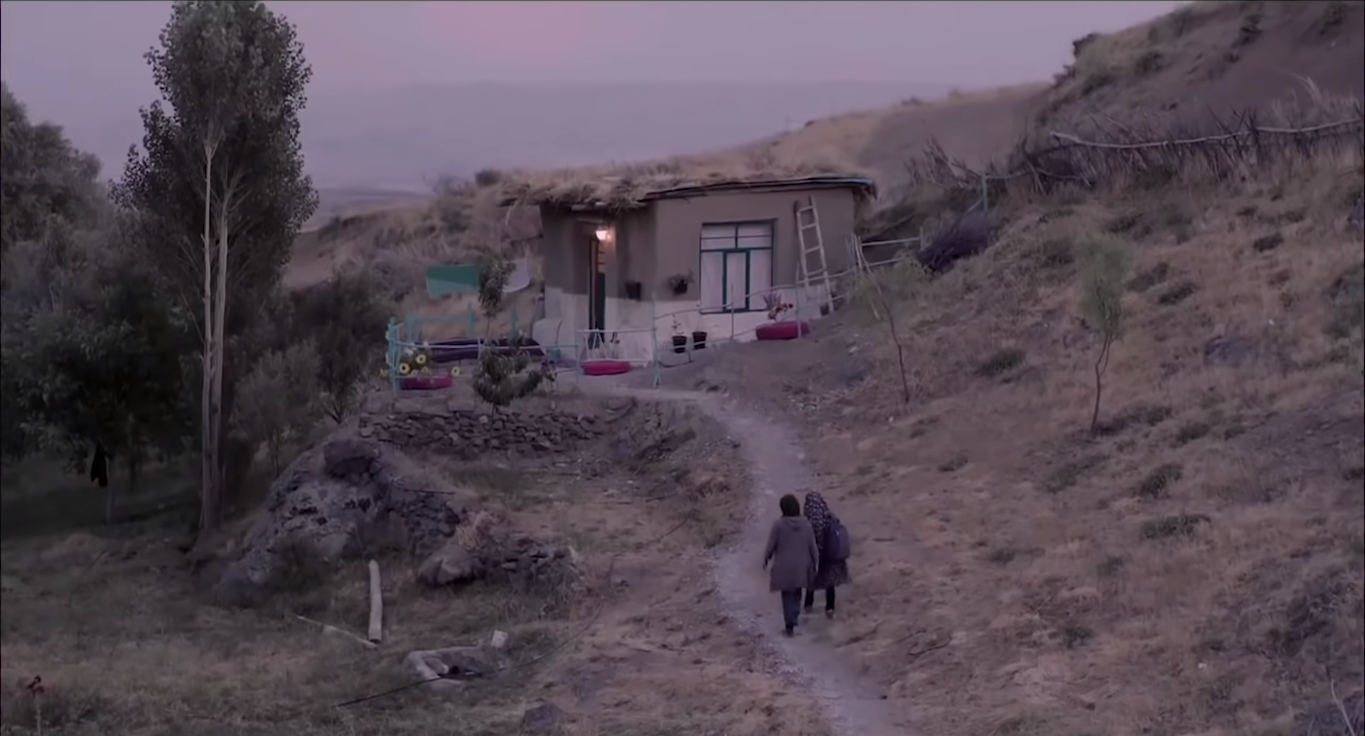
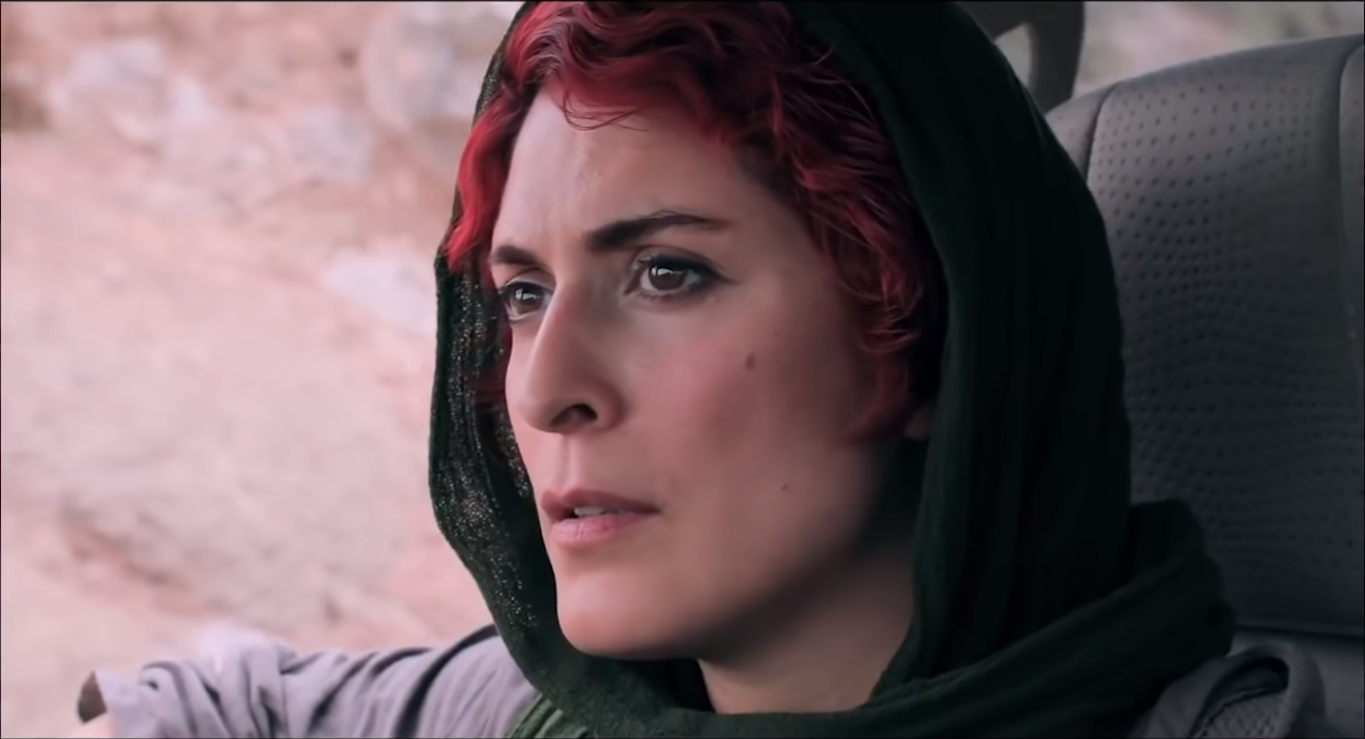
The film follows the director himself and the actress Behnaz Jafari. They received a video message of a young girl commiting suicide in an attempt to get the actress’ attention and help with the consequences of her somewhat progressive lifestyle (she studies in college and is an actress) in her traditionalist village. The three faces that gave the film its title are meant to be the faces of the three actresses in the film. The young girl that sent the message, the middle aged Behnaz Jafari and an old lady that they meet somewhere in the middle of their journey into the village. It is shot at the same location that many of Kiarostami’s films were shot, and has a lot of direct references to some of his most famous work, including the devastating ending of Taste of Cherry (1997) mirrored in the somewhat crazy old actress’ actions.

3 faces 1.pngBehnaz Jafari

As are the other films of the director since 2010, 3 Faces is a politically charged work. Panahi seems to extend his views on femininity, generational issues and religious catharsis from his other films. In this aspect, Panahi’s work seems to resemble another Iranian director that seems to be forgotten when talking about Panahi, that is Mohsen Makhmalbaf. In some of his films, of course considering Kiarostami’s influence on them as well, Makhmalbaf utilized too the fluidity between documentary paradigms and preconceived narratives to approach certain political issues – see for instance Kandahar (2001) and how it deals with the uprising war, or A Moment of Innocence (1996) and how it works with morality issues inside small communities. In the same way Taxi or This is Not a Film (2011) worked, this new film utilizes its meta elements to the fullest in order to reach the level of realism it does. It does not even shy away from going further into many other debates, much like Kiarostami’s Close-Up (1990) when it comes to the debate about the power of film and the influence of art in an oppressed society.

Despite not being as original as a film like Taxi was, Panahi seems to make a proper tribute to his masters. The debate topics of Makhmalbaf in 2001 or Kiarostami in 1990 are not the same the ones being discussed in Panahi’s contemporary cinema. Even if going as far as utilizing diegetic elements of the voyage or other direct elements of these other director, the final product is still original and relevant. There is a blend of a seemingly ascetic scenario with traditional but poetic use of framing and editing, and with a real sense of pathos that transcends the otherworldly level of cinema into real life (with a knowledge of technology and modernity that remembered us of other directors that utilized modern elements to their most real, like Michael Haneke in Happy End (2017) ). This mixture of techniques combined with the poignancy of Panahi’s assertions is hard to criticise and all of it definitely works.

3 faces 3.png

One of the most important things to take from a fictional film like 3 Faces is its sense of realism. Despite working will milions of elements and influences that are somewhat hard to keep track of, the film puts them together in a way that every frame drools a sense of what’s reality like in Iran, but even goes further in globalizing Iran’s problems. How do we deal with our professional lives, how do we deal with deceit, how do we deal with time and how do we deal with rules. What is the role of God, and does godliness ends when humanity starts to fade. These are some of the things that are hard not to think of when we see a film like Panahi’s. Much like the main idea from his 2011 film we are once faced with the fact that a film is a representation of life. Not only that, but the final product of this representation is alarming, not only because of what’s happening in some Middle Eastern countries, but because of the true universality of these problems.

7 out of 10

Burning (2019)

(original title: Beoning)

Directed by Chang-dong Lee

large_burning-poster

 “You burn down other people’s greenhouses?”

Burning is a 2018 film that unfortunately was only released in Portugal (where we are based) precisely a year after its premiere on the Cannes Film Festival. To worsen things, only a limited number of smaller cinemas decided to screen it. A sad resolution to a challenging and interesting film, a clear difference from the lack of creativity that plagued the commercial circuit in the last month.

Director Chang-dong Lee maintains the caustic and dramatic style that characterized most of his films. Lee tries on his works to access the darkness in the human nature, putting his characters in situations way beyond their comfort zone. Either by turbulent political scenarios like in his directing debut Green Fish (1997), or in Peppermint Candy (2000), a haunting tale of a man’s downward spiral to suicide; or finally and maybe his most well received film Oasis (2002), dealing with father and daughter relations amidst a debilitating disease. This last one ended up receiving the Best Director’s award and the Marcello Mastroianni Award for Leading Actress on the well-respected Venice Film Festival.

This time Lee brings to the screen an adaptation of a small story by the Japanese writer Haruki Murakami (“Barn Burning”, 1982). The film takes place on current day South Korea, having as the lead character Jongsu (Ah-in Yoo). A recent graduate of literary studies he finds it hard to get a job in his field of studies. A well-read young man, quotes William Faulkner as his favorite writer, mostly because of how relatable his writing is to him. During a walk in Seul he suddenly meets a childhood friend named Haemi (Jong-seo Jun). They both are from a countryside village outside of Seul. Haemi is now a grown woman and like most in Korea has done plastic surgery, making her almost unrecognizable to Jongsu. They have a dinner and afterward she invites him to her house, where they end up having sex. There Jongsu acknowledges her decision to go to Africa and accepts feeding her cat while she is gone. While she is away, he decides to take care of his family farm where he spent his childhood, dreaming of Haemi’s return.

This surely one of those films that the less we know coming to the cinema the better, because the second half sure takes an unexpected turn from the romantic drama vibe that characterized the first part (which ironically kind of renders this review a bad tool for the ones who haven’t watched it ). When Haemi returns from Africa, we are introduced to a new friend that she made named Ben (Steven Yeun). A very rich individual, he “steals” Haemi from Jongsu, but despite that she still invites him to hang around them both, acting like an awkward third wheel. Besides that, there’s a delicate class critique around Ben. Jongsu compares him to Gatsby from the famous Fritzgerald’s novel, wondering what his occupation is to grant him this luxurious lifestyle.


“Misterious people who are young and rich but you dont know what they do”

Haemi is this happy and naïve like figure, and doesn’t care for such things as Jongsu does, who from the start feels there is something off with Ben. One day her and Ben appear uninvited in Jongsu’s family farm. In a moment alone Ben confesses his love with burning greenhouses, leaving a sense of imminent danger in the air. Despite that, Haemi is totally clueless to this and Ben’s love for arson. In one beautiful scene (after Ben’s revelation) during dusk, with the North Korean montains in the background, Haemi dances half naked to the sound of Miles Davis soundtrack of Louis Malle’s Elevator to the Gallows (1958). The cinematography by Kyung-pyo Hong is gorgeous and adds a lot to giving a sense of dreamlike state, leaving the viewer more and more uncertain about what is happening.

The haunting Haemi dancing scene

Jongsu is a calm and introverted individual. Throughout the film we get clues about his past and childhood, especially the ones dealing with his mother. He is a lone wolf kind of person and starts to obsess with Haemi. There is a patent and ever-growing rage inside him against Ben, who despite always seeming uninterested in Haemi’s actions, she always tries to please him. This jealousy ends up hurting Jonsu’s relationship with her and leaving him with a lot of guilty caused by his behavior. But when he tries to amend things with her, she’s not there to talk to him. There’s a deep tension in this film but it is always invisible. The answers don’t seem to appear, but the rage grows stronger by the minute. In the end we can’t help but to feel if Jongsu’s obsession with Haemi and attempt to control her actions was part of the motivation for such a rageful and traumatic closure. As if he felt not only rage against Ben but also with himself.

8 out of 10

Kuroneko (1968)

Directed by Kaneto Shindo

MV5BZDM5ZDAwNmQtZmNjMi00NTJhLThkNTMtNzlhZWIyZmVlMzRiXkEyXkFqcGdeQXVyNzI1NzMxNzM@._V1_SY1000_SX710_AL_

“What ghost would dare hate us?”

Kuroneko is directed by the late Kaneto Shindo (1912–2012), already at the time a revered figure in Japanese cinema with features such as Hadaka no shima (1960) or Onibaba (1964). The film takes place in medieval Japan during the Heian period, torn by civil war. In the opening scene a group of samurai approaches a bamboo house owned by two women: Yone (Nobuku Otowa) and her daughter-in-law Shige (Kiwako Taichi). They end up raping and killing both and the house is razed by flames. It’s a powerful opening shot that challenges the chivalrous notion associated with the honoured samurai. Out of nowhere, in this devastating scenario appears an eerie black cat that licks the dead bodies. The cat, surely a representation of evil, is a presence through the film until its final climax .The spirits of the two dead women then make a pact with evil forces in order to be allowed to return to Japan.  With revenge in their minds they will now dedicate their time to kill and drink the blood of the samurai.

vlcsnap-2019-03-19-20h27m40s269“You must be a ghost to be wandering so late at night”

In the following scenes we see a careful and well managed method of creating tension in the viewer. The younger woman seduces a horse-riding samurai to her house, where her mother in law is waiting. There the man is well received by the two hosts, in a charming and warming manner. The samurai is completely relaxed and inebriated by all the sake he could drink, which makes this the perfect opportunity to attack. It’s a slow and well-constructed pace that serves the purpose of creating a stressful environment quite well. An unnerving meowing is heard in the background, always reminding of the dark spirits within the two woman ghosts. The pattern of killing is repeated with a few more samurai soldiers. Waiting for them at the Rashomon (a big gate at Kyoto’s entrance), the younger woman plays an angelic and naïve part, entrancing the man also with her physical attributes

.vlcsnap-2019-03-19-20h28m50s696A dance before the sudden atack

The film takes an even more tragic turn when we’re introduced to the character of Gintoki (Kichiemon Nakamura). He is the son of Yone and was soon to be married to Shige, before the civil war separated them. His success in the conflict has made him a respected samurai, creating a conundrum when he finally meets the ghosts of his family. To worsen things, he his pressured by his superior to eradicate the ghost problem that has killed a lot of his men.

As a horror film, Kuroneko takes by the hand of his director extreme care with creating an eerie atmosphere, especially with the extensive use of fog. It is present in a lot of scenes and creates a sense of unrest in the viewer. The use of shadows as a visual cue is also very interesting, notably in one of the kills. Here, the shadowy effect behind a curtain creates a different way of displaying death, never boring the viewer despite the similar scenarios. Regarding the lighting, it accentuates murky rooms and backgrounds, while spotlights and backlighting seem to illuminate a character in the frame. The translucid clothing and curtains in the house are great means to accentuate the supernatural and ghostly figure of the two women.

Kuroneko functions as more than a simple horror film. Like referenced above, it crushes the image of sainthood a lot of times imposed to the armed forces. It challenges the discrepancy between ethic codes like the samurai’s Bushido, and the real actions of the regular soldiers in the war. Despite this code being a big influence on Japanese’s ethics (even in the modern times), it didn’t avoid the numerous war crimes committed by Japan during World War II. The film tries to separate the idyllic from the real, demonstrating that the honour and respect for the other is something bigger than the job or title they assume. The film has also clearly a feminist approach against models of toxic masculinity displayed here by most of the men. The rape scene in the beginning of the film is shocking not because of any gratuitous violence displayed, but by the total normality of it. For the soldiers it’s just one more day in their lives, and not an ounce of regret is exhibited. So it makes the violence against the samurai throughout the film justified and deserved in a certain way. But in the end, when there is the confrontation with a loved one belonging to the class they swore to kill, an internal dilemma heaves out of this conflict. Is there space for forgiveness or must it be completed without any exception? Is direct revenge the only true way to resolve one’s problems or will it make even more harm?


A Brighter Summer Day (1991)

(original title: Gu ling jie shao nian sha ren shi jian)

Directed by Edward Young

MV5BNzQ1OTRjYWYtZTZhYy00YTU5LWEwZjMtMThhYmM4YjA1NjI0XkEyXkFqcGdeQXVyMTQxNzMzNDI@._V1_

“Are you lonesome tonight?”

With almost four hours of runtime, watching A Brighter Summer Day may feel like too much too handle for the average movie goer. Even more if you take in account the fact that the movie is not spoken in English on the like of epics as Lawrence of Arabia (1962) or Ben Hur (1959). But despite all that, there is plenty of reasons to dedicate time for this Taiwanese gem. Spoken in mandarin (among other local Chinese dialects), it was at the time a considerably large project with more than a hundred actors participating. The directing was at the hands of Edward Young, one of the most important figures of the Taiwan cinema, responsible for Terrorizers (1986) and most notably Yi Yi (2000). This was his most critically acclaimed masterpiece and ended up granting him the best director award at Cannes.

The film takes place on the island of Taiwan, during the autocratic regime led by Chiang Kai-shek and the Kuomitang party. After the defeat in the Chinese civil war and escape of the nationalist forces to Taiwan, the Republic of China (RoC) was declared in the island. This two-china scenario, where both of them (the other being the communist People’s Republic of China (PRC)) claimed the legitimacy to control the whole China. The storyline follows Xiao Si’r (Chang Chen), a junior high student, from 1959 to 1963. Lacking on his studies he has to attend night school, full of delinquents, and where gang warfare is a commonplace. Si’r sits between the Little Park Boys, composed by the children of civil servants, and the 217s, made up of children of military officers.

vlcsnap-2019-03-06-11h16m38s145The two gang leaders 

This duality between army and civil populace is a common theme through all the film, especially to make clear of the impotence of the army authority to create a true sense of national identity. Important to notice though that in the period retracted in the film, the RoC was the official China to the West, in particular the USA. The western influence is very strong on the construction of a identity in this troubled Taiwanese youth. In a ballroom scene we can see the American, UN and RoC flags together, noting this hope for the West to resolve the many problems of a fragile state. A state that enforces militaristic views on his citizens starting obviously by the young. From the school uniforms that resemble army like ones, to the practice of western marching tunes (like the famous Prussian march Alte Kameraden) in school, everything is catered to give identity from war. But amidst all this we have the traditional Chinese views of family, which are in danger against growing western influence. The authoritarian views and the importance of the unity of the family trace back to the Confucius teachings that modelled the Chinese civilization, with values like the deep need for a hierarchy based on age and meritocracy. In the film we see in S’ir family how debt, problems with state authority (those two being his parents’ fault) and his failure of to get good results and respect his school superiors all culminate in deep shame for them all. Outside the family core, this coming of age film takes also a deep look into the value of friendship and love between the Taiwanese youth. Girls are seen as mere objects of enjoyment for most of the boys, but not as much for S’ir. A few scenes in we are introduced to this girl Ming (Lisa Yang), the girlfriend of the leader of The Lost Boys, Honey (Hung-Ming Lin), an outlaw running away from police authorities. Trough the film S’ir gets more and more infatuated with her which among the violent gang fights and his obsession to “save” her from the promiscuity ultimately leads to a tragic conclusion. One cannot help to feel a somewhat paternalistic side in S’ir regarding woman, as if they are incapable of taking responsibility for themselves and need a male saviour.

vlcsnap-2019-03-06-11h06m21s856“I’ll protect you!”

Regarding the cinematography there is a deep care for mainly long framed shots, with almost no use of close ups. The only exception are the ones shot inside of S’ir’s house. Being a traditional Japanese house, the viewer can’t help to feel an homage to directors like Yasujiro Ozu, especially for use of a low placed camera and use of sliding doors to create different camera framings.

vlcsnap-2019-03-06-11h13m51s316“So when will we see each other again?”

On A Brighter Summer Day, director Young tries to give a deep analysis on the basis of the Taiwanese identity. An island controlled by the Japanese for many years before, now is ruled by the nationalist forces, losers of the civil war. The gang violence (that goes to extremes in some scenes) goes hand in hand with the Elvis song “Are You Lonesome Tonight” whose lyrics give the English title of the film. A duality between violence and authority against lack of identity, naivety and melancholy is constant as the film goes by, leaving the viewer astonished by some of the decisions of the characters. In 1991, year of its release, the RoC was an economic powerhouse but has lost most of its international diplomatic reputation to the PRC (especially after it was replaced as the “true” China in the United Nations).

A Brighter Summer Day is not only a coming of age film about the Taiwanese youth but Taiwan itself. It shows the struggle of creating a new identity out of a lot of different and sometimes contrasting cultures. The two China problem has no end in sight but as the years go by, the more cemented it gets the construction of the Taiwanese identity, something that films like this one helps a lot to create.