Knife+Heart (2019)

(original title: Un couteau dans le cœur)

Directed by Yann Gonzalez

knife+heart poster

“She saw so many gay flicks, she thought she was a fag.”

Yann Gonzalez is a French director known for his feature film You And The Night (2013) but mostly because of his many other short films. He is especially well regarded in the LGBTQ+ community for his preference on themes regarding sexuality and gender politics. Having won many prizes and nominations in important festivals like Cannes Film Festival, he is one of those directors to be watching out for if you are interested in art-house films of the new era. However, we feel on Camera Coverage that this new feature from Gonzalez is pretty much a mess, it is not without some singular scenes that are incredible, but it is indeed a bit of a mess.

The film follows Anne (Vanessa Paradis), a gay pornography film director, in her quest of filming her new feature that seems to be more bold and adventurous than her previous. This brings us close to the character and her relationship dynamics with her film editor Löis (Kate Moran) and her dealing with alcohol addiction. From the start we know that the film has as a main plot a giallo-esque story, with a serial killer that seems to be targeting the actors from Anne’s films. The connecion between the killer and the actors is left uknown until the end of the film, where we are bombarded with a traditional plot-twist from the great classics of the genre.

print heart+knife 1Vanessa Paradis as Anne

The film plays along the lines of what we may consider the supernatural giallo, especially in its first two acts. The relationship between Anne’s vision of her new picture and the killings is meant to be perceived, but sadly, with its ending, we are left hanging in the understanding of this relationship. Throughout her journey we are faced with many surrealist images that are traditional in these giallo films and Italian horror films of the 1960s and 1970s, but they seem to add little to the unravel of our characters quest. It is clear that there are many diagetic layers on Knife+Heart, but after seeing it and thought of it for a week I still feel that they are not only disconnected, but they are sadly disconnected, as most of them are individually incredible and contain a lot of contrasting and formally complex ideas working on a deep semiotic level. The insistence on creating a traditional giallo in structure does not work in the film as much as it does visually, and it lefts the viewer confused, frustrated and cheated.

Vanessa Paradis is one of the actors in later years that we feel, as lovers of photography in general, that has one of the most unique faces. The characterization of every character in the film, especially her’s, is incredibly stylized and works well comparing to the other aspects of the film. The whole visual aspect of the film is undeniably great. It works as a cool throwback to the films of the genre, but it works as a singular piece as well, despite its insistence on weird black and white thermal images when depicting dream sequences. However, even at the technical level (image and sound) Knife+Heart is not the best throwback to the giallo, particularly if we consider the incredible films that made reference to the genre we have seen in the last few years (like Berberian Sound Studio (2012) and Amer (2009) ).

black and white dreams equencesOne of the dream sequences

Falling short on others to describe the film, it feels disapointing. The director has achieved greatness with some of his short films (notably Les îles (2017) ), but this time he completely misses the target. Despite arguably being one of the films that are a throwback to the afforementioned genres that more truly incorporates not only the visual aesthetics but the structure of the giallo, it fails on creating a compelling experience by being too overwhelming and obtuse with its symbols and parallels. I feel that some of this may be due to how random some of the events in the film are, and the discrepancy of vibes in it. The play of the director regarding the meta aspect of the film (the films inside the film; the dreams inside the film; the dreams that are the film; the relationship between director and editor, etc) is interesting, as are the mirror images it tries to make with its individual scenes. Sadly it does not keep up with its promises (especially its depiction of the theme of obsessive and corrosive love) and mostly is an insatisfying experience, that while being really extreme and poignant in the depiction of a community and a genre of filmmaking that is really underapreciated and not valued as it should, it leaves the spectator feeling that it is a mere exercise in shock value and pretentiousness.


3.5 out of 10

Bibi Andersson || Persona (1966)

[Directed by Ingmar Bergman]

1.jpg

Earlier this week we have been braced with the devastating news of the death of the legendary actress Bibi Andersson. She is best known for her long collaboration with director Ingmar Bergman with whom she had made approximately twelve films. Andersson is responsible to the introduction of Liv Ullmann to Bergman, and therefore responsible for what is one of the most legendary collaborations in the history of cinema. Even though the spotlight is often on Ullmann, Bibi Andersson is the original muse of the director, and works as a strong homogenous figure in Bergman’s early work, only later her figure being noticeable as a “lighthearted” contrast to what was the “severity” of Liv Ullmann, especially on the masterpiece that is Persona.

Every film lover knows Persona. But it is also true that no one can truly deconstruct and interpret the film in what may be considered a “right way”. This is a film that is meant to work on a level that differs from our usual cinematic experiences. Most of this is due to the way both characters interact and the work of metamorphosis between the two. While, as mentioned before, Liv Ullmann plays the patient, an actress that is both austere and troubled, Bibi Andersson plays a deeply humane but also troubled nurse. While both performances are incredibly layered and dynamic, we are mostly guided by the eyes of nurse Alma in her quest to heal Elizabeth Vogler, that quickly turns into a therapy for her own troubles. The humanity and sincerity of Andersson’s performance brings to the film something for the viewer to relate to, something that is essential for Bergman’s work to function correctly in order to not transform into something completely obtuse and abstract. She is the perfect counterpart that bridges the complex states of mind and the complex artistic pretensions of the film into our everyday lives, creating in the end one of the most unheimlich experiences one can have with a film.

Bibi Andersson is the light of our everyday lives fading in the world of Bergman’s cinema. She brought reality and sensibility to films that would feel too cold and distant to be as relevant as they are today. This week we lost one of the big faces of Swedish cinema, and she will surely be remembered as one of the absolute icons of the history of film. We leave a list below of our favourite films she made part of. Bibi Andersson will not be forgotten.

The List:

Sommarnattens leende [Smiles of a Summer Night] (1955)
Det sjunde inseglet [The Seventh Seal] (1957)
Smultronstället [Wild Strawberries] (1957)
Djävulens öga [The Devil's Eye] (1960)
Syskonbädd 1782 [My Sister, My Love] (1966)
Persona (1966)
Flickorna [The Girls] (1968)
En passion [A Passion] (1969)
Scener ur ett äktenskap [Scenes from a Marriage] (1974)
An Enemy of the People (1978)
Quintet (1979)

The Fire Within (1963)

(original title: Le Feu Follett)

Directed by Louis Malle

qL6ZEBtqgDUf0j76xJ6GFEpaGQYXl3_large

“One day I realised I’d spent my life waiting. For women. Money. Action. So I drank myself stupid.”

Louis Malle is a French director that started his career amidst the Nouvelle Vague movement. Despite not being a full front figure like Jean Luc Godard, Alain Resnais or the recently late Agnes Varda, he has a personal style and sensibility that make him, in my opinion, an underrated director in the French scene. His first full feature is Ascenseur pour l’échafaud (1958), a noir masterpiece, displaying a suffocating and almost despairing feel with the brilliance of his night Paris shots. This in alliance with a stellar original soundtrack by the jazz great Miles Davis make for an almost perfect debut as a director. Throughout his career he would tackle difficult and polemic themes like Nazi collaboration (Lacombe Lucien (1974) ) or incestuous relationships (Le souffle au cœur (1971) ). His own World War II experience would serve as the theme for Au revoir les enfants (1987), a powerful film about a catholic school that hides Jewish children from Nazi persecution.

With Le Feu Follett, Malle focuses once again in very sensitive topics, like depression, addiction and especially on suicide. The story follows Alain Leroy (Maurice Ronet), a 30-year-old writer with alcoholic problems as he leaves the rehabilitation clinic in Paris. This service was played by his ex-wife, who now lives away from him in New York. To verify the success of the treatment, she sends one of Alain’s old female acquaintances Lydia (Léna Skerla) to check up on him. His doctor (Jean-Paul Moulinot) assures him that he is completely cured, and all is good now. Despite all the positive feedback from the outside Alain cannot help but feel disenchanted with the prospects of his future. Though the film we see him visit some old friends and catching up with their current lives in the present. For instance, as his comrade Dubourg (Bernard Noël) now dedicates his life to Egyptology and marriage, Eva (Jeanne Moreau) wastes her time with drug users. In another scene we see Alain dine with Solange (Alexandra Stewart) and her wealthy and reactionary friends. There is a feeling of resentment by Alain against his friends as if they are no longer the same as they were in their youth. As if in some way, their juvenile ideals were betrayed and transformed exactly on what was promised to fight against.

vlcsnap-2019-04-17-13h41m27s823.png“It’s not feelings of anxiety, it’s a single feeling of constant anxiety”

Despite the constant presence of friends and acquaintances, Alain feels more alone than ever. Deep inside he feels truly displaced in this world and questions the bourgeois life that his friends live. In his small room questions the meaning of his existence and if he should just end it. The addiction leaves him with constant questioning of his abilities as a writer and even his notions of manhood, mainly because of the power and dependence that his ex-wife still has on him.

Maurice Ronet, who worked with Malle before in Ascenseur pour l’échafaud (1958) does an astonishing job in this film. With a profound sense of calmness, he wanders through Paris narrating his thoughts in an eloquent manner. Malle use of handheld cameras give a more personal and closer feel as we feel as if we walk along with Alain. Along with the minimalistic notes of piano composed by Erik Satie there is a bittersweet tone to the relation between the viewer and the protagonist. In his head he made up his mind and he is tired of waiting for something that gives meaning to his life. Despite that, what may feel as a self-imposed fatalism is something very hard to understand to those not experienced with depression or addition problems. Alain seems like the kind of men that has nothing against him. With a good figure, intelligent and well-dressed what does he needs more? He has lots of friends and women that want to spend the night with him but regardless of that he is extremely unhappy with his life.

vlcsnap-2019-04-17-13h42m10s094.png

Malle, born into a wealthy industrialist family surely took a lot of his own thoughts and experiences into this work. Inspired by the writter Pierre Drieu la Rochelle (who ended up committing suicide) and his novel Will O’ the Wisp (1931), Malle gives an honest and well needed take on both mental issues and the problematics of contemporary society. Alain is in short, a profoundly alone person mainly because people lack the understanding of his real problems. Depression works not only on sadness and poor mood but especially the lack or misplacement of feelings. The true sadness of the film lies on not the decisions made by Alain but how poorly the others could view his problems. Maybe it was shame or pure hopelessness, but Alain seemed to others like a functional human being. If the viewer did not have access to his thoughts would them also view him as a man in the brink of suicide?

The Wild Pear Tree (2019)

(original title: Ahlat Agaci)

Directed by Nuri Bilge Ceylan

wild pear tree 1.jpg

“Everyone has their own temperament. The thing is being able to accept and like it.”

The “new” (premiered in 2018’s Cannes Film Festival) film by the critically acclaimed Turkish director Nuri Bilge Ceylan is again a huge work in size. And again, Ceylan presents us a massive picture that feels even more entrancing than his previous film Winter Sleep (2014). The similarities between both films are obvious, as they both tell stories of writers. However, The Wild Pear Tree is way more accessible than Winter Sleep (2014) and more irreverent at the same time. Sadly, it does not quite hold up against the director’s best (most notably Once Upon A Time In Anatolia (2008) and Distant (2002) ), following some of the same small issues present in the 2014 film. This is, however, not a reason to dismiss the film, because even a lesser Nuri Bilge Ceylan film is still a way more interesting experience than most.

wild pear tree 3.png

The filmography of the director is notorious for having two specific characteristics: he is one of the big names associated with the so called “Slow Cinema”, and his films are incredibly wordy and verborraic at the same time. In The Wild Pear Tree this last characteristic is even more noticeable, with the “slow” and transcendental aspect feeling that it was put to side, and, when exercised, feeling a bit forced and out of tone. The film follows Sinan (Dogu Demirkol), a young writer that has finished his education to be a primary school teacher like his father. He is also working on publishing a book he wrote, and most of the first part of the film follows his struggle in finding money to be able to do it. This is the main situation we are presented with the main character, but the film, since the beginning, has an intense focus on the relationship between Sinan and his father Idris (Murat Cemcir), who is a man caught in a downward spiral of gambling and unmesurable debt.

Despite the film mainly following Sinan and his interactions with many of the townsfolk, and even a famous writer, it is on the father-son dynamic presented that the film truly shines. The character development of Sinan, while honest and relatable, is never biased in trying to depict him as a truly well-meant individual at all. His father is depicted with some really harsh situations as well. However, their personalities are completely different. The evolution of the story is one that is settled on the idea that both these characters are antagonistic, and ends with the most incredible note of transcendental family bonding energy that completely disrupts all the insistence on creating such opposite characters.

wild pear tree 4.pngIdris, a truly incredible performance by Murat Cemcir

The problem with The Wild Pear Tree when comparing it with other Ceylan films is that this time Ceylan feels that is touching on much more coloquial and generic themes, and unsuccesfully trying to elevate them all at the same time. It is a weirdly paced film, with scenes that range from the themes of death and religion to relationships and love, sometimes presenting them with no apparent connection to each other. Sadly, it also doesn’t always succeed on being truly poignant in the portrayal of a lot of these themes, with the noticeable exception being the depicted problems regarding family dynamics. The film being dialogue driven does not help it in achieving the poetic intensity of his previous films as well, despite turning the film into a more enjoyable and quickly relatable experience to the viewer. It makes some of its scenes feel like they are too predictable, and some of the “funny moments” in the film feel odd in the overall picture. The idea of quickly cutting scenes that are supposedly happening in the characters minds or in dreams do not always work as well, and do not go well at all with the also stylistic and expected “slow” style of the director.

wild pear tree 2.png“Someone once called time a silent saw. You never know what it’ll do to us.”

That said, the conclusion of the film will leave you with unforgiving anxiety. Ceylan shows us with scenes like these why he is one of the most lyrical filmmakers out there, despite sadly going off the rails in The Wild Pear Tree. The odd pacing of the film is distracting and almost unforgivable to a director that already made so many great things. The visual aspect of the film is top notch, especially the scenes in winter time, but even regarding this, sometimes the digital camera seems to not be able to capture as well some of the scenes as it should. The soundtrack is unnexpectedly great and one of the best yet in his filmography. However, while not being as problematic in some of the aforementioned aspects as Winter Sleep (2014) was, The Wild Pear Tree is still not the hyper comeback we were expecting, despite having one of the most cathartic closures in any of Ceylan’s films. It is a frustatingly imperfect film with a lot of incredible singular scenes. But for some of those scenes alone and the incredible depiction of the relationship between Sinan and Idris, The Wild Pear Tree is still a film to look out for.


7 out of 10

Utvandrarna (1971) / Nybyggarna (1972)

(eng:The Emigrants / The New Land)

Directed by Jan Troell

MV5BZTJlMGEwMTgtNWRlOC00NmQ5LThiY2UtMGZjNTllNTEwZTdhXkEyXkFqcGdeQXVyNzQxNDExNTU@._V1_

The construction of the modern United States was a long and laborious process that encompassed many hardships by the countless ethnic groups that help created. Millions of people from all around the world embarked on ships to the American continent with the hope for a better life, incited by the “American Dream” that would bring freedom and economic prosperity, something lacking in their place of origin. Unfortunately, the country was built with more than free labour, with slavery and other racist cruelties being imposed to certain ethnic groups.

vlcsnap-2019-04-03-12h44m56s371.png“Many slaves have better dwellings, food, clothing and working conditions than most peasants in Europe”

In these films, the focus is given to a Swedish family in the mid-nineteenth-century. Sweden is represented far from the image of prosperity that we relate with today’s Nordic countries. It is primarily an agricultural economy, with an engrained protestant ethos. It’s a difficult life, with years of bad crops creating harsh conditions of life, allied with religious persecutions. The film takes focus on the couple made up of Karl Oskar (Max von Sydow) and Kristina (Liv Ullmann), inhabitants of Smalanda, a small farming town. Despite the economic difficulties their family grows, ending up with four offspring. The idea of emigrating to America is conveyed to Karl Oskar by his brother Robert (Eddie Axberg). Kristina refuses fearing for the safety of her children during a arduous transatlantic voyage. The death of their oldest daughter to overeating unfermented grain finally convinces the wife to abandon her hometown and embark on a perilous trip to United States. After selling everything they have, the trip begins, with some family friends and religious exiles.

One moment that is one of the biggest highlights of the film is without a doubt the farewell to their hometown. The director Jan Troell does a stellar job focusing the faces of the ones leaving that impoverish and grey land. The looks to the ones that stay, whether be family or old friends, are a sight that knows that is almost certain that they will not return to this place. It is a bittersweet feeling that almost makes the viewer a passenger in that old wagon that will take them to the boat. It’s without a doubt a very powerful scene that truly shows the experience of leaving one’s home country and all the contrast of feelings with that situation.

.vlcsnap-2019-04-03-12h33m26s268.pngThe ones that stay behind

The boat trip that follows shows, in a unique kind of manner the horrendous way that travelling the Atlantic Ocean was for the lower economical classes. Unlike today, the trip lasted for weeks, in an overcrowded boat, with very few preoccupations with hygiene, food or the comfort of its passengers. This kind of conditions are perfect for the transmission of diseases, and even the death of some of the passengers. It’s a claustrophobic feeling inside the large ship, leaving the viewer almost as anxious for the end of the trip as the travellers.

This kind of hardships and the detail for realism depicted in the films certainly makes the viewer feel a certain compassion with the characters. These moments portrayed are not gratuitous displays of poverty and the horrors of it just to shock the viewer or to take cheap lessons of humbleness from it. They are a part of history that sometimes is either forgotten or romanced by the newer generations. The United States of America were formed by emigrants that went to great lengths to give themselves and their descendants opportunities of life impossible in their countries of origin. It is certainly ironic that some of the people that descended from these impoverish and in need migrants now display fearmongering views against ones in similar situations.

Clocking more than seven hours of time length, both the films show a crude and genuine view during this period. They are sometimes slow movies and that take time to develop. Sydow and Ullman have truly a remarkable and honest performances, marked by a deep complicity with each other, and are accompanied by a cast of interesting and sometimes quirky secondary characters.

MV5BNDU0MmI0YWUtMzZiZS00OTg5LWFjMWYtOWRiMmZiYmY5MjlkXkEyXkFqcGdeQXVyNzQxNDExNTU@._V1_Film poster for Nybyggarna (1972)

As a follow up for Utvandrarna we have Nybyggarna (1972) by the same director, where we can follow the journey of the Karl Oskar’s family as they settle in a terrain In Minnesota. Here we are introduced to new problematics that challenge the idea of the so called “American Dream”. The richness of the new land is not enough for his brother Robert so he decides to go West, chasing the California Gold Rush. The war against the Sioux, a Native-American tribe (in the Dakota War of 1862) leaves his family in peril, with some perishing to indigenous warriors. On top of that, his wife has several problems with miscarriages and ends up getting dangerously ill. Like mentioned above it was a very difficult life in Sweden, but the change to America doesn’t seem to make it that much better. It’s a dangerous and lawless land and it would take years to create a stable State and a better growing economy. For ones interested in the knowing how the United States came to be, both the films are unavoidable because they create without a doubt a mental picture of the time that cannot be comprehended only by reading history books. It gives a voice to these people that made the ultimate sacrifice for a better future for them despite terrible adversities.

Us (2019)

Directed by Jordan Peele

1

“We’re Americans.”

After the massive hit that was Get Out (2017), Jordan Peele kept showing his love for horror and a will to keep on writing new material in the genre. The subtexts and politics of Get Out (2017) were clear and well transformed into a more or less consistent concept. The value of the film was deposited in the dynamic of this transaction of racial politics into the horror film discourse, and by provoking the viewer with suggestive and anarchic ideas (similar to the one’s by Spike Lee). It was a film that worked as a genre piece but utilized its strengths to reach the public and confront them with realities that while terrifying are enlightening. Daniel Kaluuya presented us one great performance, backed by an incredible supporting cast. That is the main thing that mirrors and is enhanced in Us. The performances are well-above average and the film owes its cast a lot for its dynamic between horror and comedy (presented even more extremely than in Peele’s previous).

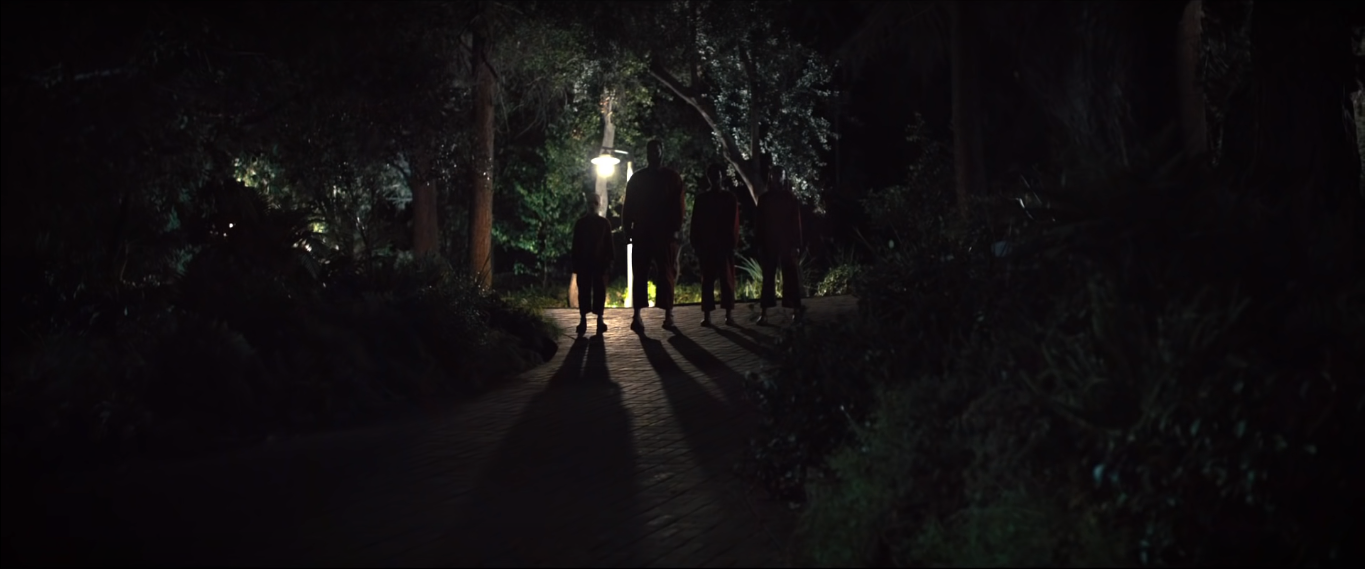
us 1.pngShadows and reflections are essential elements of the film
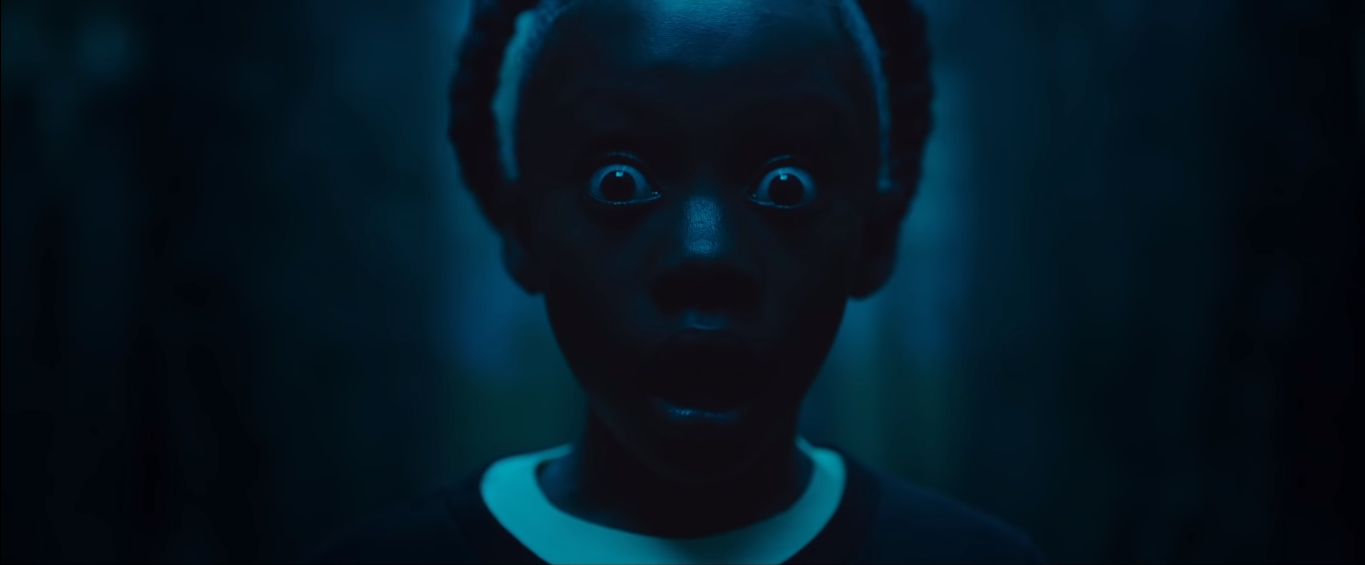
The game of mirrors presented in Us starts right of the bat with the name of the film. There is ‘Us’ and ‘US’, and with that information in mind we can expect the film to present certain political ideas. The problem with it is that most of the times the small scenes are full of certain meanings that contrast with the main concept of the film, creating a lot of room for interpretation, especially considering the film as an exercise in ideology. The best thing about the film (after Lupita Nyong’o’s mesmerizing performance) is arguably how vague its political readings can be. We are teased with the idea of it being a political film with the title alone, and yet the film challenges us to dig deeper to find any consistent concepts regarding its ideas. Despite touching on the subject of racism, Peele’s vision is now aiming at broader issues with Us.

Being a comercial film, it comes with its problems. Some of the scenes in the film are too predictable in its stereotypes. What helps the film to get over these scenes is its usage in an almost metalinguistic cinematic way. Peele knows his horror clichés and uses them in an ironic way briliantly, playing with our expectations and creating genuinely funny moments. As an European citizen it is hard to understand the realities of racism in America (mostly due to our racial prejudices being of a different nature and having a different expression), so probably these complaints at the end of the day are just conditioned by my personal life experience. Having this in mind, Us regards the subject of racism in a lighter way than what was expected, especially considering its main theme. This is not a negative criticism at all, because as I mentioned before, the vagueness of Us adds a lot to any reading of the film, including a reading inclined to the ideas of racism.”

Visually it is more interesting than Get Out (2017), despite being a completely different film. It is creative and intelligent in its visual style, enough to be noticeable when comparing it to other big horror blockbusters. However, it still ends up feeling a little bit flat, just like Peele’s previous did. The use of music is brilliantly funny, and the original soundtrack is really great as well, especially the anthemic track (that reminds me almost of The Omen‘s (1976) soundtrack). Technically it is satisfying enough, never being truly flabbergasting.

us 2.pngThe already iconic shot from Us

By what I’ve said so far one would assume that Us is a brilliant film. But it is not. It is too vague and too self-conscious to be just a commercial film to watch at the mall, and too predictable in its techniques and paralells to be a really serious and innovative picture. One of the things that troubles me the most is that its vagueness translates a lot into meaninglessness, even though it is clear that there was a care in creating a well-rounded plot (in a Hitchockian way) and complete concept. The second thing that annoys me is the necessity to overexplain everything in the end. The “plot-twist” was rather predictable and despite the film having a lot of interesting buried plot points, it leaves a more experienced viewer feeling that the film is being condescending.

This text took into consideration spoilers and I decided to not discuss any of the plot, as it is very fun to watch without knowing what it is about. Gather some friends and go watch it. Probably every person will come out of the theater with a different reading of the film (I read somewhere that a guy thinks that the film is somehow anti-socialist. I highly doubt that though) and it is an enjoyable time in the cinema. Don’t expect too much out of it, but face it with enough seriousness to consider it, as it is clear that a lot of work and dedication went into it. Jordan Peele seems like he will be the new horror genre director to look out for, though.


6 out of 10

Alice (1988)

(original title: Něco z Alenky)

Directed by Jan Švankmajer

40000-alice-0-230-0-345-crop

“Alice thought to herself: ‘Now you will see a film made for children… perhaps. But, I nearly forgot, you must close your eyes, otherwise you won’t see anything.’ “

Jan Švankmajer is one of those directors that is a legend to the lovers of animated films and sadly underappreciated by the general public. In a way it is a disappointing fact, but at the end of the day, stop-motion animation is still a very particular style, and when combined with surrealism and experimental imagery, there is not much left for the casual viewer to incline in its direction. Nevertheless, Švankmajer’s work is an influence to some of the most successful directors in Hollywood, such as Tim Burton for instance. Being a fan of puppeteering and stop-motion, it is hard not to include one of his films in our Classics category, as not only is he a master of the art of puppets and traditional surrealism, but also a great filmmaker that channels his very unique vision with full use of the medium.

If it wasn’t obvious enough, Alice is a film adaptation of Alice’s Adventures in Wonderland, the famous novel written by Lewis Carroll. Despite being very faithful to its original material (even comparing it to some other adaptations, that tend to mix up the novel with its sequel Through the Looking-Glass and What Alice Found There), it does not depict all of the episodes in the book. However, every line in the film (not including the quote we selected above, that is at the very beginning of Alice) is taken directly from the novel. That said, it completely re-reads the novel, illustrating it in a creative and new way. Its style must have been described as truly unheimlich if Sigmund Freud had the chance to watch it. This is mostly because of Švankmajer’s obsession with everyday objects and things that are well-known to us, giving them a life that should not be. Dodgson’s novel is the perfect object to be narrated by Švankmajer, as it is an inheritly playful, ambiguous, psychadelic and metamorphic story. Other surrealists have taken a chance at this novel, but only the odd combination of interests in Švankmajer could result in such an interesting piece.

alice 2Alice shrinks into a doll.

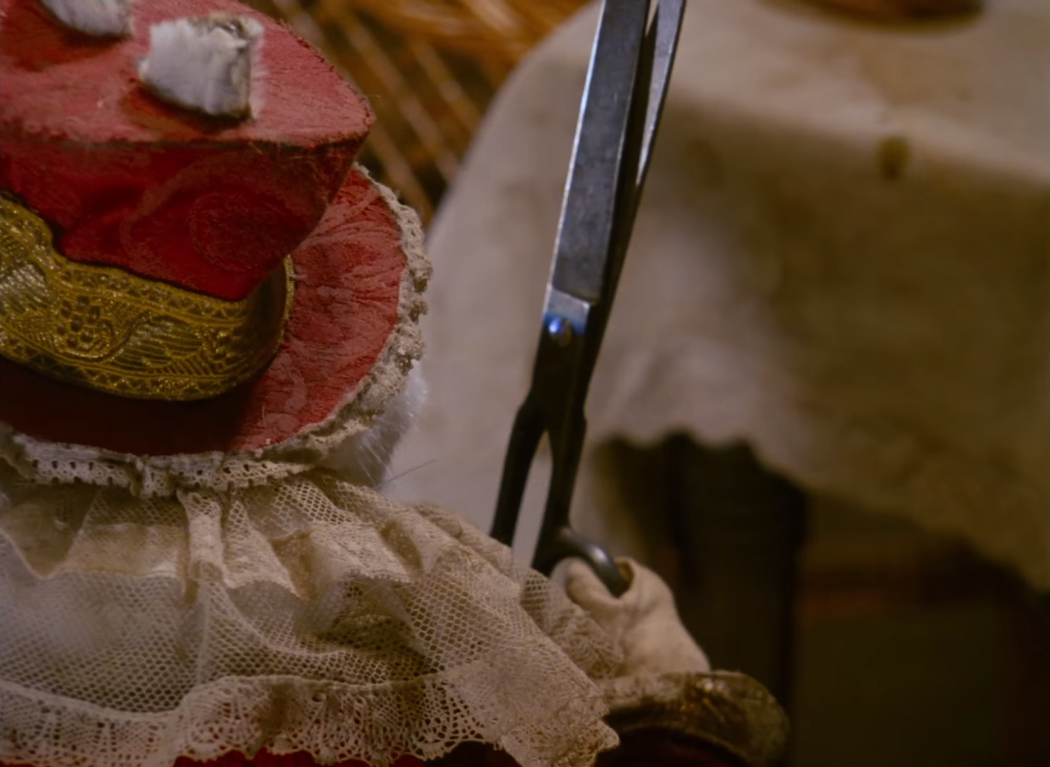
By the end of the novel Alice wakes up in her sister’s lap, as she shouts (after growing spontaneously) that all those soldiers were just a “pack of cards”. And in fact we suppose by her sister’s description afterwards that all of her adventures in Wonderland were her background setting fantasized. Švankmajer takes these ideas to an absolute extreme, utilizing animation in everyday objects and artifacts instead of focusing on creating polished fantastical creatures. This creates an incredible textural feeling in the film, something that is common in his body of work. It seems that he knows of the many different readings of the story as well, as his semiotic game (combined with smart editing, framing and cinematic techniques that are not strictly related to the effect of the animation) shows knowledge about the different subtexts of Alice in Wonderland, with a special insistence on its sexual and psychoanalytical readings.

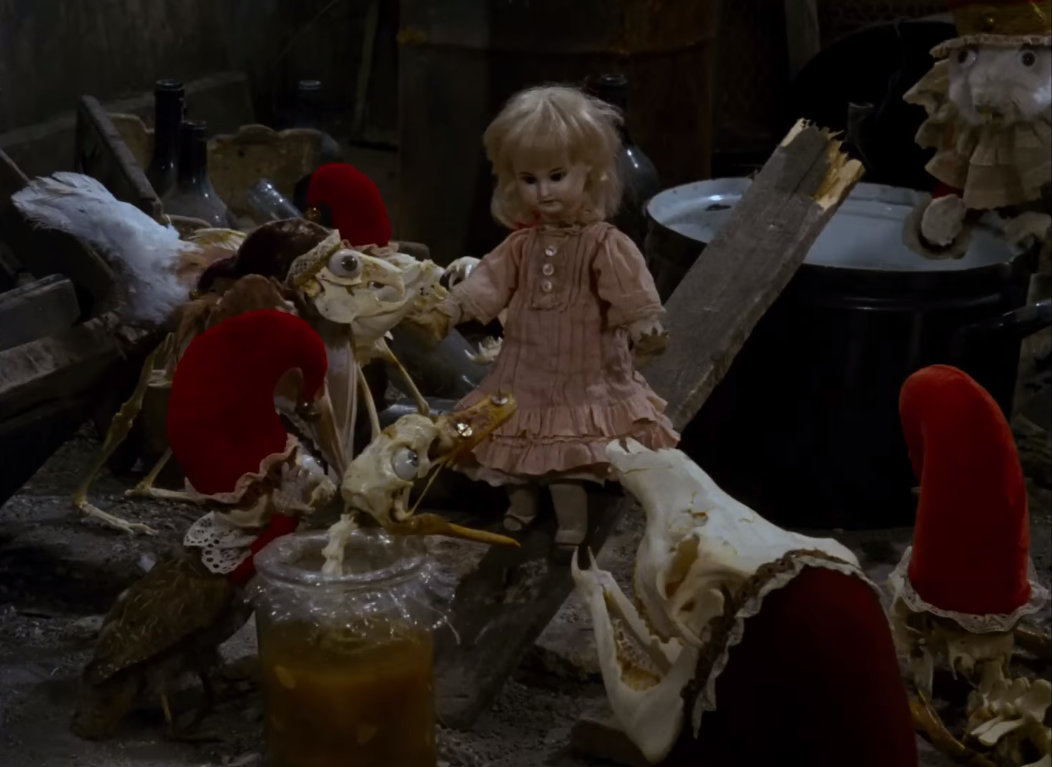
alice 1.pngProbably the most unsettling scene in the film, the infamous tea party.
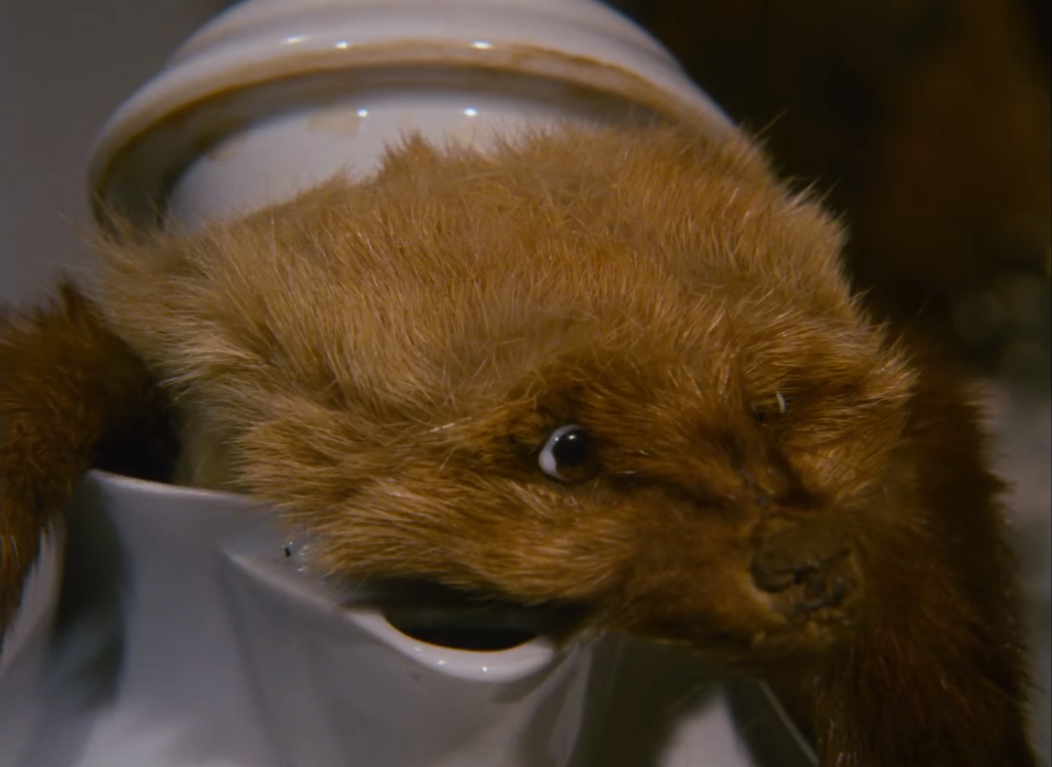
As in some of his other works (such as Conspirators of Pleasure (1996) and Little Otik (2000) ) we can observe in this work a presence of sexuality in childhood. It is a very subtle and delicate subject, but the honesty and tactility of the director allows these themes to flow in a poignant yet brutal way. The process of coming of age, clear in Dodgson’s original, is a prominent theme in the film overall. The brutal violence of growing in Švankmajer’s version is less evident than in the book, but it burns at a much more deeper level. This is mostly due to the use of the medium of cinema (images and time) combined with the animation and metamorphosis of inanimate objects (especially regarding things like meat and bones, that are a staple of Švankmajer’s, that when back to life create this uncanny feeling of seeing a sort of in-between of life and death).

alice 3.png“Off with their heads!”

Alice is a film to feel and not just watch. As the main character said, it is a children’s film, with the exception that it isn’t. It is, though, an incredible revisiting of a timeless classic. Focusing on the coming of age aspect of Alice, the cyclic nature of the story, the transformations and the perception of the real in human imagination, the film is definitely not for everyone. It is highly stylized, sometimes cryptic and ambiguous and it does not follow an easy narrative for the ones that are unfamiliar with the story. One can’t deny all these obstacles to the big audiences, but it is making it injustice when saying it is not a unique experience that will probably change the way you look at film as an art form and reconsider an old but dynamic and always fresh animation technique.

The Sisters Brothers (2019)

Directed by Jacques Audiard

MV5BOTZmNTI1MzMtMGY0ZS00YTRlLWI4OTktYzE3YzZjZjJkNDVlXkEyXkFqcGdeQXVyMjM4NTM5NDY@._V1_SY1000_SX675_AL_

“I had to help him. He is my brother.”

The western genre has been a staple of the American cinema since its early beginnings in  the turn of the twentieth century. It helped to create a romanticised image of USA’s growth as a powerful nation, from the lawless open deserts filled with bandits, to the fights against the native Americans. Sometimes problematic by today’s standards of justice and ethics (mainly because of unjust representations of non-whites) the western were a very successful category mainly until the end of the sixties when the Vietnam war and the civil rights movements shifted the attention to other more pending issues at hand.

The Sisters Brothers is the last main western release in line with the many that came out in the last years. This western revival has a different paradigm to what it was the purpose of old-time ones. It focuses on unusual themes for the genre (like the African-American struggle in Django Unchained (2012) or portrays the characters in a rather much more crude and realistic tone compared to the idealistic and clean aspect of the old westerns (for instance The Revenant (2015) or True Grit (2010)). The film we´re focusing on today takes a similar stand and pretends to use some of the western typical tropes to depict a deeper story than it appears on the first hand. As the two main protagonists we have Eli Sisters (John C. Reilly) and Charlie Sisters (Joaquin Phoenix). The two brothers and outlaws serve as hired guns of a mysterious wealthy man known only as the Commodore and accept a contract to kill a a man named Hermann Warm (Riz Ahmed), a chemist rumoured to have found a formula that makes the gold glow underwater.  The film is set during the gold rush in the western part of the United States. It takes into thoughtful consideration the creation of a truthful atmosphere, displaying a effervescent growth of towns made up by people fascinated by this “easy” way to get rich. Another character named John Morris (Jake Gyllenhaal), also an employ of this Commodore, tries to find the same man as the Sisters. He is the first to encounter Warm, who after some initial struggle convinces him to join him in a partnership. Warm is an idealist kind of man, dreaming that the money raised with his invention could make way for an commune in Texas, where every man was equal and without social classes. The film takes place in 1851, three years after  Marx and Engels’s Communist Manifesto was published and it sure had made a deep impression on Warm. Despite this hopefulness in his mind, his invention, as we can see in the end of the film, is of terrible physical harm to humans. Almost as if there is somewhere a metaphor associating creation of wealth and the suffering of millions of low-class citizens.

vlcsnap-2019-03-23-19h34m47s543“You never thought about stopping?”

The focus of the film is primarily the relationship between the two brothers. Eli acts as the more responsible of the two, almost as a father figure to Charlie, always trying to protect him. Charlie, on the other hand, is a drunkard, with a somewhat nihilistic posture to life. In a scene we see the two discussion a future without being hired killers, with Charlie being deeply against any possible career change. Despite all the harsh times and difficulties, we can experience an honest brotherly love between the two. They only have each other and shared a severe childhood, mainly because of a drunk and violent father figure, something that can explain most of Charlie’s attitude towards alcohol and violence.

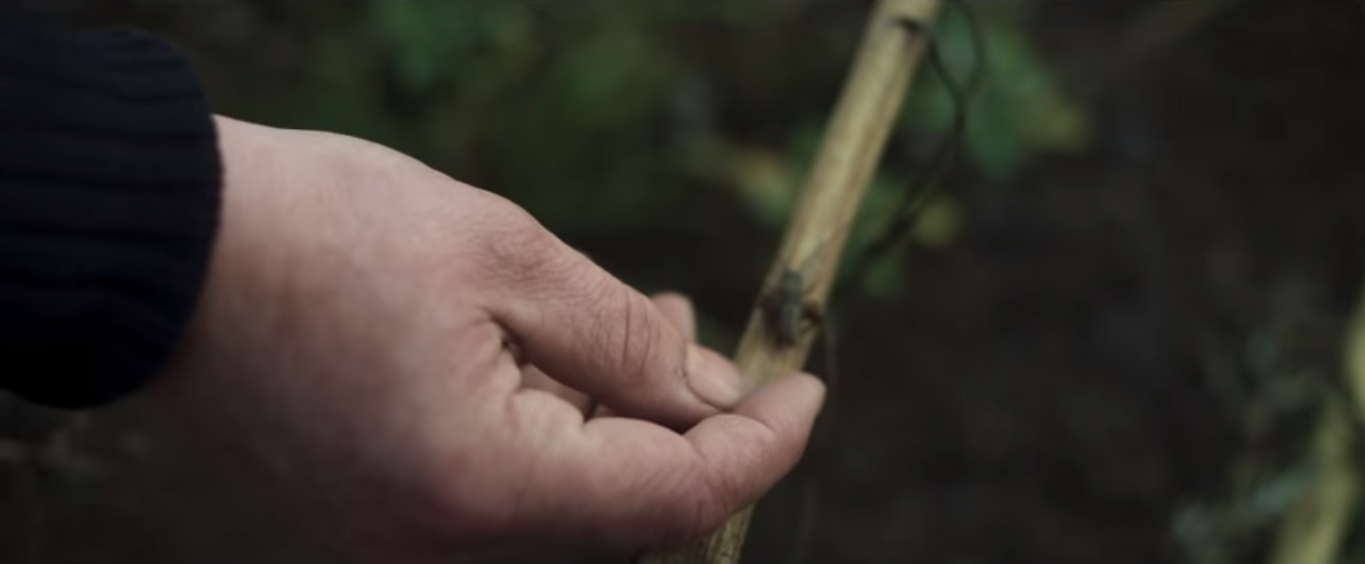
Director Jacques Audiard (responsible for films such as Un prophète (2009) or De rouille et d’os (2012)), makes its first English speaking feature with The Sisters Brothers. Like Sergio Leone and all the “Spaghetti western” genre, not being an American truly brings a fresh new approach to such a classic and almost a creator of an American identity. Despite being a violent film, with the protagonists being cold hard killers without remorse, the viewer cannot help but to empathize with them. The “Wild West” was truly a rough time to life and that is well represented in the film. In a scene we see a spider entering Eli’s mouth, making him very sick in the following day, in one of the most gruesome moments in the film.  Everything surrounding the brothers seems to want to eliminate them, from other outlaws to Mother Nature itself. Despite all the euphoric feeling towards a growing economy, there is a deep loneliness in the men, completely tired of this extremely competitive world. The ending of the film truly reflects that, not obsessing, like old time westerns, in a sense of true justice, but in internal peace and fulfilment.

The Sister Brothers is a good film, with superb performances and a great care for the film’s ambience. It is not a perfect film, mainly because some of the sudden changes, from slapstick comedy to the more dramatic moments feel somewhat odd. It may also feel to more impatient viewers as if nothing much is going on many if the scenes. Despite that, is an different approach to the genre and definitely not to be missed.

7 out of 10

Kuroneko (1968)

Directed by Kaneto Shindo

MV5BZDM5ZDAwNmQtZmNjMi00NTJhLThkNTMtNzlhZWIyZmVlMzRiXkEyXkFqcGdeQXVyNzI1NzMxNzM@._V1_SY1000_SX710_AL_

“What ghost would dare hate us?”

Kuroneko is directed by the late Kaneto Shindo (1912–2012), already at the time a revered figure in Japanese cinema with features such as Hadaka no shima (1960) or Onibaba (1964). The film takes place in medieval Japan during the Heian period, torn by civil war. In the opening scene a group of samurai approaches a bamboo house owned by two women: Yone (Nobuku Otowa) and her daughter-in-law Shige (Kiwako Taichi). They end up raping and killing both and the house is razed by flames. It’s a powerful opening shot that challenges the chivalrous notion associated with the honoured samurai. Out of nowhere, in this devastating scenario appears an eerie black cat that licks the dead bodies. The cat, surely a representation of evil, is a presence through the film until its final climax .The spirits of the two dead women then make a pact with evil forces in order to be allowed to return to Japan.  With revenge in their minds they will now dedicate their time to kill and drink the blood of the samurai.

vlcsnap-2019-03-19-20h27m40s269“You must be a ghost to be wandering so late at night”

In the following scenes we see a careful and well managed method of creating tension in the viewer. The younger woman seduces a horse-riding samurai to her house, where her mother in law is waiting. There the man is well received by the two hosts, in a charming and warming manner. The samurai is completely relaxed and inebriated by all the sake he could drink, which makes this the perfect opportunity to attack. It’s a slow and well-constructed pace that serves the purpose of creating a stressful environment quite well. An unnerving meowing is heard in the background, always reminding of the dark spirits within the two woman ghosts. The pattern of killing is repeated with a few more samurai soldiers. Waiting for them at the Rashomon (a big gate at Kyoto’s entrance), the younger woman plays an angelic and naïve part, entrancing the man also with her physical attributes

.vlcsnap-2019-03-19-20h28m50s696A dance before the sudden atack

The film takes an even more tragic turn when we’re introduced to the character of Gintoki (Kichiemon Nakamura). He is the son of Yone and was soon to be married to Shige, before the civil war separated them. His success in the conflict has made him a respected samurai, creating a conundrum when he finally meets the ghosts of his family. To worsen things, he his pressured by his superior to eradicate the ghost problem that has killed a lot of his men.

As a horror film, Kuroneko takes by the hand of his director extreme care with creating an eerie atmosphere, especially with the extensive use of fog. It is present in a lot of scenes and creates a sense of unrest in the viewer. The use of shadows as a visual cue is also very interesting, notably in one of the kills. Here, the shadowy effect behind a curtain creates a different way of displaying death, never boring the viewer despite the similar scenarios. Regarding the lighting, it accentuates murky rooms and backgrounds, while spotlights and backlighting seem to illuminate a character in the frame. The translucid clothing and curtains in the house are great means to accentuate the supernatural and ghostly figure of the two women.

Kuroneko functions as more than a simple horror film. Like referenced above, it crushes the image of sainthood a lot of times imposed to the armed forces. It challenges the discrepancy between ethic codes like the samurai’s Bushido, and the real actions of the regular soldiers in the war. Despite this code being a big influence on Japanese’s ethics (even in the modern times), it didn’t avoid the numerous war crimes committed by Japan during World War II. The film tries to separate the idyllic from the real, demonstrating that the honour and respect for the other is something bigger than the job or title they assume. The film has also clearly a feminist approach against models of toxic masculinity displayed here by most of the men. The rape scene in the beginning of the film is shocking not because of any gratuitous violence displayed, but by the total normality of it. For the soldiers it’s just one more day in their lives, and not an ounce of regret is exhibited. So it makes the violence against the samurai throughout the film justified and deserved in a certain way. But in the end, when there is the confrontation with a loved one belonging to the class they swore to kill, an internal dilemma heaves out of this conflict. Is there space for forgiveness or must it be completed without any exception? Is direct revenge the only true way to resolve one’s problems or will it make even more harm?


Gräns (2019)

(eng: Border)

Directed by Ali Abbasi

grans 1

“I don’t see the point of evil.”

Inspired on a novel by John Ajvide Lindqvist (better known for Let The Right One In), Border is one of the films to have a lot of controversy and high regard last year. To it was awarded the Un Certain Regard award at Cannes, and it even managed to swiftly get a nomination to the Oscar for Best Achievement in Makeup and Hairstyling. The controversy is mainly due to the sexual nature of its themes. It is an undeniably shocking film. The usage its shock value is, however, very pertinent. As Let The Right One In (2008), the transformation of Lindqvist’s story into film works brilliantly, combining the already poignant themes present in the words and visually expanding them, something that is even more noticeable in Border, mainly due to the irreverence and shamelessness of the film’s imagery.

The film follows Tina (Eva Melander), a security officer working on border control, and he daily routine. She is not blessed by standards of Western beauty and has a menacing look that works well with her magical power of being able to smell people’s feelings. She lives an unhappy marriage and has no friends other than her mentally-ill father. There are two big changes in her life when she smells a memory card on a passenger’s phone that is full of snuff films and child pornography and on another scene sees a guy that is oddly similar to her and confuses her special sensibilities. These changes lead to two inner plots in the film that consist on one side a detective thriller-like film and on the other a romantic story that leads to Tina’s discovery of her true identity.

border 2.png

Border is a story of fluid bodies and souls trapped in an ordered world. Tina and Vore (Eero Milonoff) are figurations of chaos inside an organized Western society. However, if we consider the sexual nature of the film we quickly understand that there is a political edge to this chaos. Combined with the ideas of social isolation, foreignness and family issues we understand that the new dynamic presented by these two special characters is an amalgamation of every otherness that exists in our contemporary world. So far so great. The problem with the film is that while presenting brilliant ideas, it overly complicates them and by the end it leaves an undesirable odd feeling to the viewer. Of course this ending can be read as an anarchic solution to the aforementioned themes, or even as a following to the mythology presented half-way into the story, but never does it feel as smooth as expected. Comparing it to something like the ending of Do The Right Thing (1989), for instance, it feels really off considering the way the plot devices work beforehand.

Technically it is a decent film. It never does something that is not expected from an ultra-realist style film. Sometimes the camera seems to be too shaky, and even nauseating at times. In other scenes, the fast movements of the camera and all the shakiness contribute greatly to the inner beauty of the film. The original soundtrack is very enchanting and is really on the same page with the tone of the film. The make-up effects are pristine, as is Melander’s performance. I would say Eero Milonoff’s performance is never up to par with Melander’s, and sometimes is not even really good at all. But then again, that is never a big problem (even if combined with the shaky camera aspect of the film) if we face it with the originality and boldness of all the other decisions surrounding it.

border 4.pngOne of the great visual moments in Gräns

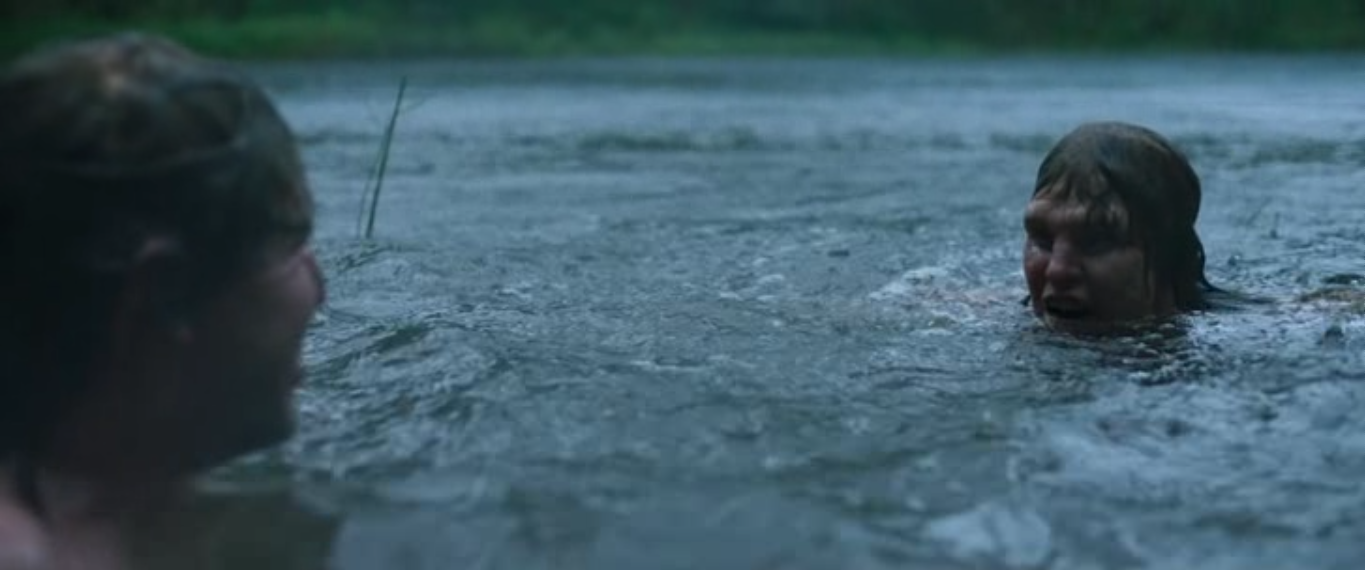
The reason I was not a big fan of Let The Right One In (2008) is probably the reason I am actually a big fan of Border. It is a consciously awkward film, one that is aiming specifically at shocking the viewer in order to get its ideas out there. Most of the times this technique does not work, but with Border it does, as it is probably the perfect figurative film of the many lost souls in our monotonous society. Even though it is not perfect, particularly the thrilleresque subplot, Border works a lot better than expected. This review tried to say as little as possible about the singular elements of the film because in order for it to work it is mandatory to watch it with little knowledge about what is so special about it. It released in Portugal last week despite having been distributed in the rest of the world earlier this year. Still, try and watch it on stream or DVD, because if you don’t, you will be missing what is probably the most excruciatingly, cringeworthy and at the same time beautiful sex scene of the last few years (and for that alone it deserves ½ a point).

6.5 out of 10