The Spirit of the Beehive (1973)

(original title: El espíritu de la colmena)

Directed by Victor Erice

MV5BMTIzNjYwMTUzMl5BMl5BanBnXkFtZTcwNTE4MDQzMQ@@._V1_

“Why did he kill her?

Children in film are often used as a powerful tool to portray an array of heavy and dark sentiments through the eyes of naivety and without preconceptions. If we take, for instance, the experience of war, this innocence shattering event makes up for a potent art statement. For example, in a film like Elem Klimov’s Come and See (1985) the sheer expressions of horror in the face of the young Florya, during the Nazi’s invasion of the Soviet Union makes up for an image far more lasting than if it was an adult. There is something about the loss of innocence combined with a sense of escapism in a child’s mind to deal with that shocking reality. But it doesn’t need to be as eerie and explicit like that to make a deep impression. In a film like Children of Heaven (Majid Majidi, 1997) the journey for a poor child to get a new pair of shoes for his sister makes up for a simple but not less beautiful and warm experience.

The Spirit of the Beehive is not in anyway as a traumatic experience as the Klimov film mentioned above. The plot takes during the early years of Francisco Franco’s fascist regime in Spain. It is interesting to point out that this film was released during the last years of this dictatorship, marking perhaps, by the themes portrayed in the film, a pending weakness in the regime. The main characters are two young sisters, Ana (Ana Torrent) and Isabel (Isabel Telleria). Their father has a myriad of occupations that go from bookkeeper to beekeeper and poet.  Taking place in a small Castillian village in the Spanish Meseta, cinema is a motive for great excitement in this quiet town. The projector is set on an old barn and all the inhabitants, including the small girls watch a dubbed version of James Whale’s Frankenstein (1931). The impact is immense on the younger one Ana, who leaves the cinema traumatized by the famous drowning scene. Obsessed with the monster, she looks for any sign of the monster close to home. The search ends up leading her to an isolated old shed on a large and desolate piece of flat land. Inside there’s a wounded republican soldier, trying to escape death at the hands of the Francoist forces. The small girl, naïve to all the political struggles, steals food from home to feed the desperate soldier. The Republican partisan is found and shot by the Nationalists which leads to the suspicion that Ana’s father was the one helping him. The pressure for the daughter ends up being too much and she escapes next to a lake, making a clear parallel with the Frankenstein plot.

captura-de-ecracc83-2019-05-01-acc80s-17.04.18.png
The impact of the film reflected in her eyes

Portraying a Republican this way, like a wounded horse waiting for its demise, is an obvious example of a critique against the then fascist Spanish regime. In the seventies, dictatorships in Europe suffered an enormous amount of pressure by the rest of the western powers that already lived in democracy. Regimes like the Spanish (and as well the Portuguese one) grew more and more isolated. That could explain why films like this one or Viridiana (Buñuel, 1961, a ferocious critique of the catholic church, usual theme in Buñuel) passed the censors, despite the bad image they made of the regime. With general Franco’s death in 1975, Spain would finally make its transition to a democratic regime. Despite this obvious message, this film is much more than a political statement. It deals with the pureness of a child’s imagination, and how the make believes sometimes juxtaposes the sense of what is real. The innocence of Ana makes her completely unaware of the possible troubles she may be getting into by helping the soldier. Ana Torrent (that would end up working also with Carlos Saura in Cría Cuervos (1976)) makes up for an extremely sincere and sweet innocent child, in one of the more perfect roles played by a child that young. Merit has to be given to Erice for being able to blossom such a talent in a little child.

captura-de-ecracc83-2019-05-01-acc80s-16.55.38.png
The vastness of the Spanish “Meseta”

On top of the terrific performances, the cinematography is clearly an astonishing feat. The stellar work of Luis Cuadrado (who ironically was losing eyesight during the shoot) is found in creating this sense of emptiness both inside the buildings and in the vast Spanish flat lands. The house where the children live feels old and uninhabited and the small village is surrounded by immense of dry fields to lose sight on. The emptiness feels like a colossal canvas for a young child’s imagination. Together with the somewhat eerie but at the same time comforting soundtrack by Spanish composer Luis de Pablo, The Spirit of the Beehive is a cinematographic experience like any other.

Utvandrarna (1971) / Nybyggarna (1972)

(eng:The Emigrants / The New Land)

Directed by Jan Troell

MV5BZTJlMGEwMTgtNWRlOC00NmQ5LThiY2UtMGZjNTllNTEwZTdhXkEyXkFqcGdeQXVyNzQxNDExNTU@._V1_

The construction of the modern United States was a long and laborious process that encompassed many hardships by the countless ethnic groups that help created. Millions of people from all around the world embarked on ships to the American continent with the hope for a better life, incited by the “American Dream” that would bring freedom and economic prosperity, something lacking in their place of origin. Unfortunately, the country was built with more than free labour, with slavery and other racist cruelties being imposed to certain ethnic groups.

vlcsnap-2019-04-03-12h44m56s371.png“Many slaves have better dwellings, food, clothing and working conditions than most peasants in Europe”

In these films, the focus is given to a Swedish family in the mid-nineteenth-century. Sweden is represented far from the image of prosperity that we relate with today’s Nordic countries. It is primarily an agricultural economy, with an engrained protestant ethos. It’s a difficult life, with years of bad crops creating harsh conditions of life, allied with religious persecutions. The film takes focus on the couple made up of Karl Oskar (Max von Sydow) and Kristina (Liv Ullmann), inhabitants of Smalanda, a small farming town. Despite the economic difficulties their family grows, ending up with four offspring. The idea of emigrating to America is conveyed to Karl Oskar by his brother Robert (Eddie Axberg). Kristina refuses fearing for the safety of her children during a arduous transatlantic voyage. The death of their oldest daughter to overeating unfermented grain finally convinces the wife to abandon her hometown and embark on a perilous trip to United States. After selling everything they have, the trip begins, with some family friends and religious exiles.

One moment that is one of the biggest highlights of the film is without a doubt the farewell to their hometown. The director Jan Troell does a stellar job focusing the faces of the ones leaving that impoverish and grey land. The looks to the ones that stay, whether be family or old friends, are a sight that knows that is almost certain that they will not return to this place. It is a bittersweet feeling that almost makes the viewer a passenger in that old wagon that will take them to the boat. It’s without a doubt a very powerful scene that truly shows the experience of leaving one’s home country and all the contrast of feelings with that situation.

.vlcsnap-2019-04-03-12h33m26s268.pngThe ones that stay behind

The boat trip that follows shows, in a unique kind of manner the horrendous way that travelling the Atlantic Ocean was for the lower economical classes. Unlike today, the trip lasted for weeks, in an overcrowded boat, with very few preoccupations with hygiene, food or the comfort of its passengers. This kind of conditions are perfect for the transmission of diseases, and even the death of some of the passengers. It’s a claustrophobic feeling inside the large ship, leaving the viewer almost as anxious for the end of the trip as the travellers.

This kind of hardships and the detail for realism depicted in the films certainly makes the viewer feel a certain compassion with the characters. These moments portrayed are not gratuitous displays of poverty and the horrors of it just to shock the viewer or to take cheap lessons of humbleness from it. They are a part of history that sometimes is either forgotten or romanced by the newer generations. The United States of America were formed by emigrants that went to great lengths to give themselves and their descendants opportunities of life impossible in their countries of origin. It is certainly ironic that some of the people that descended from these impoverish and in need migrants now display fearmongering views against ones in similar situations.

Clocking more than seven hours of time length, both the films show a crude and genuine view during this period. They are sometimes slow movies and that take time to develop. Sydow and Ullman have truly a remarkable and honest performances, marked by a deep complicity with each other, and are accompanied by a cast of interesting and sometimes quirky secondary characters.

MV5BNDU0MmI0YWUtMzZiZS00OTg5LWFjMWYtOWRiMmZiYmY5MjlkXkEyXkFqcGdeQXVyNzQxNDExNTU@._V1_Film poster for Nybyggarna (1972)

As a follow up for Utvandrarna we have Nybyggarna (1972) by the same director, where we can follow the journey of the Karl Oskar’s family as they settle in a terrain In Minnesota. Here we are introduced to new problematics that challenge the idea of the so called “American Dream”. The richness of the new land is not enough for his brother Robert so he decides to go West, chasing the California Gold Rush. The war against the Sioux, a Native-American tribe (in the Dakota War of 1862) leaves his family in peril, with some perishing to indigenous warriors. On top of that, his wife has several problems with miscarriages and ends up getting dangerously ill. Like mentioned above it was a very difficult life in Sweden, but the change to America doesn’t seem to make it that much better. It’s a dangerous and lawless land and it would take years to create a stable State and a better growing economy. For ones interested in the knowing how the United States came to be, both the films are unavoidable because they create without a doubt a mental picture of the time that cannot be comprehended only by reading history books. It gives a voice to these people that made the ultimate sacrifice for a better future for them despite terrible adversities.

Alice (1988)

(original title: Něco z Alenky)

Directed by Jan Švankmajer

40000-alice-0-230-0-345-crop

“Alice thought to herself: ‘Now you will see a film made for children… perhaps. But, I nearly forgot, you must close your eyes, otherwise you won’t see anything.’ “

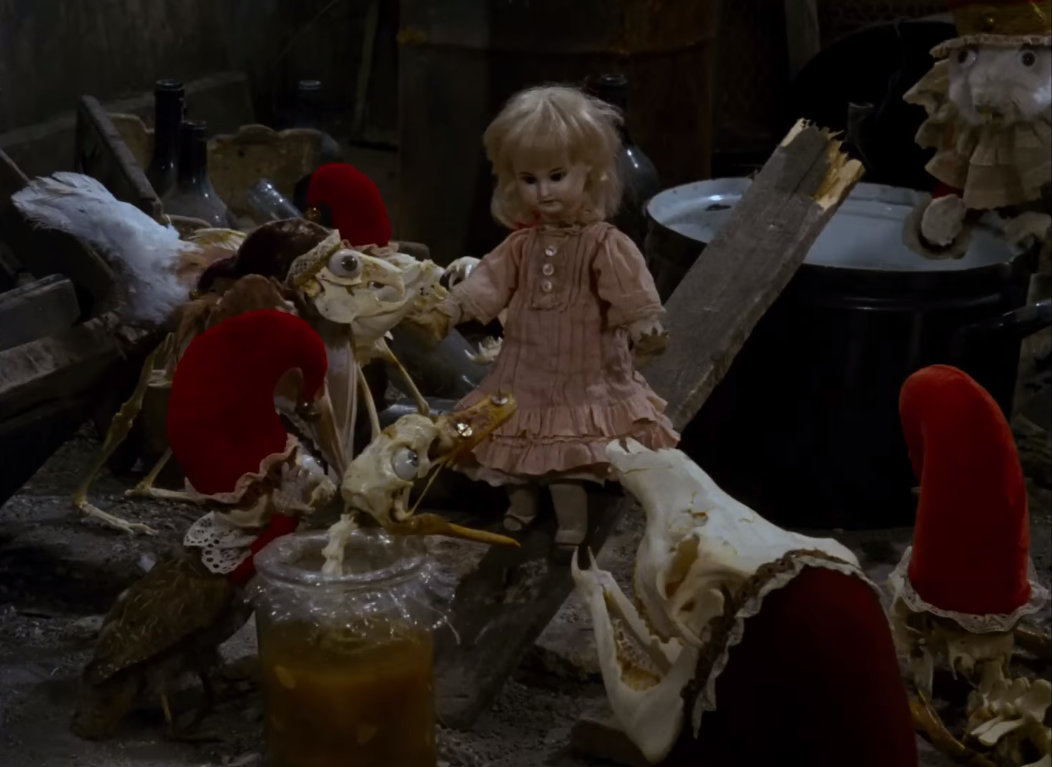
Jan Švankmajer is one of those directors that is a legend to the lovers of animated films and sadly underappreciated by the general public. In a way it is a disappointing fact, but at the end of the day, stop-motion animation is still a very particular style, and when combined with surrealism and experimental imagery, there is not much left for the casual viewer to incline in its direction. Nevertheless, Švankmajer’s work is an influence to some of the most successful directors in Hollywood, such as Tim Burton for instance. Being a fan of puppeteering and stop-motion, it is hard not to include one of his films in our Classics category, as not only is he a master of the art of puppets and traditional surrealism, but also a great filmmaker that channels his very unique vision with full use of the medium.

If it wasn’t obvious enough, Alice is a film adaptation of Alice’s Adventures in Wonderland, the famous novel written by Lewis Carroll. Despite being very faithful to its original material (even comparing it to some other adaptations, that tend to mix up the novel with its sequel Through the Looking-Glass and What Alice Found There), it does not depict all of the episodes in the book. However, every line in the film (not including the quote we selected above, that is at the very beginning of Alice) is taken directly from the novel. That said, it completely re-reads the novel, illustrating it in a creative and new way. Its style must have been described as truly unheimlich if Sigmund Freud had the chance to watch it. This is mostly because of Švankmajer’s obsession with everyday objects and things that are well-known to us, giving them a life that should not be. Dodgson’s novel is the perfect object to be narrated by Švankmajer, as it is an inheritly playful, ambiguous, psychadelic and metamorphic story. Other surrealists have taken a chance at this novel, but only the odd combination of interests in Švankmajer could result in such an interesting piece.

alice 2Alice shrinks into a doll.

By the end of the novel Alice wakes up in her sister’s lap, as she shouts (after growing spontaneously) that all those soldiers were just a “pack of cards”. And in fact we suppose by her sister’s description afterwards that all of her adventures in Wonderland were her background setting fantasized. Švankmajer takes these ideas to an absolute extreme, utilizing animation in everyday objects and artifacts instead of focusing on creating polished fantastical creatures. This creates an incredible textural feeling in the film, something that is common in his body of work. It seems that he knows of the many different readings of the story as well, as his semiotic game (combined with smart editing, framing and cinematic techniques that are not strictly related to the effect of the animation) shows knowledge about the different subtexts of Alice in Wonderland, with a special insistence on its sexual and psychoanalytical readings.

alice 1.pngProbably the most unsettling scene in the film, the infamous tea party.

As in some of his other works (such as Conspirators of Pleasure (1996) and Little Otik (2000) ) we can observe in this work a presence of sexuality in childhood. It is a very subtle and delicate subject, but the honesty and tactility of the director allows these themes to flow in a poignant yet brutal way. The process of coming of age, clear in Dodgson’s original, is a prominent theme in the film overall. The brutal violence of growing in Švankmajer’s version is less evident than in the book, but it burns at a much more deeper level. This is mostly due to the use of the medium of cinema (images and time) combined with the animation and metamorphosis of inanimate objects (especially regarding things like meat and bones, that are a staple of Švankmajer’s, that when back to life create this uncanny feeling of seeing a sort of in-between of life and death).

alice 3.png“Off with their heads!”

Alice is a film to feel and not just watch. As the main character said, it is a children’s film, with the exception that it isn’t. It is, though, an incredible revisiting of a timeless classic. Focusing on the coming of age aspect of Alice, the cyclic nature of the story, the transformations and the perception of the real in human imagination, the film is definitely not for everyone. It is highly stylized, sometimes cryptic and ambiguous and it does not follow an easy narrative for the ones that are unfamiliar with the story. One can’t deny all these obstacles to the big audiences, but it is making it injustice when saying it is not a unique experience that will probably change the way you look at film as an art form and reconsider an old but dynamic and always fresh animation technique.

Kuroneko (1968)

Directed by Kaneto Shindo

MV5BZDM5ZDAwNmQtZmNjMi00NTJhLThkNTMtNzlhZWIyZmVlMzRiXkEyXkFqcGdeQXVyNzI1NzMxNzM@._V1_SY1000_SX710_AL_

“What ghost would dare hate us?”

Kuroneko is directed by the late Kaneto Shindo (1912–2012), already at the time a revered figure in Japanese cinema with features such as Hadaka no shima (1960) or Onibaba (1964). The film takes place in medieval Japan during the Heian period, torn by civil war. In the opening scene a group of samurai approaches a bamboo house owned by two women: Yone (Nobuku Otowa) and her daughter-in-law Shige (Kiwako Taichi). They end up raping and killing both and the house is razed by flames. It’s a powerful opening shot that challenges the chivalrous notion associated with the honoured samurai. Out of nowhere, in this devastating scenario appears an eerie black cat that licks the dead bodies. The cat, surely a representation of evil, is a presence through the film until its final climax .The spirits of the two dead women then make a pact with evil forces in order to be allowed to return to Japan.  With revenge in their minds they will now dedicate their time to kill and drink the blood of the samurai.

vlcsnap-2019-03-19-20h27m40s269“You must be a ghost to be wandering so late at night”

In the following scenes we see a careful and well managed method of creating tension in the viewer. The younger woman seduces a horse-riding samurai to her house, where her mother in law is waiting. There the man is well received by the two hosts, in a charming and warming manner. The samurai is completely relaxed and inebriated by all the sake he could drink, which makes this the perfect opportunity to attack. It’s a slow and well-constructed pace that serves the purpose of creating a stressful environment quite well. An unnerving meowing is heard in the background, always reminding of the dark spirits within the two woman ghosts. The pattern of killing is repeated with a few more samurai soldiers. Waiting for them at the Rashomon (a big gate at Kyoto’s entrance), the younger woman plays an angelic and naïve part, entrancing the man also with her physical attributes

.vlcsnap-2019-03-19-20h28m50s696A dance before the sudden atack

The film takes an even more tragic turn when we’re introduced to the character of Gintoki (Kichiemon Nakamura). He is the son of Yone and was soon to be married to Shige, before the civil war separated them. His success in the conflict has made him a respected samurai, creating a conundrum when he finally meets the ghosts of his family. To worsen things, he his pressured by his superior to eradicate the ghost problem that has killed a lot of his men.

As a horror film, Kuroneko takes by the hand of his director extreme care with creating an eerie atmosphere, especially with the extensive use of fog. It is present in a lot of scenes and creates a sense of unrest in the viewer. The use of shadows as a visual cue is also very interesting, notably in one of the kills. Here, the shadowy effect behind a curtain creates a different way of displaying death, never boring the viewer despite the similar scenarios. Regarding the lighting, it accentuates murky rooms and backgrounds, while spotlights and backlighting seem to illuminate a character in the frame. The translucid clothing and curtains in the house are great means to accentuate the supernatural and ghostly figure of the two women.

Kuroneko functions as more than a simple horror film. Like referenced above, it crushes the image of sainthood a lot of times imposed to the armed forces. It challenges the discrepancy between ethic codes like the samurai’s Bushido, and the real actions of the regular soldiers in the war. Despite this code being a big influence on Japanese’s ethics (even in the modern times), it didn’t avoid the numerous war crimes committed by Japan during World War II. The film tries to separate the idyllic from the real, demonstrating that the honour and respect for the other is something bigger than the job or title they assume. The film has also clearly a feminist approach against models of toxic masculinity displayed here by most of the men. The rape scene in the beginning of the film is shocking not because of any gratuitous violence displayed, but by the total normality of it. For the soldiers it’s just one more day in their lives, and not an ounce of regret is exhibited. So it makes the violence against the samurai throughout the film justified and deserved in a certain way. But in the end, when there is the confrontation with a loved one belonging to the class they swore to kill, an internal dilemma heaves out of this conflict. Is there space for forgiveness or must it be completed without any exception? Is direct revenge the only true way to resolve one’s problems or will it make even more harm?


Le Havre (2011)

Directed by Aki Karusmäki

le havre 1

“I am ruthless against criminals but I don’t like to see the innocent suffer.”

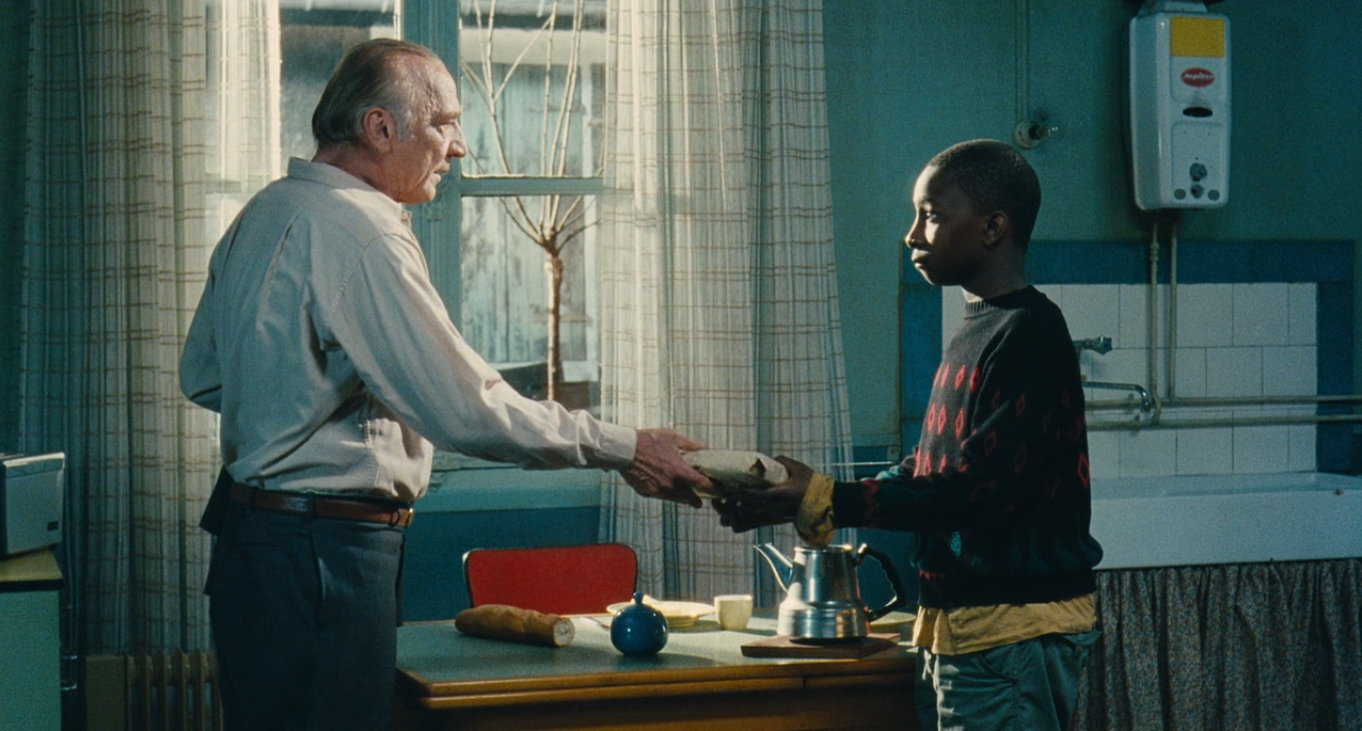
This week on Camera Coverage we are talking yet again about French Cinema, but this time we are moving fourth in time and talking about Le Havre by the Finnish filmmaker Aki Kaurismäki. This is arguably the director’s most accessible film, considering he is known for his absurdist and irreverent style. But nonetheless, I personally select Le Havre as his definite film and as a classic definitely not because of it being accessible, but because of it being an epitome of viewer manipulation, political cinema and Kaurismäki’s technical mastery. When we regard Le Havre as being less absurd and surreal than, for instance, La Vie de Bohème (1992) or The Man Without a Past (2002), we are talking about the narrative interruptions and singular hallucinatory moments in these films. However, Le Havre contains an absurdity that is conceptual to the idyllic grand narrative of its main plot. What is most impressive about this particularity in the film, however, is that when you see what it is really doing, you can never smile the same way at the colourful characters in Normandy as you did before.

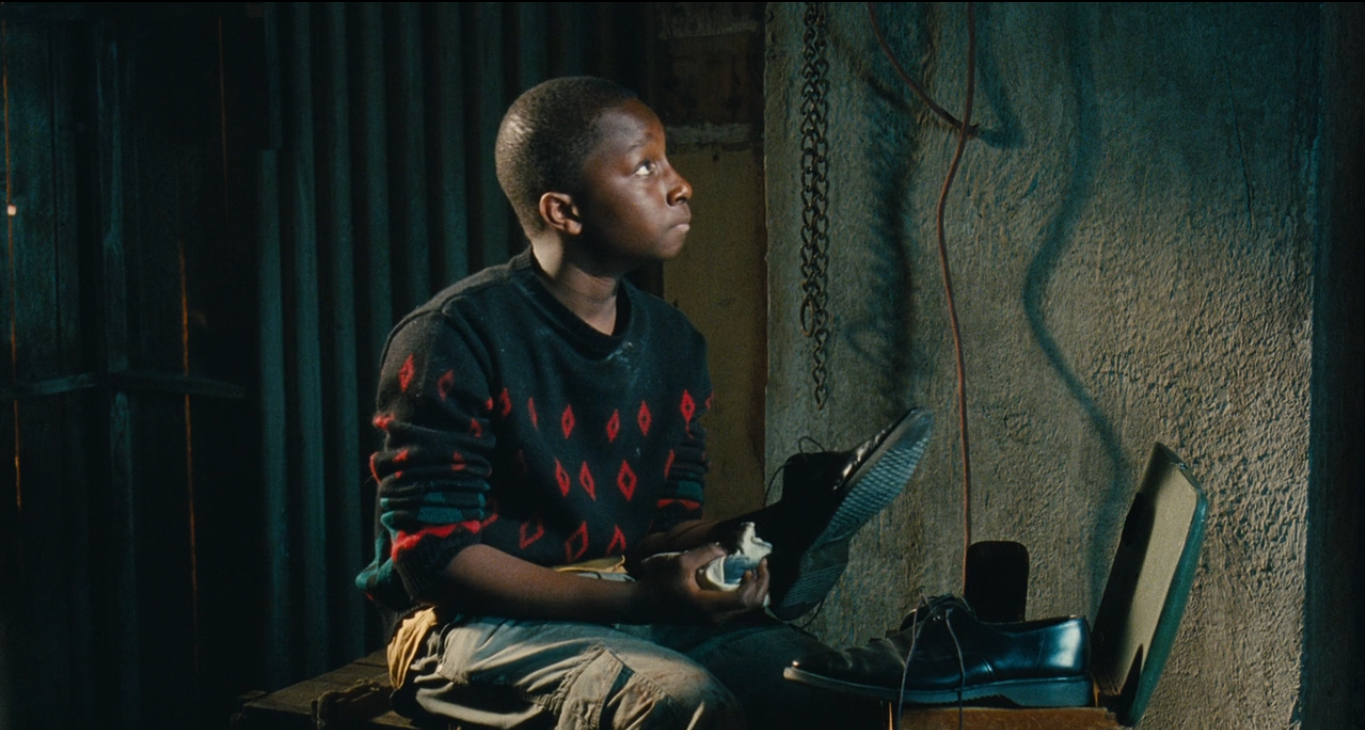
The film follows the daily life of Marcel Marx (André Wilms) and his colourful but monotonous routines. He is an old man, a shoe shiner, that while leading a poor life with his wife Arletty (beautifully played by Kati Outinen) we know he had many life experiences that got him the stability he has in this life of his (we assume this mainly due to his relationship with the other characters in town). All of the sudden, the order of Marcel’s usual tasks and routine is all shaken up as he finds a lost black boy that has tried to enter France illegally.

le havre 2.png“- Where are you going? – London.”

Kaurismäki unusual style is still present, especially considering the film’s framing and the characterization of its characters. The increased colour saturation and strategic placing of certain objects, combined with a complete vintage look regarding the clothes, hairstyles and makeup of its characters give Le Havre a vibe that is reminiscent of something from a Jacques Tati film. Having this said, the dialogues are much more idiosyncratic, following Kaurismäki usual style (despite, as mentioned before, being toned down in this particular film), that for the ones that are not acquainted with his past work, is something that reminds us of Jim Jarmusch for instance, especially regarding its sometimes obscure humour. This combination of vintage style and contemporary themes gives an edge to the idea of it being very self-conscious about its medium, something that in my opinion, despite not being something new, it is used to an uttermost mastery, elevating every single idea present in the film, even if you do not fully agree with its politics.

le havre 1The ultimate cinematic miracle

Despite being clear and conscious of its political inclinations, Le Havre goes a step further in its self-awareness, as the film seems to recognize that after all, this is all just a film. What could be seen like a mere whimsical, typically French and caricatured story quickly turns into an attempt to picture the hyperreality of the politics it is defending, and devastatingly twists the language of film into itself, resulting in the film being a product of pure manipulation but unmistakable honesty, even that it is being arguably pessimistic about the reality it is presenting. By the end of Le Havre and after flirting with the idea of clichés, we witness a miracle, a coincidence that is way too improbable to be taken lightly, even in this light-hearted modern fairy-tale. When we experience this beautiful cinematic and purely fantastical scene we should feel happy for our characters. But we can’t. Because the implication of this beautiful coincidence is that the world Le Havre is presenting is not our real world, and all the other picturesque and lovely situations are mere fabrications of cinema.

le havre fb e igIdrissa

Manipulation in films such as Forrest Gump (1994) or Schindler’s List (1993) are never welcome and often taint what is most of Hollywood cinema today, especially when it is clearly presenting political themes. But when we experience the technique utilized at its maximum potential in films like this, we seem to see unexpected potentials in the usage of this tool in our self-discovery. Kaurismäki seems to have hit the spot with this film, at least for me. In a French idyllic and polychromatic world he managed to make the black boy really seem like a part of the rainbow. Maybe one day in our real world we will manage to include all the current shunned colours in our own rainbows.

A Brighter Summer Day (1991)

(original title: Gu ling jie shao nian sha ren shi jian)

Directed by Edward Young

MV5BNzQ1OTRjYWYtZTZhYy00YTU5LWEwZjMtMThhYmM4YjA1NjI0XkEyXkFqcGdeQXVyMTQxNzMzNDI@._V1_

“Are you lonesome tonight?”

With almost four hours of runtime, watching A Brighter Summer Day may feel like too much too handle for the average movie goer. Even more if you take in account the fact that the movie is not spoken in English on the like of epics as Lawrence of Arabia (1962) or Ben Hur (1959). But despite all that, there is plenty of reasons to dedicate time for this Taiwanese gem. Spoken in mandarin (among other local Chinese dialects), it was at the time a considerably large project with more than a hundred actors participating. The directing was at the hands of Edward Young, one of the most important figures of the Taiwan cinema, responsible for Terrorizers (1986) and most notably Yi Yi (2000). This was his most critically acclaimed masterpiece and ended up granting him the best director award at Cannes.

The film takes place on the island of Taiwan, during the autocratic regime led by Chiang Kai-shek and the Kuomitang party. After the defeat in the Chinese civil war and escape of the nationalist forces to Taiwan, the Republic of China (RoC) was declared in the island. This two-china scenario, where both of them (the other being the communist People’s Republic of China (PRC)) claimed the legitimacy to control the whole China. The storyline follows Xiao Si’r (Chang Chen), a junior high student, from 1959 to 1963. Lacking on his studies he has to attend night school, full of delinquents, and where gang warfare is a commonplace. Si’r sits between the Little Park Boys, composed by the children of civil servants, and the 217s, made up of children of military officers.

vlcsnap-2019-03-06-11h16m38s145The two gang leaders 

This duality between army and civil populace is a common theme through all the film, especially to make clear of the impotence of the army authority to create a true sense of national identity. Important to notice though that in the period retracted in the film, the RoC was the official China to the West, in particular the USA. The western influence is very strong on the construction of a identity in this troubled Taiwanese youth. In a ballroom scene we can see the American, UN and RoC flags together, noting this hope for the West to resolve the many problems of a fragile state. A state that enforces militaristic views on his citizens starting obviously by the young. From the school uniforms that resemble army like ones, to the practice of western marching tunes (like the famous Prussian march Alte Kameraden) in school, everything is catered to give identity from war. But amidst all this we have the traditional Chinese views of family, which are in danger against growing western influence. The authoritarian views and the importance of the unity of the family trace back to the Confucius teachings that modelled the Chinese civilization, with values like the deep need for a hierarchy based on age and meritocracy. In the film we see in S’ir family how debt, problems with state authority (those two being his parents’ fault) and his failure of to get good results and respect his school superiors all culminate in deep shame for them all. Outside the family core, this coming of age film takes also a deep look into the value of friendship and love between the Taiwanese youth. Girls are seen as mere objects of enjoyment for most of the boys, but not as much for S’ir. A few scenes in we are introduced to this girl Ming (Lisa Yang), the girlfriend of the leader of The Lost Boys, Honey (Hung-Ming Lin), an outlaw running away from police authorities. Trough the film S’ir gets more and more infatuated with her which among the violent gang fights and his obsession to “save” her from the promiscuity ultimately leads to a tragic conclusion. One cannot help to feel a somewhat paternalistic side in S’ir regarding woman, as if they are incapable of taking responsibility for themselves and need a male saviour.

vlcsnap-2019-03-06-11h06m21s856“I’ll protect you!”

Regarding the cinematography there is a deep care for mainly long framed shots, with almost no use of close ups. The only exception are the ones shot inside of S’ir’s house. Being a traditional Japanese house, the viewer can’t help to feel an homage to directors like Yasujiro Ozu, especially for use of a low placed camera and use of sliding doors to create different camera framings.

vlcsnap-2019-03-06-11h13m51s316“So when will we see each other again?”

On A Brighter Summer Day, director Young tries to give a deep analysis on the basis of the Taiwanese identity. An island controlled by the Japanese for many years before, now is ruled by the nationalist forces, losers of the civil war. The gang violence (that goes to extremes in some scenes) goes hand in hand with the Elvis song “Are You Lonesome Tonight” whose lyrics give the English title of the film. A duality between violence and authority against lack of identity, naivety and melancholy is constant as the film goes by, leaving the viewer astonished by some of the decisions of the characters. In 1991, year of its release, the RoC was an economic powerhouse but has lost most of its international diplomatic reputation to the PRC (especially after it was replaced as the “true” China in the United Nations).

A Brighter Summer Day is not only a coming of age film about the Taiwanese youth but Taiwan itself. It shows the struggle of creating a new identity out of a lot of different and sometimes contrasting cultures. The two China problem has no end in sight but as the years go by, the more cemented it gets the construction of the Taiwanese identity, something that films like this one helps a lot to create.

Rosencrantz & Guildenstern Are Dead (1990)

Directed by Tom Stoppard

rosencrantz 4

“What are they like? Indifferent.”

On this week’s Classics section of our website we move away from the Golden Age of Cinema to the 1990’s with the adaptation of one of the most successful plays of the 20th century, Rosencrantz & Guildenstern Are Dead. Often compared with other plays like En attendant Godot (1952) regarding its themes – philosophical and hermeneutical – and absurdist style, Tom Stoppard’s work differs in its dealing with metadrama and metanarratives in general, something to keep in mind when watching the film version, even if it was also directed by Stoppard himself.

The main narrative surrounds, as the title suggests, the action of arguably the two of Hamlet’s lesser characters. The story follows them inside the world of Hamlet and participating, when due, with the other characters in Shakespeare’s play. When Rosencrantz and Guildenstern are not caught in Shakespeare’s words, they seem to be alienated from the situation they find themselves in. It is then where Stoppard’s promising ideas really come to life.

rosencrantz and guildenstern are dead 1.png“You see, it is the kind you do believe in, it’s what is expected. Deaths for all ages and occasions! Deaths of king and princes, and nobodies…”

The story treats the existence of characters in a play, the existence of characters inside a story. We are presented with both characters having different world views, even if the world surrounding them often confuse their names (as they are inconsequential and underdeveloped characters in the original Hamlet). Guildenstern (played by Tim Roth… I think) seems to question his surroundings, the absurdities both characters encounter since the beginning of the story, while Rosencrantz (played by Gary Oldman… or is it Tim Roth?) seems to passively accept the reality of these same situations. We are faced with this question between Free-Will versus Determinism that will develop throughout the story as Stoppard takes his side of the fight, when the story will clearly defend and deal with the idea of predetermined human action.

This is but the surface of what is a complicated but uncontested allegory constructed by Stoppard. Complicated questions are like bricks in this wonderfully intellectual wall. However, even if these themes are presented in a slick and rhythmic fashion, all of it can be overwhelming at times. Betwixt the main deconstruction of Determinism we are faced with themes like the questioning of God’s existence, the questioning of our place inside a community that observes us, the themes of private and public life, questions about complex hermeneutic and theoretical constructions, and the delightfully unanswerable question of does Art imitates Life or Life imitates Art; Rosencrantz & Guildenstern are Dead is, at times, even more daunting than what this very sentenced tried to describe. Despite this criticism, the dialogue never leads the viewer (or spectator, for that matter) to perceive Stoppard’s piece as pretentious. This is mainly because of the honesty and transparency of the aforementioned questions. I personally even defend that watching the film version will actually help to decontstruct and interpret a story that can be entangled in the depth of the metanarrative and metadrama in its theater version. Nevertheless, it is really fun, rythmic and enticing, while never being too obtuse or being pointless to the casual viewer.

rosencrantz and guildenstern are dead 2Scene referencing Sir Isaac Newton’s apple.

The film is often regarded as not being cinematic in the presentation of the original story. I would not completely disagree, as it is a film focused on dialogue, but it is not doing justice to Stoppard’s film adaptation when we say that it is completely devoid of cinematic originality. There is a gag added to the film regarding the encounter of Rosencrantz with famous scientific discoveries. Tweaks such as these combined with beautiful organic framing and cinematography, a clear sense of style and production design and great performances from all of the ensemble cast overthrow the arguable lack of originality regarding editing, for instance.

Despite not being as praised as our two previous picks for our Classics section, Rosencrantz & Guildenstern Are Dead is my personal pick as our first modern (or should I say post-modern?) “classic” film. Even though it is probably ideal to see it played in a stage, when you have no other option, seeing it on the screen will not leave you with a distaste for this adaptation of the classic absurdist play. And yes, it is cinematic enough to be considered as a great classic of cinema as well.

Le Silence de la Mer (1949)

(eng: The Silence of the Sea)

Directed by Jean-Pierre Melville

MV5BMWJjM2ZkZTEtZDM0My00YzU2LWEzNTMtMWExNDY3OWNmYjlmXkEyXkFqcGdeQXVyMTQxNzMzNDI@._V1_SY1000_CR0,0,708,1000_AL_

Filmed in 1947 and released two years after, Le Silence de la Mer was the answer of Jean-Pierre Melville to the dark period of Nazi Germany’s occupation of France. The script is inspired on the book by the same name written by the French author Jean Bruller. This novel, published secretly in France during the first year of the Nazi invasion, became a beacon of inspiration to the Resistance. Melville himself joined the French Resistance and fought for the liberation of his country. He established a deep connection with the book, noting later that it was the logic choice of inspiration for the script of his first feature film.

The narrative of the film follows a young German officer, Werner von Ebrennac (Howard Vernon), in a recently occupied French town. There he takes hold of a room in a house belonging to an old Frenchman (Jean-Marie Robain) and his niece (Nicole Stéphane). The new occupant is given a complete silence treatment by the French, despite the constant attempts of conversation by the German. A self-proclaimed Francophone, von Ebrennac speaks fluently the French language. With a gentle and warm posture, he shows his love for music and talks about his youth. But above all he talks constantly of the greatness of both countries, France and Germany, and the need for a closer relationship. This is the way he justifies the war, affirming that both the nations will gain tremendously with the new alliance. This vision is shattered though, in a scene where von Ebrennac meet with his fellow officers in Paris. Here he discovers that the rest of the army does not share his ideas of union between the two nations, but the total annihilation of the French spirit. He decides then to leave France and volunteers to the feared Eastern front to fight the soviet forces. It feels like he abandons all its hope described by his words through the film and embarks on a suicide mission, disenchanted by the ideals on his uniform and to the deserved punishment.

vlcsnap-2019-02-19-11h48m33s494“Then he knocked on our door/ Was it to spare us from the sight of an enemy’s uniform, or to make us forget and get used to him?”

The setting of the film is mainly the small living room of the house occupied by the young German officer. Except for a flashback to von Ebrennec’s nostalgic youth and the trip to Paris near the end of the film, all the scenes take place in the old Frenchman’s house. But it doesn’t feel claustrophobic at all, but rather cosy. It’s an austere film marked by minimalistic camera work and very few outside shots. Despite this, the viewer can’t help but feel but sympathetic to the German officer. In his “monologues” transpires a feeling of hope that almost grabs the other two occupants of the house, shattered by the fall of France and the enormous shame of defeat to Germany, its old rival. We get the perception that the old uncle, sitting on his chair silently smoking his pipe, has almost a inner urge to try and answer to von Ebrennec. His niece sits stoically knitting and completely evades the gaze of the intruder in her own house. Only at the last moment with his departure to the East we see this close up of the niece’s eyes glowing with light, as in final approval of the officer, giving him a kind of redemption and exceptionality against his German peers.

vlcsnap-2019-02-19-11h52m51s930“Do you think we’re so stupid as to allow France ever to rise again?”

The character of the german officer has its similarities with the captain von Rauffenstein (Erich von Stroheim) in Jean Renoir’s La grande illusion (1937). Both carry a deep sympathy for the enemy’s culture and feel the war is needed for the greater good of both nations. The difference lies primarily on age and grades of naivety. Von Rauffenstein is an old officer living with chivalric notions displaced from a period like World War I, marked by the mechanization of war and massification of the killings. On the other hand, the star of this film is completely fooled by the Nazi party real intentions for invading France. The conception of this heroic and chivalrous nineteenth-century times (where the dispute between the German Empire and France mainly started) is long gone, replaced by vindictiveness and the total annihilation of the enemy. The film starts with this homage to the bravery of the people who smuggled prohibited books. A man carrying a briefcase with books by authors like Camus or the above mentioned Bruller. A message after this scene transmits that this the wounds are too fresh, and the intention is not to solve the problem between the two nations.

Melville, like most of France is still in shock resulting from the German aggression and this film results as the possible answer at the time. He would return to similar themes in his movies, specifically Léon Morin, Priest (1961) or L’armée des ombres (1969). But these were movies made on the sixties, where much of the wounds were healed. It feels strange that Mellville, even more being jewish himself, decides to make a film where a German officer is portrayed in a civil and flattering way, a couple of years after the war ended. Perhaps it’s his way of showing, like the officer in the film, his admiration for the other side, and that a sense of reprisal must be refrained.

The Steel Helmet (1951)

Directed by Samuel Fuller

220px-TheSteelHelmet

“Told him I didn’t want any kid tagging along.”

Samuel Fuller is one of the most high-regarded filmmakers of the 20th century, being cited as an influence by many big names in American cinema such as Martin Scorsese or Richard Linklater. Today I am selecting one of his earlier works, and one that is not necessarily one of his most praised films, The Steel Helmet. Notorious for dwelling and transferring the pulp magazine aesthetic onto the big screen, being his most famous films Shock Corridor (1963) or The Naked Kiss (1964), Fuller always knew how to utilize the melodramatic and almost exploitative and sensational themes associated with the pulps to the fullest. In this early film, The Steel Helmet, he moves away from these archetypes and utilizes a reality well-known to him to deliver his poignant and spiky ideas of the war and of the politics of his time.

The film revolves around the Korean War, which was actually ongoing at the time of its release. However, despite propaganda for this war and the release of other films regarding this particular war, Fuller’s picture is arguably the less romanticized of the bunch. There is still a clear tragic pathos to the central plot of the film, but while other pictures focus on the glory and courage of the American soldiers, The Steel Helmet focuses on the soldier’s mindset, on the soldiers that are afraid, nervous and trying to survive in a war instead of soldiers gallantly marching towards their deaths.

The camera follows Gene Evans’ Sgt. Zack on the aftermath of a fatal confrontation of his platoon with North Korean troops, where he was the lucky one who survived, even though he was shot in his helmet. He finds a South Korean kid nearby which at first he dismisses, but eventually lets the kid follow him on his way out of the war. Again, it is not the first time we see children or teenagers in a war situation in American cinema, but what Fuller makes “Short Round” (the name given by the sergeant to the kid) go through is an unacceptably violent scenario, stepping on the joints of the viewer and creating an atmosphere of uneasiness that I can only imagine being almost unprecedented at the time of the film’s release, especially by the devastating emotional ending of this central plot.

steel helmet 2“Get yourself a pair of clodhoppers! No, no. Over there. Take Peewee Johnson’s.”

But arguably, the film shines most in its ideological ambiguities and in being genuinely humanizing. Even though this is a letter of hatred towards war, it depicts the communist side of the war in a really interesting way. It is Sgt. Zack’s war-prisoner that pushes some of the minorities in the squad at the Buddhist temple to reason with some of the social problems in America. He questions the African American soldier about him riding the back of the bus while he payed for the whole ticket, and faces the Japanese American soldier with the realities of the Japanese prisoners of war made by Americans in the World War II. Although the answers demonstrate an apparent loyalty to their flag, the insistence on the reaction of the soldiers by Fuller demonstrates that they recognize that there is something wrong with the American society .Unfortunately they must remain antagonistic and patriotic against the temptations of their communist enemy (even though they may be right on this one). There is, however, a complete disregard for the politics behind the war, and a distrust of Fuller’s on communist affairs, especially considering this situation of the prisoner that almost reminds us of the temptation of Eve, but also by the overall depiction of communist belief as betrayor of tradition and spirituality mirrored in the hiding and fighting in the Buddhist temple.

steel helmet 1“You pay for a ticket, but you even have to sit in the back of a public bus. Isn’t that so?”

There is also a subtlety in the interaction of the soldiers. Despite the angry, traumatized and cold Sgt. Zack being a result of warfare (despite that by the end of the picture he dives deeper in war trauma), the film emphasises the actual interaction of innocent and scared young men going through the actual process of trauma. There is an intimacy in The Steel Helmet that is absent in most American war films released at the time, and not in a romanticized way. The despair of war leads these young men to place hope and effort on small comforting gestures, most notably the bald soldier’s and the Japanese American soldier’s interaction regarding hair loss and their cooperation in such a personal matter, that is still important despite the dangers of a war background.

The film is an answer to pictures like A Walk in the Sun (1945), as it demonstrates that war is not romantic. It is a field where innocents meet their deaths, or even worse. Visually it is stunning, with great special effects and action set-pieces for such a small budget (around 103,000 US dollars) and full of small visual queues that are full of allegories and character building potential (small things like the North Korean soldier hiding behind the Buddha statue or Sgt. Zack playing with Buddhist artefacts in the temple). It is the combination of the outrageous situations with these subtleties that make Fuller’s work so enticing. The Steel Helmet is a relentless attack on war, but also an attack on racism and on the dismissal of spirituality. Complete with a shockingly tragic plot and definitely stepping the line with its themes by 1951’s standards, The Steel Helmet is my first pick for our Classics section of the blog, and despite it being often dismissed when competing with others from Samuel Fuller’s filmography, I have no problem in saying it is possibly my favourite from him.