The Beach Bum (2019)

Directed by Harmony Korine
mv5bmty3mduzmtazov5bml5banbnxkftztgwndk3odqynzm40._v1_sy1000_cr006751000_al_-1

“He may be a jerk, but he’s a great man.”

Korine became known on the movie industry for writing the screenplay for the critically acclaimed Kids (1995), being only 19 years old at the time. Made his directorial debut with Gummo (1997), Korine started to implement his vision for cinema. Unlike traditional American cinema (that depends heavily on the power of narrative), he prefers an approach not so plot based. The film flows freely along the small events that occur, without a sense of a strict plotline that must be respected. In a way his vision of cinema is closer to a European one, in line of a Godard or a Cassavetes (in terms of artistic inspiration, as in quality he is a few steps below still).

It is not in any sense a figure praised by everybody. His films create a divide both among critics and overall public. For instance, in his previous film Spring Breakers (2012) he tried to make a social commentary of naiveté and the new” American dream” the younger generations, using Florida as background. The result had some interesting notes but is one of those films that tries way hard to be more profound than it really is. And that is usually the reason that leaves people often disappointed with his work.

In Beach Bum Korine returns once again to Florida but using a different approach. Florida still maintains the very saturated colours that were used in Spring Breakers, along with some great cinematography. It carefully translates the warmness and tropical aspect of the place with some gorgeous backgrounds. The difference lies on the overall tone of the film. Florida is depicted usually in film as this tropical paradise, but the reality is usually grimmer than that. The Florida Project (Sean S. Baker,2017) did a great job portraying the lives of lower classes in a cheap motel, showing a rather dark side to the stifling blissfulness.

There are no taboos in Korine’s films, either it be sexual, drug use or violence and Beach Bum continues to follow that line. As the protagonist we have Moondog (Matthew McConaughey), this hardcore stoner that lives this extremely hedonistic life without rules. McConaughey plays with great ease a role that its not that new to him (as for instance Linklater’s Dazed and Confused (1993) ). As the film progresses, we learn that he used to be a great writer but now lives of his multimillionaire wife Minnie’s (Isla Fisher) bank account. It´s a non-conventional and open relationship, noted by the multiple affair that they both have, something that don’t seem to bother them that much. It’s only the event of their daughter Heather´s (Stefania LaVie Owen) wedding that brings them together once again. The absurdity of the wedding brings along some great comedic scenes as well some interesting caracters such as Lingerie (Snoop Dogg). Despite having an obvious affair with his wife, Moondog is still very fond of him. The film then takes an tragic turn that leaves Moondog completely broke and homeless. The only way of getting the money back if he writes a new book, something that he is avoiding for a long time.

These two events come without notice a shape the flow of the film. Throughout his ramblings he encounters some eccentric characters like Flicker (Zac Efron), an sociopath pyromaniac with an spiritual side, or Captain Wack (Martin Lawrence), with his fixation with dolphins. Everywhere he goes positivity follows him. There are no dirty places or bad people, everything is glowing in Beach Bum. His life seems completely chaotic and without any shape of planning. He is a free spirit, loved by everybody, and always with an unshakable positivity. It’s almost discomfortable his level of happiness, almost childlike and completely unaware of his surroundings. But it always works out well for him in the end, even when all could go wrong. The cathartic ending shows his views about money were purely utilitarian. He needed the money to continue his lifestyle, not for shows of grandeur and opulence. It can be seen as a critic to the money culture that rules over us and distracts us from the most important things in life.

Overall its an interesting experience that tries to convey a more positive outlook to the problems of the world. On a more profound level Moondog is a troubled soul showed by his alcoholism, drug abuse or his womanizer ways. Despite that he still has an inspiring way of guiding himself towards happiness as his main goal to life. It´s not a life changing film or his message is new by any chance but in the end, it makes up for a different and thought-provoking film experience.

6 out of 10

Divorce Italian Style (1961)

(original title: Divorzio all’italiana)
Directed by Pietro Germi
mv5bmjm3njqxmze3nl5bml5banbnxkftztgwnzmzotq1mze40._v1_sy1000_cr007071000_al_

“Have you really got another headache?”

This week we’re heading out to Italy with this film by Sicilian director Pietro Germi. His early work is characterized by a neorealist tone in the likes of Rosselini or Vittorio De Sica (in films such as Il ferroviere (1956). In the sixties his line of work shifted towards the satirical comedy in the likes of Dino Risi or Mario Monicelli. This Italian style of comedy, the so-called commedia all’italiana (comedy Italian style) is characterized by a profound sense of social criticism beside the curtain of apparent lightness of laughter. The film ended up giving Germi the Oscar for Best Story and Screenplay Written Directly for the Screen at the 35th Academy Awards in 1962 and as well the Best Comedy award at the Cannes festival.  

In Divorce Italian Style (1961), Germi plays a masterful take on the Sicilian machismo, only possible through an acute sense of comedy. Baron Ferdinando Cefalù (Marcello Mastroianni) is a disgraced nobleman married to Rosalia (Daniela Rocca). He has grown out of love with her and wants desperately to dissolve the marriage. The problem resides in the fact that at the time divorce was prohibited by law, leaving him “trapped” with Rosalia for the rest of his life. The illegality of divorce had its deep roots on the influence that the Catholic Church still had on life in Italy, especially the south. Fefè, as his wife affectionately calls him, draws a devious plan in order to get rid of Rosalia. By bringing her close to affection to another man, making him the cuckold, he could then kill then both, invoking that crime of passion and get away with murder. After this, he could finally make his move on to Angela (Stefania Sandrelli), his 16 years old cousin who he was infatuated with.

“Angela, what an unexpected pleasure”

The comic aspect of the film starts with the contrasts between the physical appearance of the couple. The baron is a cool figure, with a cigarette on the corner of his mouth, dark shades and a stylish moustache. A bon vivant and in a way a figure out of his time. But that is only a cover, shown by the preoccupations with his body (in a funny scene at the mirror where Mastroianni reflects about his belly size), and the way he presents himself at home, with the hair unkempt and rumpled clothes. In a way Mastroianni is creating a satire of the perfect and charming Italian lover, which includes himself in the lot (like in Fellini´s La Dolce Vita (1960). Despite all his flaws, Fefè is still convinced that he´s on top of his game and deserves a better looking and younger wife.

His wife Rosalia is characterized physically by the excessive body hair, especially in her face, with the subtle moustache and unibrow. Fefè is clearly repulsed by her and her constant shows of love make him rather disconformable. To add up, Rosalia has this very high-pitched voice and extravagant poses. The audience, despite knowing that is wrong, almost ends up in a devious way to agree with him. Germi makes the viewer enter in a conflict with themselves and therefore make him in Mastroianni´s shoes. If we analyse deeper though, Rosalia is a naïve kind of person, completely unaware of his husband unhappiness with the relationship.

Through the film we see him fantasizing about how he would kill his wife. Either by stabbing her in the back and throwing her into a soap caldron; or later in the beach by imagining her being swallowed up in quicksand. He finally finds Carmelo (Leopoldo Trieste), a World War II veteran who was deeply in love with Rosalia. The designing of plan was now completed, and when the two finally met again and fell in love, Fefè was now the cuckold. The shame was not only onto him but the entire family, ending a part of it being the reason for his father´s death or the actions against Rosalia and Carmelo.

Baron Ferdinando “Fefè” Cefalù and his wife Rosalia

The end shatters completely with the double standard of the male chauvinism. Now with a clear path to chase and marry the young Angela, she ends up behaving a lot like him. The irony displaced in the final scenes maybe tries to show that the problem is more a societal one than only the mischievous character of the baron. This is not an excuse for the husband´s actions, which are evidentially reprovable. But in the end, it feels like is easier to kill the partner than to lawfully divorce him. In addiction to this, the reaction of his family and the deep sense of shame all around the village display the problems that a post war and now democratic Italy had with machismo and the authority of the old institutions. 

The Dead Don’t Die (2019)

Directed by Jim Jarmusch

the dead dont die cover

This is definitely going to end badly.

Probably the hardest film of 2019 to discuss so far, The Dead Don’t Die is the new film by the American director Jim Jarmusch. It was the film to open the 2019 Cannes Film Festival and is releasing worldwide since. We at Camera Coverage had the opportunity to watch the first showing of the film in Portugal and having passed two full days since watching it, we feel even more confused about it than what we did when getting out of the theater.

Adam Driver and Bill Murray play Ronnie Peterson and Cliff Robertson, two policemen that will lead us through the whole of the story. Out of nowhere it seems that in the small town of Centerville the days are now unusually longer. Quickly we aknowledge that the cause of this is that the axis of the Earth was messed up by some experimentation with polar fracking. Eventually this situation goes out of proportion, leading to weird behaviour on animal life and eventually, spoiler alert, leading to the rising of the undead.

the dead dont die cover 2.pngNot the dynamic duo that a zombie apocalypse world needs, but the one it deserves.

This is a weird one. Jim Jarmusch is known for his idiosyncrasies when it comes to plot development and genre play, but he goes full-on with his new film. Despite being rather slow, The Dead Don’t Die does not restrain itself to being a mere zombie film. It is not a mere parody or satire either, and despite the hyper-refentiality of the film it is hard to call it an exercise of pastiche. If for nothing else, the film should be taken into consideration for the odd balance it makes with all these known paradigms. By doing so, it gives the film an absurd edge that makes it so unnexpected that by the third act of the film one can only imagine that Samuel Beckett came back from the dead to rewrite the whole thing.

This is one of the best compliments that can be made towards Jarmusch’s new film. Despite the many issues with it, the writing is one of its key successes. All of the parts were clearly written for the actors that played them. The dynamic between these actors and the writing is unbelievable. It enhances what I suppose that was the main focus of the film, that is, the nonsensical aspect of the modern world. Despite it being clearly conscious of its overexplanations and lack of subtilty, as it all contributes to the enhancement of the film’s main idea, it retracts from what could honestly be a much more polished and complex film. That said, there are some nuances in the film that are really interesting. Some images regarding certain characters, especially the characters played by Selena Gomez and Tilda Swinton, really stay with you and are oddly poetic and subtle inside such a consciously obvious film.

dead dont die 1.pngWhat else could Tilda Swinton play in a Jim Jamursch directed zombie film than a Scottish (???) samurai mortician.

It is technically predictable but delightful, as many of the director’s other features. The soundtrack is really impressive and fit for the meta aspect of the whole film, playing with genres, clichés and expectations. The main problem with The Dead Don’t Die is its lack of catharsis. By creating an 100% self conscious film, and I mean 100%, and considering the gigantinc amount of references it has (and not restricted to references of zombie films either), it feels cold and hollow. Even if that was Jarmusch’s main focus, more than feeling cold and redundant, the film feels disapointing. It takes the more than dry idea of George A. Romero’s Dawn of the Dead (1978) and tries to elevate it, but it does not even elevate it that much for it to be original in the slightest. All in all, Jarmusch made a film that I truly believe that needs a rewatch to really get a grip of. Despite not being as likeable as one could hope, it is clear that there is something more to it. Or maybe not and we are just disapointed admirers of the director’s previous work.

6 out of 10

Diamantino (2019)

Directed by Gabriel Abrantes & Daniel Schmidt

Poster_Diamantino_Cinemas

“They call me the Michael Angelo of the pitch”

Diamantino marks the debut of Gabriel Abrantes (with the partnership of Daniel Schmidt) into the world of full featured films. Abrantes has a long list of short films in his bag, such as A Brief History of Princess X (2016) or A History of Mutual Respect (2010). In his films he tries to ally a philosophical and critical stance to thematic such as history, gender and sexuality politics and the power of Art. With this long feature, Abrantes and Schmidt try to ally all these themes with an absurdist and at the same time comedic approach to serious and problematic contemporary problems. Almost a year after its Cannes debut, it finally showed up on Portuguese cinemas.

The plot follows Diamantino Matamouros (Carloto Cotta), the biggest football star in the world, who resembles an uncanny similarity to Cristiano Ronaldo. Either by the physical appearance or his narration of the events with a Madeira island accent (subtitled even to Portuguese audiences, although he is speaking Portuguese, something that may only be appreciated by the native speakers of the language) the resemblance is something that clearly pops on the viewer. Despite that, it’s not a direct reference and the character serves mainly as a caricature for nowadays biggest stars. He is a revered figured, almost like a god, astonishingly rich and with a personality ingrained with vanity and at the same time a tremendous ignorance for the events of the world. The very first scene, where we see him play in a sold-out stadium in the World Cup alongside with giant puppies in a pink cloudy haze, marks the surrealistic tone of the film. This scenario created in his head is the mechanism necessary to make him excel in what does best. Diamantino’s vanity and obsession with image and performance is not critiqued but instead he is presented as a deeply naïve and almost childish character. With the unexpected appearance of a refugee boat near his yacht, he completely loses all his ability to enter in that mental state represented by the pink haze and loses all his football skills. He goes from hero to zero, in a statement of the vapid celebratory status that rules our society, where one mistake is enough to fall from grace.

DIAMANTINO_BRAZIL-HD24_PRORES4444_VOLTRT_VO51_VILTRT_VI51-26062018.00_05_34_21.Still003The surreal place that Diamantino goes when he plays

Shocked by the migrant reality, he decides to adopt a Mozambican refugee boy, who is actually a female agent in disguise to discover possible financial frauds. Placed in an alternative timeline, Portugal is a neofascist country. One of the best aspects is the placement of small but very perspicuous clues that evoke the country’s forty-year dictatorship. It compares the creation of a glorious past with its big symbols with the new symbols created by today’s society in order to give a sense of national identity. The plot derives then into an almost espionage type of film. The despotic government convinces our lead character into a cloning process to make an entire football team full of skilful players like him in order to regain the glory lost in the World Cup final. This potentially deadly procedure would end up giving him breasts, something that deeply embarrasses him. The laughs of the audience to this scene maybe are a refection the director wants to make in relation to transphobia but unfortunately fails short to give any deep impact on the viewer.

The film’s first half results in an interesting critique of nowadays culture and politics. The long dictatorship (from 1926 to 1974) marked generations with a propaganda machine that created myths to justify a sense of identity. Despite a few decades passed since 1974, the mindset of the contemporary Portuguese people in some ways still rely in those myths of grandeur in a way of self-identity. Diamantino’s sisters (Anabela Moreira/ Margarida Moreira) also make an interesting point with their greed for their brothers’ money. With their sly personality, they are willing to sacrifice his own brother if needed. Alongside the positive points made before, Cotta’s performance is also a big highlight in the film, creating a deeply interesting character.

diamantino06.jpg.pngDiamantino and his “adoptive son”

The problem with the film relies essentially on pace. Past the first half of the film the repetition of the more poignant (or funny) aspects start to wear off and lose some of the charm. In a way, it reminds me of Capitão Falcão (2015) a Portuguese film that deals with similar political themes with also a comedic approach. The premises are smart and offer new ideas that deserve his praise, especially in dealing with ghosts of the past in a more cheerful that can help more easily engrain the audience in a political reflation without a more acute sense of guilt. The problem is that it is unable to deliver a more powerful second half without recycling most of the content used before. Worst than that, it finishes with a disappointing and cliché ending. Maybe Diamantino would be better if it was a short film, as it would be a more cohesive and well-rounded experience, instead of the constant repetition of tropes.


5 out of 10


Le Havre (2011)

Directed by Aki Karusmäki

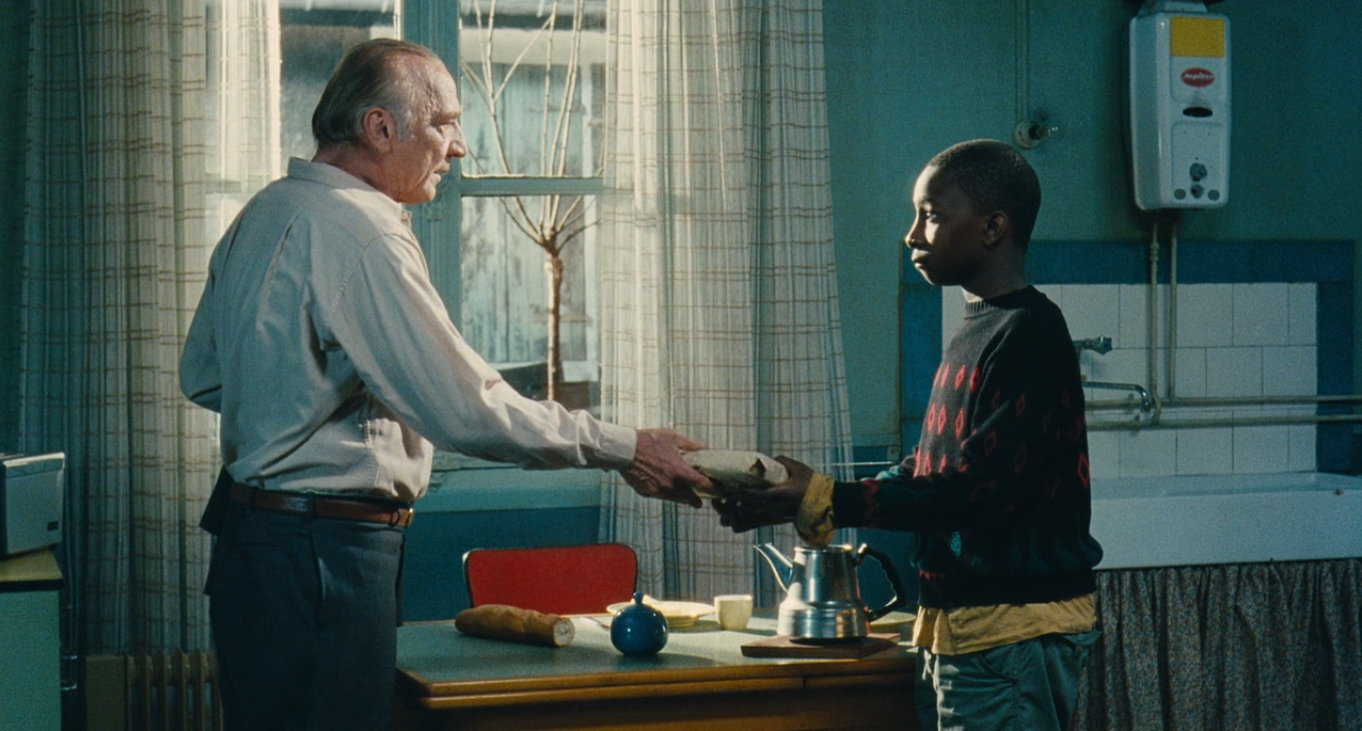
le havre 1

“I am ruthless against criminals but I don’t like to see the innocent suffer.”

This week on Camera Coverage we are talking yet again about French Cinema, but this time we are moving fourth in time and talking about Le Havre by the Finnish filmmaker Aki Kaurismäki. This is arguably the director’s most accessible film, considering he is known for his absurdist and irreverent style. But nonetheless, I personally select Le Havre as his definite film and as a classic definitely not because of it being accessible, but because of it being an epitome of viewer manipulation, political cinema and Kaurismäki’s technical mastery. When we regard Le Havre as being less absurd and surreal than, for instance, La Vie de Bohème (1992) or The Man Without a Past (2002), we are talking about the narrative interruptions and singular hallucinatory moments in these films. However, Le Havre contains an absurdity that is conceptual to the idyllic grand narrative of its main plot. What is most impressive about this particularity in the film, however, is that when you see what it is really doing, you can never smile the same way at the colourful characters in Normandy as you did before.

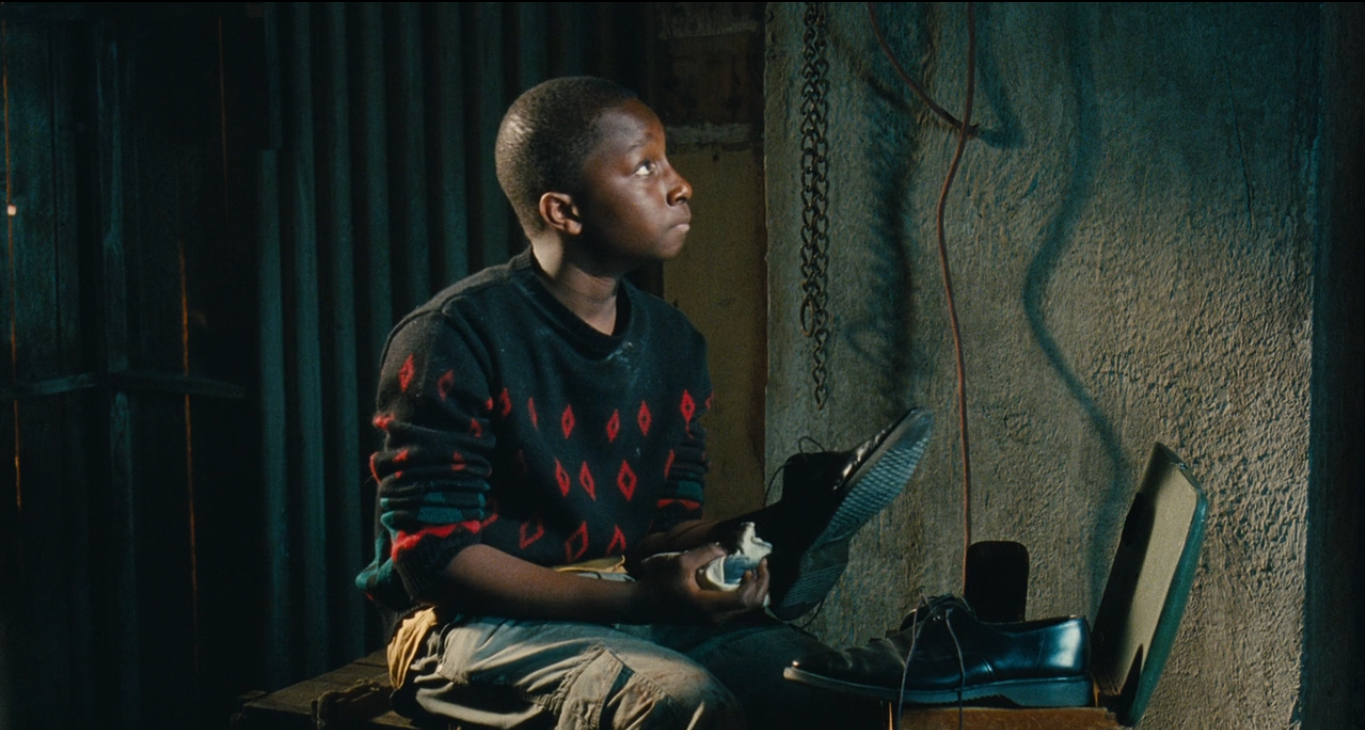
The film follows the daily life of Marcel Marx (André Wilms) and his colourful but monotonous routines. He is an old man, a shoe shiner, that while leading a poor life with his wife Arletty (beautifully played by Kati Outinen) we know he had many life experiences that got him the stability he has in this life of his (we assume this mainly due to his relationship with the other characters in town). All of the sudden, the order of Marcel’s usual tasks and routine is all shaken up as he finds a lost black boy that has tried to enter France illegally.

le havre 2.png“- Where are you going? – London.”

Kaurismäki unusual style is still present, especially considering the film’s framing and the characterization of its characters. The increased colour saturation and strategic placing of certain objects, combined with a complete vintage look regarding the clothes, hairstyles and makeup of its characters give Le Havre a vibe that is reminiscent of something from a Jacques Tati film. Having this said, the dialogues are much more idiosyncratic, following Kaurismäki usual style (despite, as mentioned before, being toned down in this particular film), that for the ones that are not acquainted with his past work, is something that reminds us of Jim Jarmusch for instance, especially regarding its sometimes obscure humour. This combination of vintage style and contemporary themes gives an edge to the idea of it being very self-conscious about its medium, something that in my opinion, despite not being something new, it is used to an uttermost mastery, elevating every single idea present in the film, even if you do not fully agree with its politics.

le havre 1The ultimate cinematic miracle

Despite being clear and conscious of its political inclinations, Le Havre goes a step further in its self-awareness, as the film seems to recognize that after all, this is all just a film. What could be seen like a mere whimsical, typically French and caricatured story quickly turns into an attempt to picture the hyperreality of the politics it is defending, and devastatingly twists the language of film into itself, resulting in the film being a product of pure manipulation but unmistakable honesty, even that it is being arguably pessimistic about the reality it is presenting. By the end of Le Havre and after flirting with the idea of clichés, we witness a miracle, a coincidence that is way too improbable to be taken lightly, even in this light-hearted modern fairy-tale. When we experience this beautiful cinematic and purely fantastical scene we should feel happy for our characters. But we can’t. Because the implication of this beautiful coincidence is that the world Le Havre is presenting is not our real world, and all the other picturesque and lovely situations are mere fabrications of cinema.

le havre fb e igIdrissa

Manipulation in films such as Forrest Gump (1994) or Schindler’s List (1993) are never welcome and often taint what is most of Hollywood cinema today, especially when it is clearly presenting political themes. But when we experience the technique utilized at its maximum potential in films like this, we seem to see unexpected potentials in the usage of this tool in our self-discovery. Kaurismäki seems to have hit the spot with this film, at least for me. In a French idyllic and polychromatic world he managed to make the black boy really seem like a part of the rainbow. Maybe one day in our real world we will manage to include all the current shunned colours in our own rainbows.

Green Book (2019)

Directed by Peter Farrelly

green book 2.png“So if I’m not black enough and if I’m not white enough, then tell me, Tony, what am I?” – Don Shirley

Green Book is a film directed by Peter Farrelly, who has mostly a bunch of major successful comedies on his record like Dumb and Dumber (1994) and There’s Something About Mary (1998). This comedy past is clearly an influence on this production, which provides a more light-hearted mood to an otherwise dark themed film.

The story follows Tony Lip (Viggo Mortensen), a rough Italian-American bouncer in a upper class night club during the 1960’s. Suddenly out of work after the club closes for renovations, he is compelled to get a new job fast to pay for his bills. An old acquaintance gives him the contact of a “doctor” who is in the need for a new chauffer. This “doctor” ends up not being a medical one, but a stage name for pianist Dr. Donald Shirley (Mahershala Ali), who is planning a concert tour in the south of the USA. As an African American Don is clearly anticipating problems relating his skin colour on the deep American south, so he is counting on Tony to not only drive him around but also be a kind of bodyguard. After some reluctance, he accepts the job. His hesitation is mainly due  to racism: having a black person in charge felt humiliating for Tony.

The film does a good job portraying the mob mentality of racism inside the Italian-American community, who suffered discrimination from the other white ethnicities. John M. Parker, a American Democratic politician from Louisiana (ironically one of the places where Don Shirley stopped in his tour) described the Italians as “just a little worse than the Negro, being if anything filthier in their habits, lawless, and treacherous”. Despite that, they hold on to their white ethnicity very strongly as in a way to feel superior. This power relationship was explored in a powerful manner by Spike Lee´s work Do The Right Thing (1989). There we see that despite similar economic backgrounds of low-income status, racism is still a powerful tool for compensating internalized shame, as in a way as saying, “at least I’m not black”.

vlcsnap-2019-03-09-15h06m25s979The first meeting in Don Shirley’s house

But in this film the power dynamic is different, because of the economical status of the two main characters. Shirley is a rich and highly refined pianist, familliar with the best things in life. Tony on the other hand comes from a low-income family and must work hard just to make ends meet. He tries to show throughout the film how he is closer to the African-American culture than Shirley, by showing him things that he has not experienced in his life such as listening to black music and eating fried chicken (which was apparently false in real life, accordingly to Shirley’s family). The film tries to get across the image that the racism that Tony displays is completely unjustified because he is closer to black culture than Don. But what Tony fails to understand is that despite not being connoisseur of the typical black culture, he stills suffers discrimination from the fact that he is black. More than that, it sure has racist undertones, especially in the correlation between being black and enjoying the stereotypical black culture, especially when made by a white man.

vlcsnap-2019-03-09-15h05m51s415“Thats why you drivin’ him around. You´re half N- yourself”

As the film goes by the relationship between the two grows stronger, with Tony Lip saving the pianist from many problems derived from the blatant racism in the south. This is another problem that the film ends up creating. The protagonist of the film is clearly Viggo Mortensen’s character and not Don. It is a movie trope present in a lot of Hollywood films (such as a classic like To Kill a Mockingbird (1962) or more recently The Blind Side (2009) that shifts the focus of the film from the narrative of suffering of the minority to the act of saving by the white character. Worse than that, it almost creates the image that the non-white person is incapable of saving him/herself from all their problems, many of them ironically created by the whites themselves. Despite this drawback, there are some funny and engaging moments portrayed by Viggo Mortensen, and a stellar performance by Mahershala Ali, which ended up earning him the Oscar.

The film ends on a cosy Christmas dinner with Tony Lip’s family where Don Shirley ends up joining them. The resentment against black people suddenly disappears and everybody accepts the black man at the table. This Christmas setting (despite not clearly being the director’s decision to make this statement) is the perfect analogy for racism amongst the white society. We all remember the messages of forgiveness and solidarity that go around in text messages, and suddenly everybody recognizes the need to help the homeless and foster care children. The warm and fuzzy ending to this film encapsulates precisely that feeling. It feels more like holiday spirit than a real change of attitude. Giving this film the Best Picture award at the Oscars – especially when a more poignant movie like BlacKkKlansman (2018) is also nominated – feels like Hollywood only wants to scrape the surface of the problem, without creating much fuss and controversy.

5 out of 10