

“Sempre a guerra. Agora já leva crianças pobres com ele. Para morrerem.“
[It’s always the war. Now he takes the children of the poor with him. To their deaths.]
The new Rita Azevedo Gomes film may seem meaningless to people outside Portugal, but as a Portuguese Cinema fan it is exciting to know that a director with such a small but critically acclaimed filmography just released new work. As a director, she has claimed her main influences, and this time she did not even needed to talk about them, as they are clear to anyone that goes through the film. She is working with an old-school film festival favourite actress, Ingrid Caven, and her performance is probably the highlight of the picture. Despite being an interesting homage to many visionary directors and containing great shot compositions (with the help of what is arguably the greatest Portuguese cinematographer, Acácio de Almeida) and a hypnotic soundtrack by José Mário Branco, The Portuguese Woman falls short in its delivery.
The film adapts a story from the 1924 novella by Robert Musil with the same name, with dialogues adapted by Agustina Bessa-Luís, a favourite of Manoel de Oliveira. It follows the story of a Portuguese woman (weird hun?) when she marries a German lord and lives in a castle in Germany while his husband is busy leading a war. It trails their romantic lives while he is in war, and what changes in their relationship when he comes back from it.
 The ever beautiful Ingrid Caven in the beginning of the film.
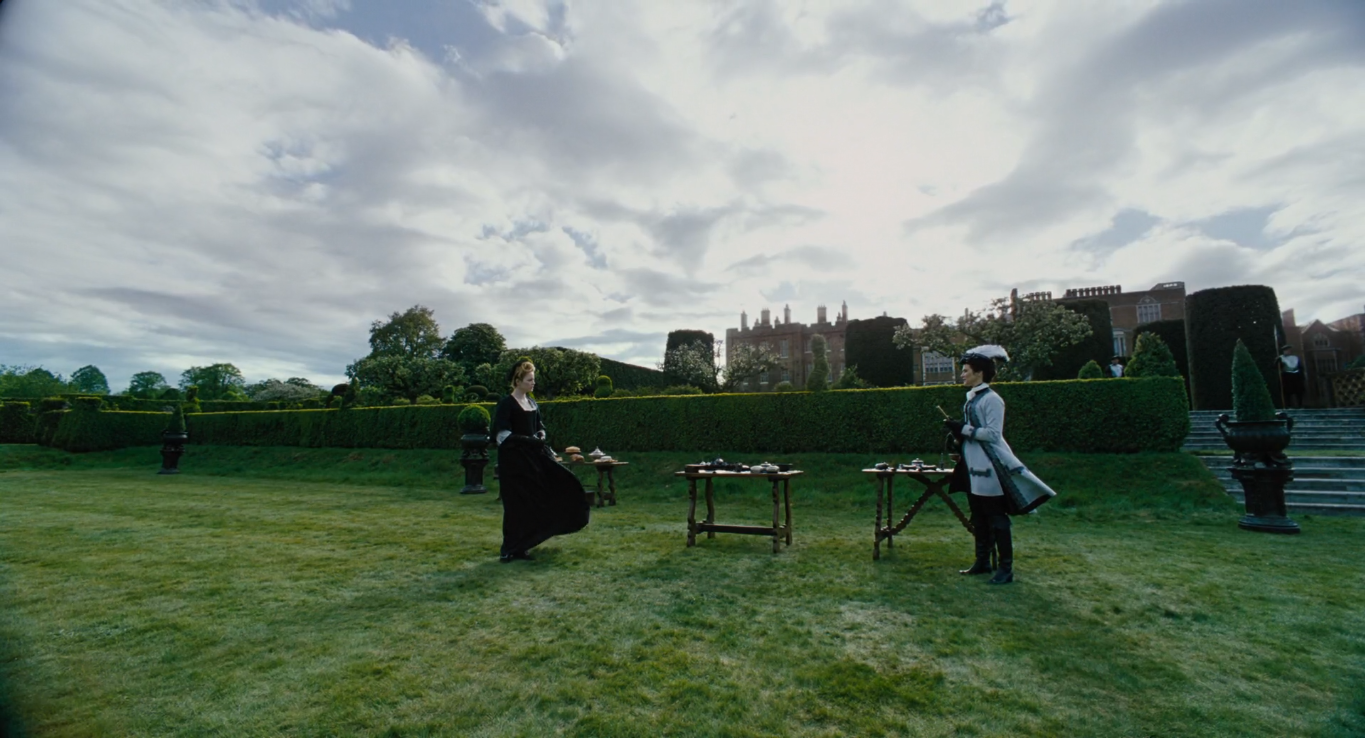
Before I present the reasons I think why this film does not fall into the category of being great at all, let me first point out what holds the film up. There is a clear sense of cinematic conceptualization. A balance between the images and the sound and the music that is absolutely mesmerizing and engaging enough to create hope in the viewer for something great. The incredible care with framing reminds me of, of course, Oliveira’s work (as the director herself has mentioned the film as being a follow up tribute to Oliveira’s body of work), but mainly reminds me of Dreyer and, oddly enough, Peter Greenaway. There is an insistence in The Portuguese Woman of transforming beautiful roccoco painting archetypes into film, working almost like tableaux vivants. Rita works with the tools of camera movement and actor movement to lead us through these living paintings in a way that is diegetic enough to counterpart the hardship you will have in deconstructing the dialogues themselves (especially if you are a casual Portuguese citizen watching the film without subtitles). The soundtrack complements beautifully the rhythm of the scenes, even though that sometimes you feel the sound design of the film (especially regarding dialogue) to sound a little strange in the overall composition of the scenes (at least odd enough for me to notice).
The main problem with the film, and comparing it with some of Oliveira’s films for instance (and I know comparing is not the right way to analyse a new film), is that despite having some brilliant scenes, as a whole, it leaves the viewer feeling like the film is an exercise in futility. There are singular moments that are brilliant, and most of them are visual moments. I have no disdain for Agustina Bessa-Luís’ work (especially considering her words in Vale Abraão (1993) and her novels), but I truly feel that her script combined with the less-amazing and unoriginal scenes create a feeling of decadence that hasn’t the right to be in a tribute film. It is frustrating to deconstruct a film that is as beautiful and competent as this to only find banal and tired ideas that were already messed with a million times, and no overarching concept to hold its existence. And this is where the comparison with Peter Greenaway disappears, because there is no breaking of the narrative conventions in The Portuguese Woman that compensate for the extensive use of the aforementioned indulgent filmmaking decisions. I know that the screenplay is supposed to sound theatrical and poetic (just as it was in, again, Vale Abraão or Francisca (1981) ), but there is something in this particular picture that is profoundly distasteful and tiring.
 An example of the mentioned idea of tableaux vivants.
It is a frustrating film for the potential it had to be great. The faces, the costumes, the voices, the colours, all of the small elements are meticulously chosen to compose every scene. The presence of Ingrid Caven brings a mesmerizing element of a Greek Chorus-like nature to the film, another ingredient added to what could have been a great cinematic work. The themes of womanhood, lethargy and class-relations are there though, even if disappointing in their scope. The lighting is great and magnetic. The music – enchanting. Even Bessa-Luís’ words are beautiful, but feel misplaced, and even misspoken at times. The film itself… it really has nothing new to say, and while it is presenting nothing new, and in spite of its cinematic beauty and being a noticeable tribute, it is remarkably unsatisfying and inconsequential.
5 out of 10

 “Sometimes it’s hard to remember whether you’ve loaded a pellet or not.”
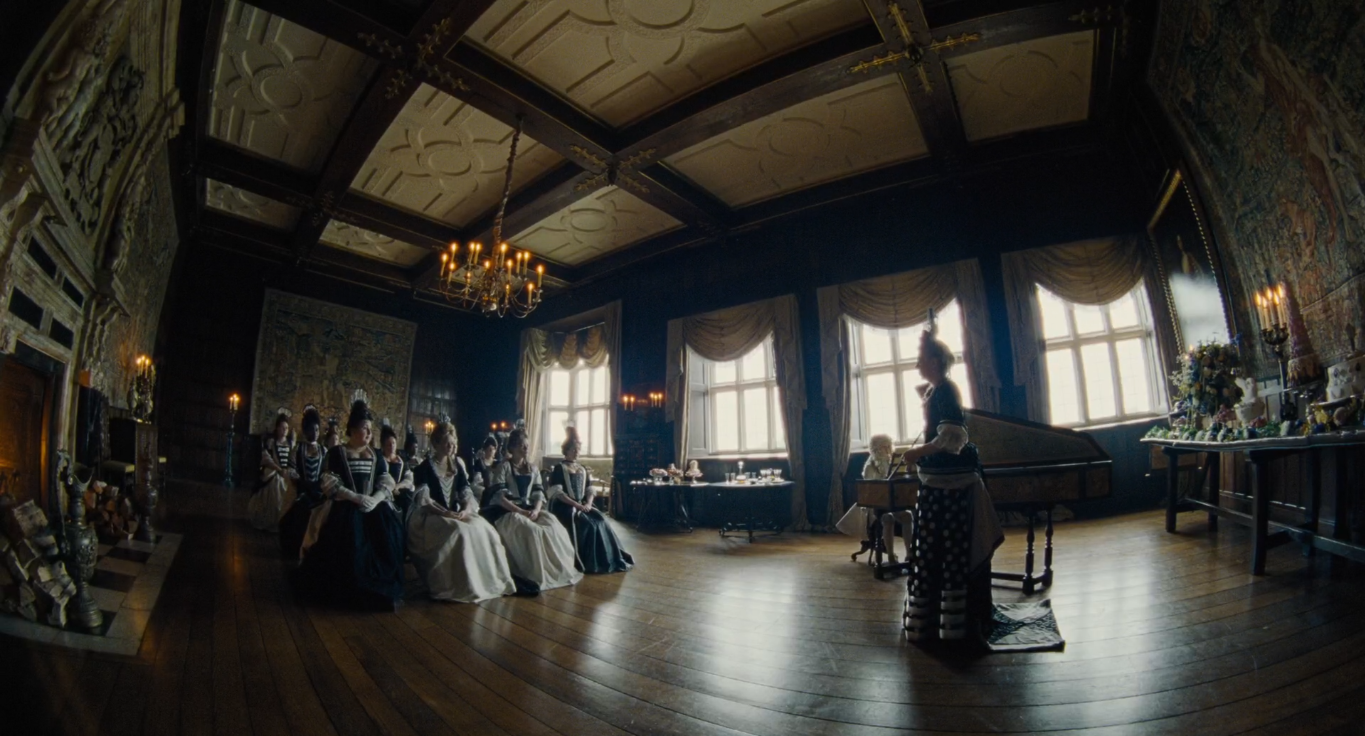 An example of the use of fisheye lens and the odd camera placement in what could otherwise been a regular scene in court.
 Camera Coverage