The Beach Bum (2019)

Directed by Harmony Korine
mv5bmty3mduzmtazov5bml5banbnxkftztgwndk3odqynzm40._v1_sy1000_cr006751000_al_-1

“He may be a jerk, but he’s a great man.”

Korine became known on the movie industry for writing the screenplay for the critically acclaimed Kids (1995), being only 19 years old at the time. Made his directorial debut with Gummo (1997), Korine started to implement his vision for cinema. Unlike traditional American cinema (that depends heavily on the power of narrative), he prefers an approach not so plot based. The film flows freely along the small events that occur, without a sense of a strict plotline that must be respected. In a way his vision of cinema is closer to a European one, in line of a Godard or a Cassavetes (in terms of artistic inspiration, as in quality he is a few steps below still).

It is not in any sense a figure praised by everybody. His films create a divide both among critics and overall public. For instance, in his previous film Spring Breakers (2012) he tried to make a social commentary of naiveté and the new” American dream” the younger generations, using Florida as background. The result had some interesting notes but is one of those films that tries way hard to be more profound than it really is. And that is usually the reason that leaves people often disappointed with his work.

In Beach Bum Korine returns once again to Florida but using a different approach. Florida still maintains the very saturated colours that were used in Spring Breakers, along with some great cinematography. It carefully translates the warmness and tropical aspect of the place with some gorgeous backgrounds. The difference lies on the overall tone of the film. Florida is depicted usually in film as this tropical paradise, but the reality is usually grimmer than that. The Florida Project (Sean S. Baker,2017) did a great job portraying the lives of lower classes in a cheap motel, showing a rather dark side to the stifling blissfulness.

There are no taboos in Korine’s films, either it be sexual, drug use or violence and Beach Bum continues to follow that line. As the protagonist we have Moondog (Matthew McConaughey), this hardcore stoner that lives this extremely hedonistic life without rules. McConaughey plays with great ease a role that its not that new to him (as for instance Linklater’s Dazed and Confused (1993) ). As the film progresses, we learn that he used to be a great writer but now lives of his multimillionaire wife Minnie’s (Isla Fisher) bank account. It´s a non-conventional and open relationship, noted by the multiple affair that they both have, something that don’t seem to bother them that much. It’s only the event of their daughter Heather´s (Stefania LaVie Owen) wedding that brings them together once again. The absurdity of the wedding brings along some great comedic scenes as well some interesting caracters such as Lingerie (Snoop Dogg). Despite having an obvious affair with his wife, Moondog is still very fond of him. The film then takes an tragic turn that leaves Moondog completely broke and homeless. The only way of getting the money back if he writes a new book, something that he is avoiding for a long time.

These two events come without notice a shape the flow of the film. Throughout his ramblings he encounters some eccentric characters like Flicker (Zac Efron), an sociopath pyromaniac with an spiritual side, or Captain Wack (Martin Lawrence), with his fixation with dolphins. Everywhere he goes positivity follows him. There are no dirty places or bad people, everything is glowing in Beach Bum. His life seems completely chaotic and without any shape of planning. He is a free spirit, loved by everybody, and always with an unshakable positivity. It’s almost discomfortable his level of happiness, almost childlike and completely unaware of his surroundings. But it always works out well for him in the end, even when all could go wrong. The cathartic ending shows his views about money were purely utilitarian. He needed the money to continue his lifestyle, not for shows of grandeur and opulence. It can be seen as a critic to the money culture that rules over us and distracts us from the most important things in life.

Overall its an interesting experience that tries to convey a more positive outlook to the problems of the world. On a more profound level Moondog is a troubled soul showed by his alcoholism, drug abuse or his womanizer ways. Despite that he still has an inspiring way of guiding himself towards happiness as his main goal to life. It´s not a life changing film or his message is new by any chance but in the end, it makes up for a different and thought-provoking film experience.

6 out of 10

3 Faces (2019)

(original title: Se rokh)

Directed by Jafar Panahi

3 faces

“So you came for her and not for us.”

Jafar Panahi is a Iranian director famous for his continuous quarrel with censorship and his consequent imprisonment in 2010. His 2015 masterpiece Taxi gave him worldwide recognition, but he was already one of the highest praised Asian directors from the last twenty years by film critics and a staple of the big film festivals. His work follows the lead of his master Abbas Kiarostami, especially after being imprisoned, where he approached a fluid style between documentary and fiction to develop his already highly realist filmography. 3 Faces is a film that won the award for Best Screenplay at the Cannes Film Festival, and is since being released all over the globe.

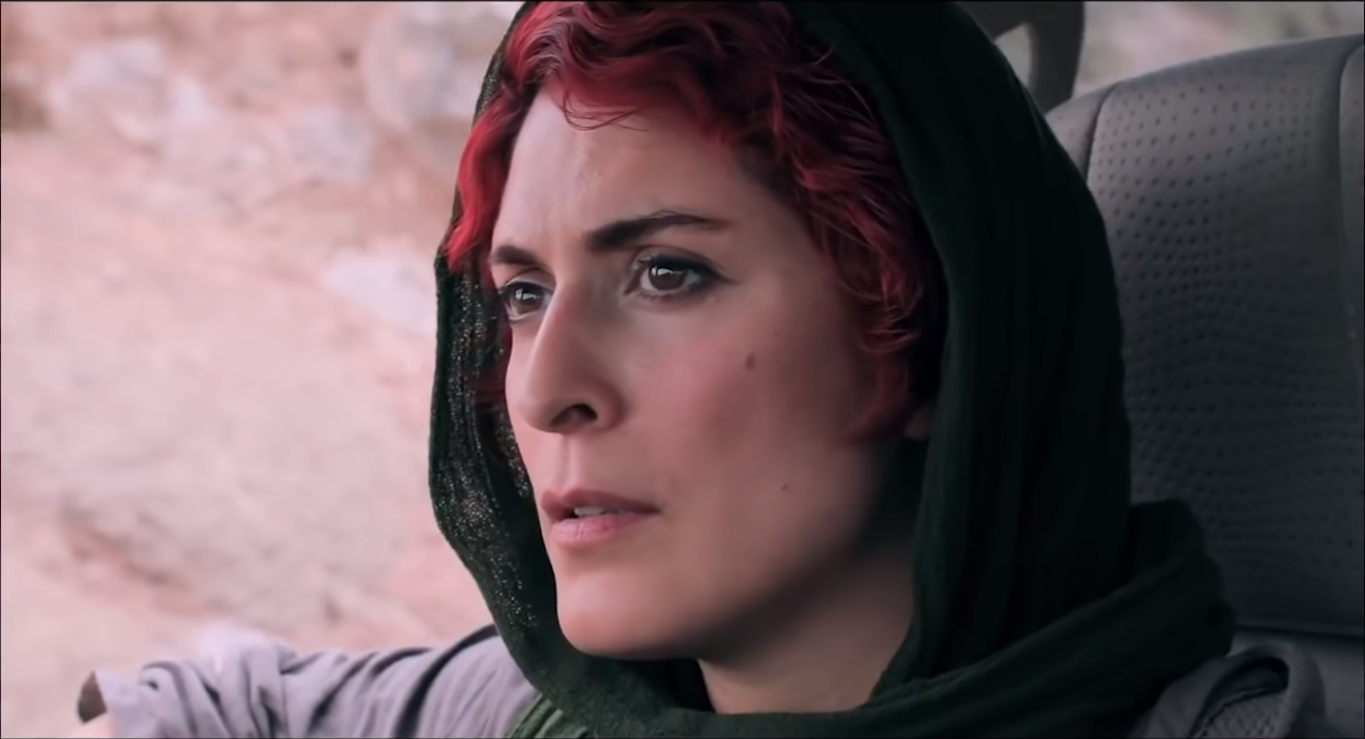
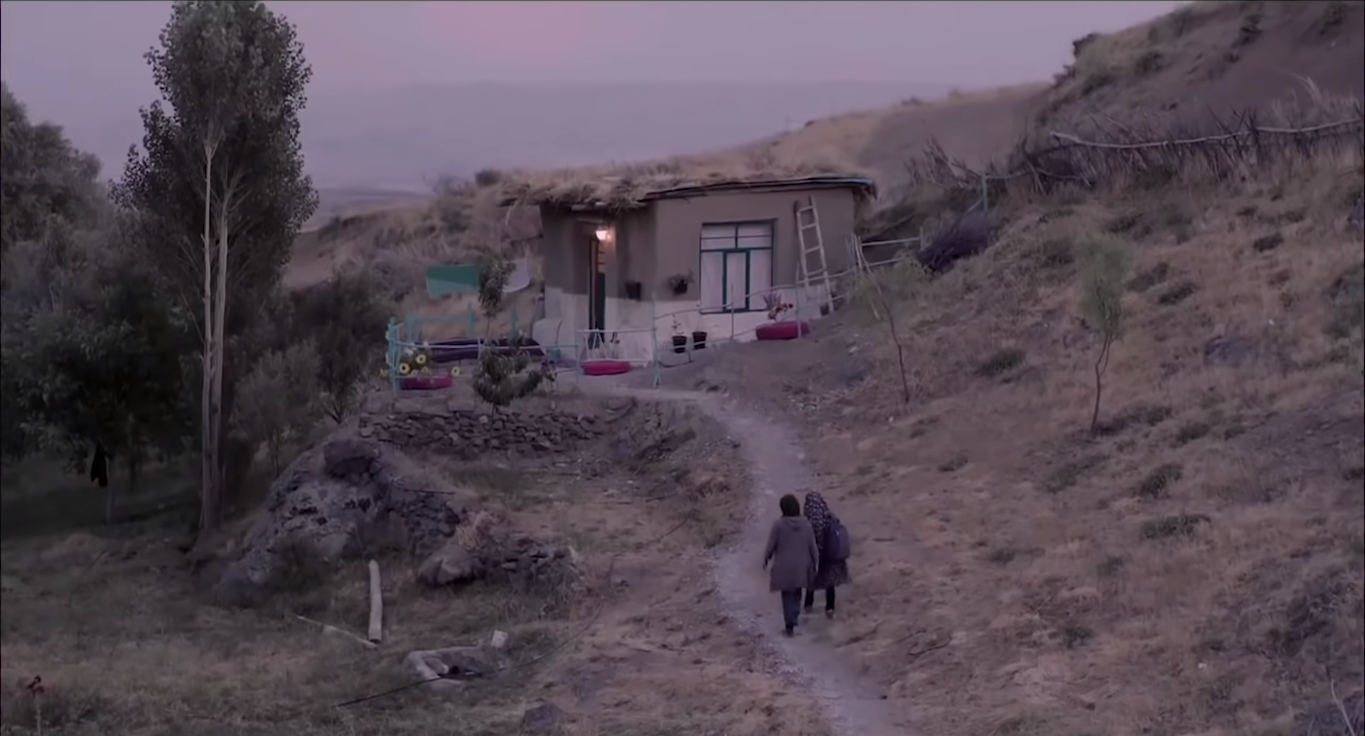
The film follows the director himself and the actress Behnaz Jafari. They received a video message of a young girl commiting suicide in an attempt to get the actress’ attention and help with the consequences of her somewhat progressive lifestyle (she studies in college and is an actress) in her traditionalist village. The three faces that gave the film its title are meant to be the faces of the three actresses in the film. The young girl that sent the message, the middle aged Behnaz Jafari and an old lady that they meet somewhere in the middle of their journey into the village. It is shot at the same location that many of Kiarostami’s films were shot, and has a lot of direct references to some of his most famous work, including the devastating ending of Taste of Cherry (1997) mirrored in the somewhat crazy old actress’ actions.

3 faces 1.pngBehnaz Jafari

As are the other films of the director since 2010, 3 Faces is a politically charged work. Panahi seems to extend his views on femininity, generational issues and religious catharsis from his other films. In this aspect, Panahi’s work seems to resemble another Iranian director that seems to be forgotten when talking about Panahi, that is Mohsen Makhmalbaf. In some of his films, of course considering Kiarostami’s influence on them as well, Makhmalbaf utilized too the fluidity between documentary paradigms and preconceived narratives to approach certain political issues – see for instance Kandahar (2001) and how it deals with the uprising war, or A Moment of Innocence (1996) and how it works with morality issues inside small communities. In the same way Taxi or This is Not a Film (2011) worked, this new film utilizes its meta elements to the fullest in order to reach the level of realism it does. It does not even shy away from going further into many other debates, much like Kiarostami’s Close-Up (1990) when it comes to the debate about the power of film and the influence of art in an oppressed society.

Despite not being as original as a film like Taxi was, Panahi seems to make a proper tribute to his masters. The debate topics of Makhmalbaf in 2001 or Kiarostami in 1990 are not the same the ones being discussed in Panahi’s contemporary cinema. Even if going as far as utilizing diegetic elements of the voyage or other direct elements of these other director, the final product is still original and relevant. There is a blend of a seemingly ascetic scenario with traditional but poetic use of framing and editing, and with a real sense of pathos that transcends the otherworldly level of cinema into real life (with a knowledge of technology and modernity that remembered us of other directors that utilized modern elements to their most real, like Michael Haneke in Happy End (2017) ). This mixture of techniques combined with the poignancy of Panahi’s assertions is hard to criticise and all of it definitely works.

3 faces 3.png

One of the most important things to take from a fictional film like 3 Faces is its sense of realism. Despite working will milions of elements and influences that are somewhat hard to keep track of, the film puts them together in a way that every frame drools a sense of what’s reality like in Iran, but even goes further in globalizing Iran’s problems. How do we deal with our professional lives, how do we deal with deceit, how do we deal with time and how do we deal with rules. What is the role of God, and does godliness ends when humanity starts to fade. These are some of the things that are hard not to think of when we see a film like Panahi’s. Much like the main idea from his 2011 film we are once faced with the fact that a film is a representation of life. Not only that, but the final product of this representation is alarming, not only because of what’s happening in some Middle Eastern countries, but because of the true universality of these problems.

7 out of 10