LEFFEST – Lisboa & Sintra Film Festival 2019


leffest.jpg

We at Camera Coverage have been attending to the 2019 edition of the biggest film festival in Portugal and thought of speaking a little bit about the films we have been able to see. We got our heads around the whole section of the films in competition to the festival’s awards, and some of the new releases on other sections of the festival. Between all of these we thought of making our brief selection of films that are for us the highlights of the festival. Also, from Wednesday forth we are thinking of making more focused texts on what we think is our favourite of the festival, and the films that were awarded by the selected jury of the festival – that are to be announced in the 24th of November.

For our list we have picked three highlights from the festival selection in the competition.


Atlantis, by Valentyn Vasyanovych


atlantis 3.jpg

This year’s competition was packed with two films from the old Eastern Block that find themselves in somewhat the same category. These are The Criminal Man, by Dmitry Mamuliya and the afforementioned Atlantis, by Valentyn Vasyanovych. Both of these films are paced with care and drag the viewer into a very slow pacing, being easy to put them in what some call the “slow-cinema” category. However, while Atlantis presents consisted cathartic and poetic imagery, The Criminal Man seems to be a film in which there is a great central scene – arguably greater than any scene in Atlantis – and feeling a bit empty in comparison. Atlantis is a film that has its setting in a dystopic post-war Ukraine, following a main character suffering from PTSD. There are many scenes of despair, many moments where we may be led to think that Vasyanovych really has no hope for his country and his people after the consequences of the war. By the end though, we are faced with this flash of light, as poetically depicted as any of the shades of grey previously presented in the film, that remind us that the power of love and humanity  is strong enough, not only to be reborn from the remnants of such war, but I would even say taht there is here a suggestion that this light may even prevent us from falling into this dark utopia if we keep it close to us.


Beanpole [Dylda], by Kantemir Balagov

kinopoisk.ru


Arguably one of the most talked about films in the festival scene, Kantemir Balagov’s Beanpole deserves every bit of the attention it has received. The film deals with a plethora of complex themes, and presents them with, however extreme, 100% believable situations. The fluid sense we have – much of it provided by a sober set and art design – between all of these is impressive. From war trauma, to poverty, to complex romantic and motherhood dynamics, Beanpole seems to gather all of this seamlessly. It is a beautifully shot film, with a strong sense of colour and aesthetics, including a dynamic camera that switches from being handheld and really shaky to fluidity and steadiness at a pace that is hard to notice as we are mesmerized with everything that is being portrayed. The sense of pathos in Beanpole is the probably one of the strongest from the festival, and the performances are certainly the most convincing. A cinematic treat for the eyes, and an always important reminder of what extremes can the human soul deal with.


Fire Will Come [O Que Arde], by Oliver Laxe

fire will come

A personal favourite of ours, O Que Arde by Oliver Laxe is one of the most subtle and gentle depictions of the complex nature of human beings. Between the beautiful landscapes of Galicia and their absolute destruction there are humans and their complex, but nonetheless consequential, relationships. We follow Amador through his journey back home from being imprisoned for causing a massive forest fire in his region. He deals with his everyday chores in the countryside, next to his mother Benedita – a charming powerhouse of a 80 year old woman. There is a sense of silence and of the ephemeral throughout the whole of the film, despite the absolute chaos that is the nature of human existence. Even when filming the forest fire scenes there is a sense of calm, a sense of beauty and a sense of sobriety that gives opportunity to the viewer to mingle on the many subjects the film can extract from our lives. Family, ecology, social life, the rural world, decadence, destruction and limits. All of these and none of them at the same time. O Que Arde is without a doubt one of our 2019 favourites.


Other honourable mentions:

Tommaso, by Abel Ferrara
Balloon [Qi Qiu], by Pema Tseden
Atlantics [Atlantique] (out of competition), by Mati Diop


Divorce Italian Style (1961)

(original title: Divorzio all’italiana)
Directed by Pietro Germi
mv5bmjm3njqxmze3nl5bml5banbnxkftztgwnzmzotq1mze40._v1_sy1000_cr007071000_al_

“Have you really got another headache?”

This week we’re heading out to Italy with this film by Sicilian director Pietro Germi. His early work is characterized by a neorealist tone in the likes of Rosselini or Vittorio De Sica (in films such as Il ferroviere (1956). In the sixties his line of work shifted towards the satirical comedy in the likes of Dino Risi or Mario Monicelli. This Italian style of comedy, the so-called commedia all’italiana (comedy Italian style) is characterized by a profound sense of social criticism beside the curtain of apparent lightness of laughter. The film ended up giving Germi the Oscar for Best Story and Screenplay Written Directly for the Screen at the 35th Academy Awards in 1962 and as well the Best Comedy award at the Cannes festival.  

In Divorce Italian Style (1961), Germi plays a masterful take on the Sicilian machismo, only possible through an acute sense of comedy. Baron Ferdinando Cefalù (Marcello Mastroianni) is a disgraced nobleman married to Rosalia (Daniela Rocca). He has grown out of love with her and wants desperately to dissolve the marriage. The problem resides in the fact that at the time divorce was prohibited by law, leaving him “trapped” with Rosalia for the rest of his life. The illegality of divorce had its deep roots on the influence that the Catholic Church still had on life in Italy, especially the south. Fefè, as his wife affectionately calls him, draws a devious plan in order to get rid of Rosalia. By bringing her close to affection to another man, making him the cuckold, he could then kill then both, invoking that crime of passion and get away with murder. After this, he could finally make his move on to Angela (Stefania Sandrelli), his 16 years old cousin who he was infatuated with.

“Angela, what an unexpected pleasure”

The comic aspect of the film starts with the contrasts between the physical appearance of the couple. The baron is a cool figure, with a cigarette on the corner of his mouth, dark shades and a stylish moustache. A bon vivant and in a way a figure out of his time. But that is only a cover, shown by the preoccupations with his body (in a funny scene at the mirror where Mastroianni reflects about his belly size), and the way he presents himself at home, with the hair unkempt and rumpled clothes. In a way Mastroianni is creating a satire of the perfect and charming Italian lover, which includes himself in the lot (like in Fellini´s La Dolce Vita (1960). Despite all his flaws, Fefè is still convinced that he´s on top of his game and deserves a better looking and younger wife.

His wife Rosalia is characterized physically by the excessive body hair, especially in her face, with the subtle moustache and unibrow. Fefè is clearly repulsed by her and her constant shows of love make him rather disconformable. To add up, Rosalia has this very high-pitched voice and extravagant poses. The audience, despite knowing that is wrong, almost ends up in a devious way to agree with him. Germi makes the viewer enter in a conflict with themselves and therefore make him in Mastroianni´s shoes. If we analyse deeper though, Rosalia is a naïve kind of person, completely unaware of his husband unhappiness with the relationship.

Through the film we see him fantasizing about how he would kill his wife. Either by stabbing her in the back and throwing her into a soap caldron; or later in the beach by imagining her being swallowed up in quicksand. He finally finds Carmelo (Leopoldo Trieste), a World War II veteran who was deeply in love with Rosalia. The designing of plan was now completed, and when the two finally met again and fell in love, Fefè was now the cuckold. The shame was not only onto him but the entire family, ending a part of it being the reason for his father´s death or the actions against Rosalia and Carmelo.

Baron Ferdinando “Fefè” Cefalù and his wife Rosalia

The end shatters completely with the double standard of the male chauvinism. Now with a clear path to chase and marry the young Angela, she ends up behaving a lot like him. The irony displaced in the final scenes maybe tries to show that the problem is more a societal one than only the mischievous character of the baron. This is not an excuse for the husband´s actions, which are evidentially reprovable. But in the end, it feels like is easier to kill the partner than to lawfully divorce him. In addiction to this, the reaction of his family and the deep sense of shame all around the village display the problems that a post war and now democratic Italy had with machismo and the authority of the old institutions. 

Ruben Brandt, Collector (2019)

Directed by Milorad Krstic

rub

“Art is the key to the troubles of the mind”

This week, for the first time on Camera Coverage, we’ll be taking a look at an animated feature. Coming from Hungary, Ruben Brandt, Collector is the first feature film of Milorad Krstic. A fairly unknown figure with only short movie credit (My Baby Left Me (1995) ), Krstic makes up a strong impression at the age of 66 years old. Regardless of its country of origin, the film is dubbed originally in English.

At the centre we have as the main character Ruben Brandt (voiced by Ivan Kamaras), a world-famous psychologist haunted by these weird and absurd dreams all connected with famous art pieces. The story advances between real life and dream sequences where famous paintings try to harm and kill Ruben. It is an extremely bizarre but captivating scenario to see; for instance, Velázquez’s Infanta Margarita Teresa in a Blue Dress (1659) trying to bite off his arm in a speeding train; or even a pistol duel against Andy Warhol’s Double Elvis (1963). These wonderful usages of famous art pieces from the western world redefine their meanings beautifully and with great taste.

vlcsnap-2019-05-11-15h46m58s874The duel with Elvis

Ruben Brandt is himself an art lover. His methods for helping his patients all connect with art, as he is a true believer of self-artistic expression to exorcise one’s ghosts of the past. Asking for help dealing with her problem with kleptomania is Mimi (Gabriella Hamori), an art robber escaping from detective Mike Kowalski (Csaba “Kor” Márton). She and the other patients in Brandt’s luxurious clinic discover his problems related to his dreams and agree they all must help him. The problems that made them enter the clinic are all related to crime and stealing so teaming up to rob to steal Manet’s Olympia (1863) is not that big of a deal. When they show this painting stolen from the Musée d’Orsay in Paris to Brandt, his nightmares with the woman portrayed suddenly disappeared. He then joins the group to steal the rest of the paintings that still haunted his dreams. The gang raids numerous museums all around the world like the Louvre, MoMa, the Uffizi Gallery or the Art Institute of Chicago, ending up getting the attention of both authorities and gang members alike.The above-mentioned detective Kowalski tries to catch Mimi and the rest of the group before other criminals get to them, attracted by the huge bounty on their heads.

The storyline ends up emulating the classic Hollywood spy and cop movies genre, being a somewhat disappointing experience especially in the last third of the film. This is a film that is to be appreciated more by the originality of the embedded details rather than the narrative itself. There are plenty of heist films clichés, and the personality of the characters is not that deep or original, maybe except for the protagonist. Regarding the plot, points go certainly to the importance given to art and its relation to the well being of an individual. The connection between psychology and art is an interesting and refreshing one, especially in a world dominated by scientific thought.

vlcsnap-2019-05-11-15h45m34s690Velazquez’s Infanta Margarida attack

Aesthetically this film leaves the viewer in awe by the gorgeous detail to both the characters and the world around them. People are portrayed as these cubistic with surrealistic undertones like a Picasso met Dali kind of style. Some have three eyes, others two heads, and, in a brilliant play with perspectives, there is a character that is bidimensional like a sheet of paper. It is an astonishing world completely filled with subtle references to all kinds of art, that goes from Soviet propaganda to American Realism painting. Besides that, a brilliant homage is also given to cinema, portrayed in the home collection of detective Kowalski. Filled with film memorabilia from Weneger’s Der Student von Prag (1913) poster to the small detail of ice cubes in the shape of Alfred Hitchcock, there´s a lot for any movie buff to enjoy in these small quirks.

Overall it was a pleasant surprise, and an animation like any other I’ve ever watched. The focus on the holistic aspect of art in the human mind is definably a positive aspect. In the end Ruben Brandt, Collector gives both an approachable introduction to art history and something that art enthusiasts can take also.

6 out of 10

The Spirit of the Beehive (1973)

(original title: El espíritu de la colmena)

Directed by Victor Erice

MV5BMTIzNjYwMTUzMl5BMl5BanBnXkFtZTcwNTE4MDQzMQ@@._V1_

“Why did he kill her?

Children in film are often used as a powerful tool to portray an array of heavy and dark sentiments through the eyes of naivety and without preconceptions. If we take, for instance, the experience of war, this innocence shattering event makes up for a potent art statement. For example, in a film like Elem Klimov’s Come and See (1985) the sheer expressions of horror in the face of the young Florya, during the Nazi’s invasion of the Soviet Union makes up for an image far more lasting than if it was an adult. There is something about the loss of innocence combined with a sense of escapism in a child’s mind to deal with that shocking reality. But it doesn’t need to be as eerie and explicit like that to make a deep impression. In a film like Children of Heaven (Majid Majidi, 1997) the journey for a poor child to get a new pair of shoes for his sister makes up for a simple but not less beautiful and warm experience.

The Spirit of the Beehive is not in anyway as a traumatic experience as the Klimov film mentioned above. The plot takes during the early years of Francisco Franco’s fascist regime in Spain. It is interesting to point out that this film was released during the last years of this dictatorship, marking perhaps, by the themes portrayed in the film, a pending weakness in the regime. The main characters are two young sisters, Ana (Ana Torrent) and Isabel (Isabel Telleria). Their father has a myriad of occupations that go from bookkeeper to beekeeper and poet.  Taking place in a small Castillian village in the Spanish Meseta, cinema is a motive for great excitement in this quiet town. The projector is set on an old barn and all the inhabitants, including the small girls watch a dubbed version of James Whale’s Frankenstein (1931). The impact is immense on the younger one Ana, who leaves the cinema traumatized by the famous drowning scene. Obsessed with the monster, she looks for any sign of the monster close to home. The search ends up leading her to an isolated old shed on a large and desolate piece of flat land. Inside there’s a wounded republican soldier, trying to escape death at the hands of the Francoist forces. The small girl, naïve to all the political struggles, steals food from home to feed the desperate soldier. The Republican partisan is found and shot by the Nationalists which leads to the suspicion that Ana’s father was the one helping him. The pressure for the daughter ends up being too much and she escapes next to a lake, making a clear parallel with the Frankenstein plot.

captura-de-ecracc83-2019-05-01-acc80s-17.04.18.png
The impact of the film reflected in her eyes

Portraying a Republican this way, like a wounded horse waiting for its demise, is an obvious example of a critique against the then fascist Spanish regime. In the seventies, dictatorships in Europe suffered an enormous amount of pressure by the rest of the western powers that already lived in democracy. Regimes like the Spanish (and as well the Portuguese one) grew more and more isolated. That could explain why films like this one or Viridiana (Buñuel, 1961, a ferocious critique of the catholic church, usual theme in Buñuel) passed the censors, despite the bad image they made of the regime. With general Franco’s death in 1975, Spain would finally make its transition to a democratic regime. Despite this obvious message, this film is much more than a political statement. It deals with the pureness of a child’s imagination, and how the make believes sometimes juxtaposes the sense of what is real. The innocence of Ana makes her completely unaware of the possible troubles she may be getting into by helping the soldier. Ana Torrent (that would end up working also with Carlos Saura in Cría Cuervos (1976)) makes up for an extremely sincere and sweet innocent child, in one of the more perfect roles played by a child that young. Merit has to be given to Erice for being able to blossom such a talent in a little child.

captura-de-ecracc83-2019-05-01-acc80s-16.55.38.png
The vastness of the Spanish “Meseta”

On top of the terrific performances, the cinematography is clearly an astonishing feat. The stellar work of Luis Cuadrado (who ironically was losing eyesight during the shoot) is found in creating this sense of emptiness both inside the buildings and in the vast Spanish flat lands. The house where the children live feels old and uninhabited and the small village is surrounded by immense of dry fields to lose sight on. The emptiness feels like a colossal canvas for a young child’s imagination. Together with the somewhat eerie but at the same time comforting soundtrack by Spanish composer Luis de Pablo, The Spirit of the Beehive is a cinematographic experience like any other.

Knife+Heart (2019)

(original title: Un couteau dans le cœur)

Directed by Yann Gonzalez

knife+heart poster

“She saw so many gay flicks, she thought she was a fag.”

Yann Gonzalez is a French director known for his feature film You And The Night (2013) but mostly because of his many other short films. He is especially well regarded in the LGBTQ+ community for his preference on themes regarding sexuality and gender politics. Having won many prizes and nominations in important festivals like Cannes Film Festival, he is one of those directors to be watching out for if you are interested in art-house films of the new era. However, we feel on Camera Coverage that this new feature from Gonzalez is pretty much a mess, it is not without some singular scenes that are incredible, but it is indeed a bit of a mess.

The film follows Anne (Vanessa Paradis), a gay pornography film director, in her quest of filming her new feature that seems to be more bold and adventurous than her previous. This brings us close to the character and her relationship dynamics with her film editor Löis (Kate Moran) and her dealing with alcohol addiction. From the start we know that the film has as a main plot a giallo-esque story, with a serial killer that seems to be targeting the actors from Anne’s films. The connecion between the killer and the actors is left uknown until the end of the film, where we are bombarded with a traditional plot-twist from the great classics of the genre.

print heart+knife 1Vanessa Paradis as Anne

The film plays along the lines of what we may consider the supernatural giallo, especially in its first two acts. The relationship between Anne’s vision of her new picture and the killings is meant to be perceived, but sadly, with its ending, we are left hanging in the understanding of this relationship. Throughout her journey we are faced with many surrealist images that are traditional in these giallo films and Italian horror films of the 1960s and 1970s, but they seem to add little to the unravel of our characters quest. It is clear that there are many diagetic layers on Knife+Heart, but after seeing it and thought of it for a week I still feel that they are not only disconnected, but they are sadly disconnected, as most of them are individually incredible and contain a lot of contrasting and formally complex ideas working on a deep semiotic level. The insistence on creating a traditional giallo in structure does not work in the film as much as it does visually, and it lefts the viewer confused, frustrated and cheated.

Vanessa Paradis is one of the actors in later years that we feel, as lovers of photography in general, that has one of the most unique faces. The characterization of every character in the film, especially her’s, is incredibly stylized and works well comparing to the other aspects of the film. The whole visual aspect of the film is undeniably great. It works as a cool throwback to the films of the genre, but it works as a singular piece as well, despite its insistence on weird black and white thermal images when depicting dream sequences. However, even at the technical level (image and sound) Knife+Heart is not the best throwback to the giallo, particularly if we consider the incredible films that made reference to the genre we have seen in the last few years (like Berberian Sound Studio (2012) and Amer (2009) ).

black and white dreams equencesOne of the dream sequences

Falling short on others to describe the film, it feels disapointing. The director has achieved greatness with some of his short films (notably Les îles (2017) ), but this time he completely misses the target. Despite arguably being one of the films that are a throwback to the afforementioned genres that more truly incorporates not only the visual aesthetics but the structure of the giallo, it fails on creating a compelling experience by being too overwhelming and obtuse with its symbols and parallels. I feel that some of this may be due to how random some of the events in the film are, and the discrepancy of vibes in it. The play of the director regarding the meta aspect of the film (the films inside the film; the dreams inside the film; the dreams that are the film; the relationship between director and editor, etc) is interesting, as are the mirror images it tries to make with its individual scenes. Sadly it does not keep up with its promises (especially its depiction of the theme of obsessive and corrosive love) and mostly is an insatisfying experience, that while being really extreme and poignant in the depiction of a community and a genre of filmmaking that is really underapreciated and not valued as it should, it leaves the spectator feeling that it is a mere exercise in shock value and pretentiousness.


3.5 out of 10

Bibi Andersson || Persona (1966)

[Directed by Ingmar Bergman]

1.jpg

Earlier this week we have been braced with the devastating news of the death of the legendary actress Bibi Andersson. She is best known for her long collaboration with director Ingmar Bergman with whom she had made approximately twelve films. Andersson is responsible to the introduction of Liv Ullmann to Bergman, and therefore responsible for what is one of the most legendary collaborations in the history of cinema. Even though the spotlight is often on Ullmann, Bibi Andersson is the original muse of the director, and works as a strong homogenous figure in Bergman’s early work, only later her figure being noticeable as a “lighthearted” contrast to what was the “severity” of Liv Ullmann, especially on the masterpiece that is Persona.

Every film lover knows Persona. But it is also true that no one can truly deconstruct and interpret the film in what may be considered a “right way”. This is a film that is meant to work on a level that differs from our usual cinematic experiences. Most of this is due to the way both characters interact and the work of metamorphosis between the two. While, as mentioned before, Liv Ullmann plays the patient, an actress that is both austere and troubled, Bibi Andersson plays a deeply humane but also troubled nurse. While both performances are incredibly layered and dynamic, we are mostly guided by the eyes of nurse Alma in her quest to heal Elizabeth Vogler, that quickly turns into a therapy for her own troubles. The humanity and sincerity of Andersson’s performance brings to the film something for the viewer to relate to, something that is essential for Bergman’s work to function correctly in order to not transform into something completely obtuse and abstract. She is the perfect counterpart that bridges the complex states of mind and the complex artistic pretensions of the film into our everyday lives, creating in the end one of the most unheimlich experiences one can have with a film.

Bibi Andersson is the light of our everyday lives fading in the world of Bergman’s cinema. She brought reality and sensibility to films that would feel too cold and distant to be as relevant as they are today. This week we lost one of the big faces of Swedish cinema, and she will surely be remembered as one of the absolute icons of the history of film. We leave a list below of our favourite films she made part of. Bibi Andersson will not be forgotten.

The List:

Sommarnattens leende [Smiles of a Summer Night] (1955)
Det sjunde inseglet [The Seventh Seal] (1957)
Smultronstället [Wild Strawberries] (1957)
Djävulens öga [The Devil's Eye] (1960)
Syskonbädd 1782 [My Sister, My Love] (1966)
Persona (1966)
Flickorna [The Girls] (1968)
En passion [A Passion] (1969)
Scener ur ett äktenskap [Scenes from a Marriage] (1974)
An Enemy of the People (1978)
Quintet (1979)

The Wild Pear Tree (2019)

(original title: Ahlat Agaci)

Directed by Nuri Bilge Ceylan

wild pear tree 1.jpg

“Everyone has their own temperament. The thing is being able to accept and like it.”

The “new” (premiered in 2018’s Cannes Film Festival) film by the critically acclaimed Turkish director Nuri Bilge Ceylan is again a huge work in size. And again, Ceylan presents us a massive picture that feels even more entrancing than his previous film Winter Sleep (2014). The similarities between both films are obvious, as they both tell stories of writers. However, The Wild Pear Tree is way more accessible than Winter Sleep (2014) and more irreverent at the same time. Sadly, it does not quite hold up against the director’s best (most notably Once Upon A Time In Anatolia (2008) and Distant (2002) ), following some of the same small issues present in the 2014 film. This is, however, not a reason to dismiss the film, because even a lesser Nuri Bilge Ceylan film is still a way more interesting experience than most.

wild pear tree 3.png

The filmography of the director is notorious for having two specific characteristics: he is one of the big names associated with the so called “Slow Cinema”, and his films are incredibly wordy and verborraic at the same time. In The Wild Pear Tree this last characteristic is even more noticeable, with the “slow” and transcendental aspect feeling that it was put to side, and, when exercised, feeling a bit forced and out of tone. The film follows Sinan (Dogu Demirkol), a young writer that has finished his education to be a primary school teacher like his father. He is also working on publishing a book he wrote, and most of the first part of the film follows his struggle in finding money to be able to do it. This is the main situation we are presented with the main character, but the film, since the beginning, has an intense focus on the relationship between Sinan and his father Idris (Murat Cemcir), who is a man caught in a downward spiral of gambling and unmesurable debt.

Despite the film mainly following Sinan and his interactions with many of the townsfolk, and even a famous writer, it is on the father-son dynamic presented that the film truly shines. The character development of Sinan, while honest and relatable, is never biased in trying to depict him as a truly well-meant individual at all. His father is depicted with some really harsh situations as well. However, their personalities are completely different. The evolution of the story is one that is settled on the idea that both these characters are antagonistic, and ends with the most incredible note of transcendental family bonding energy that completely disrupts all the insistence on creating such opposite characters.

wild pear tree 4.pngIdris, a truly incredible performance by Murat Cemcir

The problem with The Wild Pear Tree when comparing it with other Ceylan films is that this time Ceylan feels that is touching on much more coloquial and generic themes, and unsuccesfully trying to elevate them all at the same time. It is a weirdly paced film, with scenes that range from the themes of death and religion to relationships and love, sometimes presenting them with no apparent connection to each other. Sadly, it also doesn’t always succeed on being truly poignant in the portrayal of a lot of these themes, with the noticeable exception being the depicted problems regarding family dynamics. The film being dialogue driven does not help it in achieving the poetic intensity of his previous films as well, despite turning the film into a more enjoyable and quickly relatable experience to the viewer. It makes some of its scenes feel like they are too predictable, and some of the “funny moments” in the film feel odd in the overall picture. The idea of quickly cutting scenes that are supposedly happening in the characters minds or in dreams do not always work as well, and do not go well at all with the also stylistic and expected “slow” style of the director.

wild pear tree 2.png“Someone once called time a silent saw. You never know what it’ll do to us.”

That said, the conclusion of the film will leave you with unforgiving anxiety. Ceylan shows us with scenes like these why he is one of the most lyrical filmmakers out there, despite sadly going off the rails in The Wild Pear Tree. The odd pacing of the film is distracting and almost unforgivable to a director that already made so many great things. The visual aspect of the film is top notch, especially the scenes in winter time, but even regarding this, sometimes the digital camera seems to not be able to capture as well some of the scenes as it should. The soundtrack is unnexpectedly great and one of the best yet in his filmography. However, while not being as problematic in some of the aforementioned aspects as Winter Sleep (2014) was, The Wild Pear Tree is still not the hyper comeback we were expecting, despite having one of the most cathartic closures in any of Ceylan’s films. It is a frustatingly imperfect film with a lot of incredible singular scenes. But for some of those scenes alone and the incredible depiction of the relationship between Sinan and Idris, The Wild Pear Tree is still a film to look out for.


7 out of 10

Diamantino (2019)

Directed by Gabriel Abrantes & Daniel Schmidt

Poster_Diamantino_Cinemas

“They call me the Michael Angelo of the pitch”

Diamantino marks the debut of Gabriel Abrantes (with the partnership of Daniel Schmidt) into the world of full featured films. Abrantes has a long list of short films in his bag, such as A Brief History of Princess X (2016) or A History of Mutual Respect (2010). In his films he tries to ally a philosophical and critical stance to thematic such as history, gender and sexuality politics and the power of Art. With this long feature, Abrantes and Schmidt try to ally all these themes with an absurdist and at the same time comedic approach to serious and problematic contemporary problems. Almost a year after its Cannes debut, it finally showed up on Portuguese cinemas.

The plot follows Diamantino Matamouros (Carloto Cotta), the biggest football star in the world, who resembles an uncanny similarity to Cristiano Ronaldo. Either by the physical appearance or his narration of the events with a Madeira island accent (subtitled even to Portuguese audiences, although he is speaking Portuguese, something that may only be appreciated by the native speakers of the language) the resemblance is something that clearly pops on the viewer. Despite that, it’s not a direct reference and the character serves mainly as a caricature for nowadays biggest stars. He is a revered figured, almost like a god, astonishingly rich and with a personality ingrained with vanity and at the same time a tremendous ignorance for the events of the world. The very first scene, where we see him play in a sold-out stadium in the World Cup alongside with giant puppies in a pink cloudy haze, marks the surrealistic tone of the film. This scenario created in his head is the mechanism necessary to make him excel in what does best. Diamantino’s vanity and obsession with image and performance is not critiqued but instead he is presented as a deeply naïve and almost childish character. With the unexpected appearance of a refugee boat near his yacht, he completely loses all his ability to enter in that mental state represented by the pink haze and loses all his football skills. He goes from hero to zero, in a statement of the vapid celebratory status that rules our society, where one mistake is enough to fall from grace.

DIAMANTINO_BRAZIL-HD24_PRORES4444_VOLTRT_VO51_VILTRT_VI51-26062018.00_05_34_21.Still003The surreal place that Diamantino goes when he plays

Shocked by the migrant reality, he decides to adopt a Mozambican refugee boy, who is actually a female agent in disguise to discover possible financial frauds. Placed in an alternative timeline, Portugal is a neofascist country. One of the best aspects is the placement of small but very perspicuous clues that evoke the country’s forty-year dictatorship. It compares the creation of a glorious past with its big symbols with the new symbols created by today’s society in order to give a sense of national identity. The plot derives then into an almost espionage type of film. The despotic government convinces our lead character into a cloning process to make an entire football team full of skilful players like him in order to regain the glory lost in the World Cup final. This potentially deadly procedure would end up giving him breasts, something that deeply embarrasses him. The laughs of the audience to this scene maybe are a refection the director wants to make in relation to transphobia but unfortunately fails short to give any deep impact on the viewer.

The film’s first half results in an interesting critique of nowadays culture and politics. The long dictatorship (from 1926 to 1974) marked generations with a propaganda machine that created myths to justify a sense of identity. Despite a few decades passed since 1974, the mindset of the contemporary Portuguese people in some ways still rely in those myths of grandeur in a way of self-identity. Diamantino’s sisters (Anabela Moreira/ Margarida Moreira) also make an interesting point with their greed for their brothers’ money. With their sly personality, they are willing to sacrifice his own brother if needed. Alongside the positive points made before, Cotta’s performance is also a big highlight in the film, creating a deeply interesting character.

diamantino06.jpg.pngDiamantino and his “adoptive son”

The problem with the film relies essentially on pace. Past the first half of the film the repetition of the more poignant (or funny) aspects start to wear off and lose some of the charm. In a way, it reminds me of Capitão Falcão (2015) a Portuguese film that deals with similar political themes with also a comedic approach. The premises are smart and offer new ideas that deserve his praise, especially in dealing with ghosts of the past in a more cheerful that can help more easily engrain the audience in a political reflation without a more acute sense of guilt. The problem is that it is unable to deliver a more powerful second half without recycling most of the content used before. Worst than that, it finishes with a disappointing and cliché ending. Maybe Diamantino would be better if it was a short film, as it would be a more cohesive and well-rounded experience, instead of the constant repetition of tropes.


5 out of 10


Utvandrarna (1971) / Nybyggarna (1972)

(eng:The Emigrants / The New Land)

Directed by Jan Troell

MV5BZTJlMGEwMTgtNWRlOC00NmQ5LThiY2UtMGZjNTllNTEwZTdhXkEyXkFqcGdeQXVyNzQxNDExNTU@._V1_

The construction of the modern United States was a long and laborious process that encompassed many hardships by the countless ethnic groups that help created. Millions of people from all around the world embarked on ships to the American continent with the hope for a better life, incited by the “American Dream” that would bring freedom and economic prosperity, something lacking in their place of origin. Unfortunately, the country was built with more than free labour, with slavery and other racist cruelties being imposed to certain ethnic groups.

vlcsnap-2019-04-03-12h44m56s371.png“Many slaves have better dwellings, food, clothing and working conditions than most peasants in Europe”

In these films, the focus is given to a Swedish family in the mid-nineteenth-century. Sweden is represented far from the image of prosperity that we relate with today’s Nordic countries. It is primarily an agricultural economy, with an engrained protestant ethos. It’s a difficult life, with years of bad crops creating harsh conditions of life, allied with religious persecutions. The film takes focus on the couple made up of Karl Oskar (Max von Sydow) and Kristina (Liv Ullmann), inhabitants of Smalanda, a small farming town. Despite the economic difficulties their family grows, ending up with four offspring. The idea of emigrating to America is conveyed to Karl Oskar by his brother Robert (Eddie Axberg). Kristina refuses fearing for the safety of her children during a arduous transatlantic voyage. The death of their oldest daughter to overeating unfermented grain finally convinces the wife to abandon her hometown and embark on a perilous trip to United States. After selling everything they have, the trip begins, with some family friends and religious exiles.

One moment that is one of the biggest highlights of the film is without a doubt the farewell to their hometown. The director Jan Troell does a stellar job focusing the faces of the ones leaving that impoverish and grey land. The looks to the ones that stay, whether be family or old friends, are a sight that knows that is almost certain that they will not return to this place. It is a bittersweet feeling that almost makes the viewer a passenger in that old wagon that will take them to the boat. It’s without a doubt a very powerful scene that truly shows the experience of leaving one’s home country and all the contrast of feelings with that situation.

.vlcsnap-2019-04-03-12h33m26s268.pngThe ones that stay behind

The boat trip that follows shows, in a unique kind of manner the horrendous way that travelling the Atlantic Ocean was for the lower economical classes. Unlike today, the trip lasted for weeks, in an overcrowded boat, with very few preoccupations with hygiene, food or the comfort of its passengers. This kind of conditions are perfect for the transmission of diseases, and even the death of some of the passengers. It’s a claustrophobic feeling inside the large ship, leaving the viewer almost as anxious for the end of the trip as the travellers.

This kind of hardships and the detail for realism depicted in the films certainly makes the viewer feel a certain compassion with the characters. These moments portrayed are not gratuitous displays of poverty and the horrors of it just to shock the viewer or to take cheap lessons of humbleness from it. They are a part of history that sometimes is either forgotten or romanced by the newer generations. The United States of America were formed by emigrants that went to great lengths to give themselves and their descendants opportunities of life impossible in their countries of origin. It is certainly ironic that some of the people that descended from these impoverish and in need migrants now display fearmongering views against ones in similar situations.

Clocking more than seven hours of time length, both the films show a crude and genuine view during this period. They are sometimes slow movies and that take time to develop. Sydow and Ullman have truly a remarkable and honest performances, marked by a deep complicity with each other, and are accompanied by a cast of interesting and sometimes quirky secondary characters.

MV5BNDU0MmI0YWUtMzZiZS00OTg5LWFjMWYtOWRiMmZiYmY5MjlkXkEyXkFqcGdeQXVyNzQxNDExNTU@._V1_Film poster for Nybyggarna (1972)

As a follow up for Utvandrarna we have Nybyggarna (1972) by the same director, where we can follow the journey of the Karl Oskar’s family as they settle in a terrain In Minnesota. Here we are introduced to new problematics that challenge the idea of the so called “American Dream”. The richness of the new land is not enough for his brother Robert so he decides to go West, chasing the California Gold Rush. The war against the Sioux, a Native-American tribe (in the Dakota War of 1862) leaves his family in peril, with some perishing to indigenous warriors. On top of that, his wife has several problems with miscarriages and ends up getting dangerously ill. Like mentioned above it was a very difficult life in Sweden, but the change to America doesn’t seem to make it that much better. It’s a dangerous and lawless land and it would take years to create a stable State and a better growing economy. For ones interested in the knowing how the United States came to be, both the films are unavoidable because they create without a doubt a mental picture of the time that cannot be comprehended only by reading history books. It gives a voice to these people that made the ultimate sacrifice for a better future for them despite terrible adversities.

Alice (1988)

(original title: Něco z Alenky)

Directed by Jan Švankmajer

40000-alice-0-230-0-345-crop

“Alice thought to herself: ‘Now you will see a film made for children… perhaps. But, I nearly forgot, you must close your eyes, otherwise you won’t see anything.’ “

Jan Švankmajer is one of those directors that is a legend to the lovers of animated films and sadly underappreciated by the general public. In a way it is a disappointing fact, but at the end of the day, stop-motion animation is still a very particular style, and when combined with surrealism and experimental imagery, there is not much left for the casual viewer to incline in its direction. Nevertheless, Švankmajer’s work is an influence to some of the most successful directors in Hollywood, such as Tim Burton for instance. Being a fan of puppeteering and stop-motion, it is hard not to include one of his films in our Classics category, as not only is he a master of the art of puppets and traditional surrealism, but also a great filmmaker that channels his very unique vision with full use of the medium.

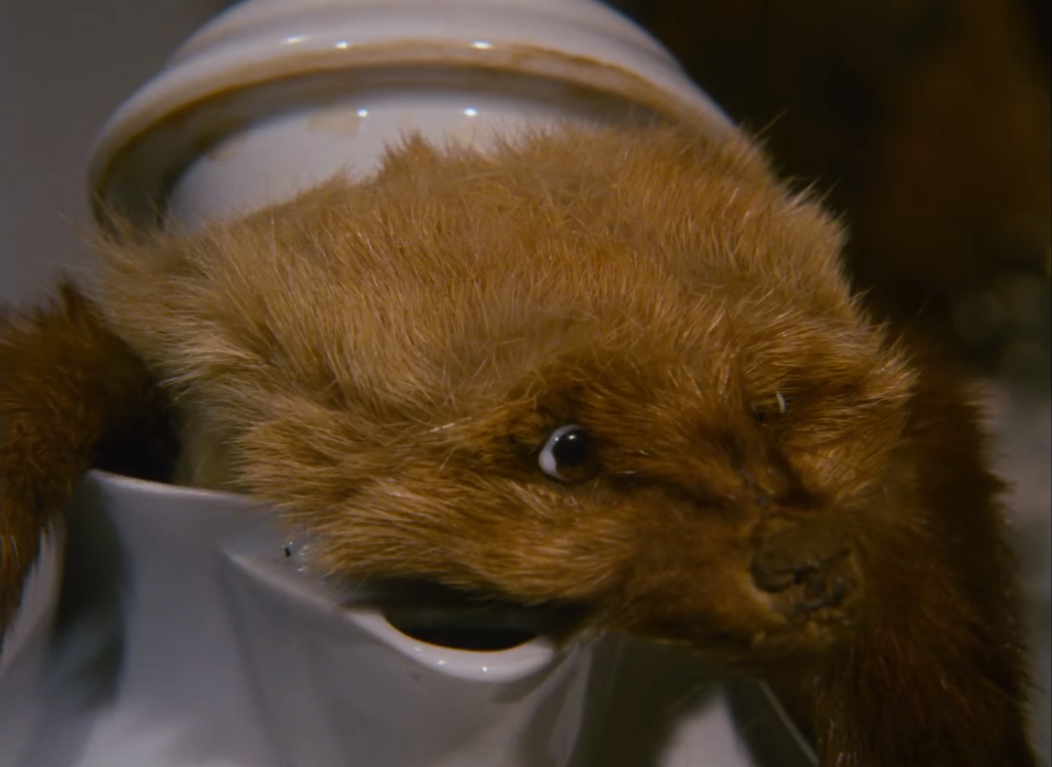
If it wasn’t obvious enough, Alice is a film adaptation of Alice’s Adventures in Wonderland, the famous novel written by Lewis Carroll. Despite being very faithful to its original material (even comparing it to some other adaptations, that tend to mix up the novel with its sequel Through the Looking-Glass and What Alice Found There), it does not depict all of the episodes in the book. However, every line in the film (not including the quote we selected above, that is at the very beginning of Alice) is taken directly from the novel. That said, it completely re-reads the novel, illustrating it in a creative and new way. Its style must have been described as truly unheimlich if Sigmund Freud had the chance to watch it. This is mostly because of Švankmajer’s obsession with everyday objects and things that are well-known to us, giving them a life that should not be. Dodgson’s novel is the perfect object to be narrated by Švankmajer, as it is an inheritly playful, ambiguous, psychadelic and metamorphic story. Other surrealists have taken a chance at this novel, but only the odd combination of interests in Švankmajer could result in such an interesting piece.

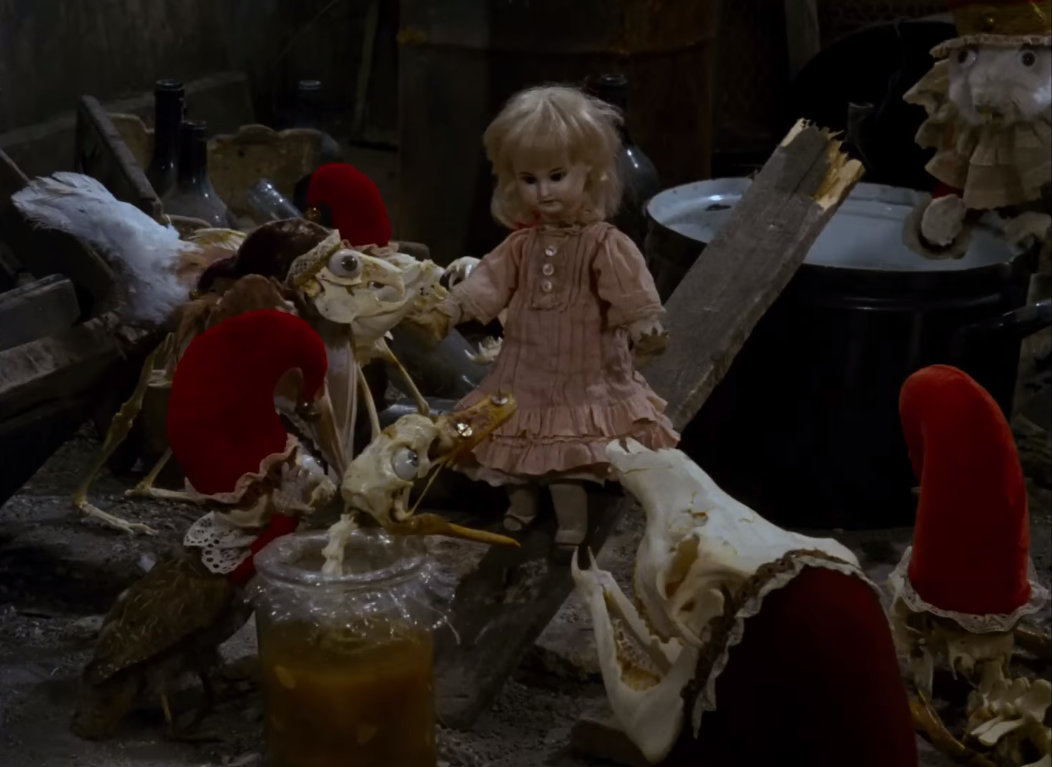
alice 2Alice shrinks into a doll.

By the end of the novel Alice wakes up in her sister’s lap, as she shouts (after growing spontaneously) that all those soldiers were just a “pack of cards”. And in fact we suppose by her sister’s description afterwards that all of her adventures in Wonderland were her background setting fantasized. Švankmajer takes these ideas to an absolute extreme, utilizing animation in everyday objects and artifacts instead of focusing on creating polished fantastical creatures. This creates an incredible textural feeling in the film, something that is common in his body of work. It seems that he knows of the many different readings of the story as well, as his semiotic game (combined with smart editing, framing and cinematic techniques that are not strictly related to the effect of the animation) shows knowledge about the different subtexts of Alice in Wonderland, with a special insistence on its sexual and psychoanalytical readings.

alice 1.pngProbably the most unsettling scene in the film, the infamous tea party.
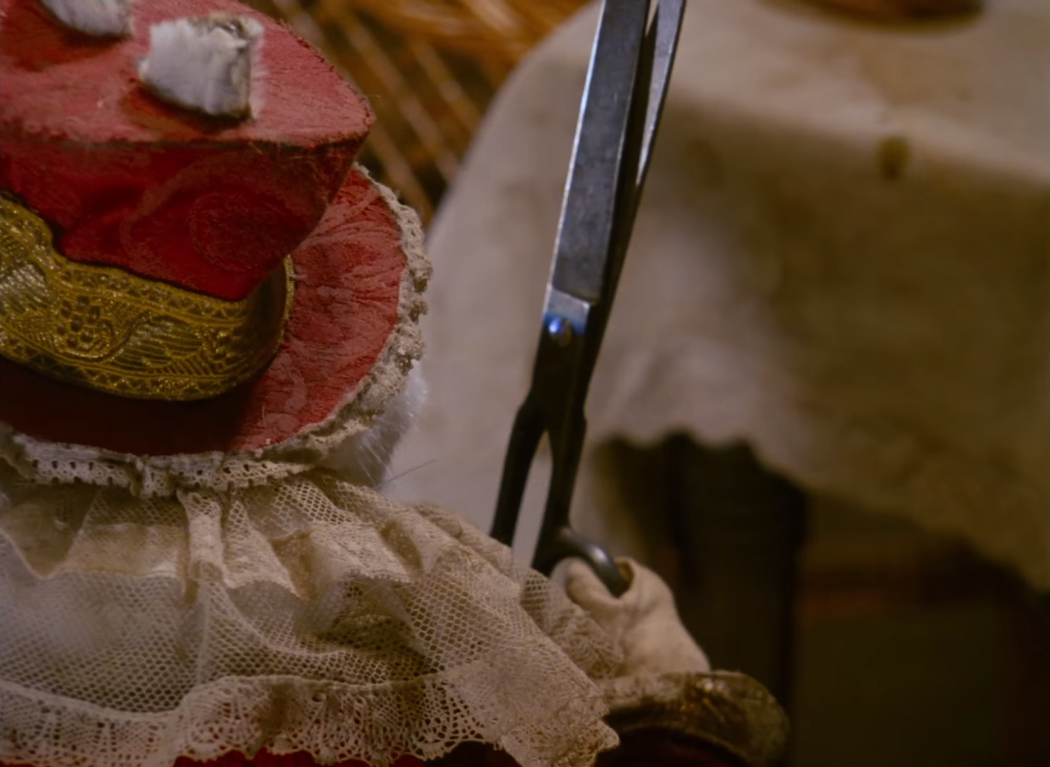
As in some of his other works (such as Conspirators of Pleasure (1996) and Little Otik (2000) ) we can observe in this work a presence of sexuality in childhood. It is a very subtle and delicate subject, but the honesty and tactility of the director allows these themes to flow in a poignant yet brutal way. The process of coming of age, clear in Dodgson’s original, is a prominent theme in the film overall. The brutal violence of growing in Švankmajer’s version is less evident than in the book, but it burns at a much more deeper level. This is mostly due to the use of the medium of cinema (images and time) combined with the animation and metamorphosis of inanimate objects (especially regarding things like meat and bones, that are a staple of Švankmajer’s, that when back to life create this uncanny feeling of seeing a sort of in-between of life and death).

alice 3.png“Off with their heads!”

Alice is a film to feel and not just watch. As the main character said, it is a children’s film, with the exception that it isn’t. It is, though, an incredible revisiting of a timeless classic. Focusing on the coming of age aspect of Alice, the cyclic nature of the story, the transformations and the perception of the real in human imagination, the film is definitely not for everyone. It is highly stylized, sometimes cryptic and ambiguous and it does not follow an easy narrative for the ones that are unfamiliar with the story. One can’t deny all these obstacles to the big audiences, but it is making it injustice when saying it is not a unique experience that will probably change the way you look at film as an art form and reconsider an old but dynamic and always fresh animation technique.