Vitalina Varela (2019)

Directed by Pedro Costa

vitalina

It’s poison!”

[“É veneno!“]

Pedro Costa is in 2019 already a well-established auteur. His work since Casa de Lava (1994) has been consistent theme-wise, and at the same time its progress is clear throughout. With Vitalina Varela the director still manages to stay true to the work he has been developing since Ossos (1997), on elevating the everyday lives of impoverished and endangered people into the realm of cinema. At the same time, there is a sense of evolution, and character development in a way, in this new feature. It is a film about Vitalina Varela, the main actress of the film, and her mostly true story of coming to meet her husband in Portugal after a 40 year waiting call for a ticket, arriving too late, as his funeral had taken place three days before her arrival.

vitalina 3.pngA film well worth noticing for its dark environments, captured as pristine as possible by Costa and his usual collaborator Leonardo Simões

As a standalone feature it is a great new way to introduce a new viewer to the director’s other films. In a way it’s one of the most linear narrative structures of the director, especially if we consider his last film Horse Money (2014) as comparison. In another hand, it is easily the most slow-paced of all of his films, making it the biggest chore to the casual moviegoer that wants to get in touch with his whole filmography. Nonetheless, Vitalina Varela has what is the most positive look towards the future of those depicted Cape Verdeans. It is at the same time, with the help of heavy stylization and immense technical care, a film that is as elevated and astray from reality as it is grounded, by its individual elements (real setting, non-actors, real stories, etc), on the truth surrounding these people’s social and economic lives.

vitalina 1.pngVentura

If we try and manage to contextualize Vitalina Varela in Costa’s full body of work, we can easily state as a fact that this is, as per usual when there is a new film by the director, the zenith of his career. If we consider the balance stated in the last paragraph, it is nothing new to the director’s other films. What is impressive is the development of the actor Ventura, the main character of his two last films Colossal Youth (2006) and Horse Money. It is the first time Ventura is not playing as himself, this is, as the character of Ventura. He plays a priest. This is the absolute next step on what we can consider as the big politics of Costa’s films. Ventura has now reached a new height, as a normal person being an actor playing himself, and now as a normal person being an actor playing a third-party character. The idea of cinema as proof of human potential in art, and of human potential in something that is transcendental, even transcendental of what may appear only as ethical, economical or political statements. This something is what makes these people worth much more than what the world gives to them, as every single person that suffers from similar conditions. This final goal is beautifully achieved in Vitalina Varela, and it presents us the in-depth story of a character that appeared briefly in Horse Money, a story that is tragic, but essentially true. The real truth, though, is not in these stories, it is not in these real people. The truth is their ability to make something great, a film, to be stars, even though that they were born in the dark side of Jesus’ face.

10 out of 10

3 Faces (2019)

(original title: Se rokh)

Directed by Jafar Panahi

3 faces

“So you came for her and not for us.”

Jafar Panahi is a Iranian director famous for his continuous quarrel with censorship and his consequent imprisonment in 2010. His 2015 masterpiece Taxi gave him worldwide recognition, but he was already one of the highest praised Asian directors from the last twenty years by film critics and a staple of the big film festivals. His work follows the lead of his master Abbas Kiarostami, especially after being imprisoned, where he approached a fluid style between documentary and fiction to develop his already highly realist filmography. 3 Faces is a film that won the award for Best Screenplay at the Cannes Film Festival, and is since being released all over the globe.

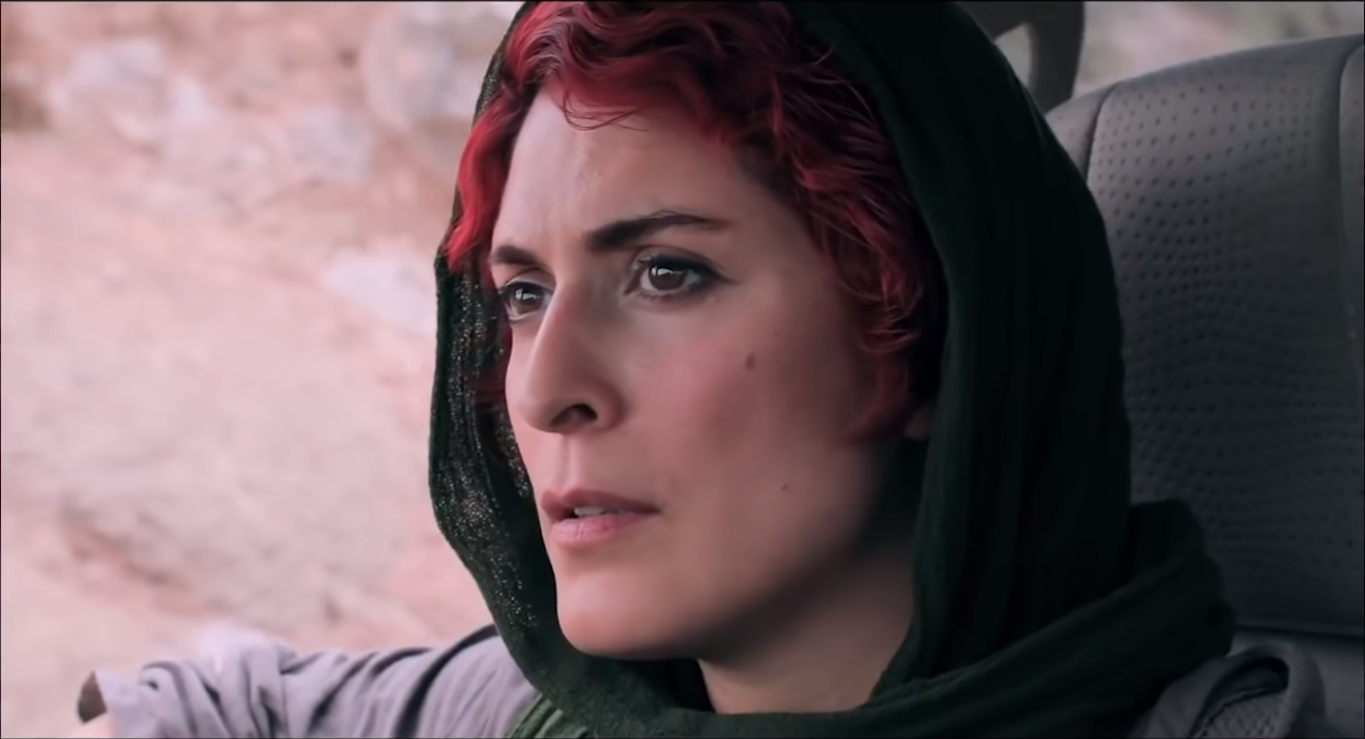
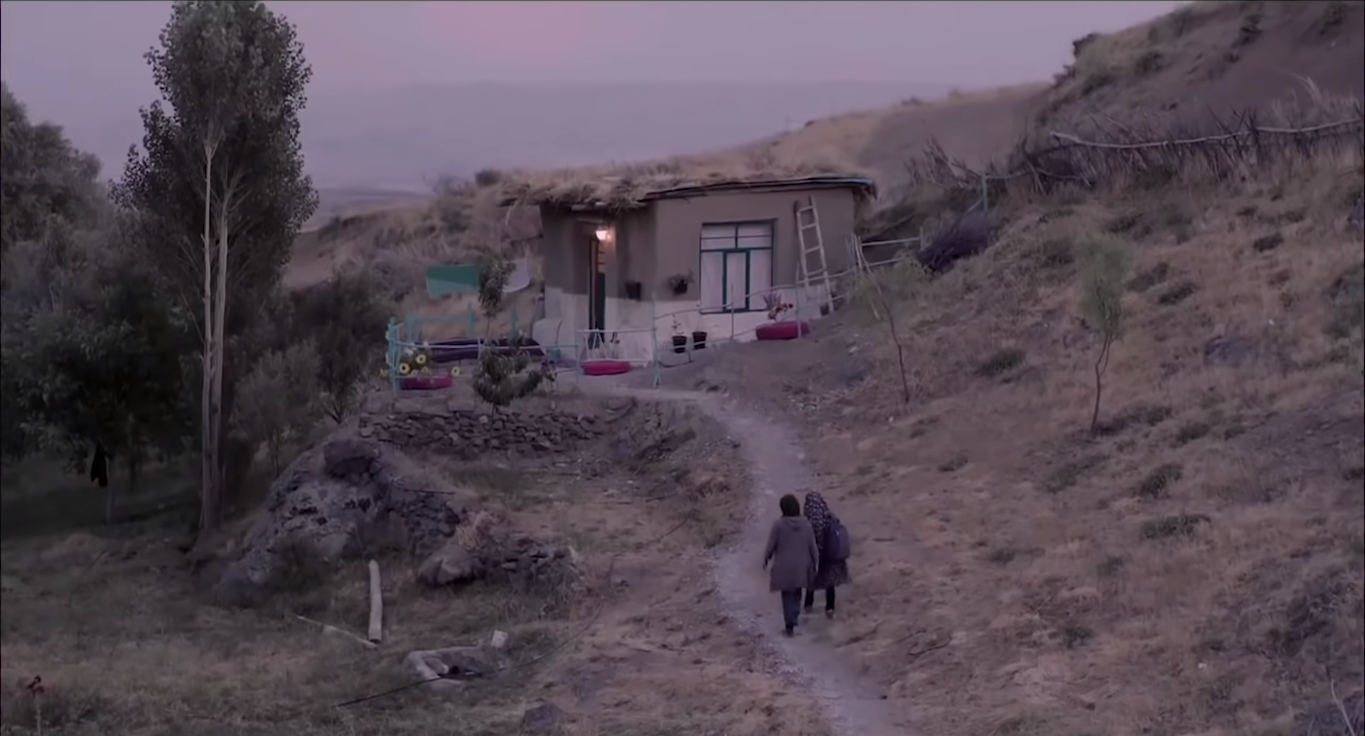
The film follows the director himself and the actress Behnaz Jafari. They received a video message of a young girl commiting suicide in an attempt to get the actress’ attention and help with the consequences of her somewhat progressive lifestyle (she studies in college and is an actress) in her traditionalist village. The three faces that gave the film its title are meant to be the faces of the three actresses in the film. The young girl that sent the message, the middle aged Behnaz Jafari and an old lady that they meet somewhere in the middle of their journey into the village. It is shot at the same location that many of Kiarostami’s films were shot, and has a lot of direct references to some of his most famous work, including the devastating ending of Taste of Cherry (1997) mirrored in the somewhat crazy old actress’ actions.

3 faces 1.pngBehnaz Jafari

As are the other films of the director since 2010, 3 Faces is a politically charged work. Panahi seems to extend his views on femininity, generational issues and religious catharsis from his other films. In this aspect, Panahi’s work seems to resemble another Iranian director that seems to be forgotten when talking about Panahi, that is Mohsen Makhmalbaf. In some of his films, of course considering Kiarostami’s influence on them as well, Makhmalbaf utilized too the fluidity between documentary paradigms and preconceived narratives to approach certain political issues – see for instance Kandahar (2001) and how it deals with the uprising war, or A Moment of Innocence (1996) and how it works with morality issues inside small communities. In the same way Taxi or This is Not a Film (2011) worked, this new film utilizes its meta elements to the fullest in order to reach the level of realism it does. It does not even shy away from going further into many other debates, much like Kiarostami’s Close-Up (1990) when it comes to the debate about the power of film and the influence of art in an oppressed society.

Despite not being as original as a film like Taxi was, Panahi seems to make a proper tribute to his masters. The debate topics of Makhmalbaf in 2001 or Kiarostami in 1990 are not the same the ones being discussed in Panahi’s contemporary cinema. Even if going as far as utilizing diegetic elements of the voyage or other direct elements of these other director, the final product is still original and relevant. There is a blend of a seemingly ascetic scenario with traditional but poetic use of framing and editing, and with a real sense of pathos that transcends the otherworldly level of cinema into real life (with a knowledge of technology and modernity that remembered us of other directors that utilized modern elements to their most real, like Michael Haneke in Happy End (2017) ). This mixture of techniques combined with the poignancy of Panahi’s assertions is hard to criticise and all of it definitely works.

3 faces 3.png

One of the most important things to take from a fictional film like 3 Faces is its sense of realism. Despite working will milions of elements and influences that are somewhat hard to keep track of, the film puts them together in a way that every frame drools a sense of what’s reality like in Iran, but even goes further in globalizing Iran’s problems. How do we deal with our professional lives, how do we deal with deceit, how do we deal with time and how do we deal with rules. What is the role of God, and does godliness ends when humanity starts to fade. These are some of the things that are hard not to think of when we see a film like Panahi’s. Much like the main idea from his 2011 film we are once faced with the fact that a film is a representation of life. Not only that, but the final product of this representation is alarming, not only because of what’s happening in some Middle Eastern countries, but because of the true universality of these problems.

7 out of 10