Raise The Red Lantern (1991)

(original title: Da hong deng long gao gao gua)

Directed by Zhang Yimou

raise the red lantern

“Isn’t that the fate of a woman?”

This week on Camera Coverage we turn back to Asia, more specifically, to China. Zhang Yimou is one of the most prolific Chinese directors of the last twenty years. Before estabilishing himself as one of the masters of the modern wuxia film with works like Hero (2002) or Curse of the Golden Flower (2006) he made a bunch of diferent films related to either Chinese history or your regular to-go drama picture. That said, his first three feature films, consisting of an unconnected trilogy, are to this day some of his best, especially the one we selected to elaborate upon. Raise the Red Lantern is a period film based on a novel by Su Tong, Wives and Concubines, that managed to do the impossible task of balancing pure cinema aesthetics and important statements on many political, social and cultural problems that are relevant to this very day.

The film follows Songlian (Li Gong), a young woman in 1920’s China. She appears to have been an university student that had some sort of conflict with her family. In a revenge act towards her family she decides to marry an old, powerful rich man in northern China. All of it happens really quickly, and Yimou puts the viewer straight into the complicated relationships between all of the four wives inside the mansion. Each of them have their own house/room that will be lit up with red lanterns if the master of the house (his name is never mentioned in the film) chooses to stay with that wife for the night or not.

raise the red lantern 1Saifei Ha as Meishan, the second wife, an opera singer.

Right off the bat we are faced with the aesthetic beauty of the film. Yes, the visuals are incredibly, but even the soundtrack works briliantly well with the images. There is a real sense of composition and structure in the film that contrasts well with its cathartic and dynamic ideas. More than just pure aesthetics the film manages to utilize many ingredients from the very beginning that make even the casual viewer to question some of the meanings and possible themes that the film will develop. Not only is the use of colour obviously important – hence the title of the film – but framing is key in the film, as is the decision of what to show and what not to show.

Raise the Red Lantern is not a sympathetic film when it comes to its protagonist, nor it is sympathetic to its viewer. The film has a claustrophobic feeling to it. There are rooms inside houses inside a village, and the four depicted woman are most of the time depicted inside these rooms like prisoners. The cold hand of the director when it comes to the depiction of these problems is felt in aspects like these, even if when picturing the master of the house there is never a shot of his face or, like we mentioned before, the mentioning of his very name. This decision would supposedly work in a way that would make us connect with the women inside, but quickly we realize that, yes, the man is a villain, but there is a bigger problem inside this world that dictates all these feelings of oppression. We must think that from the very beginning we are shown that Songlian’s decision was her own, and if she is a prisoner it is because of her doings. Despite the focus on the relationship between the women regarding their marriage, the film’s decision to avoid direct picturing of the husband puts us far away from any of his personal responsability we could have thought of.

raise the red lantern 2The quest for power of these wome led to lies such as fake illness, and even fake pregnancy.

All of this combined with the cruelty and evil depicted in these four women (being it at the same time a characteristic of each of them and a consequence of their situation), Raise the Red Lantern quickly goes from what could be a go-to bland feminist statement to a complex proposition of an overarching structure that is responsible for such issues. It is a controversial reading of the film, yes, but the catharsis we take from such a film is relevant enough to question these problems further and create a reaction in the viewer that, while mesmerized by the beauty of it, it is shocked by how contrasting it is with its ideas. Zhang Yimou made a beautiful film that manages to embellish and strengthen these women’s cages with the purpose of breaking their own metal bars.


3 Faces (2019)

(original title: Se rokh)

Directed by Jafar Panahi

3 faces

“So you came for her and not for us.”

Jafar Panahi is a Iranian director famous for his continuous quarrel with censorship and his consequent imprisonment in 2010. His 2015 masterpiece Taxi gave him worldwide recognition, but he was already one of the highest praised Asian directors from the last twenty years by film critics and a staple of the big film festivals. His work follows the lead of his master Abbas Kiarostami, especially after being imprisoned, where he approached a fluid style between documentary and fiction to develop his already highly realist filmography. 3 Faces is a film that won the award for Best Screenplay at the Cannes Film Festival, and is since being released all over the globe.

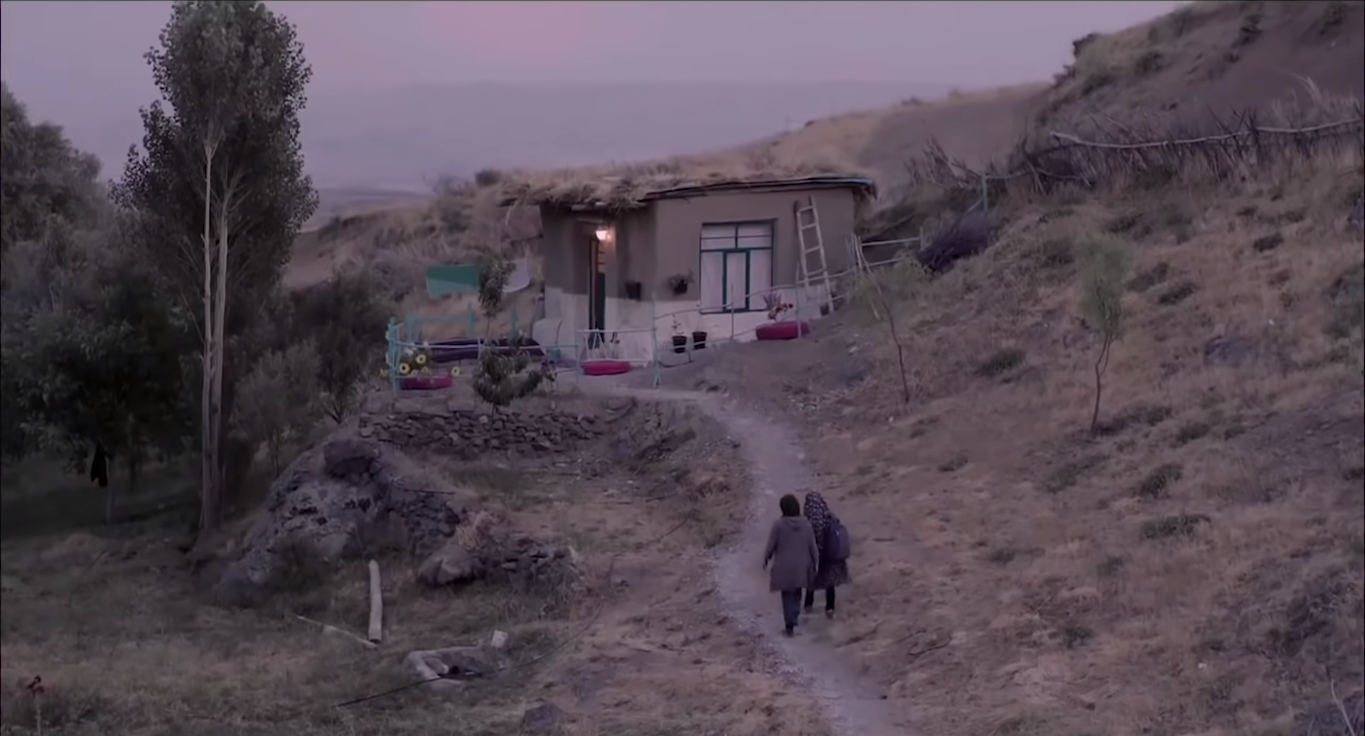
The film follows the director himself and the actress Behnaz Jafari. They received a video message of a young girl commiting suicide in an attempt to get the actress’ attention and help with the consequences of her somewhat progressive lifestyle (she studies in college and is an actress) in her traditionalist village. The three faces that gave the film its title are meant to be the faces of the three actresses in the film. The young girl that sent the message, the middle aged Behnaz Jafari and an old lady that they meet somewhere in the middle of their journey into the village. It is shot at the same location that many of Kiarostami’s films were shot, and has a lot of direct references to some of his most famous work, including the devastating ending of Taste of Cherry (1997) mirrored in the somewhat crazy old actress’ actions.

3 faces 1.pngBehnaz Jafari

As are the other films of the director since 2010, 3 Faces is a politically charged work. Panahi seems to extend his views on femininity, generational issues and religious catharsis from his other films. In this aspect, Panahi’s work seems to resemble another Iranian director that seems to be forgotten when talking about Panahi, that is Mohsen Makhmalbaf. In some of his films, of course considering Kiarostami’s influence on them as well, Makhmalbaf utilized too the fluidity between documentary paradigms and preconceived narratives to approach certain political issues – see for instance Kandahar (2001) and how it deals with the uprising war, or A Moment of Innocence (1996) and how it works with morality issues inside small communities. In the same way Taxi or This is Not a Film (2011) worked, this new film utilizes its meta elements to the fullest in order to reach the level of realism it does. It does not even shy away from going further into many other debates, much like Kiarostami’s Close-Up (1990) when it comes to the debate about the power of film and the influence of art in an oppressed society.

Despite not being as original as a film like Taxi was, Panahi seems to make a proper tribute to his masters. The debate topics of Makhmalbaf in 2001 or Kiarostami in 1990 are not the same the ones being discussed in Panahi’s contemporary cinema. Even if going as far as utilizing diegetic elements of the voyage or other direct elements of these other director, the final product is still original and relevant. There is a blend of a seemingly ascetic scenario with traditional but poetic use of framing and editing, and with a real sense of pathos that transcends the otherworldly level of cinema into real life (with a knowledge of technology and modernity that remembered us of other directors that utilized modern elements to their most real, like Michael Haneke in Happy End (2017) ). This mixture of techniques combined with the poignancy of Panahi’s assertions is hard to criticise and all of it definitely works.

3 faces 3.png

One of the most important things to take from a fictional film like 3 Faces is its sense of realism. Despite working will milions of elements and influences that are somewhat hard to keep track of, the film puts them together in a way that every frame drools a sense of what’s reality like in Iran, but even goes further in globalizing Iran’s problems. How do we deal with our professional lives, how do we deal with deceit, how do we deal with time and how do we deal with rules. What is the role of God, and does godliness ends when humanity starts to fade. These are some of the things that are hard not to think of when we see a film like Panahi’s. Much like the main idea from his 2011 film we are once faced with the fact that a film is a representation of life. Not only that, but the final product of this representation is alarming, not only because of what’s happening in some Middle Eastern countries, but because of the true universality of these problems.

7 out of 10

Cat People (1942)

Directed by Jacques Tourneur

cat-people

“Let no one say, and say it to your shame / That all was beauty here, until you came.”

This week on Camera Coverage, after an unfortunate but necessary hiatus, we take a chance at yet another Horror Classic. This time we discuss one of RKO’s ultimate, but sadly forgotten classics, Jacques Tourneur’s Cat People. We often associate suspense films of this era with Alfred Hitchcock, and rightly so, but Tourneur is a French director that utilized the techniques of the afforementioned director to a new height in his Hollywood career. Despite being associated with B-movie fair, Cat People presents classic horror cinema at its best. There is a creature, there is melodrama, there is symbolism and there is masterful use of archaic techniques in order to portray (or not) all these cathartic elements.

The film plays with the character of Irena Dubrovna (Simone Simon), a Serbian fashion designer working in New York. Right from the beginning of the film we are introduced to her future husband Oliver Reed (Kent Smith), who’s relationship with will be the main focus of the whole film. Irena has a unsettling past and is afraid that some legends from her village in Serbia are true and inside her. Stories of witches, kings, witchhunters and, of course, cat people, live within her as she expresses her anxieties of the possibility of all of it being true. This will lead to a troubled marriage, in which physical contact is inexistant, and the insistence of another woman inside the relationship dynamic will be the key factor for Irena to release the panther within her.

the other woman cat people.pngAlice as, in a genre bending role, The Other Woman, a New Yorker intruding a troubled marriage between a Serbian (Irena) and an American (Oliver).

All of this is quite literal. Irena seems to really release, or rather transform into, a panther by the third act of the film. So what makes the film so fascinating despite its somewhat cheesy premise? Well, what could have turned into a really awkward puppet and silicone fest is dealt with incredible subtilty. Tourneur’s cinema uses shadows as one of its foundational elements. This is essential to a film working with metamorphosis as is Cat People. The idea of transformation is never portrayed directly onto the screen, but suggested. I believe, as many others do, that Tourneur utilized heavy indexicality mainly because of the somewhat low budget of the film. That said, when working with abductive imagery he manages to elevate the film not only in terms of ambiguity, but also in relation to films that utilize top-notch special effects but sadly do not hold so well nowadays. It must be noted and observed that this technique is not reduced to editing and cutting the scene when transformations are due, but there is a work of suggestive imagery throughout the whole of the film. From images of Irena with paintings of menacing cats in the background, to juxstaposition of her body and a reproduction of a statue of Anubis, to the crossing of Irena’s figure and the shadow of an armchair giving her some sort of cat ears. One of the key scenes works with Irena’s footsteps quickly silencing as she is chasing Alice (Jane Randolph), as we must only assume that her feet transmorphed into the silent, deadly paws of a black panther. This film represents the use of cinema’s rhethorical means at its best, using not only the resource of image and visual representation, but going as far as utilizing sound to its most effective.

game of shadows cat people.pngAnother example of suggestion – in this case premonition – of a scene through shadows and objects. If you look closely you can observe the shadow of the bird and its cage projected onto the black panther image, predicting what would later happen in that scene regarding the bird’s death.

One can love a film by its technical prowess, but what does it all really mean? Well, Cat People does not shy away from ambiguity. This is not only due to the decisions behind the technical aspects of the film, but also due to the broad themes that the film is dealing with. Probably the most clear readings of the film lay on the problem of sexuality, femininity and relationships as a whole. There is a clear suggestion throughout the whole film of Irena’s fear of touch, even though she is already married and social or even religious judgements are not an issue. This woman is dynamic in the film, as she can transform into a menacing beast that is awaken by the overextension of male activity in the world that is her own – this is, sexual intercourse regarding her own body. But what about her Serbian identity? The reading of the film as a cultural collision is another interesting perspective by which we can approach Cat People.

Despite all these possible perspectives on the film, its ambiguity and blank spaces should be respected and perceived as such. This is a film that is simultaneously meant to be enjoyed and discussed, but never reduced to x or y perspective. By trying to limit the film’s readings (there is an immense focus by critics in accessing the film with the perspective on sexual anxieties), we tend to leave its essential element of identity that it is dealing with. More than a woman or a Serbian, Irene is an individual trying to defend her individuality when in necessity of interacting with other individuals. Whether Irene is a cat person or not we will never get to really see, but what we get to see is that Irene is as human as she can as she tries to survive in our inherently intrusive world.

Diamantino (2019)

Directed by Gabriel Abrantes & Daniel Schmidt

Poster_Diamantino_Cinemas

“They call me the Michael Angelo of the pitch”

Diamantino marks the debut of Gabriel Abrantes (with the partnership of Daniel Schmidt) into the world of full featured films. Abrantes has a long list of short films in his bag, such as A Brief History of Princess X (2016) or A History of Mutual Respect (2010). In his films he tries to ally a philosophical and critical stance to thematic such as history, gender and sexuality politics and the power of Art. With this long feature, Abrantes and Schmidt try to ally all these themes with an absurdist and at the same time comedic approach to serious and problematic contemporary problems. Almost a year after its Cannes debut, it finally showed up on Portuguese cinemas.

The plot follows Diamantino Matamouros (Carloto Cotta), the biggest football star in the world, who resembles an uncanny similarity to Cristiano Ronaldo. Either by the physical appearance or his narration of the events with a Madeira island accent (subtitled even to Portuguese audiences, although he is speaking Portuguese, something that may only be appreciated by the native speakers of the language) the resemblance is something that clearly pops on the viewer. Despite that, it’s not a direct reference and the character serves mainly as a caricature for nowadays biggest stars. He is a revered figured, almost like a god, astonishingly rich and with a personality ingrained with vanity and at the same time a tremendous ignorance for the events of the world. The very first scene, where we see him play in a sold-out stadium in the World Cup alongside with giant puppies in a pink cloudy haze, marks the surrealistic tone of the film. This scenario created in his head is the mechanism necessary to make him excel in what does best. Diamantino’s vanity and obsession with image and performance is not critiqued but instead he is presented as a deeply naïve and almost childish character. With the unexpected appearance of a refugee boat near his yacht, he completely loses all his ability to enter in that mental state represented by the pink haze and loses all his football skills. He goes from hero to zero, in a statement of the vapid celebratory status that rules our society, where one mistake is enough to fall from grace.

DIAMANTINO_BRAZIL-HD24_PRORES4444_VOLTRT_VO51_VILTRT_VI51-26062018.00_05_34_21.Still003The surreal place that Diamantino goes when he plays

Shocked by the migrant reality, he decides to adopt a Mozambican refugee boy, who is actually a female agent in disguise to discover possible financial frauds. Placed in an alternative timeline, Portugal is a neofascist country. One of the best aspects is the placement of small but very perspicuous clues that evoke the country’s forty-year dictatorship. It compares the creation of a glorious past with its big symbols with the new symbols created by today’s society in order to give a sense of national identity. The plot derives then into an almost espionage type of film. The despotic government convinces our lead character into a cloning process to make an entire football team full of skilful players like him in order to regain the glory lost in the World Cup final. This potentially deadly procedure would end up giving him breasts, something that deeply embarrasses him. The laughs of the audience to this scene maybe are a refection the director wants to make in relation to transphobia but unfortunately fails short to give any deep impact on the viewer.

The film’s first half results in an interesting critique of nowadays culture and politics. The long dictatorship (from 1926 to 1974) marked generations with a propaganda machine that created myths to justify a sense of identity. Despite a few decades passed since 1974, the mindset of the contemporary Portuguese people in some ways still rely in those myths of grandeur in a way of self-identity. Diamantino’s sisters (Anabela Moreira/ Margarida Moreira) also make an interesting point with their greed for their brothers’ money. With their sly personality, they are willing to sacrifice his own brother if needed. Alongside the positive points made before, Cotta’s performance is also a big highlight in the film, creating a deeply interesting character.

diamantino06.jpg.pngDiamantino and his “adoptive son”

The problem with the film relies essentially on pace. Past the first half of the film the repetition of the more poignant (or funny) aspects start to wear off and lose some of the charm. In a way, it reminds me of Capitão Falcão (2015) a Portuguese film that deals with similar political themes with also a comedic approach. The premises are smart and offer new ideas that deserve his praise, especially in dealing with ghosts of the past in a more cheerful that can help more easily engrain the audience in a political reflation without a more acute sense of guilt. The problem is that it is unable to deliver a more powerful second half without recycling most of the content used before. Worst than that, it finishes with a disappointing and cliché ending. Maybe Diamantino would be better if it was a short film, as it would be a more cohesive and well-rounded experience, instead of the constant repetition of tropes.


5 out of 10


Agnès Varda || Les plages d’Agnès (2008)

[Directed by Agnès Varda]

2

The past 29th of March braced us with the sour news of Agnès Varda passing away. A woman that changed the world of cinema so much should not go away dismissed by Camera Coverage. With that in mind I decided to write a small text on how much she meant to us cinema lovers and art lovers based on her autobiographical film The Beaches of Agnès.

In this documentary we see exposed the soul and will behind an incredible individual in the world of the French New Wave, something which we hope to find a lot more in her upcoming picture Varda par Agnès. By going through some of her past films and experiences in the world of art, we are able to go a step deeper in understanding the artist behind them, and never forget that the power moving those pictures was coming from a deep love for the emotions of art. Despite it being an autobiographical film, it is surely full with nods at experimentation. Any fan identifies the personal touches of the director and her whimsical idiosyncrasies. Varda is as expressionistic as ever, with her infamous atittude of being intoxicated with the mere act of living, with poetry and with the romantism in everyday life is as strong as in any of her later films. It is not necessarly the best film to start if you are not familiar with the director and the French New Wave movement, but it is tear inducing if you are an experienced viewer and lover of the excentricities of the its directors.

Varda is the joy of French cinema impersonated. Her last films had the incredible quality of the first, leaving the viewer enchanted by a woman full of life and full of will to live. A truly inspiring artist. In a world where the severity of Goddard and the ‘filmism’ of Truffaut are (wrongly) on top, she finds a perfect spot in the heart and soul of men. Innovative, magical and artsy in the best way possible, all of us want to be a little bit like Agnès, and are grateful to be blessed with so much work from her. The cinema and photography of her work shine bright enough in our world for her to never really fade away. We leave a list below of Camera Coverage’s favourite’s from this great director. May she rest her joyous soul.

The List:

Cléo de cinq à sept [Cléo from 5 to 7] (1962)
Le Bonheur (1965)
Oncle Yanco [Uncle Yanco] (1967)
Documenteur (1981)
Sans toit ni loi [Vagabond] (1985)
Les cent et une nuits de Simon Cinéma [One Hundred and One Nights] (1995)
Les Glaneurs et la Glaneuse [The Gleaners & I] (2000)
Les plages d'Agnès [The Beaches of Agnès] (2008)
Visages, villages [Faces Places] (2017)