Raise The Red Lantern (1991)

(original title: Da hong deng long gao gao gua)

Directed by Zhang Yimou

raise the red lantern

“Isn’t that the fate of a woman?”

This week on Camera Coverage we turn back to Asia, more specifically, to China. Zhang Yimou is one of the most prolific Chinese directors of the last twenty years. Before estabilishing himself as one of the masters of the modern wuxia film with works like Hero (2002) or Curse of the Golden Flower (2006) he made a bunch of diferent films related to either Chinese history or your regular to-go drama picture. That said, his first three feature films, consisting of an unconnected trilogy, are to this day some of his best, especially the one we selected to elaborate upon. Raise the Red Lantern is a period film based on a novel by Su Tong, Wives and Concubines, that managed to do the impossible task of balancing pure cinema aesthetics and important statements on many political, social and cultural problems that are relevant to this very day.

The film follows Songlian (Li Gong), a young woman in 1920’s China. She appears to have been an university student that had some sort of conflict with her family. In a revenge act towards her family she decides to marry an old, powerful rich man in northern China. All of it happens really quickly, and Yimou puts the viewer straight into the complicated relationships between all of the four wives inside the mansion. Each of them have their own house/room that will be lit up with red lanterns if the master of the house (his name is never mentioned in the film) chooses to stay with that wife for the night or not.

raise the red lantern 1Saifei Ha as Meishan, the second wife, an opera singer.

Right off the bat we are faced with the aesthetic beauty of the film. Yes, the visuals are incredibly, but even the soundtrack works briliantly well with the images. There is a real sense of composition and structure in the film that contrasts well with its cathartic and dynamic ideas. More than just pure aesthetics the film manages to utilize many ingredients from the very beginning that make even the casual viewer to question some of the meanings and possible themes that the film will develop. Not only is the use of colour obviously important – hence the title of the film – but framing is key in the film, as is the decision of what to show and what not to show.

Raise the Red Lantern is not a sympathetic film when it comes to its protagonist, nor it is sympathetic to its viewer. The film has a claustrophobic feeling to it. There are rooms inside houses inside a village, and the four depicted woman are most of the time depicted inside these rooms like prisoners. The cold hand of the director when it comes to the depiction of these problems is felt in aspects like these, even if when picturing the master of the house there is never a shot of his face or, like we mentioned before, the mentioning of his very name. This decision would supposedly work in a way that would make us connect with the women inside, but quickly we realize that, yes, the man is a villain, but there is a bigger problem inside this world that dictates all these feelings of oppression. We must think that from the very beginning we are shown that Songlian’s decision was her own, and if she is a prisoner it is because of her doings. Despite the focus on the relationship between the women regarding their marriage, the film’s decision to avoid direct picturing of the husband puts us far away from any of his personal responsability we could have thought of.

raise the red lantern 2The quest for power of these wome led to lies such as fake illness, and even fake pregnancy.

All of this combined with the cruelty and evil depicted in these four women (being it at the same time a characteristic of each of them and a consequence of their situation), Raise the Red Lantern quickly goes from what could be a go-to bland feminist statement to a complex proposition of an overarching structure that is responsible for such issues. It is a controversial reading of the film, yes, but the catharsis we take from such a film is relevant enough to question these problems further and create a reaction in the viewer that, while mesmerized by the beauty of it, it is shocked by how contrasting it is with its ideas. Zhang Yimou made a beautiful film that manages to embellish and strengthen these women’s cages with the purpose of breaking their own metal bars.

Burning (2019)

(original title: Beoning)

Directed by Chang-dong Lee

large_burning-poster

 “You burn down other people’s greenhouses?”

Burning is a 2018 film that unfortunately was only released in Portugal (where we are based) precisely a year after its premiere on the Cannes Film Festival. To worsen things, only a limited number of smaller cinemas decided to screen it. A sad resolution to a challenging and interesting film, a clear difference from the lack of creativity that plagued the commercial circuit in the last month.

Director Chang-dong Lee maintains the caustic and dramatic style that characterized most of his films. Lee tries on his works to access the darkness in the human nature, putting his characters in situations way beyond their comfort zone. Either by turbulent political scenarios like in his directing debut Green Fish (1997), or in Peppermint Candy (2000), a haunting tale of a man’s downward spiral to suicide; or finally and maybe his most well received film Oasis (2002), dealing with father and daughter relations amidst a debilitating disease. This last one ended up receiving the Best Director’s award and the Marcello Mastroianni Award for Leading Actress on the well-respected Venice Film Festival.

This time Lee brings to the screen an adaptation of a small story by the Japanese writer Haruki Murakami (“Barn Burning”, 1982). The film takes place on current day South Korea, having as the lead character Jongsu (Ah-in Yoo). A recent graduate of literary studies he finds it hard to get a job in his field of studies. A well-read young man, quotes William Faulkner as his favorite writer, mostly because of how relatable his writing is to him. During a walk in Seul he suddenly meets a childhood friend named Haemi (Jong-seo Jun). They both are from a countryside village outside of Seul. Haemi is now a grown woman and like most in Korea has done plastic surgery, making her almost unrecognizable to Jongsu. They have a dinner and afterward she invites him to her house, where they end up having sex. There Jongsu acknowledges her decision to go to Africa and accepts feeding her cat while she is gone. While she is away, he decides to take care of his family farm where he spent his childhood, dreaming of Haemi’s return.

This surely one of those films that the less we know coming to the cinema the better, because the second half sure takes an unexpected turn from the romantic drama vibe that characterized the first part (which ironically kind of renders this review a bad tool for the ones who haven’t watched it ). When Haemi returns from Africa, we are introduced to a new friend that she made named Ben (Steven Yeun). A very rich individual, he “steals” Haemi from Jongsu, but despite that she still invites him to hang around them both, acting like an awkward third wheel. Besides that, there’s a delicate class critique around Ben. Jongsu compares him to Gatsby from the famous Fritzgerald’s novel, wondering what his occupation is to grant him this luxurious lifestyle.


“Misterious people who are young and rich but you dont know what they do”

Haemi is this happy and naïve like figure, and doesn’t care for such things as Jongsu does, who from the start feels there is something off with Ben. One day her and Ben appear uninvited in Jongsu’s family farm. In a moment alone Ben confesses his love with burning greenhouses, leaving a sense of imminent danger in the air. Despite that, Haemi is totally clueless to this and Ben’s love for arson. In one beautiful scene (after Ben’s revelation) during dusk, with the North Korean montains in the background, Haemi dances half naked to the sound of Miles Davis soundtrack of Louis Malle’s Elevator to the Gallows (1958). The cinematography by Kyung-pyo Hong is gorgeous and adds a lot to giving a sense of dreamlike state, leaving the viewer more and more uncertain about what is happening.

The haunting Haemi dancing scene

Jongsu is a calm and introverted individual. Throughout the film we get clues about his past and childhood, especially the ones dealing with his mother. He is a lone wolf kind of person and starts to obsess with Haemi. There is a patent and ever-growing rage inside him against Ben, who despite always seeming uninterested in Haemi’s actions, she always tries to please him. This jealousy ends up hurting Jonsu’s relationship with her and leaving him with a lot of guilty caused by his behavior. But when he tries to amend things with her, she’s not there to talk to him. There’s a deep tension in this film but it is always invisible. The answers don’t seem to appear, but the rage grows stronger by the minute. In the end we can’t help but to feel if Jongsu’s obsession with Haemi and attempt to control her actions was part of the motivation for such a rageful and traumatic closure. As if he felt not only rage against Ben but also with himself.

8 out of 10

Lords of Chaos (2019)

Directed by Jonas Åkerlund

poster1

“I thought you were true Norwegian black metal.”

Jonas Åkerlund is a film director first known for being the original drummer of the Extreme Metal band Bathory and then breaking out of the band to pursue his career on the direction of music videos, beginning with Heavy Metal bands like Candlemass and later with more famous artists like Moby, Robbie Williams, and even Beyoncé. Despite his videography being arguably the most significant part of his work, before (and after) Lords of Chaos Åkerlund made several films like Spun (2002), Small Apartments (2012) and most recently Polar (2019). Being a fan of underground music and even Black Metal music, the sole apparition of a film like Lords of Chaos greatly spited my interest, and being the responsible guy behind the project a legend like Jonas Åkerlund (and despite knowing his work on music videos, at the time of the announcement of the film I had no idea of his other cinema work) I was more than excited to see the film. This was before I started seeing images and clips from the film’s release at the 2018 Sundance Film Festival, and watching the most recent of his films Polar (2019). After seeing this I was worried, and reasonably so.

2.png

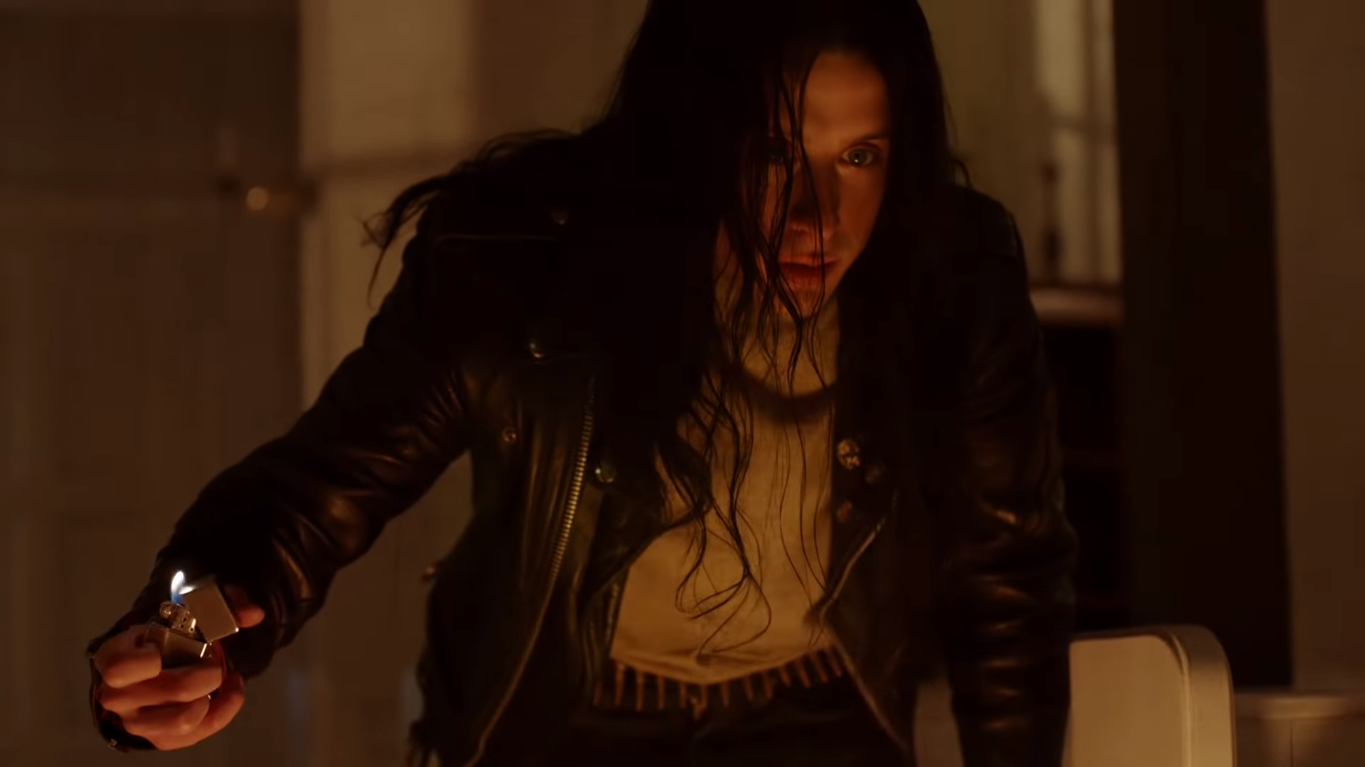
Lords of Chaos is based on the book by the same name, a work that is incredibly controversial on its own for problems regarding truth, romantization of facts and political stances it depicts. The book is based on the infamous stories of the Norwegian Black Metal scene in the late 1980s and early 1990s, and particularly the stories of Euronymous, Varg Vikernes and the so called Black Circle. The film follows the most controversial of these events: the murders, the suicides, the church burnings. It creates a lot of weird scenes that are just there for the sake of it as well. Things like a romantic subplot, sex-related gags and some of the cringe-worthy exaggerated conversations I’ve seen in any representation of an Extreme Metal or Punk scene. As you may well know Euronymous was murdered by Varg Vikernes, and this being the main event of the Black Metal scene in Norway together with the terrorist attacks on churches it created so much controversy that made this extreme genre of music tainted until this very day, being the perfect story to sell at the box-office apparently.

If we step aside from the personal bias with this genre of music and these stories, it does not help the film at all. The final product of Jonas Åkerlund’s work is fundamentally flawed like many of other films that try to depict an event of recent history. There is an obscene sense of disrespect for the dead in the film, more noticeable than the mere disrespect for the story and Black Metal in general. Euronymous is here depicted as a stupid teenager wimp that thinks he is “trve” but is actually a “poser” and Varg is depicted a “poser” that is actually “trve”. In subverting these “scene concepts”, Åkerlund manages to show on which side of the story he is and his criticism in a way that is theoretically interesting. The problem is that he lacks sensitivity with the characters, being way too predictable, and reducing the characters to a Hollywoodesque level of plastic that feels atrocious and offensive even to the ones that are not knowledgeable with the real facts depicted in the film. In the beginning of the film the director puts out a sentence on the screen saying something like “Based on Truth, Lies and What Actually Happened“. He almost used this to an interesting extent when mixing up all the myths in the dream sequences of Euronymous, but he fails, because in actuality what the spectator feels he means with this is that he does not care a single bit about the real story and the Black Metal myths and just wants to poop out a discardable bag of chips.

1.png

Technically it is awful as well. Despite not relying on a predictable shot/reverse-shot structure, the music video style he uses instead does not bring anything to the table that feels in any way authentic or aesthetically pleasing. He also goes for this snappy style of directors like Adam McKay, that combined with the fake, “edgelord” kind of stylization only makes the film stink even worse. Maybe I am privileged in the selection I make to the films I watch, but Lords of Chaos is probably the worst film I have watched in months, even worse than the insidious mess that was (his John Wick remake) Polar (2019). Not even the casting looks legitimate and for the most part the actors do not do a good job. Something as simple as the special effects and the depicted violence feels too exaggerated and silly as well, and I will not even comment on what they did with the soundtrack and especially the Mayhem songs. There are no redeeming qualities to Lords of Chaos whatsoever, and being someone with the background of Jonas Åkerlund the man behind this project, it only makes us feel even closer to the post-capitalist cinematic apocalypse.


1.5 out of 10

The Ballad of Narayama (1983)

Directed by Shôei Imamura

narayama 1

“Our ancestors have gone to the summit for hundreds of years as we do now. 25 years from now I will go there too.”

Created by arguably one of Cannes Film Festival favorite directors Shôhei Imamura (with 5 times Palme D’Or nominations and 3 wins, including on this particular film) this work of his moves the viewer with its whimsical characters that can quickly twist the mood of the film from a light family comedy to a shocking, grotesque depiction of the life in a 19th century Japanese village. The socially poignant Japanese director does not miss his selected target with The Ballad of Narayama, but even surpasses his signature social cinema and elevates the story to a state of fable that despite not being as stylized as the 1958 version of the film, is way more cinematic and even accessible to the Western audience.

Imamura created complex dynamics introducing the viewer to really well-developed characters in a warm family environment and juxtapose this familiar warmth with the rough systems and values that guide village life. The film follows the life of a family in which every member has some unsolved problem. The main plot point of the film is that the old matriarch of the family Orin (played delightfully by Sumiko Sakamoto) is getting old, and there is a tradition in the village of ubasute. Being her the main stabilizer of the family, the film follows her solving her family’s problems while preparing, without the family’s approval, her departure to the mountain.

narayama 4.jpgSumiko Sakamoto

When asked about the story Imamura joked he initially thought about starting the film with a family taking their old grandma to a nursing home up a hill in modern Japan and then showing up the title screen saying The Ballad of Narayama. This says a lot about the intentions of the director when creating the film and presenting yet again this particular story. This work goes a step further than other films that go for this type of commentary. It ends up being way more shocking in, for example, a scene on justice against a family that stole from another family’s house, than in the film’s inevitable ending. It goes beyond its original source material (being it the 1958 film or the novella) and does it in a well accomplished manner, in which apparently scenic shots of animals (rats eating snakes and snakes eating rats, for example) and the environments say a lot more about the plot itself than its charming characters may initially transmit. Having this said, pretty much everything, from the music to the framing, works diagetically in Imamura’s film. And more than that, everything stands individually as a great element to the film. As any of his films, The Ballad of Narayama is visually striking, even more so than something like Vengeance is Mine (1979). It has a visual finesse of some of his most iconic later work like The Eel (1997), another one of our favourites from Imamura that could have easily made the list.

narayama 3.jpg

Despite being better known for his 1960s films, Imamura is a director that we will probably have to revisit another time on Camera Coverage, as for his later work goes above and beyond, in our humble opinions, than what he had previously worked on. In a world where directors like Ken Russell work political cinema and are tremendously poignant in the cinematic conversion of their ideas, we have Shôhei Imamura that is way less known in the West but goes above and beyond any of his political statements and manages to touch much more fundamental problems of the human existence. Even if he was adapting a novella or even adapting the 1958 version of the film, he managed to put as much of his signature social grit and social realism as poetic and lyrical value, all rounded up with an extent use of cinema’s potential. This is how you do an adaptation of a book. This is how you do a remake.