Cat People (1942)

Directed by Jacques Tourneur

cat-people

“Let no one say, and say it to your shame / That all was beauty here, until you came.”

This week on Camera Coverage, after an unfortunate but necessary hiatus, we take a chance at yet another Horror Classic. This time we discuss one of RKO’s ultimate, but sadly forgotten classics, Jacques Tourneur’s Cat People. We often associate suspense films of this era with Alfred Hitchcock, and rightly so, but Tourneur is a French director that utilized the techniques of the afforementioned director to a new height in his Hollywood career. Despite being associated with B-movie fair, Cat People presents classic horror cinema at its best. There is a creature, there is melodrama, there is symbolism and there is masterful use of archaic techniques in order to portray (or not) all these cathartic elements.

The film plays with the character of Irena Dubrovna (Simone Simon), a Serbian fashion designer working in New York. Right from the beginning of the film we are introduced to her future husband Oliver Reed (Kent Smith), who’s relationship with will be the main focus of the whole film. Irena has a unsettling past and is afraid that some legends from her village in Serbia are true and inside her. Stories of witches, kings, witchhunters and, of course, cat people, live within her as she expresses her anxieties of the possibility of all of it being true. This will lead to a troubled marriage, in which physical contact is inexistant, and the insistence of another woman inside the relationship dynamic will be the key factor for Irena to release the panther within her.

the other woman cat people.pngAlice as, in a genre bending role, The Other Woman, a New Yorker intruding a troubled marriage between a Serbian (Irena) and an American (Oliver).

All of this is quite literal. Irena seems to really release, or rather transform into, a panther by the third act of the film. So what makes the film so fascinating despite its somewhat cheesy premise? Well, what could have turned into a really awkward puppet and silicone fest is dealt with incredible subtilty. Tourneur’s cinema uses shadows as one of its foundational elements. This is essential to a film working with metamorphosis as is Cat People. The idea of transformation is never portrayed directly onto the screen, but suggested. I believe, as many others do, that Tourneur utilized heavy indexicality mainly because of the somewhat low budget of the film. That said, when working with abductive imagery he manages to elevate the film not only in terms of ambiguity, but also in relation to films that utilize top-notch special effects but sadly do not hold so well nowadays. It must be noted and observed that this technique is not reduced to editing and cutting the scene when transformations are due, but there is a work of suggestive imagery throughout the whole of the film. From images of Irena with paintings of menacing cats in the background, to juxstaposition of her body and a reproduction of a statue of Anubis, to the crossing of Irena’s figure and the shadow of an armchair giving her some sort of cat ears. One of the key scenes works with Irena’s footsteps quickly silencing as she is chasing Alice (Jane Randolph), as we must only assume that her feet transmorphed into the silent, deadly paws of a black panther. This film represents the use of cinema’s rhethorical means at its best, using not only the resource of image and visual representation, but going as far as utilizing sound to its most effective.

game of shadows cat people.pngAnother example of suggestion – in this case premonition – of a scene through shadows and objects. If you look closely you can observe the shadow of the bird and its cage projected onto the black panther image, predicting what would later happen in that scene regarding the bird’s death.

One can love a film by its technical prowess, but what does it all really mean? Well, Cat People does not shy away from ambiguity. This is not only due to the decisions behind the technical aspects of the film, but also due to the broad themes that the film is dealing with. Probably the most clear readings of the film lay on the problem of sexuality, femininity and relationships as a whole. There is a clear suggestion throughout the whole film of Irena’s fear of touch, even though she is already married and social or even religious judgements are not an issue. This woman is dynamic in the film, as she can transform into a menacing beast that is awaken by the overextension of male activity in the world that is her own – this is, sexual intercourse regarding her own body. But what about her Serbian identity? The reading of the film as a cultural collision is another interesting perspective by which we can approach Cat People.

Despite all these possible perspectives on the film, its ambiguity and blank spaces should be respected and perceived as such. This is a film that is simultaneously meant to be enjoyed and discussed, but never reduced to x or y perspective. By trying to limit the film’s readings (there is an immense focus by critics in accessing the film with the perspective on sexual anxieties), we tend to leave its essential element of identity that it is dealing with. More than a woman or a Serbian, Irene is an individual trying to defend her individuality when in necessity of interacting with other individuals. Whether Irene is a cat person or not we will never get to really see, but what we get to see is that Irene is as human as she can as she tries to survive in our inherently intrusive world.

Knife+Heart (2019)

(original title: Un couteau dans le cœur)

Directed by Yann Gonzalez

knife+heart poster

“She saw so many gay flicks, she thought she was a fag.”

Yann Gonzalez is a French director known for his feature film You And The Night (2013) but mostly because of his many other short films. He is especially well regarded in the LGBTQ+ community for his preference on themes regarding sexuality and gender politics. Having won many prizes and nominations in important festivals like Cannes Film Festival, he is one of those directors to be watching out for if you are interested in art-house films of the new era. However, we feel on Camera Coverage that this new feature from Gonzalez is pretty much a mess, it is not without some singular scenes that are incredible, but it is indeed a bit of a mess.

The film follows Anne (Vanessa Paradis), a gay pornography film director, in her quest of filming her new feature that seems to be more bold and adventurous than her previous. This brings us close to the character and her relationship dynamics with her film editor Löis (Kate Moran) and her dealing with alcohol addiction. From the start we know that the film has as a main plot a giallo-esque story, with a serial killer that seems to be targeting the actors from Anne’s films. The connecion between the killer and the actors is left uknown until the end of the film, where we are bombarded with a traditional plot-twist from the great classics of the genre.

print heart+knife 1Vanessa Paradis as Anne

The film plays along the lines of what we may consider the supernatural giallo, especially in its first two acts. The relationship between Anne’s vision of her new picture and the killings is meant to be perceived, but sadly, with its ending, we are left hanging in the understanding of this relationship. Throughout her journey we are faced with many surrealist images that are traditional in these giallo films and Italian horror films of the 1960s and 1970s, but they seem to add little to the unravel of our characters quest. It is clear that there are many diagetic layers on Knife+Heart, but after seeing it and thought of it for a week I still feel that they are not only disconnected, but they are sadly disconnected, as most of them are individually incredible and contain a lot of contrasting and formally complex ideas working on a deep semiotic level. The insistence on creating a traditional giallo in structure does not work in the film as much as it does visually, and it lefts the viewer confused, frustrated and cheated.

Vanessa Paradis is one of the actors in later years that we feel, as lovers of photography in general, that has one of the most unique faces. The characterization of every character in the film, especially her’s, is incredibly stylized and works well comparing to the other aspects of the film. The whole visual aspect of the film is undeniably great. It works as a cool throwback to the films of the genre, but it works as a singular piece as well, despite its insistence on weird black and white thermal images when depicting dream sequences. However, even at the technical level (image and sound) Knife+Heart is not the best throwback to the giallo, particularly if we consider the incredible films that made reference to the genre we have seen in the last few years (like Berberian Sound Studio (2012) and Amer (2009) ).

black and white dreams equencesOne of the dream sequences

Falling short on others to describe the film, it feels disapointing. The director has achieved greatness with some of his short films (notably Les îles (2017) ), but this time he completely misses the target. Despite arguably being one of the films that are a throwback to the afforementioned genres that more truly incorporates not only the visual aesthetics but the structure of the giallo, it fails on creating a compelling experience by being too overwhelming and obtuse with its symbols and parallels. I feel that some of this may be due to how random some of the events in the film are, and the discrepancy of vibes in it. The play of the director regarding the meta aspect of the film (the films inside the film; the dreams inside the film; the dreams that are the film; the relationship between director and editor, etc) is interesting, as are the mirror images it tries to make with its individual scenes. Sadly it does not keep up with its promises (especially its depiction of the theme of obsessive and corrosive love) and mostly is an insatisfying experience, that while being really extreme and poignant in the depiction of a community and a genre of filmmaking that is really underapreciated and not valued as it should, it leaves the spectator feeling that it is a mere exercise in shock value and pretentiousness.


3.5 out of 10

High Life (2019)

Directed by Claire Denis

MV5BMDNjN2NjYmItMjAyZi00NmNkLWJmYTQtYzcwZGRiM2RmNGNlXkEyXkFqcGdeQXVyODUxNjcxNjE@._V1_SY1000_SX675_AL_

“It’s just a new religion for you.”

The presence of female directors in the worldwide film industry unfortunately is still somewhat lacking. For instance, over the last decade only 4% of the top 1,200 studio films were directed by women. Despite the odds, Claire Denis has throughout her career established herself as one of the most important French directors of the last decades. Her directing highlights go from Chocolat (1988), a film about France’s post-colonial issues; or Beau Travail (1999), dealing with the memories of war from French Foreign Legion soldiers. In this last one is especially interesting that themes like hypermasculinity and repressed homosexual feelings are explored by a female director, giving it a fresh new look on war films.

Claire takes now a shot at the science-fiction genre with High Life. The film tries to add new perspectives to what it means to be human when you are enclosed in a small spaceship far away from earth. It is not an easy task since the theme is well documented already, for instance in film classics like 2001, A Space Odyssey (Stanley Kubrick, 1968) or Solaris (Andrei Tarkovsky, 1972).  However, High Life is quite a different experience and references new ideas and problematics.

vlcsnap-2019-04-20-17h32m44s690.pngThe great use of red lighting

The plot functions around a group of inmates whose life sentence is to collect an unknown form of energy somewhere near a black hole. The intricacies deepen as we are introduced to the different individuals that compose the unlikely team. Dr. Dibs (Juliette Binoche) is a doctor obsessed with collecting sperm samples from the male crew members and then artificially inseminate the female ones. Failing to do so constantly she decides to double the sedative dosage and, through rape, collect the sperm from Monte (Robert Pattinson), the star of the film. The sexual tension is raised even higher with the introduction of this masturbatory machine that all of the crew, but Monte, use regularly. In a somewhat full of sexual tension and at the same time somewhat eerie scene (with a vibe that reminded me the killings in Under the Skin (2013) ) we see Binoche ride this contraption called “The Fuckbox”. In a complete trance-like state, this machine with a dildo end is set in a dark room with bondage straps hanging up from the ceiling. Making a companion to the heavy sexual tone is also the violence between the team. In a way it’s like the film tries to associate the presence of one with the other. It may start as a sexual violence situation like rape and end up in murder. These are a group of people that have lost a sense of purpose in life due to the uncertainty of their future and the claustrophobic aspect of living in a small ship in deep space.

vlcsnap-2019-04-20-17h33m45s030.pngInside “The Fuckbox”

The film begins with Monte living with a small child, alone in the spaceship. We later get to know that that child is the only success of Dr. Dibs and her mischievous tries to create newborns. Despite being an unwanted child, in a way it truly saves Monte from the same fate as his crew. Denis tries to show, especially between Monte and his little girl, some positive aspects about Humanity. In the final scenes we get to experience the wholesome relationship between the two until the ambiguous ending.

Its an interesting concept but not without its flaws. Starting with the cinematography, its somewhat lackluster, especially if we are talking about a revered director like Denis. The exterior space shots feel cheap and not very interesting either artistically or realistic, either way. Inside the spaceship it does get that much better. With points taken by the brilliant use of red light, there isn’t much there that blows you away. Maybe Denis was going for an homage to the spaceships of the 70’s because sure feels like we’re in one. The cast works well, especially Pattinson, but the dialogues feel sometimes forced and don’t add much to the plot.

It’s a peculiar film that will not appeal to the major movie goer for sure. It explores the most raw and vicious aspects about our sexuality and capacity to engage in violence. Nonetheless it’s not a missed shot by any means. Under its flaws there is a sense of novelty remarkable in this stage of her career, a director now 72 years old.

5 out of 10

The Fire Within (1963)

(original title: Le Feu Follett)

Directed by Louis Malle

qL6ZEBtqgDUf0j76xJ6GFEpaGQYXl3_large

“One day I realised I’d spent my life waiting. For women. Money. Action. So I drank myself stupid.”

Louis Malle is a French director that started his career amidst the Nouvelle Vague movement. Despite not being a full front figure like Jean Luc Godard, Alain Resnais or the recently late Agnes Varda, he has a personal style and sensibility that make him, in my opinion, an underrated director in the French scene. His first full feature is Ascenseur pour l’échafaud (1958), a noir masterpiece, displaying a suffocating and almost despairing feel with the brilliance of his night Paris shots. This in alliance with a stellar original soundtrack by the jazz great Miles Davis make for an almost perfect debut as a director. Throughout his career he would tackle difficult and polemic themes like Nazi collaboration (Lacombe Lucien (1974) ) or incestuous relationships (Le souffle au cœur (1971) ). His own World War II experience would serve as the theme for Au revoir les enfants (1987), a powerful film about a catholic school that hides Jewish children from Nazi persecution.

With Le Feu Follett, Malle focuses once again in very sensitive topics, like depression, addiction and especially on suicide. The story follows Alain Leroy (Maurice Ronet), a 30-year-old writer with alcoholic problems as he leaves the rehabilitation clinic in Paris. This service was played by his ex-wife, who now lives away from him in New York. To verify the success of the treatment, she sends one of Alain’s old female acquaintances Lydia (Léna Skerla) to check up on him. His doctor (Jean-Paul Moulinot) assures him that he is completely cured, and all is good now. Despite all the positive feedback from the outside Alain cannot help but feel disenchanted with the prospects of his future. Though the film we see him visit some old friends and catching up with their current lives in the present. For instance, as his comrade Dubourg (Bernard Noël) now dedicates his life to Egyptology and marriage, Eva (Jeanne Moreau) wastes her time with drug users. In another scene we see Alain dine with Solange (Alexandra Stewart) and her wealthy and reactionary friends. There is a feeling of resentment by Alain against his friends as if they are no longer the same as they were in their youth. As if in some way, their juvenile ideals were betrayed and transformed exactly on what was promised to fight against.

vlcsnap-2019-04-17-13h41m27s823.png“It’s not feelings of anxiety, it’s a single feeling of constant anxiety”

Despite the constant presence of friends and acquaintances, Alain feels more alone than ever. Deep inside he feels truly displaced in this world and questions the bourgeois life that his friends live. In his small room questions the meaning of his existence and if he should just end it. The addiction leaves him with constant questioning of his abilities as a writer and even his notions of manhood, mainly because of the power and dependence that his ex-wife still has on him.

Maurice Ronet, who worked with Malle before in Ascenseur pour l’échafaud (1958) does an astonishing job in this film. With a profound sense of calmness, he wanders through Paris narrating his thoughts in an eloquent manner. Malle use of handheld cameras give a more personal and closer feel as we feel as if we walk along with Alain. Along with the minimalistic notes of piano composed by Erik Satie there is a bittersweet tone to the relation between the viewer and the protagonist. In his head he made up his mind and he is tired of waiting for something that gives meaning to his life. Despite that, what may feel as a self-imposed fatalism is something very hard to understand to those not experienced with depression or addition problems. Alain seems like the kind of men that has nothing against him. With a good figure, intelligent and well-dressed what does he needs more? He has lots of friends and women that want to spend the night with him but regardless of that he is extremely unhappy with his life.

vlcsnap-2019-04-17-13h42m10s094.png

Malle, born into a wealthy industrialist family surely took a lot of his own thoughts and experiences into this work. Inspired by the writter Pierre Drieu la Rochelle (who ended up committing suicide) and his novel Will O’ the Wisp (1931), Malle gives an honest and well needed take on both mental issues and the problematics of contemporary society. Alain is in short, a profoundly alone person mainly because people lack the understanding of his real problems. Depression works not only on sadness and poor mood but especially the lack or misplacement of feelings. The true sadness of the film lies on not the decisions made by Alain but how poorly the others could view his problems. Maybe it was shame or pure hopelessness, but Alain seemed to others like a functional human being. If the viewer did not have access to his thoughts would them also view him as a man in the brink of suicide?

Agnès Varda || Les plages d’Agnès (2008)

[Directed by Agnès Varda]

2

The past 29th of March braced us with the sour news of Agnès Varda passing away. A woman that changed the world of cinema so much should not go away dismissed by Camera Coverage. With that in mind I decided to write a small text on how much she meant to us cinema lovers and art lovers based on her autobiographical film The Beaches of Agnès.

In this documentary we see exposed the soul and will behind an incredible individual in the world of the French New Wave, something which we hope to find a lot more in her upcoming picture Varda par Agnès. By going through some of her past films and experiences in the world of art, we are able to go a step deeper in understanding the artist behind them, and never forget that the power moving those pictures was coming from a deep love for the emotions of art. Despite it being an autobiographical film, it is surely full with nods at experimentation. Any fan identifies the personal touches of the director and her whimsical idiosyncrasies. Varda is as expressionistic as ever, with her infamous atittude of being intoxicated with the mere act of living, with poetry and with the romantism in everyday life is as strong as in any of her later films. It is not necessarly the best film to start if you are not familiar with the director and the French New Wave movement, but it is tear inducing if you are an experienced viewer and lover of the excentricities of the its directors.

Varda is the joy of French cinema impersonated. Her last films had the incredible quality of the first, leaving the viewer enchanted by a woman full of life and full of will to live. A truly inspiring artist. In a world where the severity of Goddard and the ‘filmism’ of Truffaut are (wrongly) on top, she finds a perfect spot in the heart and soul of men. Innovative, magical and artsy in the best way possible, all of us want to be a little bit like Agnès, and are grateful to be blessed with so much work from her. The cinema and photography of her work shine bright enough in our world for her to never really fade away. We leave a list below of Camera Coverage’s favourite’s from this great director. May she rest her joyous soul.

The List:

Cléo de cinq à sept [Cléo from 5 to 7] (1962)
Le Bonheur (1965)
Oncle Yanco [Uncle Yanco] (1967)
Documenteur (1981)
Sans toit ni loi [Vagabond] (1985)
Les cent et une nuits de Simon Cinéma [One Hundred and One Nights] (1995)
Les Glaneurs et la Glaneuse [The Gleaners & I] (2000)
Les plages d'Agnès [The Beaches of Agnès] (2008)
Visages, villages [Faces Places] (2017)

The Sisters Brothers (2019)

Directed by Jacques Audiard

MV5BOTZmNTI1MzMtMGY0ZS00YTRlLWI4OTktYzE3YzZjZjJkNDVlXkEyXkFqcGdeQXVyMjM4NTM5NDY@._V1_SY1000_SX675_AL_

“I had to help him. He is my brother.”

The western genre has been a staple of the American cinema since its early beginnings in  the turn of the twentieth century. It helped to create a romanticised image of USA’s growth as a powerful nation, from the lawless open deserts filled with bandits, to the fights against the native Americans. Sometimes problematic by today’s standards of justice and ethics (mainly because of unjust representations of non-whites) the western were a very successful category mainly until the end of the sixties when the Vietnam war and the civil rights movements shifted the attention to other more pending issues at hand.

The Sisters Brothers is the last main western release in line with the many that came out in the last years. This western revival has a different paradigm to what it was the purpose of old-time ones. It focuses on unusual themes for the genre (like the African-American struggle in Django Unchained (2012) or portrays the characters in a rather much more crude and realistic tone compared to the idealistic and clean aspect of the old westerns (for instance The Revenant (2015) or True Grit (2010)). The film we´re focusing on today takes a similar stand and pretends to use some of the western typical tropes to depict a deeper story than it appears on the first hand. As the two main protagonists we have Eli Sisters (John C. Reilly) and Charlie Sisters (Joaquin Phoenix). The two brothers and outlaws serve as hired guns of a mysterious wealthy man known only as the Commodore and accept a contract to kill a a man named Hermann Warm (Riz Ahmed), a chemist rumoured to have found a formula that makes the gold glow underwater.  The film is set during the gold rush in the western part of the United States. It takes into thoughtful consideration the creation of a truthful atmosphere, displaying a effervescent growth of towns made up by people fascinated by this “easy” way to get rich. Another character named John Morris (Jake Gyllenhaal), also an employ of this Commodore, tries to find the same man as the Sisters. He is the first to encounter Warm, who after some initial struggle convinces him to join him in a partnership. Warm is an idealist kind of man, dreaming that the money raised with his invention could make way for an commune in Texas, where every man was equal and without social classes. The film takes place in 1851, three years after  Marx and Engels’s Communist Manifesto was published and it sure had made a deep impression on Warm. Despite this hopefulness in his mind, his invention, as we can see in the end of the film, is of terrible physical harm to humans. Almost as if there is somewhere a metaphor associating creation of wealth and the suffering of millions of low-class citizens.

vlcsnap-2019-03-23-19h34m47s543“You never thought about stopping?”

The focus of the film is primarily the relationship between the two brothers. Eli acts as the more responsible of the two, almost as a father figure to Charlie, always trying to protect him. Charlie, on the other hand, is a drunkard, with a somewhat nihilistic posture to life. In a scene we see the two discussion a future without being hired killers, with Charlie being deeply against any possible career change. Despite all the harsh times and difficulties, we can experience an honest brotherly love between the two. They only have each other and shared a severe childhood, mainly because of a drunk and violent father figure, something that can explain most of Charlie’s attitude towards alcohol and violence.

Director Jacques Audiard (responsible for films such as Un prophète (2009) or De rouille et d’os (2012)), makes its first English speaking feature with The Sisters Brothers. Like Sergio Leone and all the “Spaghetti western” genre, not being an American truly brings a fresh new approach to such a classic and almost a creator of an American identity. Despite being a violent film, with the protagonists being cold hard killers without remorse, the viewer cannot help but to empathize with them. The “Wild West” was truly a rough time to life and that is well represented in the film. In a scene we see a spider entering Eli’s mouth, making him very sick in the following day, in one of the most gruesome moments in the film.  Everything surrounding the brothers seems to want to eliminate them, from other outlaws to Mother Nature itself. Despite all the euphoric feeling towards a growing economy, there is a deep loneliness in the men, completely tired of this extremely competitive world. The ending of the film truly reflects that, not obsessing, like old time westerns, in a sense of true justice, but in internal peace and fulfilment.

The Sister Brothers is a good film, with superb performances and a great care for the film’s ambience. It is not a perfect film, mainly because some of the sudden changes, from slapstick comedy to the more dramatic moments feel somewhat odd. It may also feel to more impatient viewers as if nothing much is going on many if the scenes. Despite that, is an different approach to the genre and definitely not to be missed.

7 out of 10

Le Havre (2011)

Directed by Aki Karusmäki

le havre 1

“I am ruthless against criminals but I don’t like to see the innocent suffer.”

This week on Camera Coverage we are talking yet again about French Cinema, but this time we are moving fourth in time and talking about Le Havre by the Finnish filmmaker Aki Kaurismäki. This is arguably the director’s most accessible film, considering he is known for his absurdist and irreverent style. But nonetheless, I personally select Le Havre as his definite film and as a classic definitely not because of it being accessible, but because of it being an epitome of viewer manipulation, political cinema and Kaurismäki’s technical mastery. When we regard Le Havre as being less absurd and surreal than, for instance, La Vie de Bohème (1992) or The Man Without a Past (2002), we are talking about the narrative interruptions and singular hallucinatory moments in these films. However, Le Havre contains an absurdity that is conceptual to the idyllic grand narrative of its main plot. What is most impressive about this particularity in the film, however, is that when you see what it is really doing, you can never smile the same way at the colourful characters in Normandy as you did before.

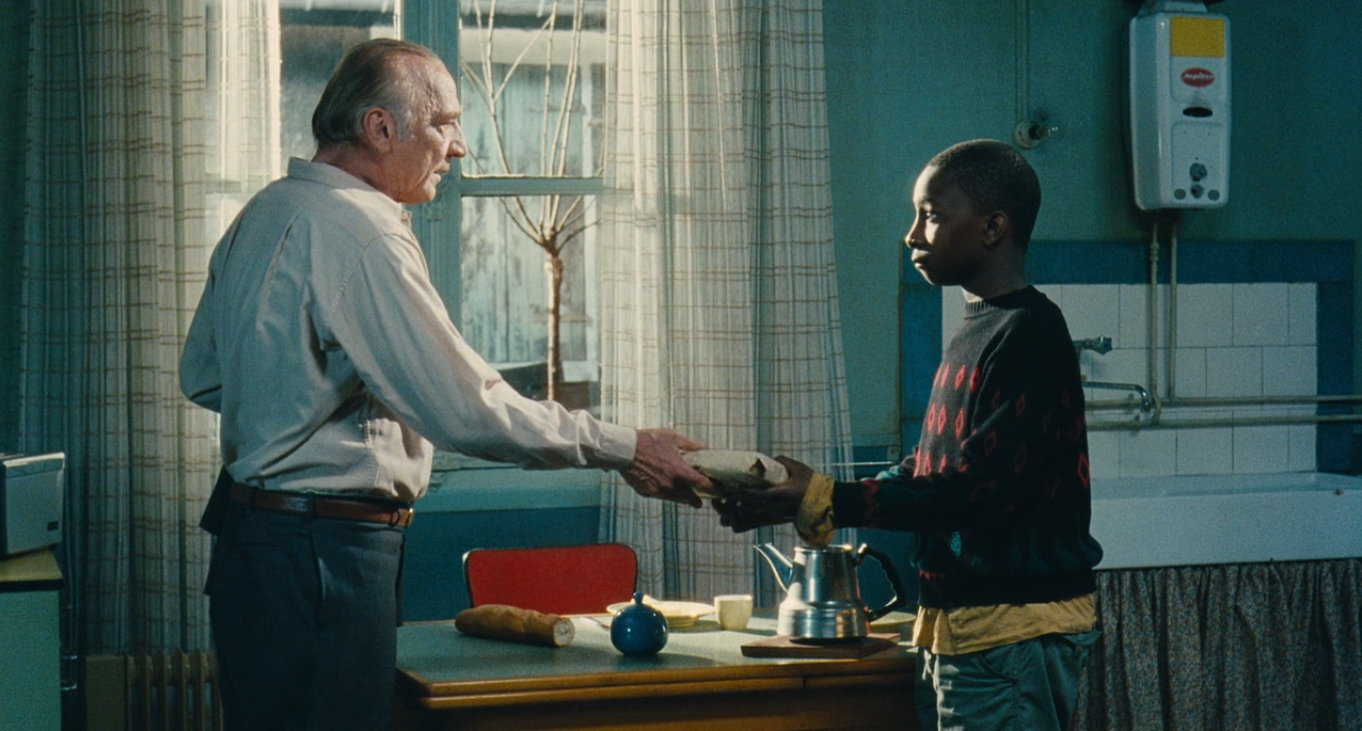
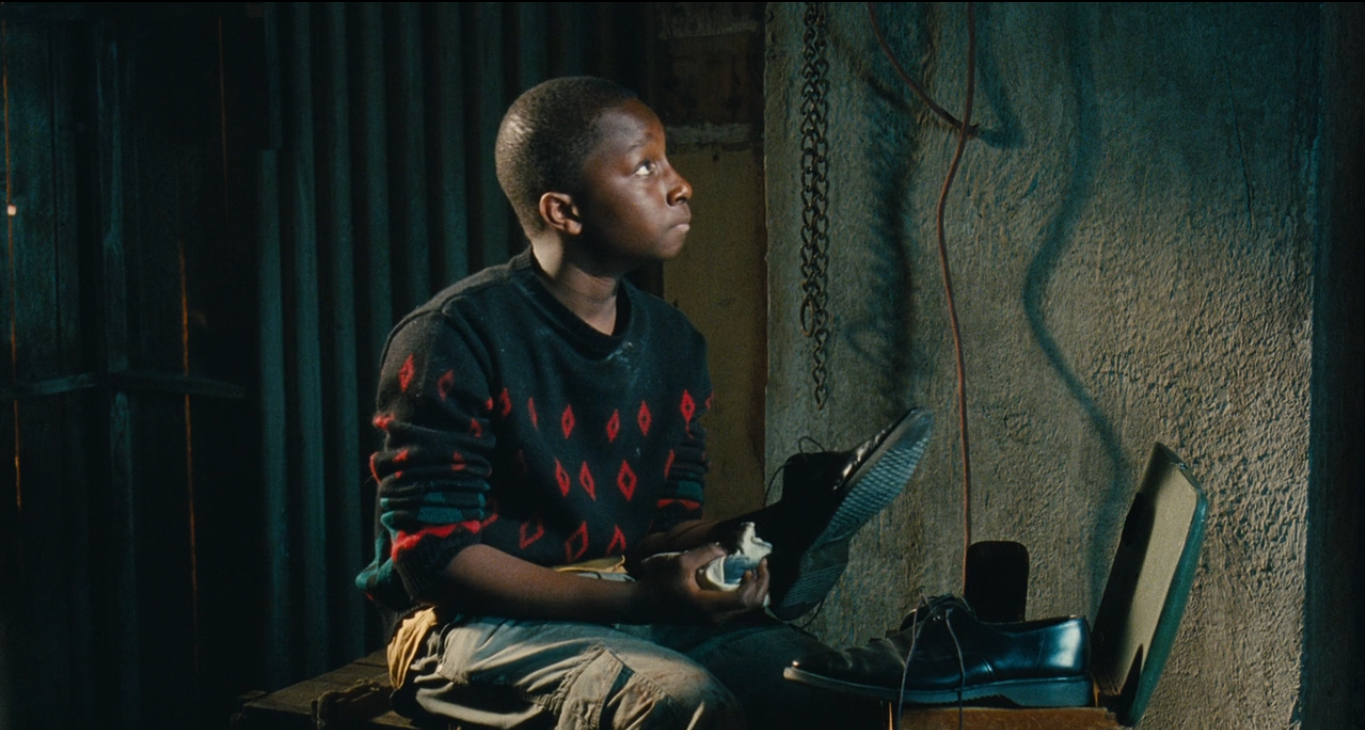
The film follows the daily life of Marcel Marx (André Wilms) and his colourful but monotonous routines. He is an old man, a shoe shiner, that while leading a poor life with his wife Arletty (beautifully played by Kati Outinen) we know he had many life experiences that got him the stability he has in this life of his (we assume this mainly due to his relationship with the other characters in town). All of the sudden, the order of Marcel’s usual tasks and routine is all shaken up as he finds a lost black boy that has tried to enter France illegally.

le havre 2.png“- Where are you going? – London.”

Kaurismäki unusual style is still present, especially considering the film’s framing and the characterization of its characters. The increased colour saturation and strategic placing of certain objects, combined with a complete vintage look regarding the clothes, hairstyles and makeup of its characters give Le Havre a vibe that is reminiscent of something from a Jacques Tati film. Having this said, the dialogues are much more idiosyncratic, following Kaurismäki usual style (despite, as mentioned before, being toned down in this particular film), that for the ones that are not acquainted with his past work, is something that reminds us of Jim Jarmusch for instance, especially regarding its sometimes obscure humour. This combination of vintage style and contemporary themes gives an edge to the idea of it being very self-conscious about its medium, something that in my opinion, despite not being something new, it is used to an uttermost mastery, elevating every single idea present in the film, even if you do not fully agree with its politics.

le havre 1The ultimate cinematic miracle

Despite being clear and conscious of its political inclinations, Le Havre goes a step further in its self-awareness, as the film seems to recognize that after all, this is all just a film. What could be seen like a mere whimsical, typically French and caricatured story quickly turns into an attempt to picture the hyperreality of the politics it is defending, and devastatingly twists the language of film into itself, resulting in the film being a product of pure manipulation but unmistakable honesty, even that it is being arguably pessimistic about the reality it is presenting. By the end of Le Havre and after flirting with the idea of clichés, we witness a miracle, a coincidence that is way too improbable to be taken lightly, even in this light-hearted modern fairy-tale. When we experience this beautiful cinematic and purely fantastical scene we should feel happy for our characters. But we can’t. Because the implication of this beautiful coincidence is that the world Le Havre is presenting is not our real world, and all the other picturesque and lovely situations are mere fabrications of cinema.

le havre fb e igIdrissa

Manipulation in films such as Forrest Gump (1994) or Schindler’s List (1993) are never welcome and often taint what is most of Hollywood cinema today, especially when it is clearly presenting political themes. But when we experience the technique utilized at its maximum potential in films like this, we seem to see unexpected potentials in the usage of this tool in our self-discovery. Kaurismäki seems to have hit the spot with this film, at least for me. In a French idyllic and polychromatic world he managed to make the black boy really seem like a part of the rainbow. Maybe one day in our real world we will manage to include all the current shunned colours in our own rainbows.

A Portuguesa (2019)

a portuguesa

Sempre a guerra. Agora já leva crianças pobres com ele. Para morrerem.

[It’s always the war. Now he takes the children of the poor with him. To their deaths.]

The new Rita Azevedo Gomes film may seem meaningless to people outside Portugal, but as a Portuguese Cinema fan it is exciting to know that a director with such a small but critically acclaimed filmography just released new work. As a director, she has claimed her main influences, and this time she did not even needed to talk about them, as they are clear to anyone that goes through the film. She is working with an old-school film festival favourite actress, Ingrid Caven, and her performance is probably the highlight of the picture. Despite being an interesting homage to many visionary directors and containing great shot compositions (with the help of what is arguably the greatest Portuguese cinematographer, Acácio de Almeida) and a hypnotic soundtrack by José Mário Branco, The Portuguese Woman falls short in its delivery.

The film adapts a story from the 1924 novella by Robert Musil with the same name, with dialogues adapted by Agustina Bessa-Luís, a favourite of Manoel de Oliveira. It follows the story of a Portuguese woman (weird hun?) when she marries a German lord and lives in a castle in Germany while his husband is busy leading a war. It trails their romantic lives while he is in war, and what changes in their relationship when he comes back from it.

a portuguesa 1.pngThe ever beautiful Ingrid Caven in the beginning of the film.

Before I present the reasons I think why this film does not fall into the category of being great at all, let me first point out what holds the film up. There is a clear sense of cinematic conceptualization. A balance between the images and the sound and the music that is absolutely mesmerizing and engaging enough to create hope in the viewer for something great. The incredible care with framing reminds me of, of course, Oliveira’s work (as the director herself has mentioned the film as being a follow up tribute to Oliveira’s body of work), but mainly reminds me of Dreyer and, oddly enough, Peter Greenaway. There is an insistence in The Portuguese Woman of transforming beautiful roccoco painting archetypes into film, working almost like tableaux vivants. Rita works with the tools of camera movement and actor movement to lead us through these living paintings in a way that is diegetic enough to counterpart the hardship you will have in deconstructing the dialogues themselves (especially if you are a casual Portuguese citizen watching the film without subtitles). The soundtrack complements beautifully the rhythm of the scenes, even though that sometimes you feel the sound design of the film (especially regarding dialogue) to sound a little strange in the overall composition of the scenes (at least odd enough for me to notice).

The main problem with the film, and comparing it with some of Oliveira’s films for instance (and I know comparing is not the right way to analyse a new film), is that despite having some brilliant scenes, as a whole, it leaves the viewer feeling like the film is an exercise in futility. There are singular moments that are brilliant, and most of them are visual moments. I have no disdain for Agustina Bessa-Luís’ work (especially considering her words in Vale Abraão (1993) and her novels), but I truly feel that her script combined with the less-amazing and unoriginal scenes create a feeling of decadence that hasn’t the right to be in a tribute film. It is frustrating to deconstruct a film that is as beautiful and competent as this to only find banal and tired ideas that were already messed with a million times, and no overarching concept to hold its existence. And this is where the comparison with Peter Greenaway disappears, because there is no breaking of the narrative conventions in The Portuguese Woman that compensate for the extensive use of the aforementioned indulgent filmmaking decisions. I know that the screenplay is supposed to sound theatrical and poetic (just as it was in, again, Vale Abraão or Francisca (1981) ), but there is something in this particular picture that is profoundly distasteful and tiring.

a portuguesa 2.pngAn example of the mentioned idea of tableaux vivants.

It is a frustrating film for the potential it had to be great. The faces, the costumes, the voices, the colours, all of the small elements are meticulously chosen to compose every scene. The presence of Ingrid Caven brings a mesmerizing element of a Greek Chorus-like nature to the film, another ingredient added to what could have been a great cinematic work. The themes of womanhood, lethargy and class-relations are there though, even if disappointing in their scope. The lighting is great and magnetic. The music – enchanting. Even Bessa-Luís’ words are beautiful, but feel misplaced, and even misspoken at times. The film itself… it really has nothing new to say, and while it is presenting nothing new, and in spite of its cinematic beauty and being a noticeable tribute, it is remarkably unsatisfying and inconsequential.

5 out of 10

Le Silence de la Mer (1949)

(eng: The Silence of the Sea)

Directed by Jean-Pierre Melville

MV5BMWJjM2ZkZTEtZDM0My00YzU2LWEzNTMtMWExNDY3OWNmYjlmXkEyXkFqcGdeQXVyMTQxNzMzNDI@._V1_SY1000_CR0,0,708,1000_AL_

Filmed in 1947 and released two years after, Le Silence de la Mer was the answer of Jean-Pierre Melville to the dark period of Nazi Germany’s occupation of France. The script is inspired on the book by the same name written by the French author Jean Bruller. This novel, published secretly in France during the first year of the Nazi invasion, became a beacon of inspiration to the Resistance. Melville himself joined the French Resistance and fought for the liberation of his country. He established a deep connection with the book, noting later that it was the logic choice of inspiration for the script of his first feature film.

The narrative of the film follows a young German officer, Werner von Ebrennac (Howard Vernon), in a recently occupied French town. There he takes hold of a room in a house belonging to an old Frenchman (Jean-Marie Robain) and his niece (Nicole Stéphane). The new occupant is given a complete silence treatment by the French, despite the constant attempts of conversation by the German. A self-proclaimed Francophone, von Ebrennac speaks fluently the French language. With a gentle and warm posture, he shows his love for music and talks about his youth. But above all he talks constantly of the greatness of both countries, France and Germany, and the need for a closer relationship. This is the way he justifies the war, affirming that both the nations will gain tremendously with the new alliance. This vision is shattered though, in a scene where von Ebrennac meet with his fellow officers in Paris. Here he discovers that the rest of the army does not share his ideas of union between the two nations, but the total annihilation of the French spirit. He decides then to leave France and volunteers to the feared Eastern front to fight the soviet forces. It feels like he abandons all its hope described by his words through the film and embarks on a suicide mission, disenchanted by the ideals on his uniform and to the deserved punishment.

vlcsnap-2019-02-19-11h48m33s494“Then he knocked on our door/ Was it to spare us from the sight of an enemy’s uniform, or to make us forget and get used to him?”

The setting of the film is mainly the small living room of the house occupied by the young German officer. Except for a flashback to von Ebrennec’s nostalgic youth and the trip to Paris near the end of the film, all the scenes take place in the old Frenchman’s house. But it doesn’t feel claustrophobic at all, but rather cosy. It’s an austere film marked by minimalistic camera work and very few outside shots. Despite this, the viewer can’t help but feel but sympathetic to the German officer. In his “monologues” transpires a feeling of hope that almost grabs the other two occupants of the house, shattered by the fall of France and the enormous shame of defeat to Germany, its old rival. We get the perception that the old uncle, sitting on his chair silently smoking his pipe, has almost a inner urge to try and answer to von Ebrennec. His niece sits stoically knitting and completely evades the gaze of the intruder in her own house. Only at the last moment with his departure to the East we see this close up of the niece’s eyes glowing with light, as in final approval of the officer, giving him a kind of redemption and exceptionality against his German peers.

vlcsnap-2019-02-19-11h52m51s930“Do you think we’re so stupid as to allow France ever to rise again?”

The character of the german officer has its similarities with the captain von Rauffenstein (Erich von Stroheim) in Jean Renoir’s La grande illusion (1937). Both carry a deep sympathy for the enemy’s culture and feel the war is needed for the greater good of both nations. The difference lies primarily on age and grades of naivety. Von Rauffenstein is an old officer living with chivalric notions displaced from a period like World War I, marked by the mechanization of war and massification of the killings. On the other hand, the star of this film is completely fooled by the Nazi party real intentions for invading France. The conception of this heroic and chivalrous nineteenth-century times (where the dispute between the German Empire and France mainly started) is long gone, replaced by vindictiveness and the total annihilation of the enemy. The film starts with this homage to the bravery of the people who smuggled prohibited books. A man carrying a briefcase with books by authors like Camus or the above mentioned Bruller. A message after this scene transmits that this the wounds are too fresh, and the intention is not to solve the problem between the two nations.

Melville, like most of France is still in shock resulting from the German aggression and this film results as the possible answer at the time. He would return to similar themes in his movies, specifically Léon Morin, Priest (1961) or L’armée des ombres (1969). But these were movies made on the sixties, where much of the wounds were healed. It feels strange that Mellville, even more being jewish himself, decides to make a film where a German officer is portrayed in a civil and flattering way, a couple of years after the war ended. Perhaps it’s his way of showing, like the officer in the film, his admiration for the other side, and that a sense of reprisal must be refrained.