Cat People (1942)

Directed by Jacques Tourneur

cat-people

“Let no one say, and say it to your shame / That all was beauty here, until you came.”

This week on Camera Coverage, after an unfortunate but necessary hiatus, we take a chance at yet another Horror Classic. This time we discuss one of RKO’s ultimate, but sadly forgotten classics, Jacques Tourneur’s Cat People. We often associate suspense films of this era with Alfred Hitchcock, and rightly so, but Tourneur is a French director that utilized the techniques of the afforementioned director to a new height in his Hollywood career. Despite being associated with B-movie fair, Cat People presents classic horror cinema at its best. There is a creature, there is melodrama, there is symbolism and there is masterful use of archaic techniques in order to portray (or not) all these cathartic elements.

The film plays with the character of Irena Dubrovna (Simone Simon), a Serbian fashion designer working in New York. Right from the beginning of the film we are introduced to her future husband Oliver Reed (Kent Smith), who’s relationship with will be the main focus of the whole film. Irena has a unsettling past and is afraid that some legends from her village in Serbia are true and inside her. Stories of witches, kings, witchhunters and, of course, cat people, live within her as she expresses her anxieties of the possibility of all of it being true. This will lead to a troubled marriage, in which physical contact is inexistant, and the insistence of another woman inside the relationship dynamic will be the key factor for Irena to release the panther within her.

the other woman cat people.pngAlice as, in a genre bending role, The Other Woman, a New Yorker intruding a troubled marriage between a Serbian (Irena) and an American (Oliver).

All of this is quite literal. Irena seems to really release, or rather transform into, a panther by the third act of the film. So what makes the film so fascinating despite its somewhat cheesy premise? Well, what could have turned into a really awkward puppet and silicone fest is dealt with incredible subtilty. Tourneur’s cinema uses shadows as one of its foundational elements. This is essential to a film working with metamorphosis as is Cat People. The idea of transformation is never portrayed directly onto the screen, but suggested. I believe, as many others do, that Tourneur utilized heavy indexicality mainly because of the somewhat low budget of the film. That said, when working with abductive imagery he manages to elevate the film not only in terms of ambiguity, but also in relation to films that utilize top-notch special effects but sadly do not hold so well nowadays. It must be noted and observed that this technique is not reduced to editing and cutting the scene when transformations are due, but there is a work of suggestive imagery throughout the whole of the film. From images of Irena with paintings of menacing cats in the background, to juxstaposition of her body and a reproduction of a statue of Anubis, to the crossing of Irena’s figure and the shadow of an armchair giving her some sort of cat ears. One of the key scenes works with Irena’s footsteps quickly silencing as she is chasing Alice (Jane Randolph), as we must only assume that her feet transmorphed into the silent, deadly paws of a black panther. This film represents the use of cinema’s rhethorical means at its best, using not only the resource of image and visual representation, but going as far as utilizing sound to its most effective.

game of shadows cat people.pngAnother example of suggestion – in this case premonition – of a scene through shadows and objects. If you look closely you can observe the shadow of the bird and its cage projected onto the black panther image, predicting what would later happen in that scene regarding the bird’s death.

One can love a film by its technical prowess, but what does it all really mean? Well, Cat People does not shy away from ambiguity. This is not only due to the decisions behind the technical aspects of the film, but also due to the broad themes that the film is dealing with. Probably the most clear readings of the film lay on the problem of sexuality, femininity and relationships as a whole. There is a clear suggestion throughout the whole film of Irena’s fear of touch, even though she is already married and social or even religious judgements are not an issue. This woman is dynamic in the film, as she can transform into a menacing beast that is awaken by the overextension of male activity in the world that is her own – this is, sexual intercourse regarding her own body. But what about her Serbian identity? The reading of the film as a cultural collision is another interesting perspective by which we can approach Cat People.

Despite all these possible perspectives on the film, its ambiguity and blank spaces should be respected and perceived as such. This is a film that is simultaneously meant to be enjoyed and discussed, but never reduced to x or y perspective. By trying to limit the film’s readings (there is an immense focus by critics in accessing the film with the perspective on sexual anxieties), we tend to leave its essential element of identity that it is dealing with. More than a woman or a Serbian, Irene is an individual trying to defend her individuality when in necessity of interacting with other individuals. Whether Irene is a cat person or not we will never get to really see, but what we get to see is that Irene is as human as she can as she tries to survive in our inherently intrusive world.

The Spirit of the Beehive (1973)

(original title: El espíritu de la colmena)

Directed by Victor Erice

MV5BMTIzNjYwMTUzMl5BMl5BanBnXkFtZTcwNTE4MDQzMQ@@._V1_

“Why did he kill her?

Children in film are often used as a powerful tool to portray an array of heavy and dark sentiments through the eyes of naivety and without preconceptions. If we take, for instance, the experience of war, this innocence shattering event makes up for a potent art statement. For example, in a film like Elem Klimov’s Come and See (1985) the sheer expressions of horror in the face of the young Florya, during the Nazi’s invasion of the Soviet Union makes up for an image far more lasting than if it was an adult. There is something about the loss of innocence combined with a sense of escapism in a child’s mind to deal with that shocking reality. But it doesn’t need to be as eerie and explicit like that to make a deep impression. In a film like Children of Heaven (Majid Majidi, 1997) the journey for a poor child to get a new pair of shoes for his sister makes up for a simple but not less beautiful and warm experience.

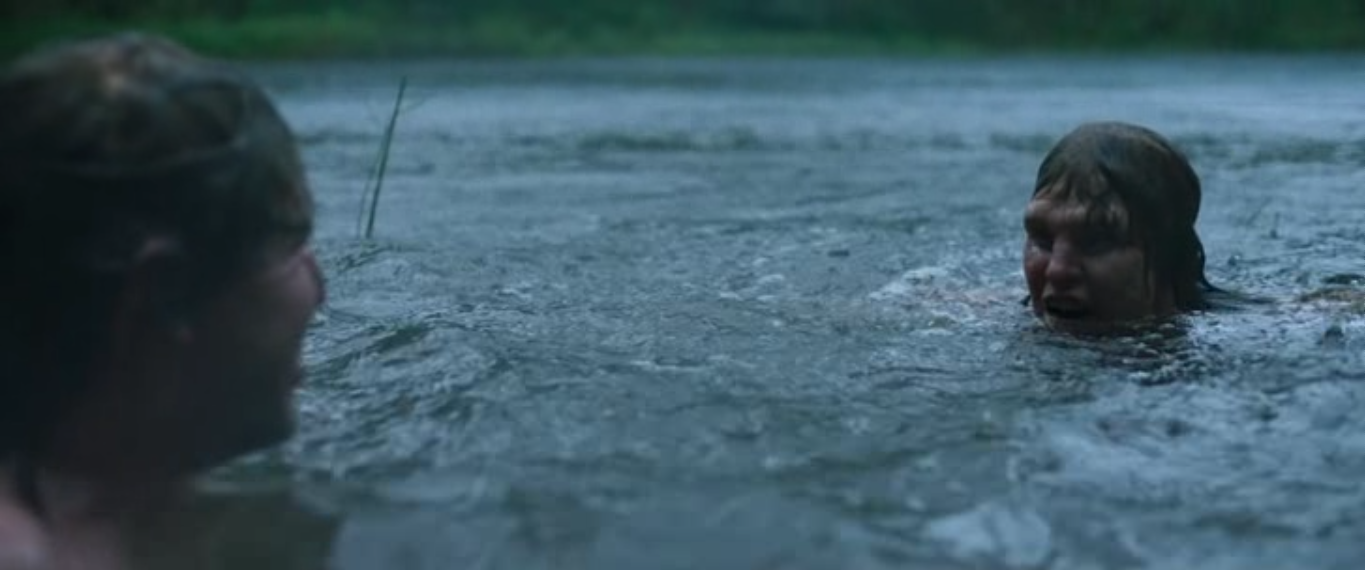
The Spirit of the Beehive is not in anyway as a traumatic experience as the Klimov film mentioned above. The plot takes during the early years of Francisco Franco’s fascist regime in Spain. It is interesting to point out that this film was released during the last years of this dictatorship, marking perhaps, by the themes portrayed in the film, a pending weakness in the regime. The main characters are two young sisters, Ana (Ana Torrent) and Isabel (Isabel Telleria). Their father has a myriad of occupations that go from bookkeeper to beekeeper and poet.  Taking place in a small Castillian village in the Spanish Meseta, cinema is a motive for great excitement in this quiet town. The projector is set on an old barn and all the inhabitants, including the small girls watch a dubbed version of James Whale’s Frankenstein (1931). The impact is immense on the younger one Ana, who leaves the cinema traumatized by the famous drowning scene. Obsessed with the monster, she looks for any sign of the monster close to home. The search ends up leading her to an isolated old shed on a large and desolate piece of flat land. Inside there’s a wounded republican soldier, trying to escape death at the hands of the Francoist forces. The small girl, naïve to all the political struggles, steals food from home to feed the desperate soldier. The Republican partisan is found and shot by the Nationalists which leads to the suspicion that Ana’s father was the one helping him. The pressure for the daughter ends up being too much and she escapes next to a lake, making a clear parallel with the Frankenstein plot.

captura-de-ecracc83-2019-05-01-acc80s-17.04.18.png
The impact of the film reflected in her eyes

Portraying a Republican this way, like a wounded horse waiting for its demise, is an obvious example of a critique against the then fascist Spanish regime. In the seventies, dictatorships in Europe suffered an enormous amount of pressure by the rest of the western powers that already lived in democracy. Regimes like the Spanish (and as well the Portuguese one) grew more and more isolated. That could explain why films like this one or Viridiana (Buñuel, 1961, a ferocious critique of the catholic church, usual theme in Buñuel) passed the censors, despite the bad image they made of the regime. With general Franco’s death in 1975, Spain would finally make its transition to a democratic regime. Despite this obvious message, this film is much more than a political statement. It deals with the pureness of a child’s imagination, and how the make believes sometimes juxtaposes the sense of what is real. The innocence of Ana makes her completely unaware of the possible troubles she may be getting into by helping the soldier. Ana Torrent (that would end up working also with Carlos Saura in Cría Cuervos (1976)) makes up for an extremely sincere and sweet innocent child, in one of the more perfect roles played by a child that young. Merit has to be given to Erice for being able to blossom such a talent in a little child.

captura-de-ecracc83-2019-05-01-acc80s-16.55.38.png
The vastness of the Spanish “Meseta”

On top of the terrific performances, the cinematography is clearly an astonishing feat. The stellar work of Luis Cuadrado (who ironically was losing eyesight during the shoot) is found in creating this sense of emptiness both inside the buildings and in the vast Spanish flat lands. The house where the children live feels old and uninhabited and the small village is surrounded by immense of dry fields to lose sight on. The emptiness feels like a colossal canvas for a young child’s imagination. Together with the somewhat eerie but at the same time comforting soundtrack by Spanish composer Luis de Pablo, The Spirit of the Beehive is a cinematographic experience like any other.

Knife+Heart (2019)

(original title: Un couteau dans le cœur)

Directed by Yann Gonzalez

knife+heart poster

“She saw so many gay flicks, she thought she was a fag.”

Yann Gonzalez is a French director known for his feature film You And The Night (2013) but mostly because of his many other short films. He is especially well regarded in the LGBTQ+ community for his preference on themes regarding sexuality and gender politics. Having won many prizes and nominations in important festivals like Cannes Film Festival, he is one of those directors to be watching out for if you are interested in art-house films of the new era. However, we feel on Camera Coverage that this new feature from Gonzalez is pretty much a mess, it is not without some singular scenes that are incredible, but it is indeed a bit of a mess.

The film follows Anne (Vanessa Paradis), a gay pornography film director, in her quest of filming her new feature that seems to be more bold and adventurous than her previous. This brings us close to the character and her relationship dynamics with her film editor Löis (Kate Moran) and her dealing with alcohol addiction. From the start we know that the film has as a main plot a giallo-esque story, with a serial killer that seems to be targeting the actors from Anne’s films. The connecion between the killer and the actors is left uknown until the end of the film, where we are bombarded with a traditional plot-twist from the great classics of the genre.

print heart+knife 1Vanessa Paradis as Anne

The film plays along the lines of what we may consider the supernatural giallo, especially in its first two acts. The relationship between Anne’s vision of her new picture and the killings is meant to be perceived, but sadly, with its ending, we are left hanging in the understanding of this relationship. Throughout her journey we are faced with many surrealist images that are traditional in these giallo films and Italian horror films of the 1960s and 1970s, but they seem to add little to the unravel of our characters quest. It is clear that there are many diagetic layers on Knife+Heart, but after seeing it and thought of it for a week I still feel that they are not only disconnected, but they are sadly disconnected, as most of them are individually incredible and contain a lot of contrasting and formally complex ideas working on a deep semiotic level. The insistence on creating a traditional giallo in structure does not work in the film as much as it does visually, and it lefts the viewer confused, frustrated and cheated.

Vanessa Paradis is one of the actors in later years that we feel, as lovers of photography in general, that has one of the most unique faces. The characterization of every character in the film, especially her’s, is incredibly stylized and works well comparing to the other aspects of the film. The whole visual aspect of the film is undeniably great. It works as a cool throwback to the films of the genre, but it works as a singular piece as well, despite its insistence on weird black and white thermal images when depicting dream sequences. However, even at the technical level (image and sound) Knife+Heart is not the best throwback to the giallo, particularly if we consider the incredible films that made reference to the genre we have seen in the last few years (like Berberian Sound Studio (2012) and Amer (2009) ).

black and white dreams equencesOne of the dream sequences

Falling short on others to describe the film, it feels disapointing. The director has achieved greatness with some of his short films (notably Les îles (2017) ), but this time he completely misses the target. Despite arguably being one of the films that are a throwback to the afforementioned genres that more truly incorporates not only the visual aesthetics but the structure of the giallo, it fails on creating a compelling experience by being too overwhelming and obtuse with its symbols and parallels. I feel that some of this may be due to how random some of the events in the film are, and the discrepancy of vibes in it. The play of the director regarding the meta aspect of the film (the films inside the film; the dreams inside the film; the dreams that are the film; the relationship between director and editor, etc) is interesting, as are the mirror images it tries to make with its individual scenes. Sadly it does not keep up with its promises (especially its depiction of the theme of obsessive and corrosive love) and mostly is an insatisfying experience, that while being really extreme and poignant in the depiction of a community and a genre of filmmaking that is really underapreciated and not valued as it should, it leaves the spectator feeling that it is a mere exercise in shock value and pretentiousness.


3.5 out of 10

Us (2019)

Directed by Jordan Peele

1

“We’re Americans.”

After the massive hit that was Get Out (2017), Jordan Peele kept showing his love for horror and a will to keep on writing new material in the genre. The subtexts and politics of Get Out (2017) were clear and well transformed into a more or less consistent concept. The value of the film was deposited in the dynamic of this transaction of racial politics into the horror film discourse, and by provoking the viewer with suggestive and anarchic ideas (similar to the one’s by Spike Lee). It was a film that worked as a genre piece but utilized its strengths to reach the public and confront them with realities that while terrifying are enlightening. Daniel Kaluuya presented us one great performance, backed by an incredible supporting cast. That is the main thing that mirrors and is enhanced in Us. The performances are well-above average and the film owes its cast a lot for its dynamic between horror and comedy (presented even more extremely than in Peele’s previous).

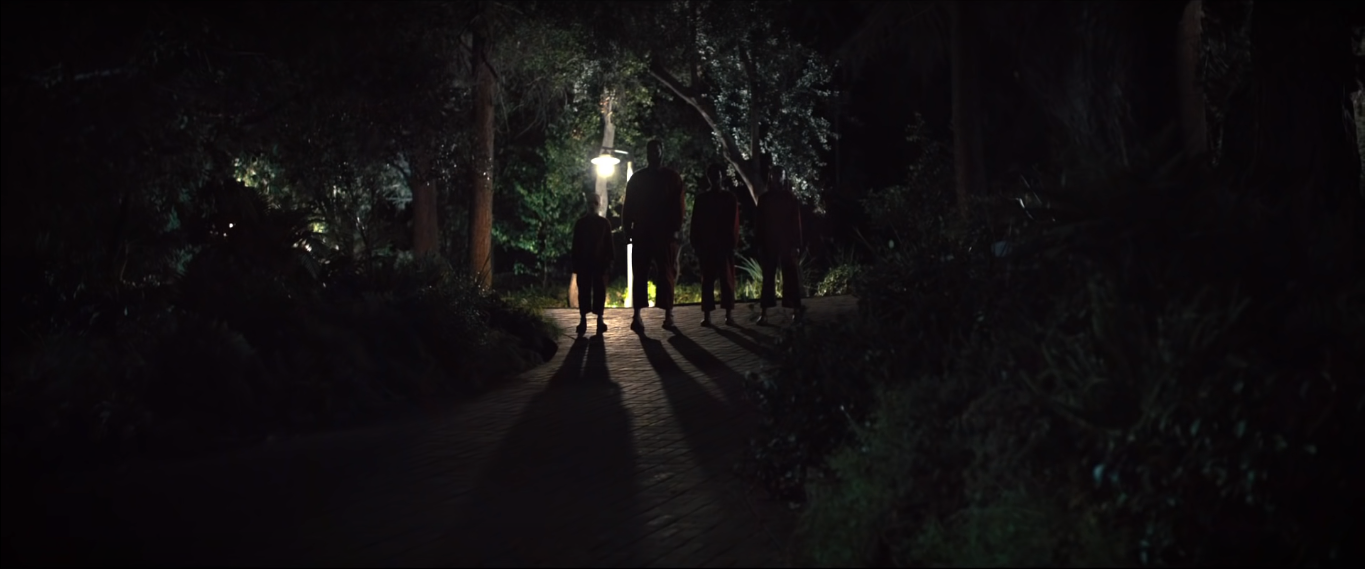
us 1.pngShadows and reflections are essential elements of the film
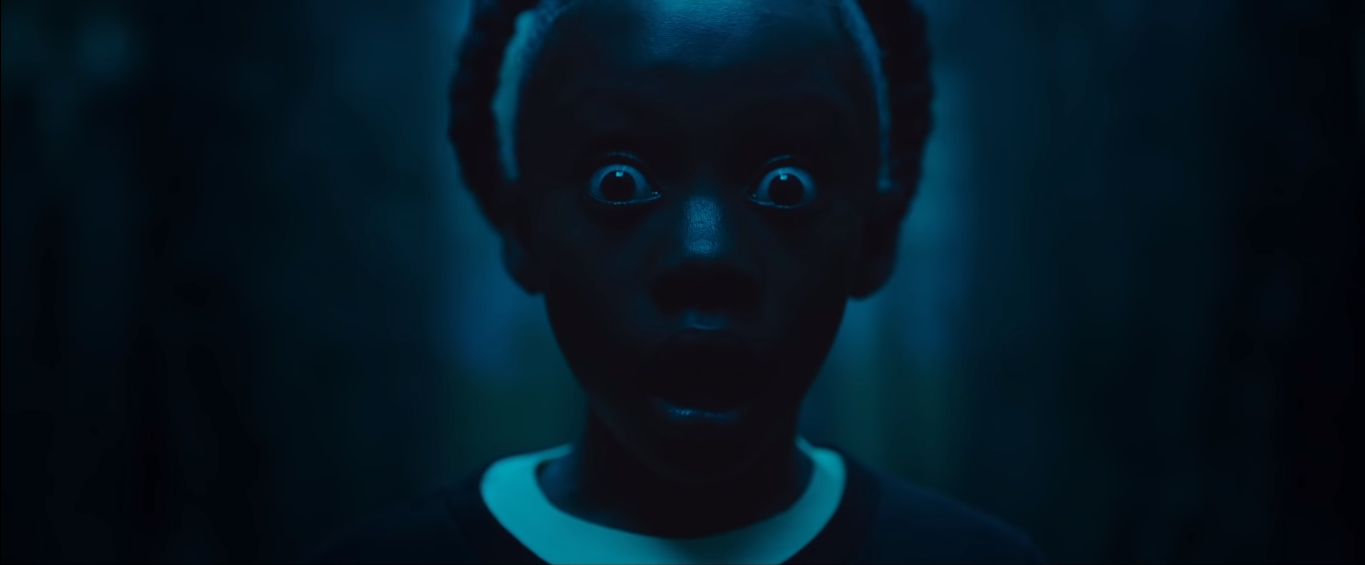
The game of mirrors presented in Us starts right of the bat with the name of the film. There is ‘Us’ and ‘US’, and with that information in mind we can expect the film to present certain political ideas. The problem with it is that most of the times the small scenes are full of certain meanings that contrast with the main concept of the film, creating a lot of room for interpretation, especially considering the film as an exercise in ideology. The best thing about the film (after Lupita Nyong’o’s mesmerizing performance) is arguably how vague its political readings can be. We are teased with the idea of it being a political film with the title alone, and yet the film challenges us to dig deeper to find any consistent concepts regarding its ideas. Despite touching on the subject of racism, Peele’s vision is now aiming at broader issues with Us.

Being a comercial film, it comes with its problems. Some of the scenes in the film are too predictable in its stereotypes. What helps the film to get over these scenes is its usage in an almost metalinguistic cinematic way. Peele knows his horror clichés and uses them in an ironic way briliantly, playing with our expectations and creating genuinely funny moments. As an European citizen it is hard to understand the realities of racism in America (mostly due to our racial prejudices being of a different nature and having a different expression), so probably these complaints at the end of the day are just conditioned by my personal life experience. Having this in mind, Us regards the subject of racism in a lighter way than what was expected, especially considering its main theme. This is not a negative criticism at all, because as I mentioned before, the vagueness of Us adds a lot to any reading of the film, including a reading inclined to the ideas of racism.”

Visually it is more interesting than Get Out (2017), despite being a completely different film. It is creative and intelligent in its visual style, enough to be noticeable when comparing it to other big horror blockbusters. However, it still ends up feeling a little bit flat, just like Peele’s previous did. The use of music is brilliantly funny, and the original soundtrack is really great as well, especially the anthemic track (that reminds me almost of The Omen‘s (1976) soundtrack). Technically it is satisfying enough, never being truly flabbergasting.

us 2.pngThe already iconic shot from Us

By what I’ve said so far one would assume that Us is a brilliant film. But it is not. It is too vague and too self-conscious to be just a commercial film to watch at the mall, and too predictable in its techniques and paralells to be a really serious and innovative picture. One of the things that troubles me the most is that its vagueness translates a lot into meaninglessness, even though it is clear that there was a care in creating a well-rounded plot (in a Hitchockian way) and complete concept. The second thing that annoys me is the necessity to overexplain everything in the end. The “plot-twist” was rather predictable and despite the film having a lot of interesting buried plot points, it leaves a more experienced viewer feeling that the film is being condescending.

This text took into consideration spoilers and I decided to not discuss any of the plot, as it is very fun to watch without knowing what it is about. Gather some friends and go watch it. Probably every person will come out of the theater with a different reading of the film (I read somewhere that a guy thinks that the film is somehow anti-socialist. I highly doubt that though) and it is an enjoyable time in the cinema. Don’t expect too much out of it, but face it with enough seriousness to consider it, as it is clear that a lot of work and dedication went into it. Jordan Peele seems like he will be the new horror genre director to look out for, though.


6 out of 10

Alice (1988)

(original title: Něco z Alenky)

Directed by Jan Švankmajer

40000-alice-0-230-0-345-crop

“Alice thought to herself: ‘Now you will see a film made for children… perhaps. But, I nearly forgot, you must close your eyes, otherwise you won’t see anything.’ “

Jan Švankmajer is one of those directors that is a legend to the lovers of animated films and sadly underappreciated by the general public. In a way it is a disappointing fact, but at the end of the day, stop-motion animation is still a very particular style, and when combined with surrealism and experimental imagery, there is not much left for the casual viewer to incline in its direction. Nevertheless, Švankmajer’s work is an influence to some of the most successful directors in Hollywood, such as Tim Burton for instance. Being a fan of puppeteering and stop-motion, it is hard not to include one of his films in our Classics category, as not only is he a master of the art of puppets and traditional surrealism, but also a great filmmaker that channels his very unique vision with full use of the medium.

If it wasn’t obvious enough, Alice is a film adaptation of Alice’s Adventures in Wonderland, the famous novel written by Lewis Carroll. Despite being very faithful to its original material (even comparing it to some other adaptations, that tend to mix up the novel with its sequel Through the Looking-Glass and What Alice Found There), it does not depict all of the episodes in the book. However, every line in the film (not including the quote we selected above, that is at the very beginning of Alice) is taken directly from the novel. That said, it completely re-reads the novel, illustrating it in a creative and new way. Its style must have been described as truly unheimlich if Sigmund Freud had the chance to watch it. This is mostly because of Švankmajer’s obsession with everyday objects and things that are well-known to us, giving them a life that should not be. Dodgson’s novel is the perfect object to be narrated by Švankmajer, as it is an inheritly playful, ambiguous, psychadelic and metamorphic story. Other surrealists have taken a chance at this novel, but only the odd combination of interests in Švankmajer could result in such an interesting piece.

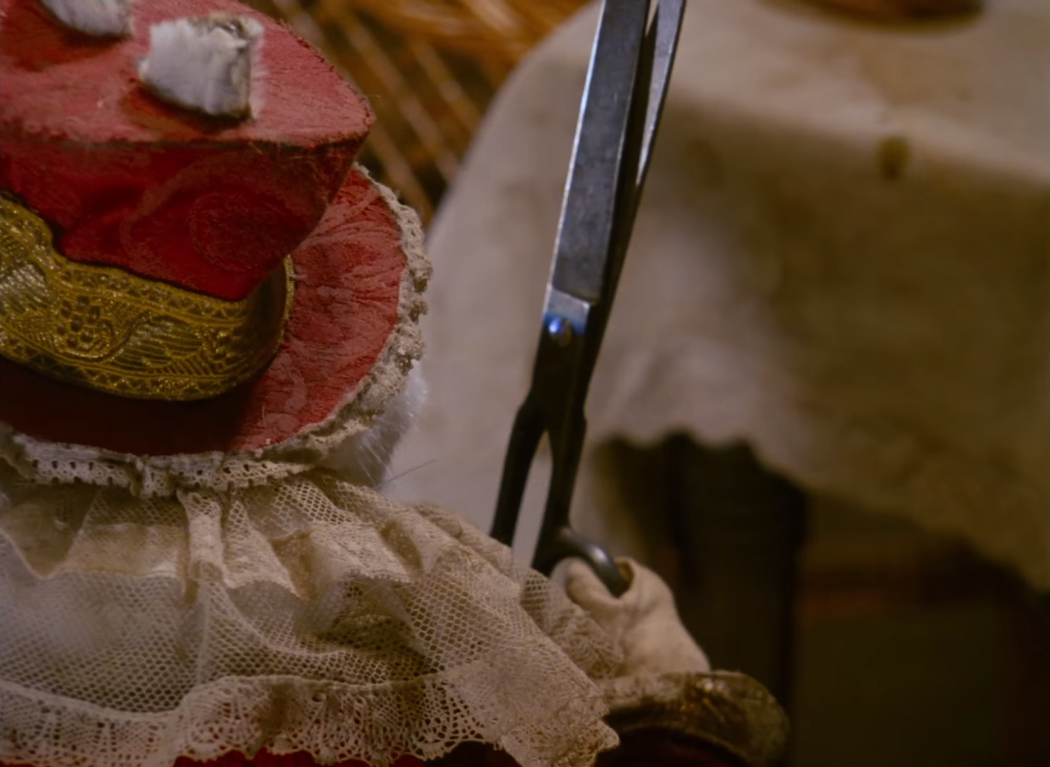
alice 2Alice shrinks into a doll.

By the end of the novel Alice wakes up in her sister’s lap, as she shouts (after growing spontaneously) that all those soldiers were just a “pack of cards”. And in fact we suppose by her sister’s description afterwards that all of her adventures in Wonderland were her background setting fantasized. Švankmajer takes these ideas to an absolute extreme, utilizing animation in everyday objects and artifacts instead of focusing on creating polished fantastical creatures. This creates an incredible textural feeling in the film, something that is common in his body of work. It seems that he knows of the many different readings of the story as well, as his semiotic game (combined with smart editing, framing and cinematic techniques that are not strictly related to the effect of the animation) shows knowledge about the different subtexts of Alice in Wonderland, with a special insistence on its sexual and psychoanalytical readings.

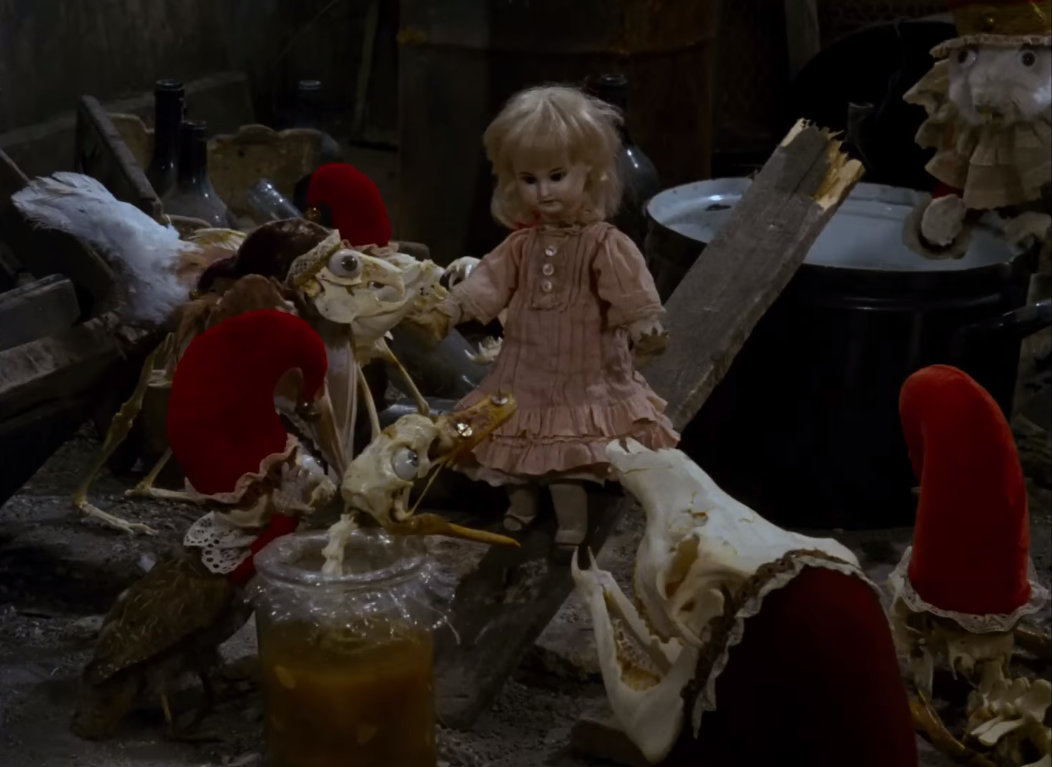
alice 1.pngProbably the most unsettling scene in the film, the infamous tea party.
As in some of his other works (such as Conspirators of Pleasure (1996) and Little Otik (2000) ) we can observe in this work a presence of sexuality in childhood. It is a very subtle and delicate subject, but the honesty and tactility of the director allows these themes to flow in a poignant yet brutal way. The process of coming of age, clear in Dodgson’s original, is a prominent theme in the film overall. The brutal violence of growing in Švankmajer’s version is less evident than in the book, but it burns at a much more deeper level. This is mostly due to the use of the medium of cinema (images and time) combined with the animation and metamorphosis of inanimate objects (especially regarding things like meat and bones, that are a staple of Švankmajer’s, that when back to life create this uncanny feeling of seeing a sort of in-between of life and death).

alice 3.png“Off with their heads!”

Alice is a film to feel and not just watch. As the main character said, it is a children’s film, with the exception that it isn’t. It is, though, an incredible revisiting of a timeless classic. Focusing on the coming of age aspect of Alice, the cyclic nature of the story, the transformations and the perception of the real in human imagination, the film is definitely not for everyone. It is highly stylized, sometimes cryptic and ambiguous and it does not follow an easy narrative for the ones that are unfamiliar with the story. One can’t deny all these obstacles to the big audiences, but it is making it injustice when saying it is not a unique experience that will probably change the way you look at film as an art form and reconsider an old but dynamic and always fresh animation technique.

Kuroneko (1968)

Directed by Kaneto Shindo

MV5BZDM5ZDAwNmQtZmNjMi00NTJhLThkNTMtNzlhZWIyZmVlMzRiXkEyXkFqcGdeQXVyNzI1NzMxNzM@._V1_SY1000_SX710_AL_

“What ghost would dare hate us?”

Kuroneko is directed by the late Kaneto Shindo (1912–2012), already at the time a revered figure in Japanese cinema with features such as Hadaka no shima (1960) or Onibaba (1964). The film takes place in medieval Japan during the Heian period, torn by civil war. In the opening scene a group of samurai approaches a bamboo house owned by two women: Yone (Nobuku Otowa) and her daughter-in-law Shige (Kiwako Taichi). They end up raping and killing both and the house is razed by flames. It’s a powerful opening shot that challenges the chivalrous notion associated with the honoured samurai. Out of nowhere, in this devastating scenario appears an eerie black cat that licks the dead bodies. The cat, surely a representation of evil, is a presence through the film until its final climax .The spirits of the two dead women then make a pact with evil forces in order to be allowed to return to Japan.  With revenge in their minds they will now dedicate their time to kill and drink the blood of the samurai.

vlcsnap-2019-03-19-20h27m40s269“You must be a ghost to be wandering so late at night”

In the following scenes we see a careful and well managed method of creating tension in the viewer. The younger woman seduces a horse-riding samurai to her house, where her mother in law is waiting. There the man is well received by the two hosts, in a charming and warming manner. The samurai is completely relaxed and inebriated by all the sake he could drink, which makes this the perfect opportunity to attack. It’s a slow and well-constructed pace that serves the purpose of creating a stressful environment quite well. An unnerving meowing is heard in the background, always reminding of the dark spirits within the two woman ghosts. The pattern of killing is repeated with a few more samurai soldiers. Waiting for them at the Rashomon (a big gate at Kyoto’s entrance), the younger woman plays an angelic and naïve part, entrancing the man also with her physical attributes

.vlcsnap-2019-03-19-20h28m50s696A dance before the sudden atack

The film takes an even more tragic turn when we’re introduced to the character of Gintoki (Kichiemon Nakamura). He is the son of Yone and was soon to be married to Shige, before the civil war separated them. His success in the conflict has made him a respected samurai, creating a conundrum when he finally meets the ghosts of his family. To worsen things, he his pressured by his superior to eradicate the ghost problem that has killed a lot of his men.

As a horror film, Kuroneko takes by the hand of his director extreme care with creating an eerie atmosphere, especially with the extensive use of fog. It is present in a lot of scenes and creates a sense of unrest in the viewer. The use of shadows as a visual cue is also very interesting, notably in one of the kills. Here, the shadowy effect behind a curtain creates a different way of displaying death, never boring the viewer despite the similar scenarios. Regarding the lighting, it accentuates murky rooms and backgrounds, while spotlights and backlighting seem to illuminate a character in the frame. The translucid clothing and curtains in the house are great means to accentuate the supernatural and ghostly figure of the two women.

Kuroneko functions as more than a simple horror film. Like referenced above, it crushes the image of sainthood a lot of times imposed to the armed forces. It challenges the discrepancy between ethic codes like the samurai’s Bushido, and the real actions of the regular soldiers in the war. Despite this code being a big influence on Japanese’s ethics (even in the modern times), it didn’t avoid the numerous war crimes committed by Japan during World War II. The film tries to separate the idyllic from the real, demonstrating that the honour and respect for the other is something bigger than the job or title they assume. The film has also clearly a feminist approach against models of toxic masculinity displayed here by most of the men. The rape scene in the beginning of the film is shocking not because of any gratuitous violence displayed, but by the total normality of it. For the soldiers it’s just one more day in their lives, and not an ounce of regret is exhibited. So it makes the violence against the samurai throughout the film justified and deserved in a certain way. But in the end, when there is the confrontation with a loved one belonging to the class they swore to kill, an internal dilemma heaves out of this conflict. Is there space for forgiveness or must it be completed without any exception? Is direct revenge the only true way to resolve one’s problems or will it make even more harm?


Gräns (2019)

(eng: Border)

Directed by Ali Abbasi

grans 1

“I don’t see the point of evil.”

Inspired on a novel by John Ajvide Lindqvist (better known for Let The Right One In), Border is one of the films to have a lot of controversy and high regard last year. To it was awarded the Un Certain Regard award at Cannes, and it even managed to swiftly get a nomination to the Oscar for Best Achievement in Makeup and Hairstyling. The controversy is mainly due to the sexual nature of its themes. It is an undeniably shocking film. The usage its shock value is, however, very pertinent. As Let The Right One In (2008), the transformation of Lindqvist’s story into film works brilliantly, combining the already poignant themes present in the words and visually expanding them, something that is even more noticeable in Border, mainly due to the irreverence and shamelessness of the film’s imagery.

The film follows Tina (Eva Melander), a security officer working on border control, and he daily routine. She is not blessed by standards of Western beauty and has a menacing look that works well with her magical power of being able to smell people’s feelings. She lives an unhappy marriage and has no friends other than her mentally-ill father. There are two big changes in her life when she smells a memory card on a passenger’s phone that is full of snuff films and child pornography and on another scene sees a guy that is oddly similar to her and confuses her special sensibilities. These changes lead to two inner plots in the film that consist on one side a detective thriller-like film and on the other a romantic story that leads to Tina’s discovery of her true identity.

border 2.png

Border is a story of fluid bodies and souls trapped in an ordered world. Tina and Vore (Eero Milonoff) are figurations of chaos inside an organized Western society. However, if we consider the sexual nature of the film we quickly understand that there is a political edge to this chaos. Combined with the ideas of social isolation, foreignness and family issues we understand that the new dynamic presented by these two special characters is an amalgamation of every otherness that exists in our contemporary world. So far so great. The problem with the film is that while presenting brilliant ideas, it overly complicates them and by the end it leaves an undesirable odd feeling to the viewer. Of course this ending can be read as an anarchic solution to the aforementioned themes, or even as a following to the mythology presented half-way into the story, but never does it feel as smooth as expected. Comparing it to something like the ending of Do The Right Thing (1989), for instance, it feels really off considering the way the plot devices work beforehand.

Technically it is a decent film. It never does something that is not expected from an ultra-realist style film. Sometimes the camera seems to be too shaky, and even nauseating at times. In other scenes, the fast movements of the camera and all the shakiness contribute greatly to the inner beauty of the film. The original soundtrack is very enchanting and is really on the same page with the tone of the film. The make-up effects are pristine, as is Melander’s performance. I would say Eero Milonoff’s performance is never up to par with Melander’s, and sometimes is not even really good at all. But then again, that is never a big problem (even if combined with the shaky camera aspect of the film) if we face it with the originality and boldness of all the other decisions surrounding it.

border 4.pngOne of the great visual moments in Gräns

The reason I was not a big fan of Let The Right One In (2008) is probably the reason I am actually a big fan of Border. It is a consciously awkward film, one that is aiming specifically at shocking the viewer in order to get its ideas out there. Most of the times this technique does not work, but with Border it does, as it is probably the perfect figurative film of the many lost souls in our monotonous society. Even though it is not perfect, particularly the thrilleresque subplot, Border works a lot better than expected. This review tried to say as little as possible about the singular elements of the film because in order for it to work it is mandatory to watch it with little knowledge about what is so special about it. It released in Portugal last week despite having been distributed in the rest of the world earlier this year. Still, try and watch it on stream or DVD, because if you don’t, you will be missing what is probably the most excruciatingly, cringeworthy and at the same time beautiful sex scene of the last few years (and for that alone it deserves ½ a point).

6.5 out of 10