The Dead Don’t Die (2019)

Directed by Jim Jarmusch

the dead dont die cover

This is definitely going to end badly.

Probably the hardest film of 2019 to discuss so far, The Dead Don’t Die is the new film by the American director Jim Jarmusch. It was the film to open the 2019 Cannes Film Festival and is releasing worldwide since. We at Camera Coverage had the opportunity to watch the first showing of the film in Portugal and having passed two full days since watching it, we feel even more confused about it than what we did when getting out of the theater.

Adam Driver and Bill Murray play Ronnie Peterson and Cliff Robertson, two policemen that will lead us through the whole of the story. Out of nowhere it seems that in the small town of Centerville the days are now unusually longer. Quickly we aknowledge that the cause of this is that the axis of the Earth was messed up by some experimentation with polar fracking. Eventually this situation goes out of proportion, leading to weird behaviour on animal life and eventually, spoiler alert, leading to the rising of the undead.

the dead dont die cover 2.pngNot the dynamic duo that a zombie apocalypse world needs, but the one it deserves.

This is a weird one. Jim Jarmusch is known for his idiosyncrasies when it comes to plot development and genre play, but he goes full-on with his new film. Despite being rather slow, The Dead Don’t Die does not restrain itself to being a mere zombie film. It is not a mere parody or satire either, and despite the hyper-refentiality of the film it is hard to call it an exercise of pastiche. If for nothing else, the film should be taken into consideration for the odd balance it makes with all these known paradigms. By doing so, it gives the film an absurd edge that makes it so unnexpected that by the third act of the film one can only imagine that Samuel Beckett came back from the dead to rewrite the whole thing.

This is one of the best compliments that can be made towards Jarmusch’s new film. Despite the many issues with it, the writing is one of its key successes. All of the parts were clearly written for the actors that played them. The dynamic between these actors and the writing is unbelievable. It enhances what I suppose that was the main focus of the film, that is, the nonsensical aspect of the modern world. Despite it being clearly conscious of its overexplanations and lack of subtilty, as it all contributes to the enhancement of the film’s main idea, it retracts from what could honestly be a much more polished and complex film. That said, there are some nuances in the film that are really interesting. Some images regarding certain characters, especially the characters played by Selena Gomez and Tilda Swinton, really stay with you and are oddly poetic and subtle inside such a consciously obvious film.

dead dont die 1.pngWhat else could Tilda Swinton play in a Jim Jamursch directed zombie film than a Scottish (???) samurai mortician.

It is technically predictable but delightful, as many of the director’s other features. The soundtrack is really impressive and fit for the meta aspect of the whole film, playing with genres, clichés and expectations. The main problem with The Dead Don’t Die is its lack of catharsis. By creating an 100% self conscious film, and I mean 100%, and considering the gigantinc amount of references it has (and not restricted to references of zombie films either), it feels cold and hollow. Even if that was Jarmusch’s main focus, more than feeling cold and redundant, the film feels disapointing. It takes the more than dry idea of George A. Romero’s Dawn of the Dead (1978) and tries to elevate it, but it does not even elevate it that much for it to be original in the slightest. All in all, Jarmusch made a film that I truly believe that needs a rewatch to really get a grip of. Despite not being as likeable as one could hope, it is clear that there is something more to it. Or maybe not and we are just disapointed admirers of the director’s previous work.

6 out of 10

Cat People (1942)

Directed by Jacques Tourneur

cat-people

“Let no one say, and say it to your shame / That all was beauty here, until you came.”

This week on Camera Coverage, after an unfortunate but necessary hiatus, we take a chance at yet another Horror Classic. This time we discuss one of RKO’s ultimate, but sadly forgotten classics, Jacques Tourneur’s Cat People. We often associate suspense films of this era with Alfred Hitchcock, and rightly so, but Tourneur is a French director that utilized the techniques of the afforementioned director to a new height in his Hollywood career. Despite being associated with B-movie fair, Cat People presents classic horror cinema at its best. There is a creature, there is melodrama, there is symbolism and there is masterful use of archaic techniques in order to portray (or not) all these cathartic elements.

The film plays with the character of Irena Dubrovna (Simone Simon), a Serbian fashion designer working in New York. Right from the beginning of the film we are introduced to her future husband Oliver Reed (Kent Smith), who’s relationship with will be the main focus of the whole film. Irena has a unsettling past and is afraid that some legends from her village in Serbia are true and inside her. Stories of witches, kings, witchhunters and, of course, cat people, live within her as she expresses her anxieties of the possibility of all of it being true. This will lead to a troubled marriage, in which physical contact is inexistant, and the insistence of another woman inside the relationship dynamic will be the key factor for Irena to release the panther within her.

the other woman cat people.pngAlice as, in a genre bending role, The Other Woman, a New Yorker intruding a troubled marriage between a Serbian (Irena) and an American (Oliver).

All of this is quite literal. Irena seems to really release, or rather transform into, a panther by the third act of the film. So what makes the film so fascinating despite its somewhat cheesy premise? Well, what could have turned into a really awkward puppet and silicone fest is dealt with incredible subtilty. Tourneur’s cinema uses shadows as one of its foundational elements. This is essential to a film working with metamorphosis as is Cat People. The idea of transformation is never portrayed directly onto the screen, but suggested. I believe, as many others do, that Tourneur utilized heavy indexicality mainly because of the somewhat low budget of the film. That said, when working with abductive imagery he manages to elevate the film not only in terms of ambiguity, but also in relation to films that utilize top-notch special effects but sadly do not hold so well nowadays. It must be noted and observed that this technique is not reduced to editing and cutting the scene when transformations are due, but there is a work of suggestive imagery throughout the whole of the film. From images of Irena with paintings of menacing cats in the background, to juxstaposition of her body and a reproduction of a statue of Anubis, to the crossing of Irena’s figure and the shadow of an armchair giving her some sort of cat ears. One of the key scenes works with Irena’s footsteps quickly silencing as she is chasing Alice (Jane Randolph), as we must only assume that her feet transmorphed into the silent, deadly paws of a black panther. This film represents the use of cinema’s rhethorical means at its best, using not only the resource of image and visual representation, but going as far as utilizing sound to its most effective.

game of shadows cat people.pngAnother example of suggestion – in this case premonition – of a scene through shadows and objects. If you look closely you can observe the shadow of the bird and its cage projected onto the black panther image, predicting what would later happen in that scene regarding the bird’s death.
One can love a film by its technical prowess, but what does it all really mean? Well, Cat People does not shy away from ambiguity. This is not only due to the decisions behind the technical aspects of the film, but also due to the broad themes that the film is dealing with. Probably the most clear readings of the film lay on the problem of sexuality, femininity and relationships as a whole. There is a clear suggestion throughout the whole film of Irena’s fear of touch, even though she is already married and social or even religious judgements are not an issue. This woman is dynamic in the film, as she can transform into a menacing beast that is awaken by the overextension of male activity in the world that is her own – this is, sexual intercourse regarding her own body. But what about her Serbian identity? The reading of the film as a cultural collision is another interesting perspective by which we can approach Cat People.

Despite all these possible perspectives on the film, its ambiguity and blank spaces should be respected and perceived as such. This is a film that is simultaneously meant to be enjoyed and discussed, but never reduced to x or y perspective. By trying to limit the film’s readings (there is an immense focus by critics in accessing the film with the perspective on sexual anxieties), we tend to leave its essential element of identity that it is dealing with. More than a woman or a Serbian, Irene is an individual trying to defend her individuality when in necessity of interacting with other individuals. Whether Irene is a cat person or not we will never get to really see, but what we get to see is that Irene is as human as she can as she tries to survive in our inherently intrusive world.

Lords of Chaos (2019)

Directed by Jonas Åkerlund

poster1

“I thought you were true Norwegian black metal.”

Jonas Åkerlund is a film director first known for being the original drummer of the Extreme Metal band Bathory and then breaking out of the band to pursue his career on the direction of music videos, beginning with Heavy Metal bands like Candlemass and later with more famous artists like Moby, Robbie Williams, and even Beyoncé. Despite his videography being arguably the most significant part of his work, before (and after) Lords of Chaos Åkerlund made several films like Spun (2002), Small Apartments (2012) and most recently Polar (2019). Being a fan of underground music and even Black Metal music, the sole apparition of a film like Lords of Chaos greatly spited my interest, and being the responsible guy behind the project a legend like Jonas Åkerlund (and despite knowing his work on music videos, at the time of the announcement of the film I had no idea of his other cinema work) I was more than excited to see the film. This was before I started seeing images and clips from the film’s release at the 2018 Sundance Film Festival, and watching the most recent of his films Polar (2019). After seeing this I was worried, and reasonably so.

2.png

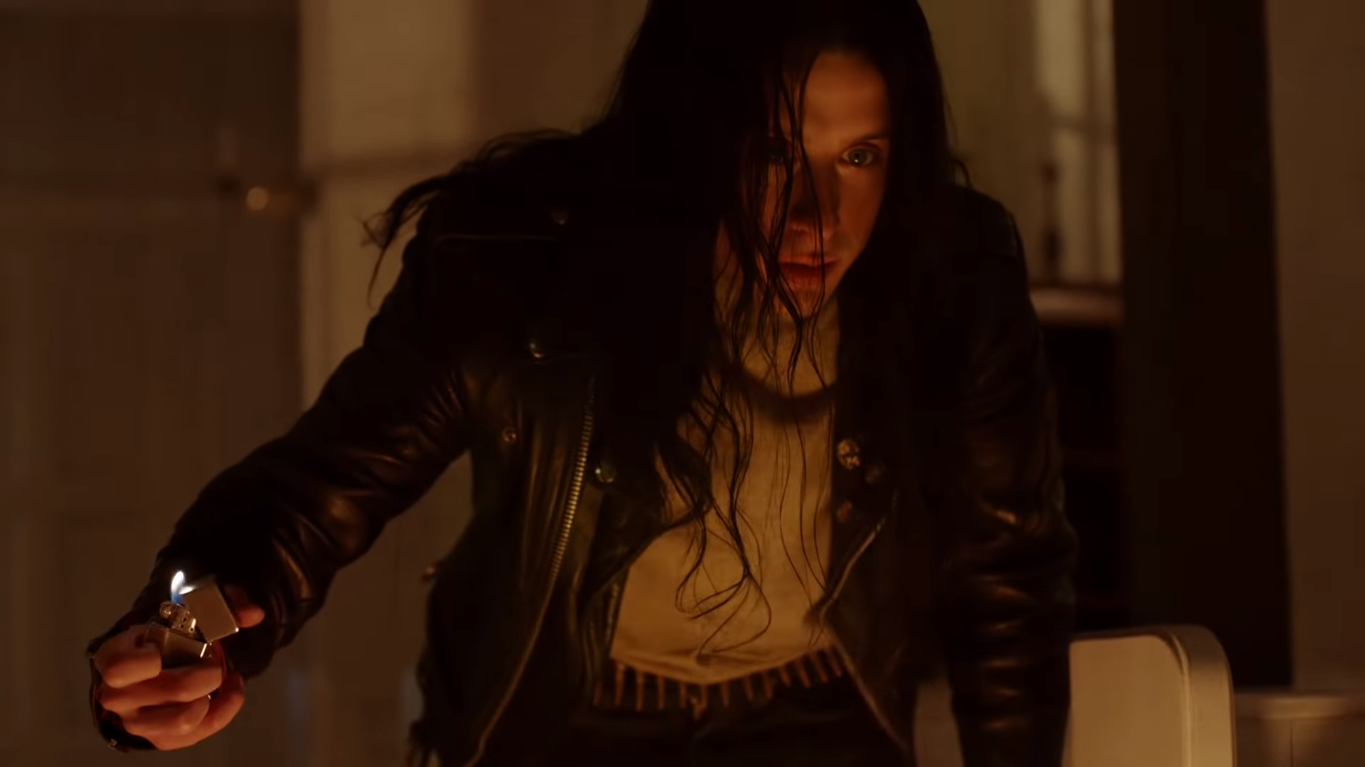
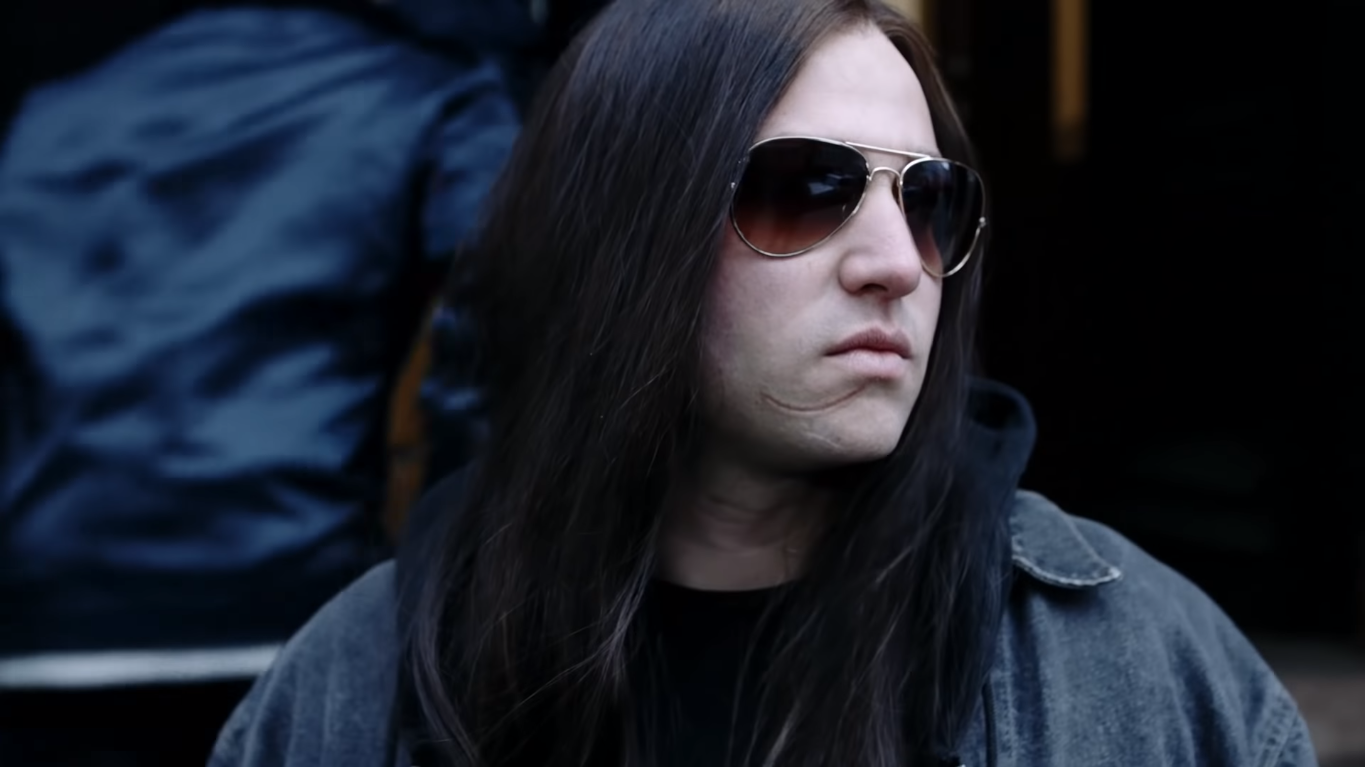
Lords of Chaos is based on the book by the same name, a work that is incredibly controversial on its own for problems regarding truth, romantization of facts and political stances it depicts. The book is based on the infamous stories of the Norwegian Black Metal scene in the late 1980s and early 1990s, and particularly the stories of Euronymous, Varg Vikernes and the so called Black Circle. The film follows the most controversial of these events: the murders, the suicides, the church burnings. It creates a lot of weird scenes that are just there for the sake of it as well. Things like a romantic subplot, sex-related gags and some of the cringe-worthy exaggerated conversations I’ve seen in any representation of an Extreme Metal or Punk scene. As you may well know Euronymous was murdered by Varg Vikernes, and this being the main event of the Black Metal scene in Norway together with the terrorist attacks on churches it created so much controversy that made this extreme genre of music tainted until this very day, being the perfect story to sell at the box-office apparently.

If we step aside from the personal bias with this genre of music and these stories, it does not help the film at all. The final product of Jonas Åkerlund’s work is fundamentally flawed like many of other films that try to depict an event of recent history. There is an obscene sense of disrespect for the dead in the film, more noticeable than the mere disrespect for the story and Black Metal in general. Euronymous is here depicted as a stupid teenager wimp that thinks he is “trve” but is actually a “poser” and Varg is depicted a “poser” that is actually “trve”. In subverting these “scene concepts”, Åkerlund manages to show on which side of the story he is and his criticism in a way that is theoretically interesting. The problem is that he lacks sensitivity with the characters, being way too predictable, and reducing the characters to a Hollywoodesque level of plastic that feels atrocious and offensive even to the ones that are not knowledgeable with the real facts depicted in the film. In the beginning of the film the director puts out a sentence on the screen saying something like “Based on Truth, Lies and What Actually Happened“. He almost used this to an interesting extent when mixing up all the myths in the dream sequences of Euronymous, but he fails, because in actuality what the spectator feels he means with this is that he does not care a single bit about the real story and the Black Metal myths and just wants to poop out a discardable bag of chips.

1.png

Technically it is awful as well. Despite not relying on a predictable shot/reverse-shot structure, the music video style he uses instead does not bring anything to the table that feels in any way authentic or aesthetically pleasing. He also goes for this snappy style of directors like Adam McKay, that combined with the fake, “edgelord” kind of stylization only makes the film stink even worse. Maybe I am privileged in the selection I make to the films I watch, but Lords of Chaos is probably the worst film I have watched in months, even worse than the insidious mess that was (his John Wick remake) Polar (2019). Not even the casting looks legitimate and for the most part the actors do not do a good job. Something as simple as the special effects and the depicted violence feels too exaggerated and silly as well, and I will not even comment on what they did with the soundtrack and especially the Mayhem songs. There are no redeeming qualities to Lords of Chaos whatsoever, and being someone with the background of Jonas Åkerlund the man behind this project, it only makes us feel even closer to the post-capitalist cinematic apocalypse.


1.5 out of 10

Us (2019)

Directed by Jordan Peele

1

“We’re Americans.”

After the massive hit that was Get Out (2017), Jordan Peele kept showing his love for horror and a will to keep on writing new material in the genre. The subtexts and politics of Get Out (2017) were clear and well transformed into a more or less consistent concept. The value of the film was deposited in the dynamic of this transaction of racial politics into the horror film discourse, and by provoking the viewer with suggestive and anarchic ideas (similar to the one’s by Spike Lee). It was a film that worked as a genre piece but utilized its strengths to reach the public and confront them with realities that while terrifying are enlightening. Daniel Kaluuya presented us one great performance, backed by an incredible supporting cast. That is the main thing that mirrors and is enhanced in Us. The performances are well-above average and the film owes its cast a lot for its dynamic between horror and comedy (presented even more extremely than in Peele’s previous).

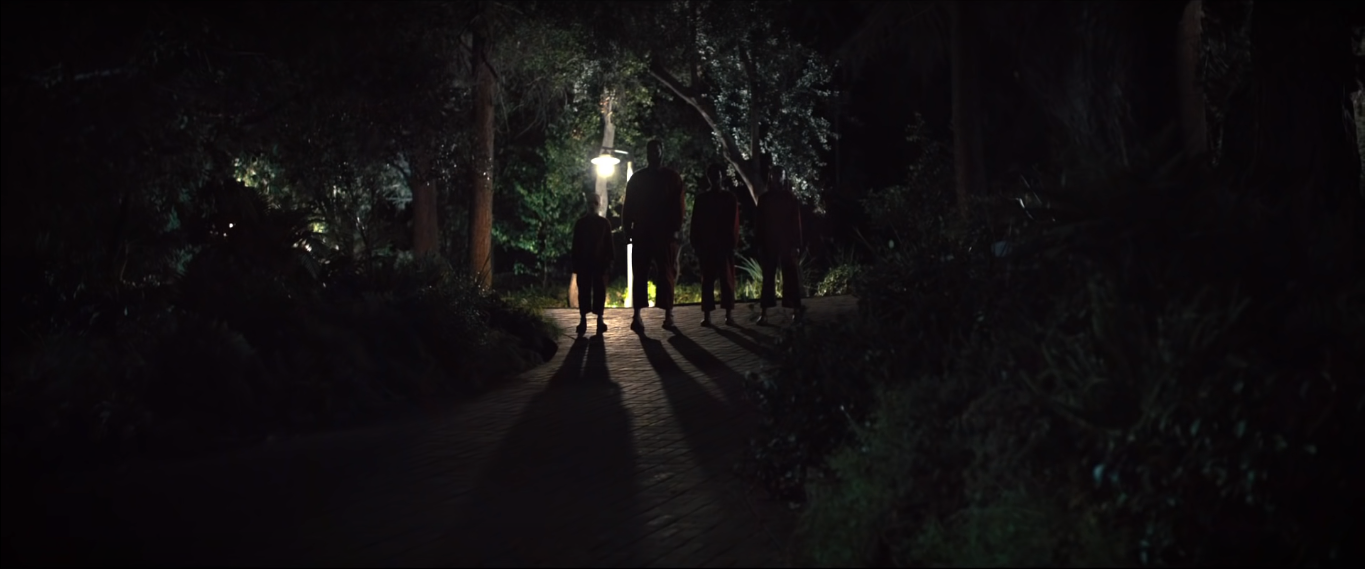
us 1.pngShadows and reflections are essential elements of the film
The game of mirrors presented in Us starts right of the bat with the name of the film. There is ‘Us’ and ‘US’, and with that information in mind we can expect the film to present certain political ideas. The problem with it is that most of the times the small scenes are full of certain meanings that contrast with the main concept of the film, creating a lot of room for interpretation, especially considering the film as an exercise in ideology. The best thing about the film (after Lupita Nyong’o’s mesmerizing performance) is arguably how vague its political readings can be. We are teased with the idea of it being a political film with the title alone, and yet the film challenges us to dig deeper to find any consistent concepts regarding its ideas. Despite touching on the subject of racism, Peele’s vision is now aiming at broader issues with Us.

Being a comercial film, it comes with its problems. Some of the scenes in the film are too predictable in its stereotypes. What helps the film to get over these scenes is its usage in an almost metalinguistic cinematic way. Peele knows his horror clichés and uses them in an ironic way briliantly, playing with our expectations and creating genuinely funny moments. As an European citizen it is hard to understand the realities of racism in America (mostly due to our racial prejudices being of a different nature and having a different expression), so probably these complaints at the end of the day are just conditioned by my personal life experience. Having this in mind, Us regards the subject of racism in a lighter way than what was expected, especially considering its main theme. This is not a negative criticism at all, because as I mentioned before, the vagueness of Us adds a lot to any reading of the film, including a reading inclined to the ideas of racism.”

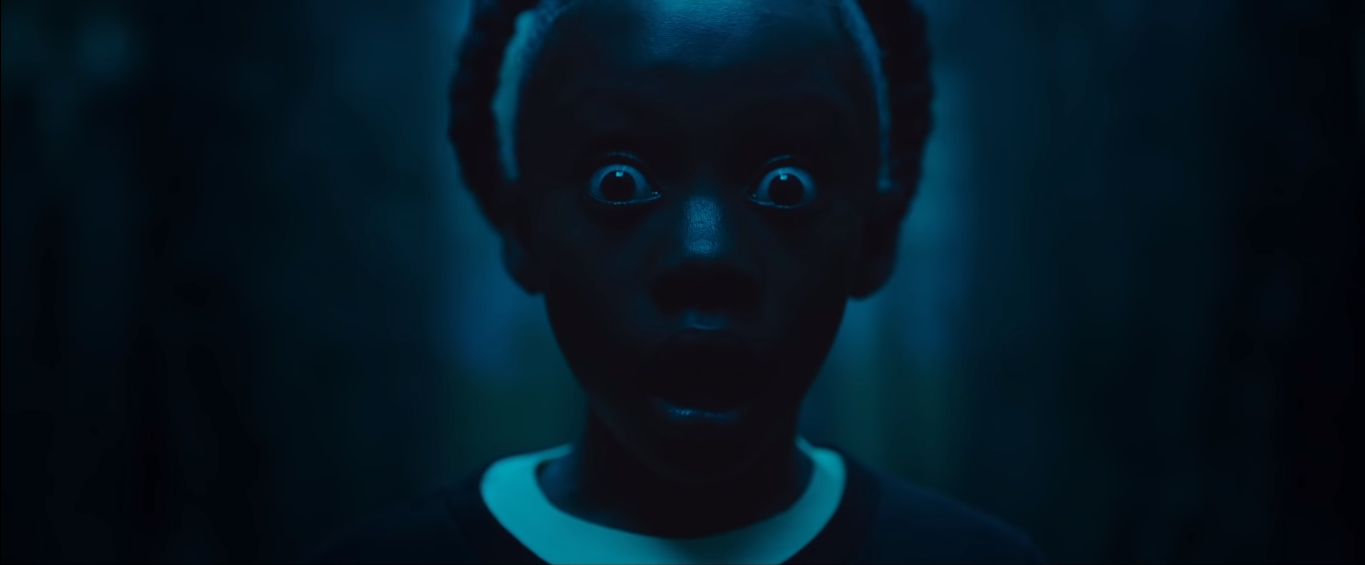
Visually it is more interesting than Get Out (2017), despite being a completely different film. It is creative and intelligent in its visual style, enough to be noticeable when comparing it to other big horror blockbusters. However, it still ends up feeling a little bit flat, just like Peele’s previous did. The use of music is brilliantly funny, and the original soundtrack is really great as well, especially the anthemic track (that reminds me almost of The Omen‘s (1976) soundtrack). Technically it is satisfying enough, never being truly flabbergasting.

us 2.pngThe already iconic shot from Us

By what I’ve said so far one would assume that Us is a brilliant film. But it is not. It is too vague and too self-conscious to be just a commercial film to watch at the mall, and too predictable in its techniques and paralells to be a really serious and innovative picture. One of the things that troubles me the most is that its vagueness translates a lot into meaninglessness, even though it is clear that there was a care in creating a well-rounded plot (in a Hitchockian way) and complete concept. The second thing that annoys me is the necessity to overexplain everything in the end. The “plot-twist” was rather predictable and despite the film having a lot of interesting buried plot points, it leaves a more experienced viewer feeling that the film is being condescending.

This text took into consideration spoilers and I decided to not discuss any of the plot, as it is very fun to watch without knowing what it is about. Gather some friends and go watch it. Probably every person will come out of the theater with a different reading of the film (I read somewhere that a guy thinks that the film is somehow anti-socialist. I highly doubt that though) and it is an enjoyable time in the cinema. Don’t expect too much out of it, but face it with enough seriousness to consider it, as it is clear that a lot of work and dedication went into it. Jordan Peele seems like he will be the new horror genre director to look out for, though.


6 out of 10