Cat People (1942)

Directed by Jacques Tourneur

cat-people

“Let no one say, and say it to your shame / That all was beauty here, until you came.”

This week on Camera Coverage, after an unfortunate but necessary hiatus, we take a chance at yet another Horror Classic. This time we discuss one of RKO’s ultimate, but sadly forgotten classics, Jacques Tourneur’s Cat People. We often associate suspense films of this era with Alfred Hitchcock, and rightly so, but Tourneur is a French director that utilized the techniques of the afforementioned director to a new height in his Hollywood career. Despite being associated with B-movie fair, Cat People presents classic horror cinema at its best. There is a creature, there is melodrama, there is symbolism and there is masterful use of archaic techniques in order to portray (or not) all these cathartic elements.

The film plays with the character of Irena Dubrovna (Simone Simon), a Serbian fashion designer working in New York. Right from the beginning of the film we are introduced to her future husband Oliver Reed (Kent Smith), who’s relationship with will be the main focus of the whole film. Irena has a unsettling past and is afraid that some legends from her village in Serbia are true and inside her. Stories of witches, kings, witchhunters and, of course, cat people, live within her as she expresses her anxieties of the possibility of all of it being true. This will lead to a troubled marriage, in which physical contact is inexistant, and the insistence of another woman inside the relationship dynamic will be the key factor for Irena to release the panther within her.

the other woman cat people.pngAlice as, in a genre bending role, The Other Woman, a New Yorker intruding a troubled marriage between a Serbian (Irena) and an American (Oliver).

All of this is quite literal. Irena seems to really release, or rather transform into, a panther by the third act of the film. So what makes the film so fascinating despite its somewhat cheesy premise? Well, what could have turned into a really awkward puppet and silicone fest is dealt with incredible subtilty. Tourneur’s cinema uses shadows as one of its foundational elements. This is essential to a film working with metamorphosis as is Cat People. The idea of transformation is never portrayed directly onto the screen, but suggested. I believe, as many others do, that Tourneur utilized heavy indexicality mainly because of the somewhat low budget of the film. That said, when working with abductive imagery he manages to elevate the film not only in terms of ambiguity, but also in relation to films that utilize top-notch special effects but sadly do not hold so well nowadays. It must be noted and observed that this technique is not reduced to editing and cutting the scene when transformations are due, but there is a work of suggestive imagery throughout the whole of the film. From images of Irena with paintings of menacing cats in the background, to juxstaposition of her body and a reproduction of a statue of Anubis, to the crossing of Irena’s figure and the shadow of an armchair giving her some sort of cat ears. One of the key scenes works with Irena’s footsteps quickly silencing as she is chasing Alice (Jane Randolph), as we must only assume that her feet transmorphed into the silent, deadly paws of a black panther. This film represents the use of cinema’s rhethorical means at its best, using not only the resource of image and visual representation, but going as far as utilizing sound to its most effective.

game of shadows cat people.pngAnother example of suggestion – in this case premonition – of a scene through shadows and objects. If you look closely you can observe the shadow of the bird and its cage projected onto the black panther image, predicting what would later happen in that scene regarding the bird’s death.

One can love a film by its technical prowess, but what does it all really mean? Well, Cat People does not shy away from ambiguity. This is not only due to the decisions behind the technical aspects of the film, but also due to the broad themes that the film is dealing with. Probably the most clear readings of the film lay on the problem of sexuality, femininity and relationships as a whole. There is a clear suggestion throughout the whole film of Irena’s fear of touch, even though she is already married and social or even religious judgements are not an issue. This woman is dynamic in the film, as she can transform into a menacing beast that is awaken by the overextension of male activity in the world that is her own – this is, sexual intercourse regarding her own body. But what about her Serbian identity? The reading of the film as a cultural collision is another interesting perspective by which we can approach Cat People.

Despite all these possible perspectives on the film, its ambiguity and blank spaces should be respected and perceived as such. This is a film that is simultaneously meant to be enjoyed and discussed, but never reduced to x or y perspective. By trying to limit the film’s readings (there is an immense focus by critics in accessing the film with the perspective on sexual anxieties), we tend to leave its essential element of identity that it is dealing with. More than a woman or a Serbian, Irene is an individual trying to defend her individuality when in necessity of interacting with other individuals. Whether Irene is a cat person or not we will never get to really see, but what we get to see is that Irene is as human as she can as she tries to survive in our inherently intrusive world.

Bibi Andersson || Persona (1966)

[Directed by Ingmar Bergman]

1.jpg

Earlier this week we have been braced with the devastating news of the death of the legendary actress Bibi Andersson. She is best known for her long collaboration with director Ingmar Bergman with whom she had made approximately twelve films. Andersson is responsible to the introduction of Liv Ullmann to Bergman, and therefore responsible for what is one of the most legendary collaborations in the history of cinema. Even though the spotlight is often on Ullmann, Bibi Andersson is the original muse of the director, and works as a strong homogenous figure in Bergman’s early work, only later her figure being noticeable as a “lighthearted” contrast to what was the “severity” of Liv Ullmann, especially on the masterpiece that is Persona.

Every film lover knows Persona. But it is also true that no one can truly deconstruct and interpret the film in what may be considered a “right way”. This is a film that is meant to work on a level that differs from our usual cinematic experiences. Most of this is due to the way both characters interact and the work of metamorphosis between the two. While, as mentioned before, Liv Ullmann plays the patient, an actress that is both austere and troubled, Bibi Andersson plays a deeply humane but also troubled nurse. While both performances are incredibly layered and dynamic, we are mostly guided by the eyes of nurse Alma in her quest to heal Elizabeth Vogler, that quickly turns into a therapy for her own troubles. The humanity and sincerity of Andersson’s performance brings to the film something for the viewer to relate to, something that is essential for Bergman’s work to function correctly in order to not transform into something completely obtuse and abstract. She is the perfect counterpart that bridges the complex states of mind and the complex artistic pretensions of the film into our everyday lives, creating in the end one of the most unheimlich experiences one can have with a film.

Bibi Andersson is the light of our everyday lives fading in the world of Bergman’s cinema. She brought reality and sensibility to films that would feel too cold and distant to be as relevant as they are today. This week we lost one of the big faces of Swedish cinema, and she will surely be remembered as one of the absolute icons of the history of film. We leave a list below of our favourite films she made part of. Bibi Andersson will not be forgotten.

The List:

Sommarnattens leende [Smiles of a Summer Night] (1955)
Det sjunde inseglet [The Seventh Seal] (1957)
Smultronstället [Wild Strawberries] (1957)
Djävulens öga [The Devil's Eye] (1960)
Syskonbädd 1782 [My Sister, My Love] (1966)
Persona (1966)
Flickorna [The Girls] (1968)
En passion [A Passion] (1969)
Scener ur ett äktenskap [Scenes from a Marriage] (1974)
An Enemy of the People (1978)
Quintet (1979)

Alice (1988)

(original title: Něco z Alenky)

Directed by Jan Švankmajer

40000-alice-0-230-0-345-crop

“Alice thought to herself: ‘Now you will see a film made for children… perhaps. But, I nearly forgot, you must close your eyes, otherwise you won’t see anything.’ “

Jan Švankmajer is one of those directors that is a legend to the lovers of animated films and sadly underappreciated by the general public. In a way it is a disappointing fact, but at the end of the day, stop-motion animation is still a very particular style, and when combined with surrealism and experimental imagery, there is not much left for the casual viewer to incline in its direction. Nevertheless, Švankmajer’s work is an influence to some of the most successful directors in Hollywood, such as Tim Burton for instance. Being a fan of puppeteering and stop-motion, it is hard not to include one of his films in our Classics category, as not only is he a master of the art of puppets and traditional surrealism, but also a great filmmaker that channels his very unique vision with full use of the medium.

If it wasn’t obvious enough, Alice is a film adaptation of Alice’s Adventures in Wonderland, the famous novel written by Lewis Carroll. Despite being very faithful to its original material (even comparing it to some other adaptations, that tend to mix up the novel with its sequel Through the Looking-Glass and What Alice Found There), it does not depict all of the episodes in the book. However, every line in the film (not including the quote we selected above, that is at the very beginning of Alice) is taken directly from the novel. That said, it completely re-reads the novel, illustrating it in a creative and new way. Its style must have been described as truly unheimlich if Sigmund Freud had the chance to watch it. This is mostly because of Švankmajer’s obsession with everyday objects and things that are well-known to us, giving them a life that should not be. Dodgson’s novel is the perfect object to be narrated by Švankmajer, as it is an inheritly playful, ambiguous, psychadelic and metamorphic story. Other surrealists have taken a chance at this novel, but only the odd combination of interests in Švankmajer could result in such an interesting piece.

alice 2Alice shrinks into a doll.

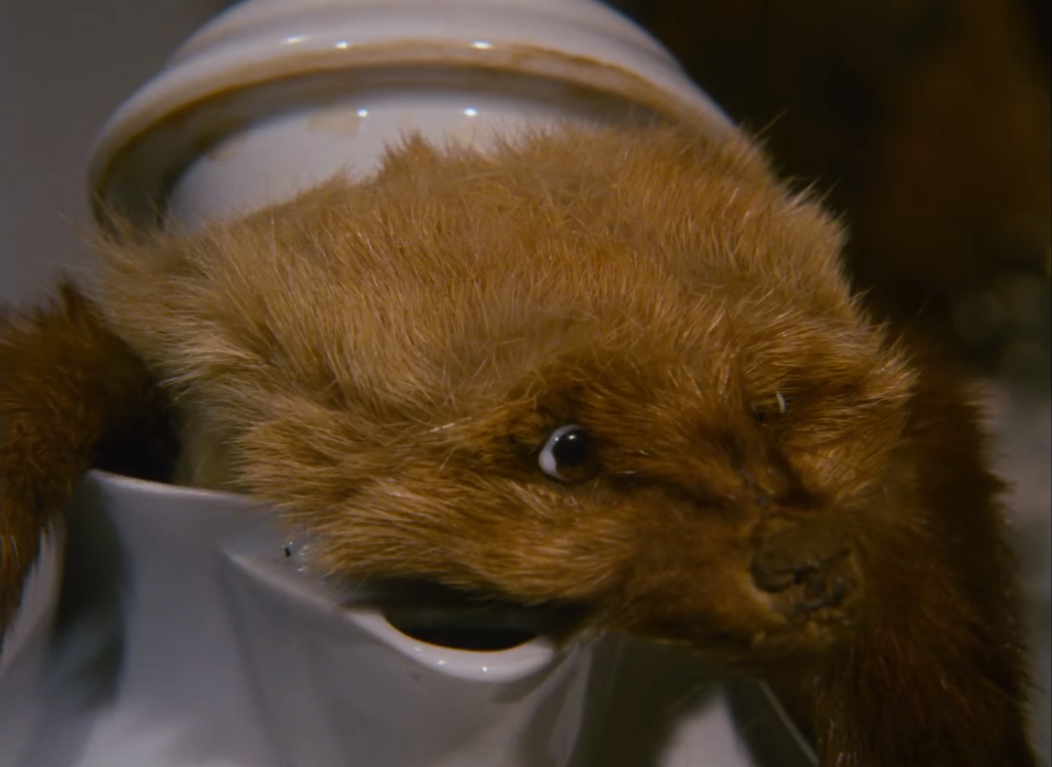
By the end of the novel Alice wakes up in her sister’s lap, as she shouts (after growing spontaneously) that all those soldiers were just a “pack of cards”. And in fact we suppose by her sister’s description afterwards that all of her adventures in Wonderland were her background setting fantasized. Švankmajer takes these ideas to an absolute extreme, utilizing animation in everyday objects and artifacts instead of focusing on creating polished fantastical creatures. This creates an incredible textural feeling in the film, something that is common in his body of work. It seems that he knows of the many different readings of the story as well, as his semiotic game (combined with smart editing, framing and cinematic techniques that are not strictly related to the effect of the animation) shows knowledge about the different subtexts of Alice in Wonderland, with a special insistence on its sexual and psychoanalytical readings.

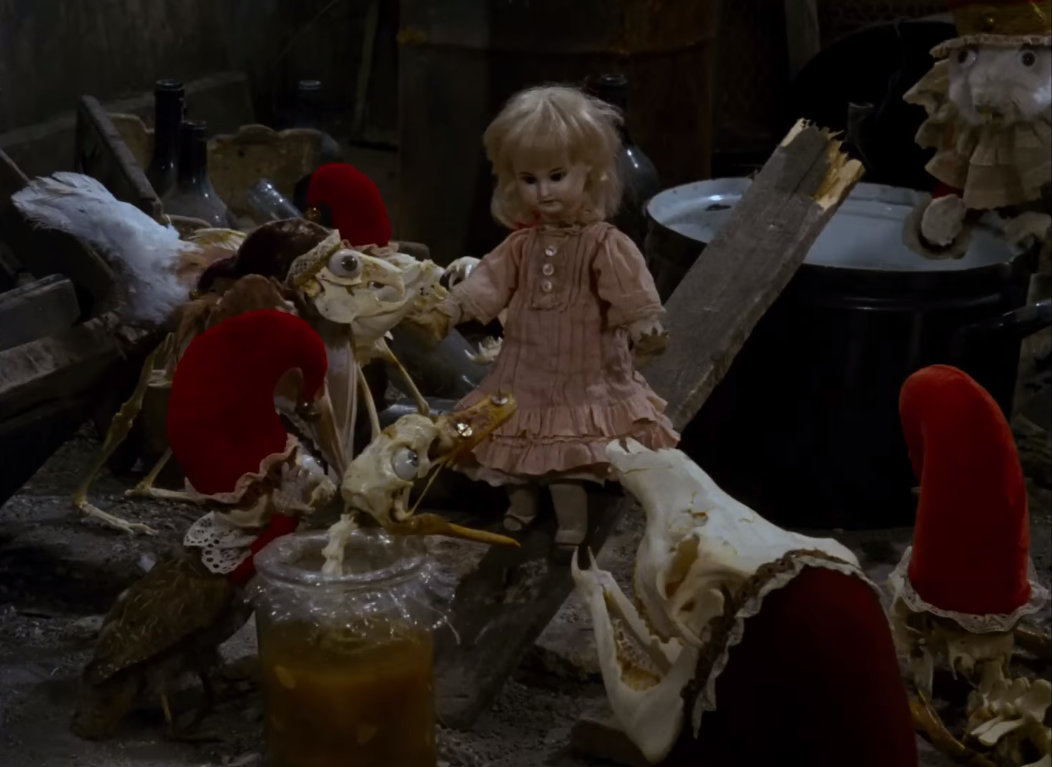
alice 1.pngProbably the most unsettling scene in the film, the infamous tea party.
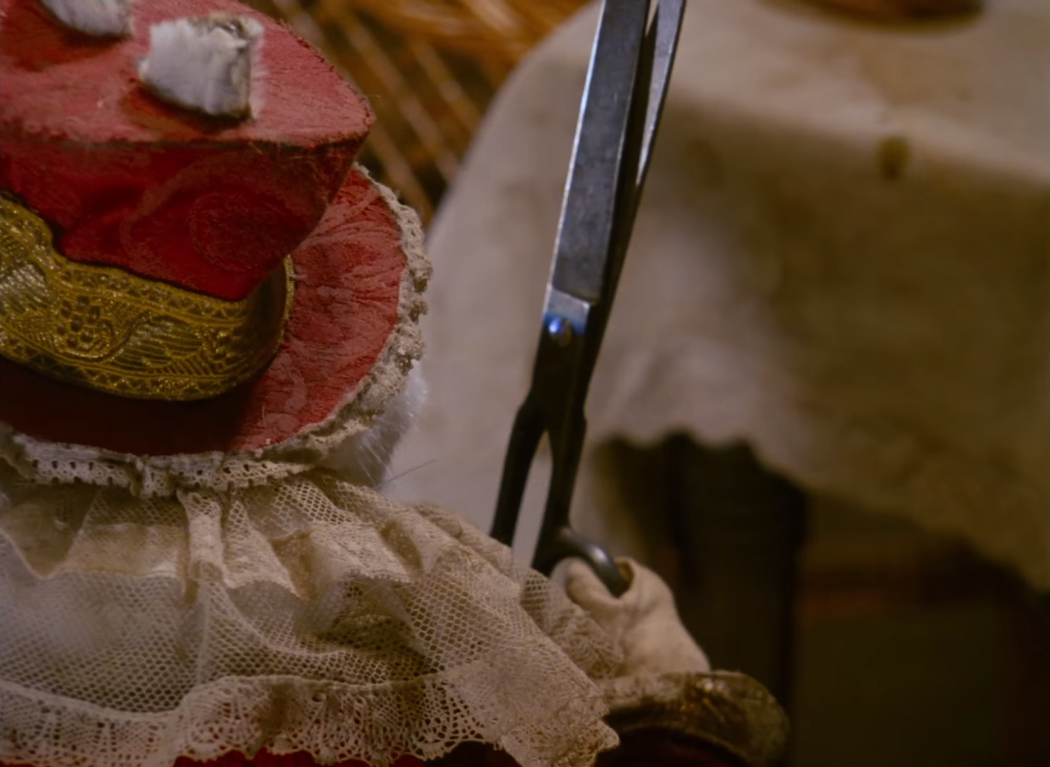
As in some of his other works (such as Conspirators of Pleasure (1996) and Little Otik (2000) ) we can observe in this work a presence of sexuality in childhood. It is a very subtle and delicate subject, but the honesty and tactility of the director allows these themes to flow in a poignant yet brutal way. The process of coming of age, clear in Dodgson’s original, is a prominent theme in the film overall. The brutal violence of growing in Švankmajer’s version is less evident than in the book, but it burns at a much more deeper level. This is mostly due to the use of the medium of cinema (images and time) combined with the animation and metamorphosis of inanimate objects (especially regarding things like meat and bones, that are a staple of Švankmajer’s, that when back to life create this uncanny feeling of seeing a sort of in-between of life and death).

alice 3.png“Off with their heads!”

Alice is a film to feel and not just watch. As the main character said, it is a children’s film, with the exception that it isn’t. It is, though, an incredible revisiting of a timeless classic. Focusing on the coming of age aspect of Alice, the cyclic nature of the story, the transformations and the perception of the real in human imagination, the film is definitely not for everyone. It is highly stylized, sometimes cryptic and ambiguous and it does not follow an easy narrative for the ones that are unfamiliar with the story. One can’t deny all these obstacles to the big audiences, but it is making it injustice when saying it is not a unique experience that will probably change the way you look at film as an art form and reconsider an old but dynamic and always fresh animation technique.

Gräns (2019)

(eng: Border)

Directed by Ali Abbasi

grans 1

“I don’t see the point of evil.”

Inspired on a novel by John Ajvide Lindqvist (better known for Let The Right One In), Border is one of the films to have a lot of controversy and high regard last year. To it was awarded the Un Certain Regard award at Cannes, and it even managed to swiftly get a nomination to the Oscar for Best Achievement in Makeup and Hairstyling. The controversy is mainly due to the sexual nature of its themes. It is an undeniably shocking film. The usage its shock value is, however, very pertinent. As Let The Right One In (2008), the transformation of Lindqvist’s story into film works brilliantly, combining the already poignant themes present in the words and visually expanding them, something that is even more noticeable in Border, mainly due to the irreverence and shamelessness of the film’s imagery.

The film follows Tina (Eva Melander), a security officer working on border control, and he daily routine. She is not blessed by standards of Western beauty and has a menacing look that works well with her magical power of being able to smell people’s feelings. She lives an unhappy marriage and has no friends other than her mentally-ill father. There are two big changes in her life when she smells a memory card on a passenger’s phone that is full of snuff films and child pornography and on another scene sees a guy that is oddly similar to her and confuses her special sensibilities. These changes lead to two inner plots in the film that consist on one side a detective thriller-like film and on the other a romantic story that leads to Tina’s discovery of her true identity.

border 2.png

Border is a story of fluid bodies and souls trapped in an ordered world. Tina and Vore (Eero Milonoff) are figurations of chaos inside an organized Western society. However, if we consider the sexual nature of the film we quickly understand that there is a political edge to this chaos. Combined with the ideas of social isolation, foreignness and family issues we understand that the new dynamic presented by these two special characters is an amalgamation of every otherness that exists in our contemporary world. So far so great. The problem with the film is that while presenting brilliant ideas, it overly complicates them and by the end it leaves an undesirable odd feeling to the viewer. Of course this ending can be read as an anarchic solution to the aforementioned themes, or even as a following to the mythology presented half-way into the story, but never does it feel as smooth as expected. Comparing it to something like the ending of Do The Right Thing (1989), for instance, it feels really off considering the way the plot devices work beforehand.

Technically it is a decent film. It never does something that is not expected from an ultra-realist style film. Sometimes the camera seems to be too shaky, and even nauseating at times. In other scenes, the fast movements of the camera and all the shakiness contribute greatly to the inner beauty of the film. The original soundtrack is very enchanting and is really on the same page with the tone of the film. The make-up effects are pristine, as is Melander’s performance. I would say Eero Milonoff’s performance is never up to par with Melander’s, and sometimes is not even really good at all. But then again, that is never a big problem (even if combined with the shaky camera aspect of the film) if we face it with the originality and boldness of all the other decisions surrounding it.

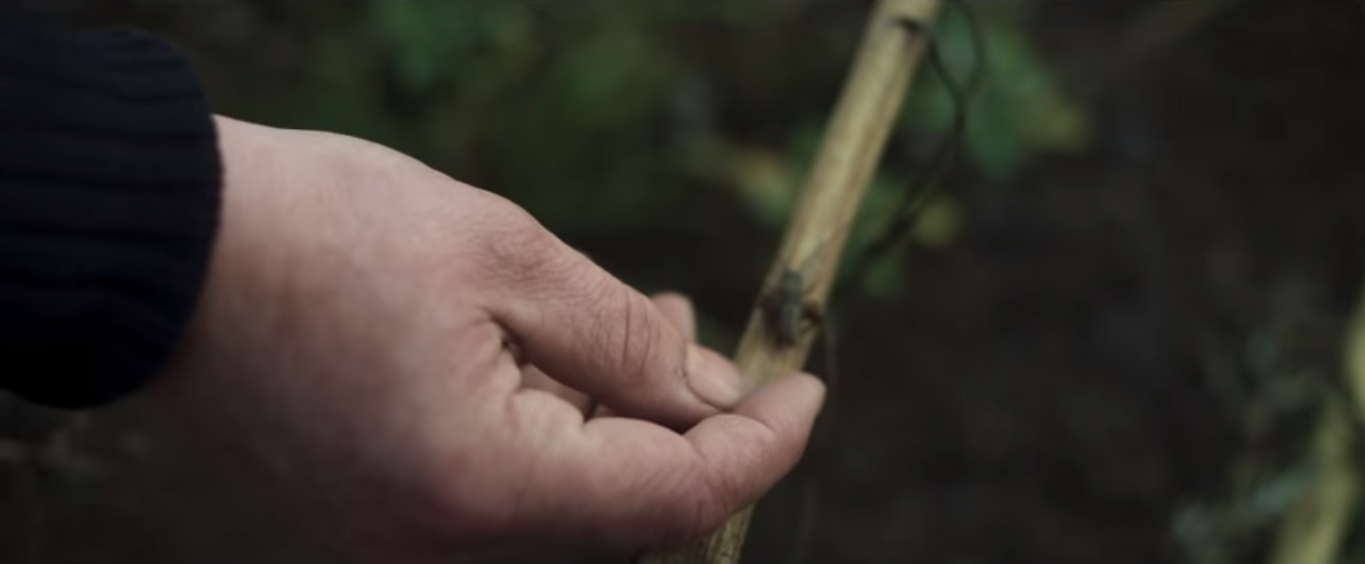
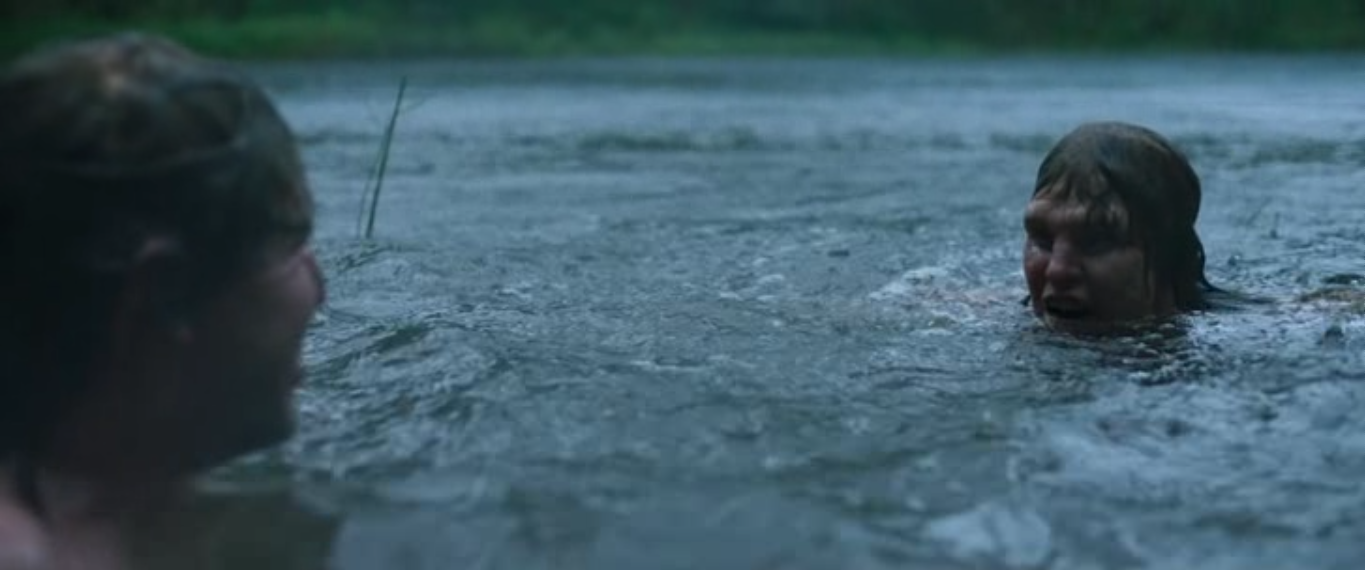
border 4.pngOne of the great visual moments in Gräns

The reason I was not a big fan of Let The Right One In (2008) is probably the reason I am actually a big fan of Border. It is a consciously awkward film, one that is aiming specifically at shocking the viewer in order to get its ideas out there. Most of the times this technique does not work, but with Border it does, as it is probably the perfect figurative film of the many lost souls in our monotonous society. Even though it is not perfect, particularly the thrilleresque subplot, Border works a lot better than expected. This review tried to say as little as possible about the singular elements of the film because in order for it to work it is mandatory to watch it with little knowledge about what is so special about it. It released in Portugal last week despite having been distributed in the rest of the world earlier this year. Still, try and watch it on stream or DVD, because if you don’t, you will be missing what is probably the most excruciatingly, cringeworthy and at the same time beautiful sex scene of the last few years (and for that alone it deserves ½ a point).

6.5 out of 10