
(original title: Se rokh)
Directed by Jafar Panahi

“So you came for her and not for us.”
Jafar Panahi is a Iranian director famous for his continuous quarrel with censorship and his consequent imprisonment in 2010. His 2015 masterpiece Taxi gave him worldwide recognition, but he was already one of the highest praised Asian directors from the last twenty years by film critics and a staple of the big film festivals. His work follows the lead of his master Abbas Kiarostami, especially after being imprisoned, where he approached a fluid style between documentary and fiction to develop his already highly realist filmography. 3 Faces is a film that won the award for Best Screenplay at the Cannes Film Festival, and is since being released all over the globe.
The film follows the director himself and the actress Behnaz Jafari. They received a video message of a young girl commiting suicide in an attempt to get the actress’ attention and help with the consequences of her somewhat progressive lifestyle (she studies in college and is an actress) in her traditionalist village. The three faces that gave the film its title are meant to be the faces of the three actresses in the film. The young girl that sent the message, the middle aged Behnaz Jafari and an old lady that they meet somewhere in the middle of their journey into the village. It is shot at the same location that many of Kiarostami’s films were shot, and has a lot of direct references to some of his most famous work, including the devastating ending of Taste of Cherry (1997) mirrored in the somewhat crazy old actress’ actions.
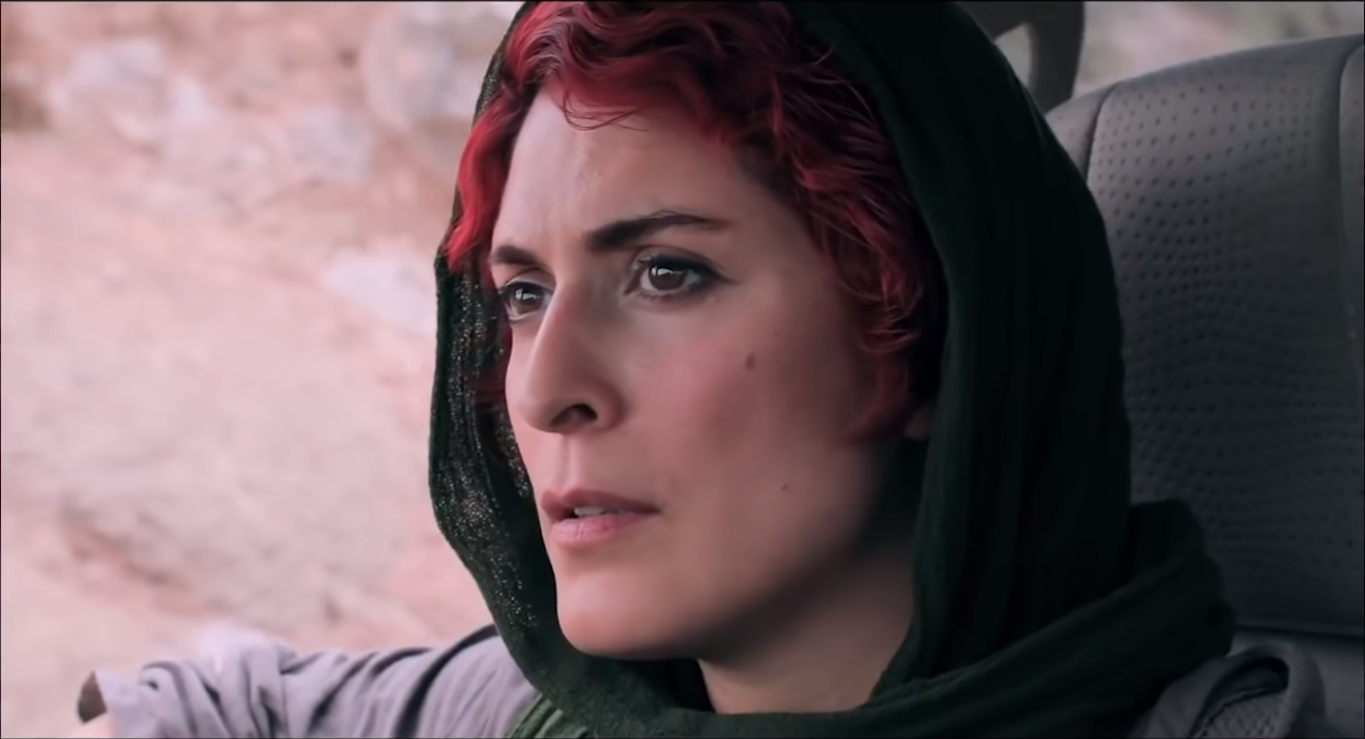 Behnaz Jafari
As are the other films of the director since 2010, 3 Faces is a politically charged work. Panahi seems to extend his views on femininity, generational issues and religious catharsis from his other films. In this aspect, Panahi’s work seems to resemble another Iranian director that seems to be forgotten when talking about Panahi, that is Mohsen Makhmalbaf. In some of his films, of course considering Kiarostami’s influence on them as well, Makhmalbaf utilized too the fluidity between documentary paradigms and preconceived narratives to approach certain political issues – see for instance Kandahar (2001) and how it deals with the uprising war, or A Moment of Innocence (1996) and how it works with morality issues inside small communities. In the same way Taxi or This is Not a Film (2011) worked, this new film utilizes its meta elements to the fullest in order to reach the level of realism it does. It does not even shy away from going further into many other debates, much like Kiarostami’s Close-Up (1990) when it comes to the debate about the power of film and the influence of art in an oppressed society.
Despite not being as original as a film like Taxi was, Panahi seems to make a proper tribute to his masters. The debate topics of Makhmalbaf in 2001 or Kiarostami in 1990 are not the same the ones being discussed in Panahi’s contemporary cinema. Even if going as far as utilizing diegetic elements of the voyage or other direct elements of these other director, the final product is still original and relevant. There is a blend of a seemingly ascetic scenario with traditional but poetic use of framing and editing, and with a real sense of pathos that transcends the otherworldly level of cinema into real life (with a knowledge of technology and modernity that remembered us of other directors that utilized modern elements to their most real, like Michael Haneke in Happy End (2017) ). This mixture of techniques combined with the poignancy of Panahi’s assertions is hard to criticise and all of it definitely works.
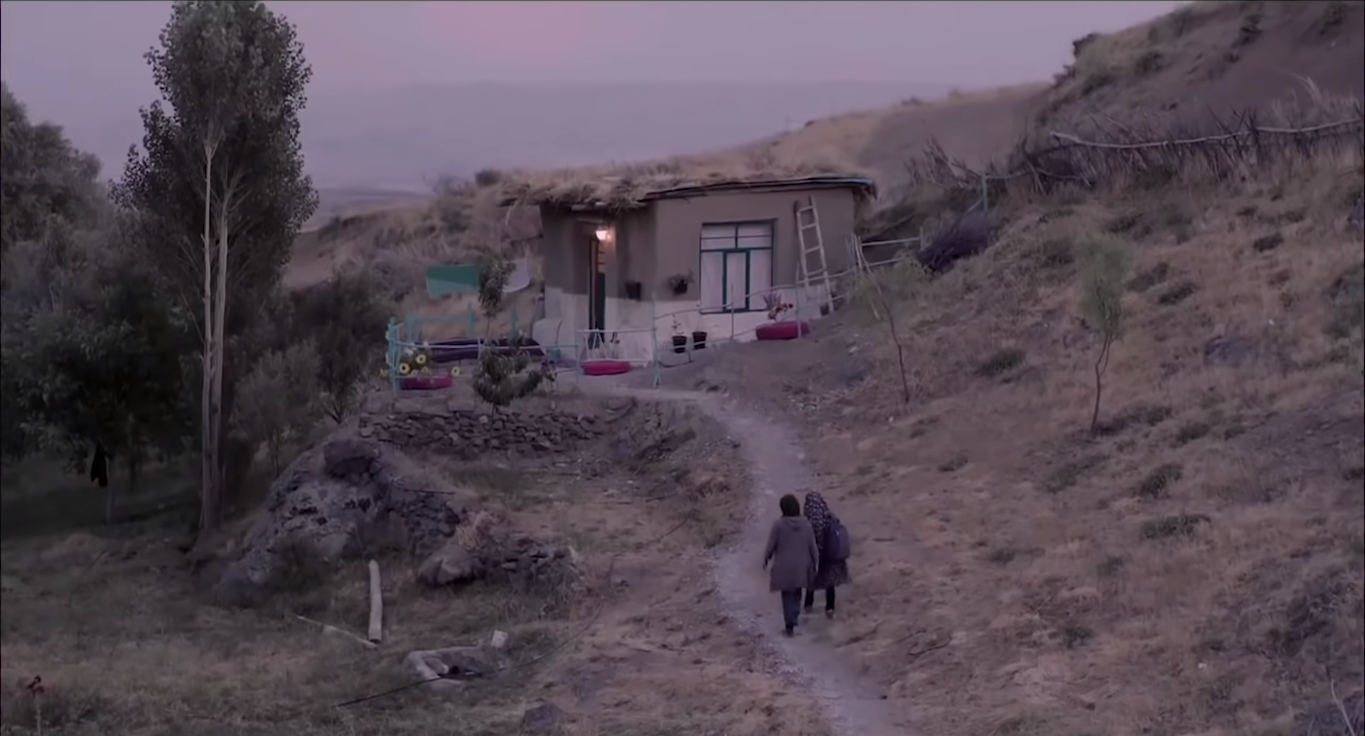
One of the most important things to take from a fictional film like 3 Faces is its sense of realism. Despite working will milions of elements and influences that are somewhat hard to keep track of, the film puts them together in a way that every frame drools a sense of what’s reality like in Iran, but even goes further in globalizing Iran’s problems. How do we deal with our professional lives, how do we deal with deceit, how do we deal with time and how do we deal with rules. What is the role of God, and does godliness ends when humanity starts to fade. These are some of the things that are hard not to think of when we see a film like Panahi’s. Much like the main idea from his 2011 film we are once faced with the fact that a film is a representation of life. Not only that, but the final product of this representation is alarming, not only because of what’s happening in some Middle Eastern countries, but because of the true universality of these problems.
7 out of 10

 “You see, it is the kind you do believe in, it’s what is expected. Deaths for all ages and occasions! Deaths of king and princes, and nobodies…”
 Scene referencing Sir Isaac Newton’s apple.
 Camera Coverage