Raise The Red Lantern (1991)

(original title: Da hong deng long gao gao gua)

Directed by Zhang Yimou

raise the red lantern

“Isn’t that the fate of a woman?”

This week on Camera Coverage we turn back to Asia, more specifically, to China. Zhang Yimou is one of the most prolific Chinese directors of the last twenty years. Before estabilishing himself as one of the masters of the modern wuxia film with works like Hero (2002) or Curse of the Golden Flower (2006) he made a bunch of diferent films related to either Chinese history or your regular to-go drama picture. That said, his first three feature films, consisting of an unconnected trilogy, are to this day some of his best, especially the one we selected to elaborate upon. Raise the Red Lantern is a period film based on a novel by Su Tong, Wives and Concubines, that managed to do the impossible task of balancing pure cinema aesthetics and important statements on many political, social and cultural problems that are relevant to this very day.

The film follows Songlian (Li Gong), a young woman in 1920’s China. She appears to have been an university student that had some sort of conflict with her family. In a revenge act towards her family she decides to marry an old, powerful rich man in northern China. All of it happens really quickly, and Yimou puts the viewer straight into the complicated relationships between all of the four wives inside the mansion. Each of them have their own house/room that will be lit up with red lanterns if the master of the house (his name is never mentioned in the film) chooses to stay with that wife for the night or not.

raise the red lantern 1Saifei Ha as Meishan, the second wife, an opera singer.

Right off the bat we are faced with the aesthetic beauty of the film. Yes, the visuals are incredibly, but even the soundtrack works briliantly well with the images. There is a real sense of composition and structure in the film that contrasts well with its cathartic and dynamic ideas. More than just pure aesthetics the film manages to utilize many ingredients from the very beginning that make even the casual viewer to question some of the meanings and possible themes that the film will develop. Not only is the use of colour obviously important – hence the title of the film – but framing is key in the film, as is the decision of what to show and what not to show.

Raise the Red Lantern is not a sympathetic film when it comes to its protagonist, nor it is sympathetic to its viewer. The film has a claustrophobic feeling to it. There are rooms inside houses inside a village, and the four depicted woman are most of the time depicted inside these rooms like prisoners. The cold hand of the director when it comes to the depiction of these problems is felt in aspects like these, even if when picturing the master of the house there is never a shot of his face or, like we mentioned before, the mentioning of his very name. This decision would supposedly work in a way that would make us connect with the women inside, but quickly we realize that, yes, the man is a villain, but there is a bigger problem inside this world that dictates all these feelings of oppression. We must think that from the very beginning we are shown that Songlian’s decision was her own, and if she is a prisoner it is because of her doings. Despite the focus on the relationship between the women regarding their marriage, the film’s decision to avoid direct picturing of the husband puts us far away from any of his personal responsability we could have thought of.

raise the red lantern 2The quest for power of these wome led to lies such as fake illness, and even fake pregnancy.

All of this combined with the cruelty and evil depicted in these four women (being it at the same time a characteristic of each of them and a consequence of their situation), Raise the Red Lantern quickly goes from what could be a go-to bland feminist statement to a complex proposition of an overarching structure that is responsible for such issues. It is a controversial reading of the film, yes, but the catharsis we take from such a film is relevant enough to question these problems further and create a reaction in the viewer that, while mesmerized by the beauty of it, it is shocked by how contrasting it is with its ideas. Zhang Yimou made a beautiful film that manages to embellish and strengthen these women’s cages with the purpose of breaking their own metal bars.

The Ballad of Narayama (1983)

Directed by Shôei Imamura

narayama 1

“Our ancestors have gone to the summit for hundreds of years as we do now. 25 years from now I will go there too.”

Created by arguably one of Cannes Film Festival favorite directors Shôhei Imamura (with 5 times Palme D’Or nominations and 3 wins, including on this particular film) this work of his moves the viewer with its whimsical characters that can quickly twist the mood of the film from a light family comedy to a shocking, grotesque depiction of the life in a 19th century Japanese village. The socially poignant Japanese director does not miss his selected target with The Ballad of Narayama, but even surpasses his signature social cinema and elevates the story to a state of fable that despite not being as stylized as the 1958 version of the film, is way more cinematic and even accessible to the Western audience.

Imamura created complex dynamics introducing the viewer to really well-developed characters in a warm family environment and juxtapose this familiar warmth with the rough systems and values that guide village life. The film follows the life of a family in which every member has some unsolved problem. The main plot point of the film is that the old matriarch of the family Orin (played delightfully by Sumiko Sakamoto) is getting old, and there is a tradition in the village of ubasute. Being her the main stabilizer of the family, the film follows her solving her family’s problems while preparing, without the family’s approval, her departure to the mountain.

narayama 4.jpgSumiko Sakamoto

When asked about the story Imamura joked he initially thought about starting the film with a family taking their old grandma to a nursing home up a hill in modern Japan and then showing up the title screen saying The Ballad of Narayama. This says a lot about the intentions of the director when creating the film and presenting yet again this particular story. This work goes a step further than other films that go for this type of commentary. It ends up being way more shocking in, for example, a scene on justice against a family that stole from another family’s house, than in the film’s inevitable ending. It goes beyond its original source material (being it the 1958 film or the novella) and does it in a well accomplished manner, in which apparently scenic shots of animals (rats eating snakes and snakes eating rats, for example) and the environments say a lot more about the plot itself than its charming characters may initially transmit. Having this said, pretty much everything, from the music to the framing, works diagetically in Imamura’s film. And more than that, everything stands individually as a great element to the film. As any of his films, The Ballad of Narayama is visually striking, even more so than something like Vengeance is Mine (1979). It has a visual finesse of some of his most iconic later work like The Eel (1997), another one of our favourites from Imamura that could have easily made the list.

narayama 3.jpg

Despite being better known for his 1960s films, Imamura is a director that we will probably have to revisit another time on Camera Coverage, as for his later work goes above and beyond, in our humble opinions, than what he had previously worked on. In a world where directors like Ken Russell work political cinema and are tremendously poignant in the cinematic conversion of their ideas, we have Shôhei Imamura that is way less known in the West but goes above and beyond any of his political statements and manages to touch much more fundamental problems of the human existence. Even if he was adapting a novella or even adapting the 1958 version of the film, he managed to put as much of his signature social grit and social realism as poetic and lyrical value, all rounded up with an extent use of cinema’s potential. This is how you do an adaptation of a book. This is how you do a remake.

High Life (2019)

Directed by Claire Denis

MV5BMDNjN2NjYmItMjAyZi00NmNkLWJmYTQtYzcwZGRiM2RmNGNlXkEyXkFqcGdeQXVyODUxNjcxNjE@._V1_SY1000_SX675_AL_

“It’s just a new religion for you.”

The presence of female directors in the worldwide film industry unfortunately is still somewhat lacking. For instance, over the last decade only 4% of the top 1,200 studio films were directed by women. Despite the odds, Claire Denis has throughout her career established herself as one of the most important French directors of the last decades. Her directing highlights go from Chocolat (1988), a film about France’s post-colonial issues; or Beau Travail (1999), dealing with the memories of war from French Foreign Legion soldiers. In this last one is especially interesting that themes like hypermasculinity and repressed homosexual feelings are explored by a female director, giving it a fresh new look on war films.

Claire takes now a shot at the science-fiction genre with High Life. The film tries to add new perspectives to what it means to be human when you are enclosed in a small spaceship far away from earth. It is not an easy task since the theme is well documented already, for instance in film classics like 2001, A Space Odyssey (Stanley Kubrick, 1968) or Solaris (Andrei Tarkovsky, 1972).  However, High Life is quite a different experience and references new ideas and problematics.

vlcsnap-2019-04-20-17h32m44s690.pngThe great use of red lighting

The plot functions around a group of inmates whose life sentence is to collect an unknown form of energy somewhere near a black hole. The intricacies deepen as we are introduced to the different individuals that compose the unlikely team. Dr. Dibs (Juliette Binoche) is a doctor obsessed with collecting sperm samples from the male crew members and then artificially inseminate the female ones. Failing to do so constantly she decides to double the sedative dosage and, through rape, collect the sperm from Monte (Robert Pattinson), the star of the film. The sexual tension is raised even higher with the introduction of this masturbatory machine that all of the crew, but Monte, use regularly. In a somewhat full of sexual tension and at the same time somewhat eerie scene (with a vibe that reminded me the killings in Under the Skin (2013) ) we see Binoche ride this contraption called “The Fuckbox”. In a complete trance-like state, this machine with a dildo end is set in a dark room with bondage straps hanging up from the ceiling. Making a companion to the heavy sexual tone is also the violence between the team. In a way it’s like the film tries to associate the presence of one with the other. It may start as a sexual violence situation like rape and end up in murder. These are a group of people that have lost a sense of purpose in life due to the uncertainty of their future and the claustrophobic aspect of living in a small ship in deep space.

vlcsnap-2019-04-20-17h33m45s030.pngInside “The Fuckbox”

The film begins with Monte living with a small child, alone in the spaceship. We later get to know that that child is the only success of Dr. Dibs and her mischievous tries to create newborns. Despite being an unwanted child, in a way it truly saves Monte from the same fate as his crew. Denis tries to show, especially between Monte and his little girl, some positive aspects about Humanity. In the final scenes we get to experience the wholesome relationship between the two until the ambiguous ending.

Its an interesting concept but not without its flaws. Starting with the cinematography, its somewhat lackluster, especially if we are talking about a revered director like Denis. The exterior space shots feel cheap and not very interesting either artistically or realistic, either way. Inside the spaceship it does get that much better. With points taken by the brilliant use of red light, there isn’t much there that blows you away. Maybe Denis was going for an homage to the spaceships of the 70’s because sure feels like we’re in one. The cast works well, especially Pattinson, but the dialogues feel sometimes forced and don’t add much to the plot.

It’s a peculiar film that will not appeal to the major movie goer for sure. It explores the most raw and vicious aspects about our sexuality and capacity to engage in violence. Nonetheless it’s not a missed shot by any means. Under its flaws there is a sense of novelty remarkable in this stage of her career, a director now 72 years old.

5 out of 10

Antonio das Mortes (1969)

(original title: O Dragão da Maldade contra o Santo Guerreiro)

Directed by Glauber Rocha

antonio das mortes 1

“Fight with the strength of your ideas. They are more worthy than me.”

Glauber Rocha was the leading figure of Brazil’s Cinema Novo (New Cinema) movement. This period of Brazilian cinema is characterized by it being deeply influenced by the subversive nature of the Nouvelle Vague and the social consciousness of Italian neorrealism. Considering the importance of this movement, and the importance of Glauber Rocha especially, to the cinema that followed it, I decided to pick what is probably one of the most iconic and highly acclaimed films from this period, Antonio das Mortes. This western-ish film is a prime example of all the characteristics of the movement. It displays the deep passion for the art form and a clear and unashamed political statement that, despite being more relevant considering the socio-political situation of Brazil at the time, pushes its universal themes higher. Also, if we consider the current political scenery in the country, we can quickly find some of the more universal statements of the film surprisingly poignant to a public inside and outside of the contemporary realities of Brazil.

The situation presented in the film is the hiring of Antonio das Mortes (Mauricio do Valle) to help some businessman to get rid of the cangaceiro bandits. As a mercenary, and together with his association with the villainized land owners, his quest for cleaning these lands leads him to a revelation of who is in need of real help. The main idea in the film surrounds this realization of Antonio das Mortes’ identity. This translates into a realization of his national identity and his spiritual identity. Glauber’s film is filled to the brim with cultural (especially religious) imagery that is notoriously Brazilian. The path he walks fights the evil tendencies of capitalism in the country and the protectionism that was due to the military dictatorship that was in rule during the film’s release.

2

The political inclinations of Glauber’s work are easily observed, and Antonio das Mortes is no different than Land in Anguish (1967) for instance. Marxist belief is crystal clear in the film’s presentation. However, having that said, the fundamental questions proposed in Antonio das Mortes show that there was a resistance to the opressive government of the time. One could say that Glauber’s ideology is näive, but the intensity of his imagery regarding cultural identity give the film a surrealist and almost transcendental feeling that go beyond the political statement it was presenting in 1969. Juxstaposing it with an interpretation of the traditional Western film tropes (one could say that the cangaceiros in Brazil are almost like the cowboy mercenaries in the US), the director is creating an incredibly cathartic experience that has a lot more to say regarding the true singularity of Brazil’s cultural life than just overlapping the film’s plot with politics.

The essencial marxist dilemma of this particular film is that there are those who own and those who do not own. Facing this situation, Antonio has to make his decision on who to help, as he does in the film’s remarkably poetic ending. This decision has a lot more implications that it may seem at first, though. By helping the ones in need, Antonio as a mercenary is liberating and delivering to these supposedly “digressive” people what was taken from them, in an almost Robin Hood-esque fashion. By doing so he regards the beautiful exotic distinctiveness and individuality of the ‘real’ Brazil over the bourgeois corruption of the masses represented in the film as the businessmen.

The film’s plastic aspect contributes greatly to its themes. The soundtrack in the film is mainly illustrative, adding an almost Greek chorus-like element to the whole piece. Visually it may be regarded as exotic, hyperbolic and exaggerated. However, the insistence on the Western tropes together with their metamorphosis with Brazilian imagery show how Glauber’s care for the representation of this foundational and almost spiritual Brazil transcends the film’s plot.

3

If you are into foreign films that feel truly foreign, that feel truly exotic and culturally different, then Antonio das Mortes is a must watch. I tried to make justice to the film, and tried to avoid the possibly distasteful analysis of the film’s politics, but this is a work to be experienced. It is as real and poetic as you can get from a country that is in a dire need for some sort of rehabilitation of tradition and identity in the best possible way, as much as it is in need of a recovery of some of the values that Antonio finds throughout his journey.

[ I am sorry for the bad quality of the still pictures, but I was unable to find a better print of the film. ]

Diamantino (2019)

Directed by Gabriel Abrantes & Daniel Schmidt

Poster_Diamantino_Cinemas

“They call me the Michael Angelo of the pitch”

Diamantino marks the debut of Gabriel Abrantes (with the partnership of Daniel Schmidt) into the world of full featured films. Abrantes has a long list of short films in his bag, such as A Brief History of Princess X (2016) or A History of Mutual Respect (2010). In his films he tries to ally a philosophical and critical stance to thematic such as history, gender and sexuality politics and the power of Art. With this long feature, Abrantes and Schmidt try to ally all these themes with an absurdist and at the same time comedic approach to serious and problematic contemporary problems. Almost a year after its Cannes debut, it finally showed up on Portuguese cinemas.

The plot follows Diamantino Matamouros (Carloto Cotta), the biggest football star in the world, who resembles an uncanny similarity to Cristiano Ronaldo. Either by the physical appearance or his narration of the events with a Madeira island accent (subtitled even to Portuguese audiences, although he is speaking Portuguese, something that may only be appreciated by the native speakers of the language) the resemblance is something that clearly pops on the viewer. Despite that, it’s not a direct reference and the character serves mainly as a caricature for nowadays biggest stars. He is a revered figured, almost like a god, astonishingly rich and with a personality ingrained with vanity and at the same time a tremendous ignorance for the events of the world. The very first scene, where we see him play in a sold-out stadium in the World Cup alongside with giant puppies in a pink cloudy haze, marks the surrealistic tone of the film. This scenario created in his head is the mechanism necessary to make him excel in what does best. Diamantino’s vanity and obsession with image and performance is not critiqued but instead he is presented as a deeply naïve and almost childish character. With the unexpected appearance of a refugee boat near his yacht, he completely loses all his ability to enter in that mental state represented by the pink haze and loses all his football skills. He goes from hero to zero, in a statement of the vapid celebratory status that rules our society, where one mistake is enough to fall from grace.

DIAMANTINO_BRAZIL-HD24_PRORES4444_VOLTRT_VO51_VILTRT_VI51-26062018.00_05_34_21.Still003The surreal place that Diamantino goes when he plays

Shocked by the migrant reality, he decides to adopt a Mozambican refugee boy, who is actually a female agent in disguise to discover possible financial frauds. Placed in an alternative timeline, Portugal is a neofascist country. One of the best aspects is the placement of small but very perspicuous clues that evoke the country’s forty-year dictatorship. It compares the creation of a glorious past with its big symbols with the new symbols created by today’s society in order to give a sense of national identity. The plot derives then into an almost espionage type of film. The despotic government convinces our lead character into a cloning process to make an entire football team full of skilful players like him in order to regain the glory lost in the World Cup final. This potentially deadly procedure would end up giving him breasts, something that deeply embarrasses him. The laughs of the audience to this scene maybe are a refection the director wants to make in relation to transphobia but unfortunately fails short to give any deep impact on the viewer.

The film’s first half results in an interesting critique of nowadays culture and politics. The long dictatorship (from 1926 to 1974) marked generations with a propaganda machine that created myths to justify a sense of identity. Despite a few decades passed since 1974, the mindset of the contemporary Portuguese people in some ways still rely in those myths of grandeur in a way of self-identity. Diamantino’s sisters (Anabela Moreira/ Margarida Moreira) also make an interesting point with their greed for their brothers’ money. With their sly personality, they are willing to sacrifice his own brother if needed. Alongside the positive points made before, Cotta’s performance is also a big highlight in the film, creating a deeply interesting character.

diamantino06.jpg.pngDiamantino and his “adoptive son”

The problem with the film relies essentially on pace. Past the first half of the film the repetition of the more poignant (or funny) aspects start to wear off and lose some of the charm. In a way, it reminds me of Capitão Falcão (2015) a Portuguese film that deals with similar political themes with also a comedic approach. The premises are smart and offer new ideas that deserve his praise, especially in dealing with ghosts of the past in a more cheerful that can help more easily engrain the audience in a political reflation without a more acute sense of guilt. The problem is that it is unable to deliver a more powerful second half without recycling most of the content used before. Worst than that, it finishes with a disappointing and cliché ending. Maybe Diamantino would be better if it was a short film, as it would be a more cohesive and well-rounded experience, instead of the constant repetition of tropes.


5 out of 10


Agnès Varda || Les plages d’Agnès (2008)

[Directed by Agnès Varda]

2

The past 29th of March braced us with the sour news of Agnès Varda passing away. A woman that changed the world of cinema so much should not go away dismissed by Camera Coverage. With that in mind I decided to write a small text on how much she meant to us cinema lovers and art lovers based on her autobiographical film The Beaches of Agnès.

In this documentary we see exposed the soul and will behind an incredible individual in the world of the French New Wave, something which we hope to find a lot more in her upcoming picture Varda par Agnès. By going through some of her past films and experiences in the world of art, we are able to go a step deeper in understanding the artist behind them, and never forget that the power moving those pictures was coming from a deep love for the emotions of art. Despite it being an autobiographical film, it is surely full with nods at experimentation. Any fan identifies the personal touches of the director and her whimsical idiosyncrasies. Varda is as expressionistic as ever, with her infamous atittude of being intoxicated with the mere act of living, with poetry and with the romantism in everyday life is as strong as in any of her later films. It is not necessarly the best film to start if you are not familiar with the director and the French New Wave movement, but it is tear inducing if you are an experienced viewer and lover of the excentricities of the its directors.

Varda is the joy of French cinema impersonated. Her last films had the incredible quality of the first, leaving the viewer enchanted by a woman full of life and full of will to live. A truly inspiring artist. In a world where the severity of Goddard and the ‘filmism’ of Truffaut are (wrongly) on top, she finds a perfect spot in the heart and soul of men. Innovative, magical and artsy in the best way possible, all of us want to be a little bit like Agnès, and are grateful to be blessed with so much work from her. The cinema and photography of her work shine bright enough in our world for her to never really fade away. We leave a list below of Camera Coverage’s favourite’s from this great director. May she rest her joyous soul.

The List:

Cléo de cinq à sept [Cléo from 5 to 7] (1962)
Le Bonheur (1965)
Oncle Yanco [Uncle Yanco] (1967)
Documenteur (1981)
Sans toit ni loi [Vagabond] (1985)
Les cent et une nuits de Simon Cinéma [One Hundred and One Nights] (1995)
Les Glaneurs et la Glaneuse [The Gleaners & I] (2000)
Les plages d'Agnès [The Beaches of Agnès] (2008)
Visages, villages [Faces Places] (2017)

Us (2019)

Directed by Jordan Peele

1

“We’re Americans.”

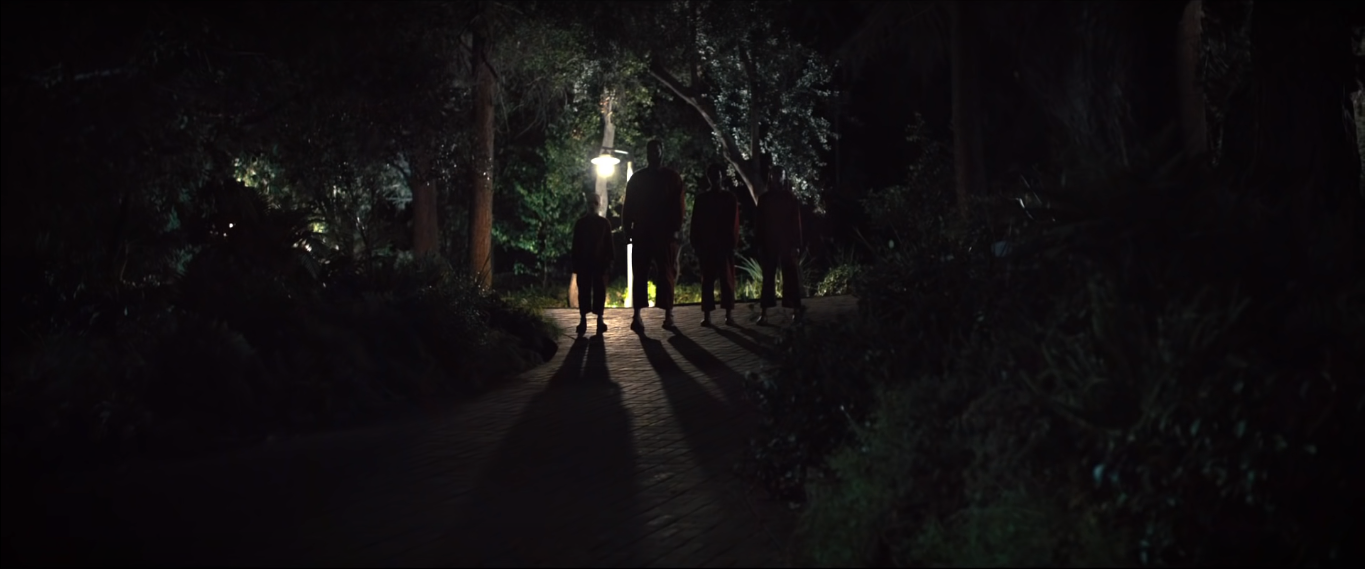
After the massive hit that was Get Out (2017), Jordan Peele kept showing his love for horror and a will to keep on writing new material in the genre. The subtexts and politics of Get Out (2017) were clear and well transformed into a more or less consistent concept. The value of the film was deposited in the dynamic of this transaction of racial politics into the horror film discourse, and by provoking the viewer with suggestive and anarchic ideas (similar to the one’s by Spike Lee). It was a film that worked as a genre piece but utilized its strengths to reach the public and confront them with realities that while terrifying are enlightening. Daniel Kaluuya presented us one great performance, backed by an incredible supporting cast. That is the main thing that mirrors and is enhanced in Us. The performances are well-above average and the film owes its cast a lot for its dynamic between horror and comedy (presented even more extremely than in Peele’s previous).

us 1.pngShadows and reflections are essential elements of the film

The game of mirrors presented in Us starts right of the bat with the name of the film. There is ‘Us’ and ‘US’, and with that information in mind we can expect the film to present certain political ideas. The problem with it is that most of the times the small scenes are full of certain meanings that contrast with the main concept of the film, creating a lot of room for interpretation, especially considering the film as an exercise in ideology. The best thing about the film (after Lupita Nyong’o’s mesmerizing performance) is arguably how vague its political readings can be. We are teased with the idea of it being a political film with the title alone, and yet the film challenges us to dig deeper to find any consistent concepts regarding its ideas. Despite touching on the subject of racism, Peele’s vision is now aiming at broader issues with Us.

Being a comercial film, it comes with its problems. Some of the scenes in the film are too predictable in its stereotypes. What helps the film to get over these scenes is its usage in an almost metalinguistic cinematic way. Peele knows his horror clichés and uses them in an ironic way briliantly, playing with our expectations and creating genuinely funny moments. As an European citizen it is hard to understand the realities of racism in America (mostly due to our racial prejudices being of a different nature and having a different expression), so probably these complaints at the end of the day are just conditioned by my personal life experience. Having this in mind, Us regards the subject of racism in a lighter way than what was expected, especially considering its main theme. This is not a negative criticism at all, because as I mentioned before, the vagueness of Us adds a lot to any reading of the film, including a reading inclined to the ideas of racism.”

Visually it is more interesting than Get Out (2017), despite being a completely different film. It is creative and intelligent in its visual style, enough to be noticeable when comparing it to other big horror blockbusters. However, it still ends up feeling a little bit flat, just like Peele’s previous did. The use of music is brilliantly funny, and the original soundtrack is really great as well, especially the anthemic track (that reminds me almost of The Omen‘s (1976) soundtrack). Technically it is satisfying enough, never being truly flabbergasting.

us 2.pngThe already iconic shot from Us

By what I’ve said so far one would assume that Us is a brilliant film. But it is not. It is too vague and too self-conscious to be just a commercial film to watch at the mall, and too predictable in its techniques and paralells to be a really serious and innovative picture. One of the things that troubles me the most is that its vagueness translates a lot into meaninglessness, even though it is clear that there was a care in creating a well-rounded plot (in a Hitchockian way) and complete concept. The second thing that annoys me is the necessity to overexplain everything in the end. The “plot-twist” was rather predictable and despite the film having a lot of interesting buried plot points, it leaves a more experienced viewer feeling that the film is being condescending.

This text took into consideration spoilers and I decided to not discuss any of the plot, as it is very fun to watch without knowing what it is about. Gather some friends and go watch it. Probably every person will come out of the theater with a different reading of the film (I read somewhere that a guy thinks that the film is somehow anti-socialist. I highly doubt that though) and it is an enjoyable time in the cinema. Don’t expect too much out of it, but face it with enough seriousness to consider it, as it is clear that a lot of work and dedication went into it. Jordan Peele seems like he will be the new horror genre director to look out for, though.


6 out of 10

Le Havre (2011)

Directed by Aki Karusmäki

le havre 1

“I am ruthless against criminals but I don’t like to see the innocent suffer.”

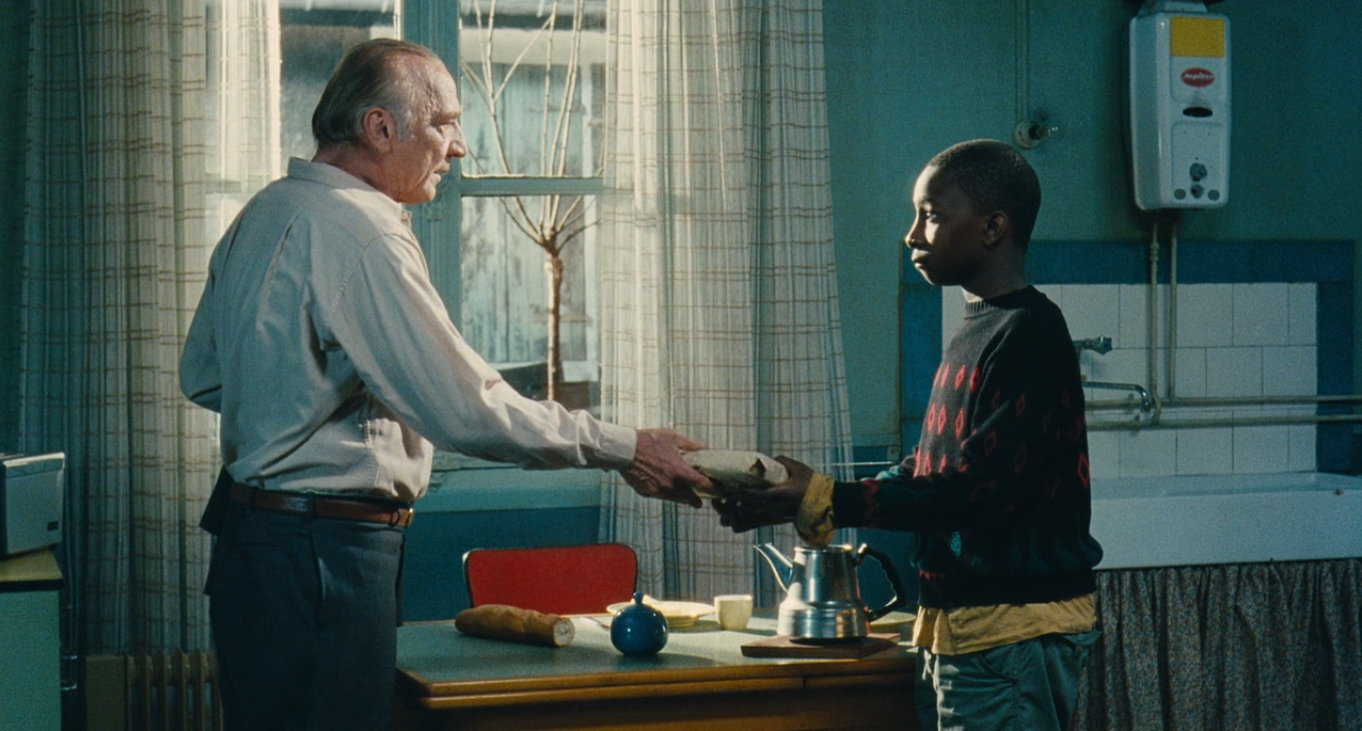
This week on Camera Coverage we are talking yet again about French Cinema, but this time we are moving fourth in time and talking about Le Havre by the Finnish filmmaker Aki Kaurismäki. This is arguably the director’s most accessible film, considering he is known for his absurdist and irreverent style. But nonetheless, I personally select Le Havre as his definite film and as a classic definitely not because of it being accessible, but because of it being an epitome of viewer manipulation, political cinema and Kaurismäki’s technical mastery. When we regard Le Havre as being less absurd and surreal than, for instance, La Vie de Bohème (1992) or The Man Without a Past (2002), we are talking about the narrative interruptions and singular hallucinatory moments in these films. However, Le Havre contains an absurdity that is conceptual to the idyllic grand narrative of its main plot. What is most impressive about this particularity in the film, however, is that when you see what it is really doing, you can never smile the same way at the colourful characters in Normandy as you did before.

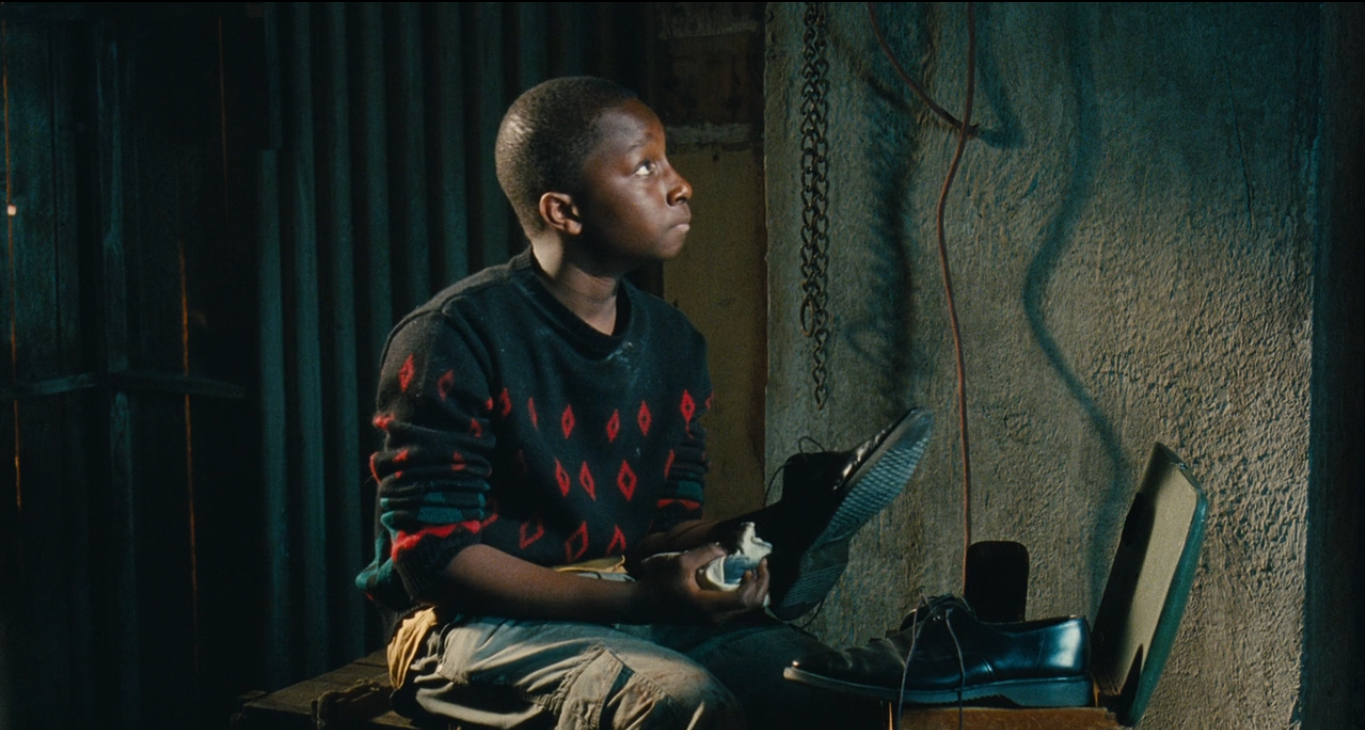
The film follows the daily life of Marcel Marx (André Wilms) and his colourful but monotonous routines. He is an old man, a shoe shiner, that while leading a poor life with his wife Arletty (beautifully played by Kati Outinen) we know he had many life experiences that got him the stability he has in this life of his (we assume this mainly due to his relationship with the other characters in town). All of the sudden, the order of Marcel’s usual tasks and routine is all shaken up as he finds a lost black boy that has tried to enter France illegally.

le havre 2.png“- Where are you going? – London.”

Kaurismäki unusual style is still present, especially considering the film’s framing and the characterization of its characters. The increased colour saturation and strategic placing of certain objects, combined with a complete vintage look regarding the clothes, hairstyles and makeup of its characters give Le Havre a vibe that is reminiscent of something from a Jacques Tati film. Having this said, the dialogues are much more idiosyncratic, following Kaurismäki usual style (despite, as mentioned before, being toned down in this particular film), that for the ones that are not acquainted with his past work, is something that reminds us of Jim Jarmusch for instance, especially regarding its sometimes obscure humour. This combination of vintage style and contemporary themes gives an edge to the idea of it being very self-conscious about its medium, something that in my opinion, despite not being something new, it is used to an uttermost mastery, elevating every single idea present in the film, even if you do not fully agree with its politics.

le havre 1The ultimate cinematic miracle

Despite being clear and conscious of its political inclinations, Le Havre goes a step further in its self-awareness, as the film seems to recognize that after all, this is all just a film. What could be seen like a mere whimsical, typically French and caricatured story quickly turns into an attempt to picture the hyperreality of the politics it is defending, and devastatingly twists the language of film into itself, resulting in the film being a product of pure manipulation but unmistakable honesty, even that it is being arguably pessimistic about the reality it is presenting. By the end of Le Havre and after flirting with the idea of clichés, we witness a miracle, a coincidence that is way too improbable to be taken lightly, even in this light-hearted modern fairy-tale. When we experience this beautiful cinematic and purely fantastical scene we should feel happy for our characters. But we can’t. Because the implication of this beautiful coincidence is that the world Le Havre is presenting is not our real world, and all the other picturesque and lovely situations are mere fabrications of cinema.

le havre fb e igIdrissa

Manipulation in films such as Forrest Gump (1994) or Schindler’s List (1993) are never welcome and often taint what is most of Hollywood cinema today, especially when it is clearly presenting political themes. But when we experience the technique utilized at its maximum potential in films like this, we seem to see unexpected potentials in the usage of this tool in our self-discovery. Kaurismäki seems to have hit the spot with this film, at least for me. In a French idyllic and polychromatic world he managed to make the black boy really seem like a part of the rainbow. Maybe one day in our real world we will manage to include all the current shunned colours in our own rainbows.