Us (2019)

Directed by Jordan Peele

1

“We’re Americans.”

After the massive hit that was Get Out (2017), Jordan Peele kept showing his love for horror and a will to keep on writing new material in the genre. The subtexts and politics of Get Out (2017) were clear and well transformed into a more or less consistent concept. The value of the film was deposited in the dynamic of this transaction of racial politics into the horror film discourse, and by provoking the viewer with suggestive and anarchic ideas (similar to the one’s by Spike Lee). It was a film that worked as a genre piece but utilized its strengths to reach the public and confront them with realities that while terrifying are enlightening. Daniel Kaluuya presented us one great performance, backed by an incredible supporting cast. That is the main thing that mirrors and is enhanced in Us. The performances are well-above average and the film owes its cast a lot for its dynamic between horror and comedy (presented even more extremely than in Peele’s previous).
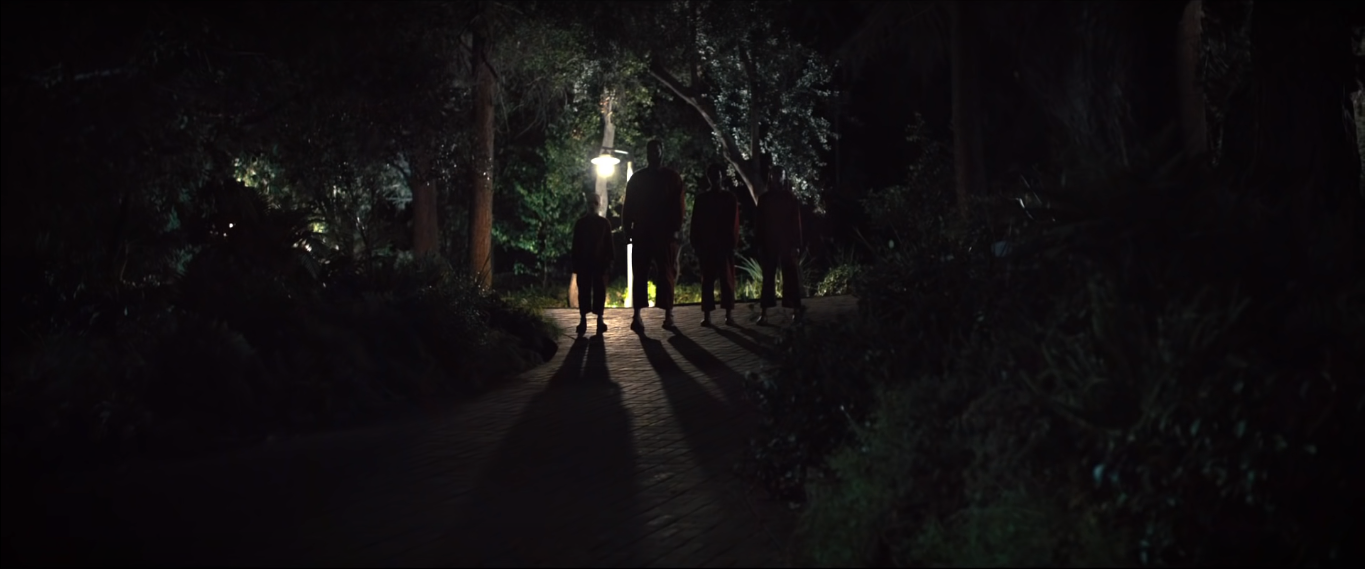
us 1.pngShadows and reflections are essential elements of the film

The game of mirrors presented in Us starts right of the bat with the name of the film. There is ‘Us’ and ‘US’, and with that information in mind we can expect the film to present certain political ideas. The problem with it is that most of the times the small scenes are full of certain meanings that contrast with the main concept of the film, creating a lot of room for interpretation, especially considering the film as an exercise in ideology. The best thing about the film (after Lupita Nyong’o’s mesmerizing performance) is arguably how vague its political readings can be. We are teased with the idea of it being a political film with the title alone, and yet the film challenges us to dig deeper to find any consistent concepts regarding its ideas. Despite touching on the subject of racism, Peele’s vision is now aiming at broader issues with Us.

Being a comercial film, it comes with its problems. Some of the scenes in the film are too predictable in its stereotypes. What helps the film to get over these scenes is its usage in an almost metalinguistic cinematic way. Peele knows his horror clichés and uses them in an ironic way briliantly, playing with our expectations and creating genuinely funny moments. As an European citizen it is hard to understand the realities of racism in America (mostly due to our racial prejudices being of a different nature and having a different expression), so probably these complaints at the end of the day are just conditioned by my personal life experience. Having this in mind, Us regards the subject of racism in a lighter way than what was expected, especially considering its main theme. This is not a negative criticism at all, because as I mentioned before, the vagueness of Us adds a lot to any reading of the film, including a reading inclined to the ideas of racism.”

Visually it is more interesting than Get Out (2017), despite being a completely different film. It is creative and intelligent in its visual style, enough to be noticeable when comparing it to other big horror blockbusters. However, it still ends up feeling a little bit flat, just like Peele’s previous did. The use of music is brilliantly funny, and the original soundtrack is really great as well, especially the anthemic track (that reminds me almost of The Omen‘s (1976) soundtrack). Technically it is satisfying enough, never being truly flabbergasting.
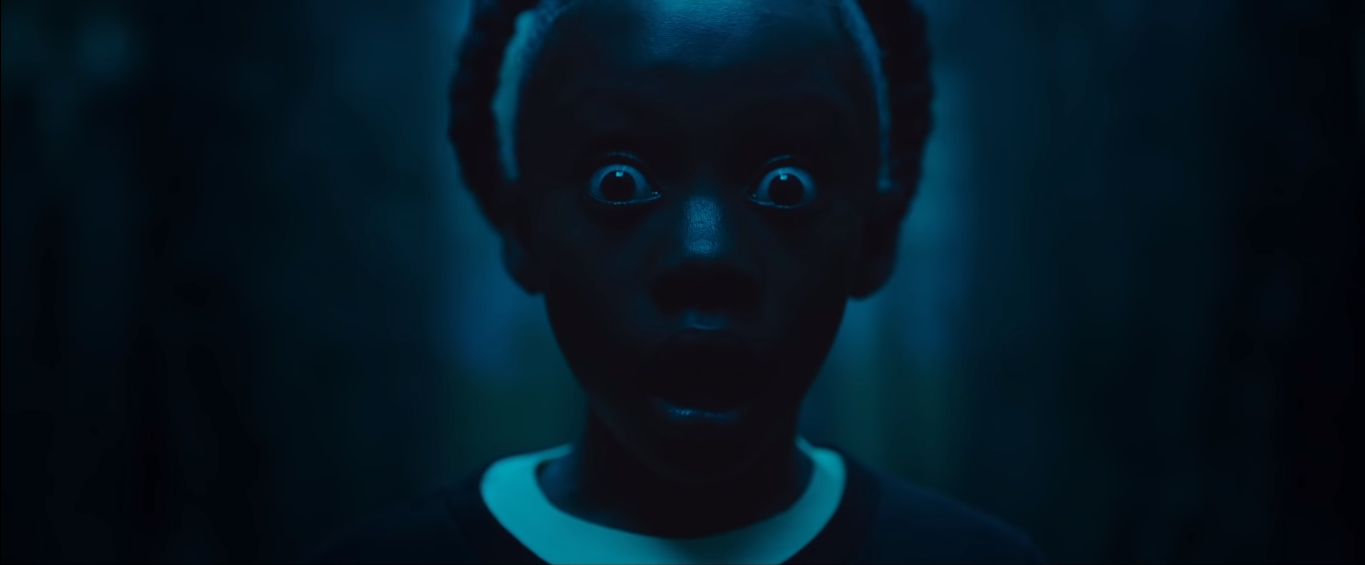
us 2.pngThe already iconic shot from Us

By what I’ve said so far one would assume that Us is a brilliant film. But it is not. It is too vague and too self-conscious to be just a commercial film to watch at the mall, and too predictable in its techniques and paralells to be a really serious and innovative picture. One of the things that troubles me the most is that its vagueness translates a lot into meaninglessness, even though it is clear that there was a care in creating a well-rounded plot (in a Hitchockian way) and complete concept. The second thing that annoys me is the necessity to overexplain everything in the end. The “plot-twist” was rather predictable and despite the film having a lot of interesting buried plot points, it leaves a more experienced viewer feeling that the film is being condescending.

This text took into consideration spoilers and I decided to not discuss any of the plot, as it is very fun to watch without knowing what it is about. Gather some friends and go watch it. Probably every person will come out of the theater with a different reading of the film (I read somewhere that a guy thinks that the film is somehow anti-socialist. I highly doubt that though) and it is an enjoyable time in the cinema. Don’t expect too much out of it, but face it with enough seriousness to consider it, as it is clear that a lot of work and dedication went into it. Jordan Peele seems like he will be the new horror genre director to look out for, though.


6 out of 10

Gräns (2019)

(eng: Border)

Directed by Ali Abbasi

grans 1

“I don’t see the point of evil.”

Inspired on a novel by John Ajvide Lindqvist (better known for Let The Right One In), Border is one of the films to have a lot of controversy and high regard last year. To it was awarded the Un Certain Regard award at Cannes, and it even managed to swiftly get a nomination to the Oscar for Best Achievement in Makeup and Hairstyling. The controversy is mainly due to the sexual nature of its themes. It is an undeniably shocking film. The usage its shock value is, however, very pertinent. As Let The Right One In (2008), the transformation of Lindqvist’s story into film works brilliantly, combining the already poignant themes present in the words and visually expanding them, something that is even more noticeable in Border, mainly due to the irreverence and shamelessness of the film’s imagery.

The film follows Tina (Eva Melander), a security officer working on border control, and he daily routine. She is not blessed by standards of Western beauty and has a menacing look that works well with her magical power of being able to smell people’s feelings. She lives an unhappy marriage and has no friends other than her mentally-ill father. There are two big changes in her life when she smells a memory card on a passenger’s phone that is full of snuff films and child pornography and on another scene sees a guy that is oddly similar to her and confuses her special sensibilities. These changes lead to two inner plots in the film that consist on one side a detective thriller-like film and on the other a romantic story that leads to Tina’s discovery of her true identity.

border 2.png

Border is a story of fluid bodies and souls trapped in an ordered world. Tina and Vore (Eero Milonoff) are figurations of chaos inside an organized Western society. However, if we consider the sexual nature of the film we quickly understand that there is a political edge to this chaos. Combined with the ideas of social isolation, foreignness and family issues we understand that the new dynamic presented by these two special characters is an amalgamation of every otherness that exists in our contemporary world. So far so great. The problem with the film is that while presenting brilliant ideas, it overly complicates them and by the end it leaves an undesirable odd feeling to the viewer. Of course this ending can be read as an anarchic solution to the aforementioned themes, or even as a following to the mythology presented half-way into the story, but never does it feel as smooth as expected. Comparing it to something like the ending of Do The Right Thing (1989), for instance, it feels really off considering the way the plot devices work beforehand.

Technically it is a decent film. It never does something that is not expected from an ultra-realist style film. Sometimes the camera seems to be too shaky, and even nauseating at times. In other scenes, the fast movements of the camera and all the shakiness contribute greatly to the inner beauty of the film. The original soundtrack is very enchanting and is really on the same page with the tone of the film. The make-up effects are pristine, as is Melander’s performance. I would say Eero Milonoff’s performance is never up to par with Melander’s, and sometimes is not even really good at all. But then again, that is never a big problem (even if combined with the shaky camera aspect of the film) if we face it with the originality and boldness of all the other decisions surrounding it.

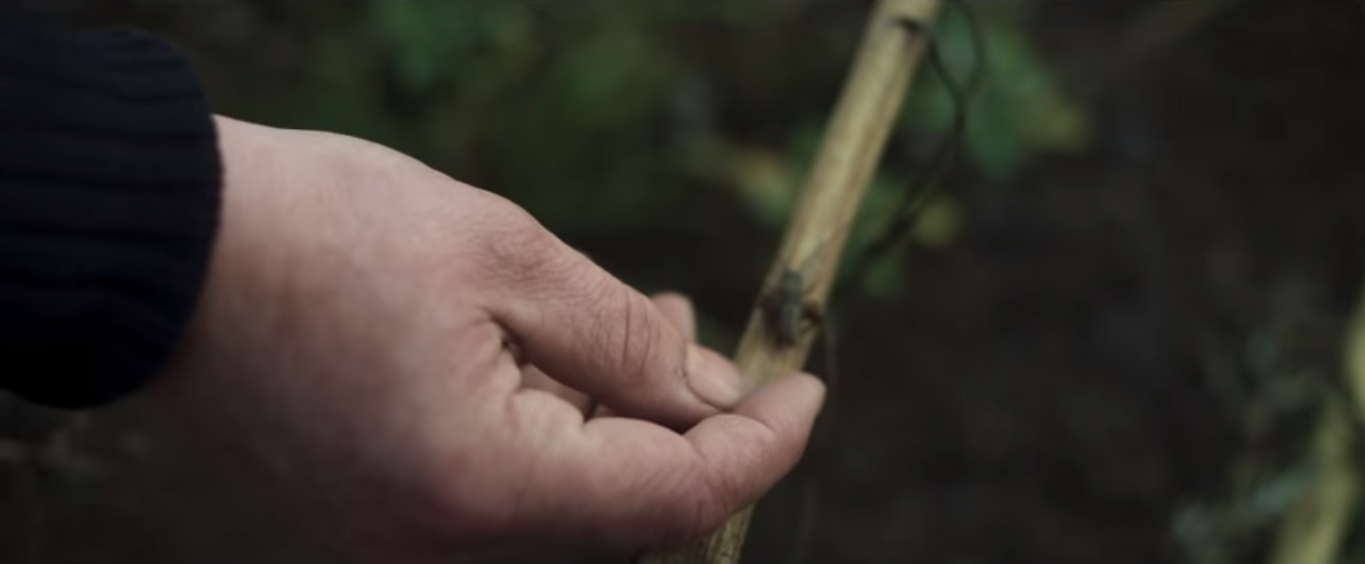
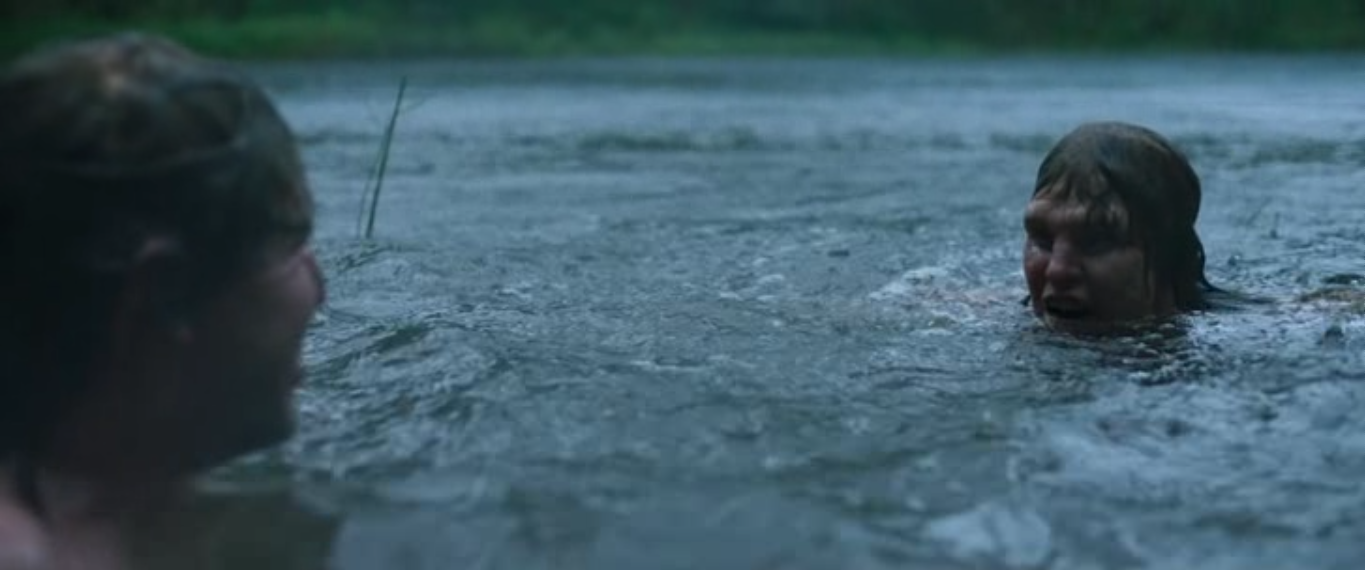
border 4.pngOne of the great visual moments in Gräns
The reason I was not a big fan of Let The Right One In (2008) is probably the reason I am actually a big fan of Border. It is a consciously awkward film, one that is aiming specifically at shocking the viewer in order to get its ideas out there. Most of the times this technique does not work, but with Border it does, as it is probably the perfect figurative film of the many lost souls in our monotonous society. Even though it is not perfect, particularly the thrilleresque subplot, Border works a lot better than expected. This review tried to say as little as possible about the singular elements of the film because in order for it to work it is mandatory to watch it with little knowledge about what is so special about it. It released in Portugal last week despite having been distributed in the rest of the world earlier this year. Still, try and watch it on stream or DVD, because if you don’t, you will be missing what is probably the most excruciatingly, cringeworthy and at the same time beautiful sex scene of the last few years (and for that alone it deserves ½ a point).

6.5 out of 10

Le Havre (2011)

Directed by Aki Karusmäki

le havre 1

“I am ruthless against criminals but I don’t like to see the innocent suffer.”

This week on Camera Coverage we are talking yet again about French Cinema, but this time we are moving fourth in time and talking about Le Havre by the Finnish filmmaker Aki Kaurismäki. This is arguably the director’s most accessible film, considering he is known for his absurdist and irreverent style. But nonetheless, I personally select Le Havre as his definite film and as a classic definitely not because of it being accessible, but because of it being an epitome of viewer manipulation, political cinema and Kaurismäki’s technical mastery. When we regard Le Havre as being less absurd and surreal than, for instance, La Vie de Bohème (1992) or The Man Without a Past (2002), we are talking about the narrative interruptions and singular hallucinatory moments in these films. However, Le Havre contains an absurdity that is conceptual to the idyllic grand narrative of its main plot. What is most impressive about this particularity in the film, however, is that when you see what it is really doing, you can never smile the same way at the colourful characters in Normandy as you did before.

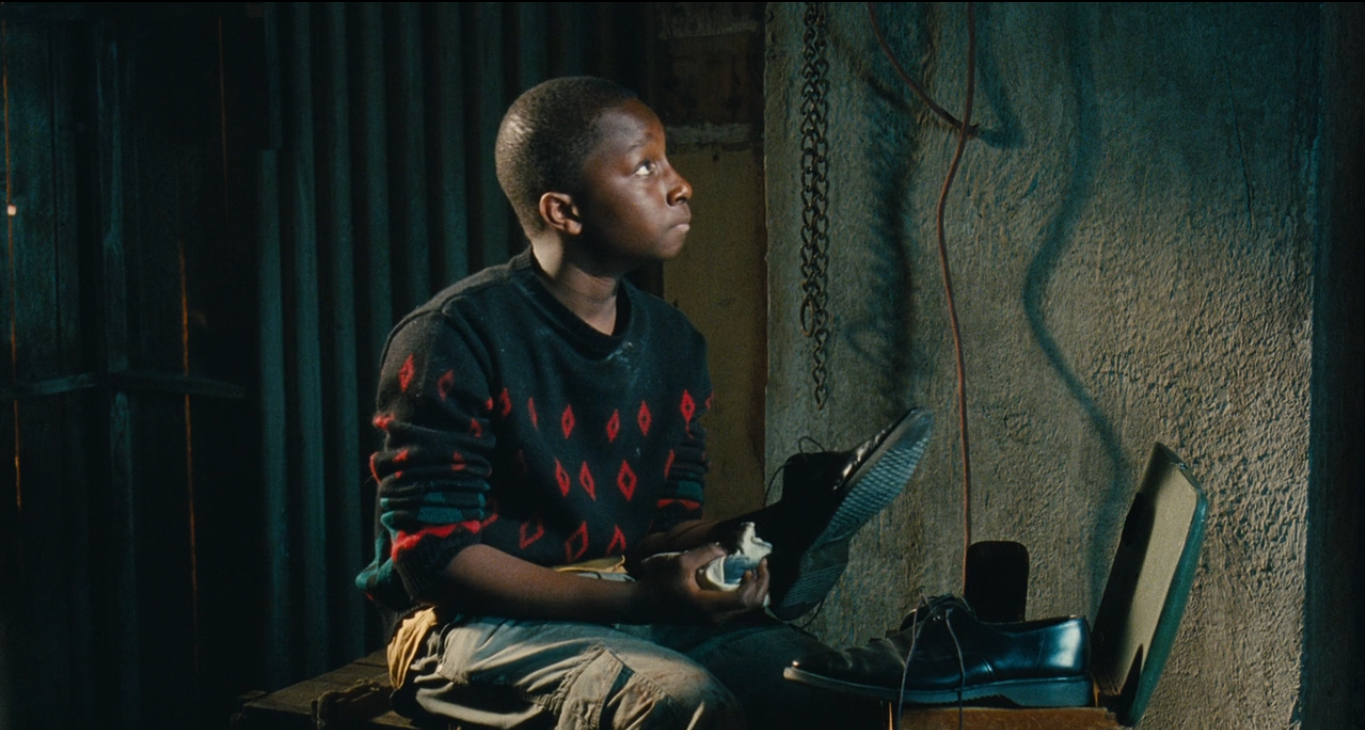
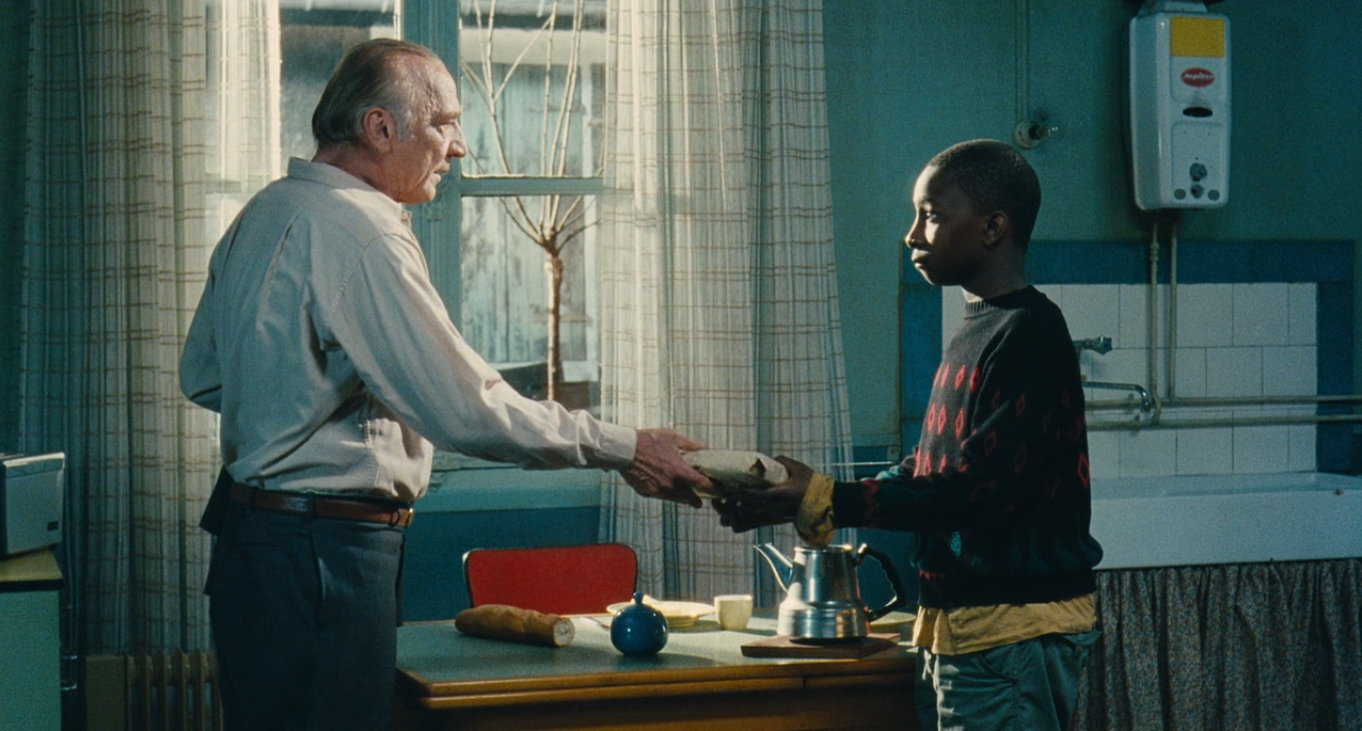
The film follows the daily life of Marcel Marx (André Wilms) and his colourful but monotonous routines. He is an old man, a shoe shiner, that while leading a poor life with his wife Arletty (beautifully played by Kati Outinen) we know he had many life experiences that got him the stability he has in this life of his (we assume this mainly due to his relationship with the other characters in town). All of the sudden, the order of Marcel’s usual tasks and routine is all shaken up as he finds a lost black boy that has tried to enter France illegally.

le havre 2.png“- Where are you going? – London.”

Kaurismäki unusual style is still present, especially considering the film’s framing and the characterization of its characters. The increased colour saturation and strategic placing of certain objects, combined with a complete vintage look regarding the clothes, hairstyles and makeup of its characters give Le Havre a vibe that is reminiscent of something from a Jacques Tati film. Having this said, the dialogues are much more idiosyncratic, following Kaurismäki usual style (despite, as mentioned before, being toned down in this particular film), that for the ones that are not acquainted with his past work, is something that reminds us of Jim Jarmusch for instance, especially regarding its sometimes obscure humour. This combination of vintage style and contemporary themes gives an edge to the idea of it being very self-conscious about its medium, something that in my opinion, despite not being something new, it is used to an uttermost mastery, elevating every single idea present in the film, even if you do not fully agree with its politics.

le havre 1The ultimate cinematic miracle

Despite being clear and conscious of its political inclinations, Le Havre goes a step further in its self-awareness, as the film seems to recognize that after all, this is all just a film. What could be seen like a mere whimsical, typically French and caricatured story quickly turns into an attempt to picture the hyperreality of the politics it is defending, and devastatingly twists the language of film into itself, resulting in the film being a product of pure manipulation but unmistakable honesty, even that it is being arguably pessimistic about the reality it is presenting. By the end of Le Havre and after flirting with the idea of clichés, we witness a miracle, a coincidence that is way too improbable to be taken lightly, even in this light-hearted modern fairy-tale. When we experience this beautiful cinematic and purely fantastical scene we should feel happy for our characters. But we can’t. Because the implication of this beautiful coincidence is that the world Le Havre is presenting is not our real world, and all the other picturesque and lovely situations are mere fabrications of cinema.

le havre fb e igIdrissa

Manipulation in films such as Forrest Gump (1994) or Schindler’s List (1993) are never welcome and often taint what is most of Hollywood cinema today, especially when it is clearly presenting political themes. But when we experience the technique utilized at its maximum potential in films like this, we seem to see unexpected potentials in the usage of this tool in our self-discovery. Kaurismäki seems to have hit the spot with this film, at least for me. In a French idyllic and polychromatic world he managed to make the black boy really seem like a part of the rainbow. Maybe one day in our real world we will manage to include all the current shunned colours in our own rainbows.