
Directed by Gabriel Abrantes & Daniel Schmidt

“They call me the Michael Angelo of the pitch”
Diamantino marks the debut of Gabriel Abrantes (with the partnership of Daniel Schmidt) into the world of full featured films. Abrantes has a long list of short films in his bag, such as A Brief History of Princess X (2016) or A History of Mutual Respect (2010). In his films he tries to ally a philosophical and critical stance to thematic such as history, gender and sexuality politics and the power of Art. With this long feature, Abrantes and Schmidt try to ally all these themes with an absurdist and at the same time comedic approach to serious and problematic contemporary problems. Almost a year after its Cannes debut, it finally showed up on Portuguese cinemas.
The plot follows Diamantino Matamouros (Carloto Cotta), the biggest football star in the world, who resembles an uncanny similarity to Cristiano Ronaldo. Either by the physical appearance or his narration of the events with a Madeira island accent (subtitled even to Portuguese audiences, although he is speaking Portuguese, something that may only be appreciated by the native speakers of the language) the resemblance is something that clearly pops on the viewer. Despite that, it’s not a direct reference and the character serves mainly as a caricature for nowadays biggest stars. He is a revered figured, almost like a god, astonishingly rich and with a personality ingrained with vanity and at the same time a tremendous ignorance for the events of the world. The very first scene, where we see him play in a sold-out stadium in the World Cup alongside with giant puppies in a pink cloudy haze, marks the surrealistic tone of the film. This scenario created in his head is the mechanism necessary to make him excel in what does best. Diamantino’s vanity and obsession with image and performance is not critiqued but instead he is presented as a deeply naïve and almost childish character. With the unexpected appearance of a refugee boat near his yacht, he completely loses all his ability to enter in that mental state represented by the pink haze and loses all his football skills. He goes from hero to zero, in a statement of the vapid celebratory status that rules our society, where one mistake is enough to fall from grace.
 The surreal place that Diamantino goes when he plays
Shocked by the migrant reality, he decides to adopt a Mozambican refugee boy, who is actually a female agent in disguise to discover possible financial frauds. Placed in an alternative timeline, Portugal is a neofascist country. One of the best aspects is the placement of small but very perspicuous clues that evoke the country’s forty-year dictatorship. It compares the creation of a glorious past with its big symbols with the new symbols created by today’s society in order to give a sense of national identity. The plot derives then into an almost espionage type of film. The despotic government convinces our lead character into a cloning process to make an entire football team full of skilful players like him in order to regain the glory lost in the World Cup final. This potentially deadly procedure would end up giving him breasts, something that deeply embarrasses him. The laughs of the audience to this scene maybe are a refection the director wants to make in relation to transphobia but unfortunately fails short to give any deep impact on the viewer.
The film’s first half results in an interesting critique of nowadays culture and politics. The long dictatorship (from 1926 to 1974) marked generations with a propaganda machine that created myths to justify a sense of identity. Despite a few decades passed since 1974, the mindset of the contemporary Portuguese people in some ways still rely in those myths of grandeur in a way of self-identity. Diamantino’s sisters (Anabela Moreira/ Margarida Moreira) also make an interesting point with their greed for their brothers’ money. With their sly personality, they are willing to sacrifice his own brother if needed. Alongside the positive points made before, Cotta’s performance is also a big highlight in the film, creating a deeply interesting character.
 Diamantino and his “adoptive son”
The problem with the film relies essentially on pace. Past the first half of the film the repetition of the more poignant (or funny) aspects start to wear off and lose some of the charm. In a way, it reminds me of Capitão Falcão (2015) a Portuguese film that deals with similar political themes with also a comedic approach. The premises are smart and offer new ideas that deserve his praise, especially in dealing with ghosts of the past in a more cheerful that can help more easily engrain the audience in a political reflation without a more acute sense of guilt. The problem is that it is unable to deliver a more powerful second half without recycling most of the content used before. Worst than that, it finishes with a disappointing and cliché ending. Maybe Diamantino would be better if it was a short film, as it would be a more cohesive and well-rounded experience, instead of the constant repetition of tropes.
5 out of 10

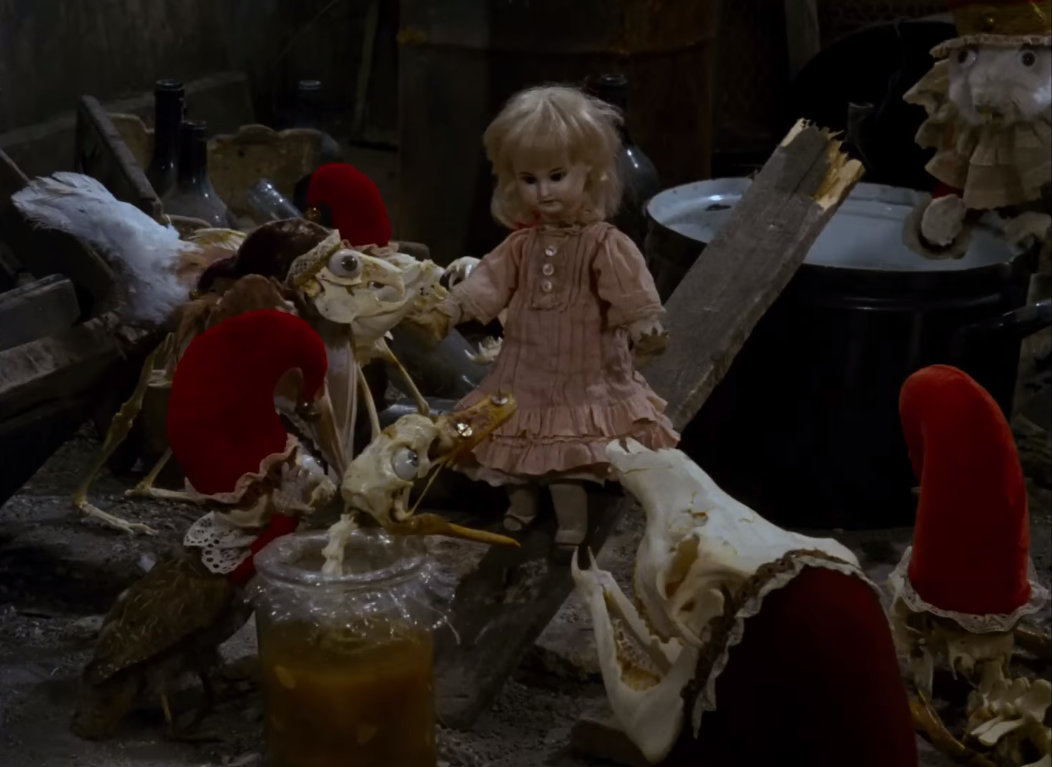 Alice shrinks into a doll.
 Probably the most unsettling scene in the film, the infamous tea party.
 “Off with their heads!”
 Camera Coverage